Kirjahaku
Etsi kirjoja tekijän nimen, kirjan nimen tai ISBN:n perusteella.
1000 tulosta hakusanalla Freeman John F.

Three Popular Lectures ; One on Natural History
John Freeman Milward Dovaston
Antigonos Verlag
2025
nidottu

History of Madagascar. Comprising Also the Progress of the Christian Mission Established in 1818, and an Authentic Account of the Persecution and Recent Martyrdom of the Native Christians
Joseph John Freeman; William Ellis
Antigonos Verlag
2025
nidottu

History of Madagascar. Comprising Also the Progress of the Christian Mission Established in 1818, and an Authentic Account of the Persecution and Recent Martyrdom of the Native Christians
Joseph John Freeman; William Ellis
Antigonos Verlag
2025
nidottu
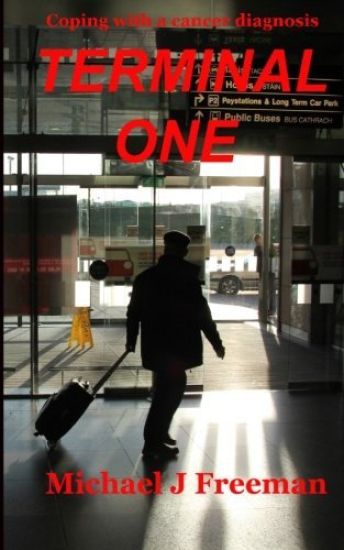
Terminal One: Coping with a cancer diagnosis
Carole Anne Freeman; Michael John Freeman
Createspace Independent Publishing Platform
2015
nidottu
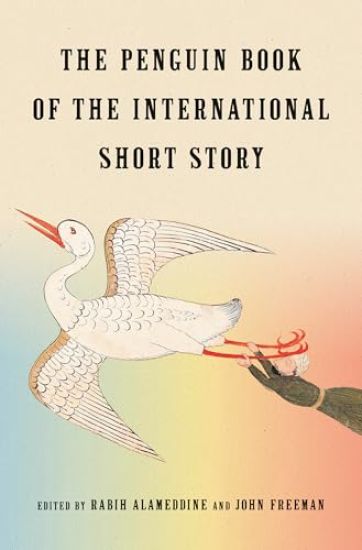
The Penguin Book of the International Short Story
Rabih Alameddine; John Freeman
Penguin Putnam Inc
2026
sidottu
The best in short fiction from around the world, from celebrated anthologist and author John Freeman and award-winning novelist Rabih Alameddine In The Penguin Book of the International Short Story, writers from different nations, languages, and sensibilities come together in a globe-spanning and long overdue tour of modern fiction. In "Super-Frog Saves Tokyo," Haruki Murakami brings us a man who believes a giant amphibian is enlisting him to protect his city from an impending earthquake. In "War of the Clowns," Mozambique's Mia Couto sketches a perfect allegory for our divided culture. In the predecessor story to her iconic novel The Vegetarian, Han Kang depicts a protagonist quietly undergoing an unlikely transformation. A Colm T ib n character thinks, "I do not even believe in Ireland," while Carol Bensimon reflects from Brazil, "All great ideas seem like bad ones at some point." Salman Rushdie brings us to unsettled rural India, Olga Tokarczuk to an ugly woman exhibit at the circus, Abdellah Ta a to the queer Arab world, Ted Chiang to a far-off galaxy. The United States is far from the center of the literary universe. This anthology is reminiscent of iconic director Bong Joon Ho's line about overcoming "the one-inch-tall barrier of subtitles" to enter a new world of film--the work of thoughtful and accomplished translators opens the door wide for those curious about what lies beyond the Western canon and classroom. Writers from six continents, ranging from new voices to literary icons, each offer a window into a distinct point of view, both transcending and illuminating their place of origin. They offer not only captivating prose, but a reminder of the power of the imagination across space and time.
Better Worlds: Education, Art, and Utopia provides a fresh examination of utopia and education. Adopting an interdisciplinary approach and drawing on literature and the visual arts as well as traditional non-fiction sources, the authors explore utopia not as a model of social perfection but as the active, imaginative building of better worlds. Utopian questions, they argue, lie at the heart of education, and addressing such questions demands attention not just to matters of theoretical principle but to the particulars of everyday life and experience. Taking utopia seriously in educational thought also involves a consideration of that which is dystopian. Utopia, this book suggests, is not something that is fixed, final, or ever fully realized; instead, it must be constantly recreated, and education, as an ongoing process of reflection, action, and transformation, has a central role to play in this process.
Are you interested in learning how to treat common conditions naturally? This book presents herbal remedies for over 100 common conditions. Would you like to learn more about common herbal remedies? This book includes descriptions of over 90 common herbal remedies.
Better Worlds: Education, Art, and Utopia provides a fresh examination of utopia and education. Adopting an interdisciplinary approach and drawing on literature and the visual arts as well as traditional non-fiction sources, the authors explore utopia not as a model of social perfection but as the active, imaginative building of better worlds. Utopian questions, they argue, lie at the heart of education, and addressing such questions demands attention not just to matters of theoretical principle but to the particulars of everyday life and experience. Taking utopia seriously in educational thought also involves a consideration of that which is dystopian. Utopia, this book suggests, is not something that is fixed, final, or ever fully realized; instead, it must be constantly recreated, and education, as an ongoing process of reflection, action, and transformation, has a central role to play in this process.
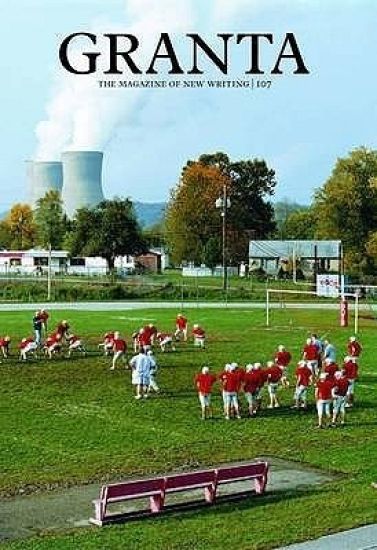
With its mixture of investigative reportage, narrative non-fiction, photography, memoir, fiction and brilliant journalism, "Granta 107" follows on from the critically-acclaimed summer reading issue to showcase more of the best new writing from around the world. In the issue, Mary Gaitskill meditates on how we measure varieties of loss after the disappearance of her rescued cat; Will Self walks through Tehran thirty years on from the revolution; Timothy Phillips uncovers a story of espionage in London between the wars; and, Rana Dasgupta reports from Delhi on the emergence of India's super rich. Plus: Ariel Leve visits the American town revitalized by immigration and Xan Rice among the Polisario rebels fighting for the disputed territory of the western Sahara; and the best new fiction from emerging and established writers.
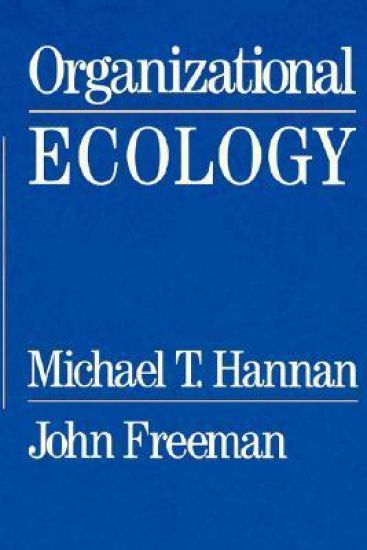
Michael T. Hannan and John Freeman examine the ecology of organizations by exploring the competition for resources and by trying to account for rates of entry and exit and for the diversity of organizational forms. They show that the destinies of organizations are determined more by impersonal forces than by the intervention of individuals.

The Florida Research Ensemble (Ulmer, Revelle, Freeman and Tilson) is an interdisciplinary collaborative arts and research group developing choragraphy, a method of inquiry which applies modernist arts practices and poststructural theory to the design and testing of image as category. The authors argue that image categories functions for networked digital media the way Aristotle's word categories functioned for literate concepts. “Chora” was retrieved for contemporary philosophy by Jacques Derrida, in the context of his deconstruction of Western metaphysics. Grounded in grammatology (the history and theory of writing), Derrida’s critique of Being and Becoming as primary concepts of reality is that the category or classification system invented within literacy is not adequate for the apparatus of electracy that has developed since the industrial revolution. The FRE project in Miami designed and tested a prototype for a choral category, capable of coordinating real places, cultural collective information, digital technologies, and personal experience. Miami Virtue tested choragraphy as a method for adopting a particular region (the Miami River), including primary discourses organizing its lifeworld, and articulating it as a category of thought. The designed and recorded virtual site functions for electracy the way concepts function for literacy: as a navigable set supporting holistic intelligence and public discourse.
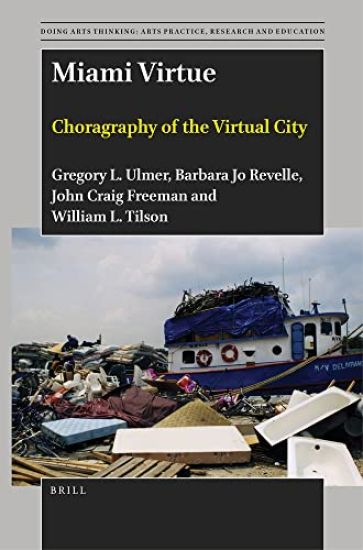
The Florida Research Ensemble (Ulmer, Revelle, Freeman and Tilson) is an interdisciplinary collaborative arts and research group developing choragraphy, a method of inquiry which applies modernist arts practices and poststructural theory to the design and testing of image as category. The authors argue that image categories functions for networked digital media the way Aristotle's word categories functioned for literate concepts. “Chora” was retrieved for contemporary philosophy by Jacques Derrida, in the context of his deconstruction of Western metaphysics. Grounded in grammatology (the history and theory of writing), Derrida’s critique of Being and Becoming as primary concepts of reality is that the category or classification system invented within literacy is not adequate for the apparatus of electracy that has developed since the industrial revolution. The FRE project in Miami designed and tested a prototype for a choral category, capable of coordinating real places, cultural collective information, digital technologies, and personal experience. Miami Virtue tested choragraphy as a method for adopting a particular region (the Miami River), including primary discourses organizing its lifeworld, and articulating it as a category of thought. The designed and recorded virtual site functions for electracy the way concepts function for literacy: as a navigable set supporting holistic intelligence and public discourse.
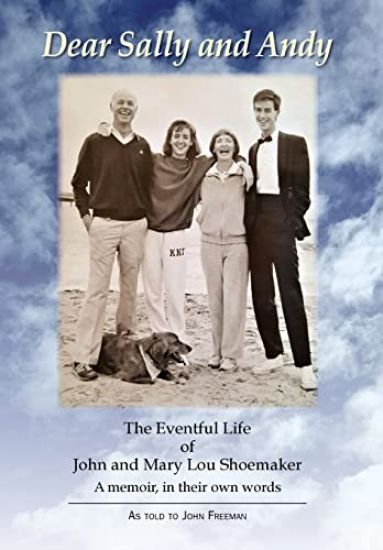
Dear Sally and Andy: The Eventful Life of John and Mary Lou Shoemaker
John Bb Freeman
Point PR Communications
2019
sidottu
"I knew the right time had come. It wasn't hard to figure out that I had found someone I could enjoy spending the rest of my life with." --John Shoemaker "I remember thinking to myself, 'You'll never be bored.' And that was the truth." -- Mary Lou Shoemaker

I was pushing my son, Charlie, in a swing when his head twitched and he threw his right arm in the air. That was the beginning of an agony I am without words to describe. Nine months later, ... Charlie's seizures were unchecked, his development delayed, '' and he had a prognosis of continued seizures and progressive retardation. Since Charlie started the (ketogenic) diet, he has been virtually seizure-free, completely drug-free, and a terrific little boy. He has had to remain on a modified version of the ketogenic diet after being on the full diet for two years, but he goes to school and leads a normal, happy life.'' One in five children with epilepsy has seizures that are resistant to medications. Even when seizures are fairly well under control, medication may affect childrenC Us alertness and mental clarity, impairing their ability to learn and reach their full potential. Many parents are looking beyond currently available medications for a satisfying solution to seizure treatment. The ketogenic diet is such an answer. This rigid, mathematically calculated, doctor-supervised diet is high in fat and low in carbohydrate and protein, and strictly limits both calories and liquid intake. The diet helps to control seizures and allows many children to become both seizure-free and drug-free. This extensively updated edition covers the many advances that have been made in understanding how the diet works, how it should be used, and its future role as a treatment for children with epilepsy