Kirjojen hintavertailu. Mukana 11 511 381 kirjaa ja 12 kauppaa.

Kirjahaku

Etsi kirjoja tekijän nimen, kirjan nimen tai ISBN:n perusteella.

1000 tulosta hakusanalla G. Desiree Fultz

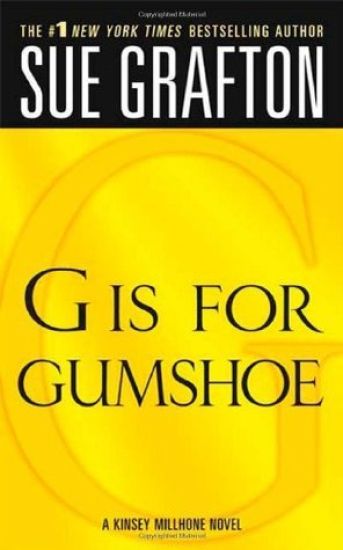
G Is for Gumshoe: A Kinsey Millhone Mystery

G Is for Gumshoe: A Kinsey Millhone Mystery

Sue Grafton

St. Martin's Press
2007
pokkari
For #1 New York Times bestselling author Sue Grafton's PI Kinsey Millhone, danger comes with the job--but she never expects to find herself at the top of a hit man's list... G IS FOR GAME... When Irene Gersh asks PI Kinsey Millhone to locate her elderly mother Agnes, whom she hasn't heard from in six months, it's not exactly the kind of case Kinsey jumps for. But a girl's gotta pay her bills, and this should be easy money--or so she thinks. Kinsey finds Agnes in a hospital. Aside from her occasional memory lapses, the octogenarian seems fine. And frightened. G IS FOR GUN... Kinsey doesn't know what to make of Agnes's vague fears and bizarre ramblings, but she's got her own worries. It seems Tyrone Patty, a criminal she helped put behind bars, is looking to make a hit. First, Kinsey's car is run off the road, and then days later, she's almost gunned down, setting in motion a harrowing cat and mouse game... G IS FOR GUMSHOE So Kinsey decides to hire a bodyguard. With PI Robert Dietz watching her 24/7, Kinsey is feeling on edge...especially with their growing sexual tension. Then, Agnes dies of an apparent homicide, Kinsey realizes the old lady wasn't so senile after all--and maybe she was trying to tell her something? Now Kinsey's determined to learn the truth...even if it kills her. "A" Is for Alibi"B" Is for Burglar"C" Is for Corpse"D" Is for Deadbeat"E" Is for Evidence"F" Is for Fugitive"G" Is for Gumshoe"H" Is for Homicide"I" Is for Innocent"J" Is for Judgment"K" Is for Killer"L" is for Lawless"M" Is for Malice"N" Is for Noose"O" Is for Outlaw"P" Is for Peril "Q" Is for Quarry"R" Is for Ricochet "S" Is for Silence "T" Is for Trespass"U" Is for Undertow "V" Is for Vengeance "W" Is for Wasted "X"

G. E. Moore

G. E. Moore

Basil Blackwell

Praeger Publishers Inc
1979
sidottu
The author emphasizes Moore's contributions to philosophy and discusses his appeals to common sense and to ordinary language and his concept of the theory of meaning. This is followed by a close examination of the method of analysis. The application of the method is then illustrated in chapters on Moore's ethics and on his views on visual perception.
G Protein-Coupled Receptors - Part A

G Protein-Coupled Receptors - Part A

ELSEVIER SCIENCE TECHNOLOGY
2022
sidottu
G Protein-Coupled Receptors, Part A, Volume 193 in the Progress in Molecular Biology and Translational Science series, highlights new advances in the field. G protein-coupled receptors (GPCRs) represent the largest class of cell surface proteins with an intricate involvement of nearly every physiological process in our body. Approximately, one third of the clinically prescribed medicines target GPCRs and the quest to improve the exiting GPCR-targeting therapeutics continues. These two volumes are focused on activation, signaling and regulation of GPCRs with specific examples of receptor systems and cellular processes.
G Protein-Coupled Receptors - Part B

G Protein-Coupled Receptors - Part B

ELSEVIER SCIENCE TECHNOLOGY
2023
sidottu
G Protein-Coupled Receptors, Part B, Volume 195 represents the largest class of cell H103 surface proteins that have intricate involvement in nearly every physiological process in our body. Approximately one third of the clinically prescribed medicines target GPCRs and the quest to improve the exiting GPCR-targeting therapeutics continues. Sections in this volume include Adhesion G protein-coupled receptors: Structure and functions, Molecular and cellular mechanisms underlying brain region-specific cannabinoid receptor modulation by estradiol across the rodent estrus cycle, Probing the orphan receptors: Tools and directions, Asymmetric activation of Class C GPCRs, Common and selective signal transduction mechanisms of GPCRs, and much more.
G-Spot: An Urban Erotic Tale

G-Spot: An Urban Erotic Tale

Noire

One World/Strivers Row
2005
nidottu
The sexy, young girlfriend of Granite "G" McKay, owner of Harlem's notorious G-Spot Social Club and a ruthless drug dealer, Juicy Stanfield finds herself growing restless and burning with unrequited sexual energy, and must come up with a scheme to escape G's dangerous world, but her plans are threatened when she falls for G's own son. Original. 24,000 first printing.
G Words

G Words

Sommer Matriangello

Lulu.com
2019
nidottu
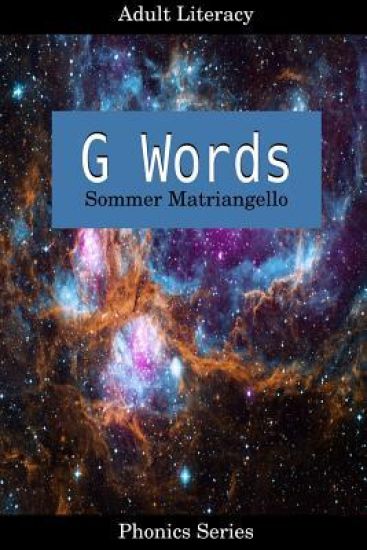
Phonics is a decoding skill that's used to help adults improve their reading skills. Using phonics makes learners feel more at ease when learning to read. It means they have a way to decode the words on the page.G Words book introduces adult learners to words that have the "G" sound in them. There are words like, goose, gecko, gopher, gears, garlic and game. G Words uses large font and images to make reading easier. G Words book has sight word sentences. It ends with the learner reading long reading passages that focus on words with the "G" sound.Each sentence and reading passage is accompanied by an image which will help the learner know what the sentence is about and will help them decode the words better.
G Protein-Coupled Receptors
This book provides a broad base of knowledge of G-protein-coupled receptors. Useful at both the university and industrial levels, this book is of particular interest to those who are developing therapeutic approaches to diseases using drugs that influence receptor activation.
G Protein-Coupled Receptors in Drug Discovery
The broad range of G protein-coupled receptors (GPCRs) encompasses all areas of modern medicine and have an enormous impact on the process of drug development. Using disease-oriented methods to cover everything from screening to expression and crystallization, G Protein-Coupled Receptors in Drug Discovery describes the physiological roles of GPCRs and their involvement in various human diseases.The book presents current approaches in drug discovery that include target selection, establishment of screening and functional assays. It also covers recombinant GPCR expression for drug screening and structural biology, different methods for structural characterization of GPCRs, and the importance of bioinformatics. The book has been carefully edited to avoid overlapping information, some duplication has been intentionally permitted so that each chapter can function as an independent unit. Providing in-depth discussions on structure and dynamics of GPCRs, this book outlines the importance of the GPCRs to drug discovery in general and drug targets specifically.Daniel E. Levy, editor of the Drug Discovery Series, is the founder of DEL BioPharma, a consulting service for drug discovery programs. He also maintains a blog that explores organic chemistry.
G Protein-Coupled Receptors
Covering recently developed methods in membrane-bound receptors, this book emphasizes receptor structure and function, knowledge of which is essential to the study of signal transduction. G Protein-Coupled Receptors has culled contributors from domestic and international sources, providing a broad base of knowledge. Some topics covered are the regulation of receptors; phosphorylation of G-protein-coupled receptors and ion channel receptors; desensitization studies using electrophysiological or confocal microscopic methods and the search for endogenous ligands for orphan receptors. This volume is useful at both the university and industrial levels, and is of particular interest to those who are developing therapeutic approaches to diseases using drugs that influence receptor activation.
G. W. M. Reynolds and His Fiction

G. W. M. Reynolds and His Fiction

Stephen Knight

Routledge
2020
nidottu
George Reynolds is arguably the most prolific of all nineteenth-century English novelists, reaching an enormous audience through his thirty-six novels. Often selling in very large numbers in weekly one-penny installments, his works were known as by the most popular English novelist ever. Yet today, he remains almost unknown in the canon of English Literature.A serious radical, strongly pro-woman, and a leading Chartist seeking the vote for all men, Reynolds’ vigorous heroines differ notably from the Victorian novelists’ timid norm. He was strongly pro-Jewish and pro-Gypsy, very interested in French and Italian society, but wrote for ordinary English working people. Dickens thought him a dangerous leftist: for all these reasons, he was excluded from the elite literary world.G. W. M. Reynolds: The Man Who Outsold Dickens reestablishes Reynolds as a major figure of mid-nineteenth-century fiction and an author of European range and status. This book examines his massive popularity and notable concern with the problems of ordinary people, especially women, in the complex and often dangerous new world of the modern city. With the support of his wife Susannah, Reynolds’ enormous influence would also make a contribution to the cause of mass political education through his role in the development of popular fiction and journalism. This book is a major innovation in the field of Victorian literary studies, with relevance to popular cultural studies, the politics of literature, and publishing history, presenting properly a much overlooked major English novelist.
G.W.M. Reynolds Reimagined

G.W.M. Reynolds Reimagined

TAYLOR FRANCIS LTD
2023
sidottu
This essay collection proposes that G.W.M. Reynolds’s contribution to Victorian print culture reveals the interrelations between authorship, genre, and radicalism in popular print culture of the nineteenth century. As a best-selling author of popular fiction marketed to the lower classes, and a passionate champion of radical politics and "the industrious classes," Reynolds and his work demonstrate the relevance of Victorian Studies to topics of pressing contemporary concern including populism, working-class fiction, the concept of ‘originality’, and the collective scholarly endeavour to ‘widen’ and ‘undiscipline’ Victorian Studies. Bringing together well-known and newly-emerging scholars from across different disciplinary perspectives, the volume explores the importance of Reynolds Studies to scholarship on the nineteenth-century. This book will appeal to students and scholars of the nineteenth-century press, popular culture, and of authorship, as well as to Victorian Studies scholars interested in the translation of Victorian texts into new and indigenous markets.
G.W.M. Reynolds

G.W.M. Reynolds

Anne Humpherys

Routledge
2019
nidottu
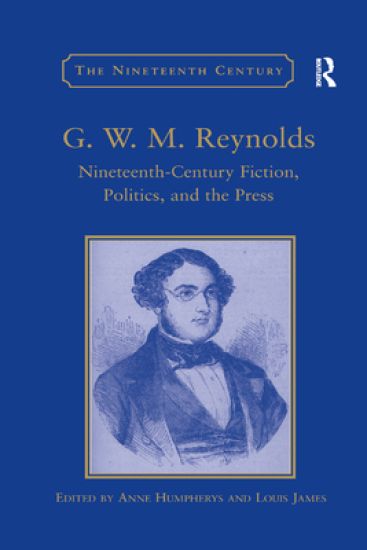
G.W.M. Reynolds (1814-1879) had a major impact on the mid-Victorian era that until now has been largely unacknowledged. A prolific novelist whose work had a massive circulation, and an influential journalist and editor, he was a man of contradictions in both his life and writing: a middle-class figure who devoted his life to working class issues but seldom missed a chance to profit from the exploitation of current issues; the founder of the radical newspaper Reynolds Weekly, as well as a bestselling author of historical romances, gothic and sensation novels, oriental tales, and domestic fiction; a perennial bankrupt who nevertheless ended his life prosperously. A figure of such diversity requires a collaborative study. Bringing together a distinguished group of scholars, this volume does justice to the full range of Reynolds's achievement and influence. With proper emphasis on new work in the field, the contributors take on Reynolds's involvement with Chartism, serial publication, the mass market periodical, commodity culture, and the introduction of French literature into British consciousness, to name just a few of the topics covered. The Mysteries of London, the century's most widely read serial, receives the extensive treatment this long-running urban gothic work deserves. Adding to the volume's usefulness are comprehensive bibliographies of Reynolds's own writings and secondary criticism relevant to the study of this central figure in mid-nineteenth-century Britain.
G-Man

G-Man

Stephen Hunter

G.P. Putnam's Sons
2018
pokkari
"A roaring good read."--FORBES.com Master sniper Bob Lee Swagger returns in this riveting novel by bestselling author and Pulitzer Prize winner Stephen Hunter. The Great Depression was marked by an epidemic of bank robberies and Tommy-gun-toting outlaws who became household names. Hunting them down was the new U.S. Division of Investigation--soon to become the FBI--which was determined to nab the most dangerous gangster this country has ever produced: Baby Face Nelson. To stop him, the Bureau recruited talented gunman Charles Swagger, World War I hero and sheriff of Polk County, Arkansas. Eighty years later, Charles's grandson Bob Lee Swagger uncovers a strongbox containing an array of memorabilia dating back to 1934--a federal lawman's badge, a .45 automatic preserved in cosmoline, a mysterious gun part, and a cryptic diagram--all belonging to Charles Swagger. Bob becomes determined to find out what happened to his grandfather-- and why his own father never spoke of Charles. But as he investigates, Bob learns that someone is following him--and shares his obsession. Told in alternating timeframes, G-Man is a thrilling addition to Stephen Hunter's bestselling Bob Lee Swagger series.
G K Chesterton: a Reappraisal

G K Chesterton: a Reappraisal

Conlon Denis

Methuen Publishing Ltd
2015
sidottu
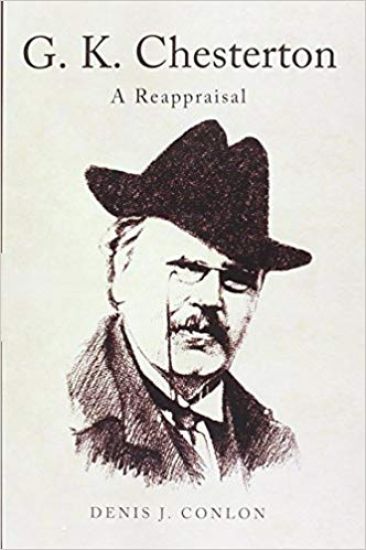
Gilbert Keith Chesterton (1874-1936), who was one of the most important literary figures of the early twentieth century, is now almost forgotten. A recent suggestion that he should be elevated to sainthood has renewed interest in him as have accusations of anti-Semitism by critics of the suggestion. From a modest start with a job in publishing and as a book reviewer, Chesterton went on to achieve a massive reputation as journalist, novelist, poet and playwright and much else. Born into a comfortable middle class family, Gilbert had a younger brother Cecil and a sister Beatrice, who died in infancy. Their father Edward, an estate agent, ensured his sons received a good education at St Paul's School. Gilbert went on to the Slade School of Art, to train as an Illustrator. At St Paul's Gilbert formed life-long friendships with, among others, Edmund Clerihew Bentley, who achieved fame of a sort with his 'clerihew' poetry. Others of Gilbert's friends were Lucian Oldershaw, E W Fordham, Digby and Waldo d'Avigdor who bonded further in the Junior Debating Club and later in the amusingly named IDK club.Known universally as G K Chesterton, Gilbert wrote 80 books, hundreds of poems and essays and several plays. He contributed articles to newspapers and journals on the important political and social issues of the day and launched his own G.K.'s Weekly. He was a brilliant orator and undertook speaking tours of North America and in Europe. He also engaged in friendly debates with George Bernard Shaw, H G Wells, Bertrand Russell and Hilaire Belloc. In his latter years, Chesterton became a successful broadcaster on BBC radio. His marriage to Frances Blogg in 1901 endured for the rest of his life. There were no children but the couple formed lasting friendships with children of other families. Frances was frequently ill and often a burden to Gilbert whose own idiosyncrasies - absent-minded, dishevelled, disorganised - gave cause for Frances and a string of secretaries to indulge him. At his death due to heart disease, he weighed more than 20 stones.In this excellent biography Denis Conlon portrays Chesterton as the giant that he was, literally and metaphorically.It includes some previously unpublished photographs and illustrations and the diary of their trip to Palestine and the Holy Land reveals his empathy with all peoples of the region. The book is a worthy addition to the genre.
G.W.F. Hegel
G.W.F. Hegel(1770-1831), arguably the greatest philosopher of the nineteenth century, decisively influenced the direction of all subsequent European thought. Variously understood as a theist and an atheist, a conservative and a liberal, an essentialist and a proto-existentialist, a rationalist and an irrationalist, the ambiguities of Hegel's position mean that `interpreting Hegel means taking a stand on all the philosophical, political and religious problems of our century'(Merleau-Ponty). This collection of writings on Hegel reflects the many-sided nature of Hegel's reception from 1831 onwards, and also offers critical studies on the full range of his work. The four volumes incorporate the classic readings of Hegel, from both the continental and analytic traditions, and also include the central twentieth century readings of his work. Each volume is provided with a clear and helpful introduction which sets the articles in their historical context and highlights the central philosophical issues that they raise.
G.W. Leibniz
Gottfried Wilhelm Leibniz (1646-1716) was one of the seventeenth century's most important thinkers. A philosopher, mathematician and scientist, his work is comparable in scope and importance only to that of Newton and Descartes. His work dominated German philosophy until Kant, and was revived in the early part of this century when his important work on logic was re-discovered. This four volume set contains 97 of the most important essays ever written about Leibniz's work. The selection has been made to bring out the scope of Leibniz's work in all the areas he wrote upon, as well as its importance to contemporary philosophy and the history of philosophy. It will be an essential reference work for anyone concerned with seventeenth century philosophy and science, as well as to all Leibniz specialists.
G.W. Leibniz's Monadology

G.W. Leibniz's Monadology

Nicholas Rescher

Routledge
1992
nidottu
G.W. Leibniz's Monadology , one of the most important pieces of the Leibniz corpus, is at once one of the great classics of modern philosophy and one of its most puzzling productions. Because the essay is written in so condensed and compact a fashion, for almost three centuries it has baffled and beguiled those who have read it for the first time. Nicholas Rescher accompanies the text of the Monadology section-by-section with relevant excerpts from other Leibnizian writings. Using these brief sections as an outline, Rescher collects together some of Leibniz's widely scattered discussions of the matters at issue. The result serves a dual purpose of providing a commentary on the Monadology by Leibniz himself, while at the same time supplying an exposition of his philosophy using the Monadology as an outline.