Kirjahaku
Etsi kirjoja tekijän nimen, kirjan nimen tai ISBN:n perusteella.
1000 tulosta hakusanalla Gary D. Robson

#1 New York Times bestselling author Gary Chapman brings us A Simple Guide for a Better MarriageMarriage is beautiful. It's meant to be a picture of Jesus and his love for the church. But it's tough to live up to that. Every relationship comes with challenges. Whether you're in your first or 51st year, you can grow in your marriage.Dr. Gary Chapman shares stories and insights inspired by decades of counseling couples. With grace and humor, Gary shares time-tested wisdom and practical advice on: Love and IntimacyCommunicationChanges and DecisionsApologies and ForgivenessAnger and Conflict ManagementAttitudes, Differences, & ExpectationsMoney, Roles, & In-LawsA Simple Guide for a Better Marriage is for all couples who desire a joy-filled marriage marked by understanding, humor, and love. This book also makes the perfect gift


Provides a valuable overview of the doctrines of the person and work of the Holy Spirit. Traces the development of this doctrine through scripture and the history of christian thought and presents a helpful assessment of recent trinitarian theology.
The concept of vocation is often at the heart of religious experience, yet suprisingly few serious theological studies have been written about it. The Way of Life seeks to remedy this oversight and to outline a sane alternative to the more questionable versions of the idea of vocation found at the popular level. Beginning with the Bible, and drawing on theological sources both Protestant and Catholic, Gary Badcock develops a constructive theology of Christian vocation, rescuing it from both secular and sacred distortions. Badcock argues that Christian vocation is essentially the call to love God and neighbor. Through a consideration of several theologians, including in particular Martin Luther and Hans Urs von Balthasar, Badcock links this theme to another ruling idea of Christian spirituality - discipleship in the way of the cross. Viewed theologically, Christian vocation finally comes to be seen as a sharing in the reconciling mission of Jesus. Vocation should be seen as a way of life - indeed, as the way of life, the way which follows Jesus himself. A Christian's vocation is not, therefore, to be confused with with an occupation.Even though work itself is of great significance, vocation is fundamentally less about what one does than about what one is. For those struggling to discover a proper sense of vocation in a society obsessed with prestige and financial gain, this volume provides a solid, readable, and theologically informed account of what it truly means to be "called of God".

In a culture dominated by the individualistic values of political and social liberalism, Gary Badcock says that we seldom hear of the church as the -creature of the Word of God.- The church has been entrusted to us by God and belongs to the structure of the Christian faith itself. Ecclesiology is first of all theology because it is primarily about the presence of God, Badcock maintains, and is thus biblical and creedal (-one, holy, catholic, and apostolic-) -- something that -we believe- -- which is what undergirds its empirical, sociological, and even pastoral function. Rather than a hollow shell where humans dream moral dreams and do good deeds, the church is the -house where God lives.-

Presents the dramatic story of the founder of the Plymouth Colony, who came to the New World in search of religious freedom, established a stable colony, and was re-elected as governor of the colony more than thirty times. Simultaneous.
For more than a decade, gay men have faced a terrible crisis—the HIV epidemic and its consequence for many, AIDS. The epidemic coincided with the development of visible gay communities, distilled from cultural, political, and sexual activities, and claiming for homosexual men a recognition of the pleasures and prerogatives of same-sex love. These gay communities are substantial subcultures, often with a geographic focus and commercial infrastructure. The same period has also seen the rise in analyses of gay life that challenged conventional configurations of human sexuality, and that have wrought profound changes in such fields as medicine, history, literary criticism, and the social sciences. This study examines these developments in the context of the HIV epidemic through interviews of twenty very different men who live in Sydney's gay community, Australia's largest and most visible, and in the provincial town of Nullangardie. The men range in age from their early twenties to sixty, in class from working class to jaded hustler, in sexual role from drag queen to happily married bisexual. The men reveal how they came to their homosexuality, how they understand the AIDS crisis, and how they have reacted to the crisis in terms of their sexual practice. The men tell their own tales, describing their sex lives in graphic detail and uninhibited language.
In the contemporary West, pressures to more effectively reallocate water to meet growing urban and environmental demands are increasing as environmental awareness grows and climate change threatens existing water supplies. The legacy of Owens Valley raises concerns about how reallocation can occur. Although it took place over seventy years ago, the water transfer from Owens Valley to Los Angeles still plays an important role in perceptions of how water markets work. The memory of Owens Valley transfer is one of theft and environmental destruction at the hands of Los Angeles. In reassessing the infamous transfer, one could say that there was no "theft." Owens Valley landowners fared well in their land and water sales, earning more than if they had stayed in agriculture. In another sense, however, "theft" did occur. The water was not literally stolen, but there was a sharp imbalance in gains from the trade—with most of the benefits going to Los Angeles. Owens Valley, then, demonstrates the importance of distributional issues in water trades when the stakes are large. Los Angeles water rights in the Owens Valley and Mono Basin have again been a front-page issue since 1970. New environmental and recreational values and air pollution concerns have ushered in demands to curtail the shipment of water from source regions for urban use. Owen's Valley Revisited: A Reassesment of the West's First Great Water Transfer carefully explores how these sagas were addressed, considering the costs involved, and alternative approaches that might have resulted in more rapid and less contentious remedies. This analysis offers insights to guide the ongoing conversation about water politics and the future thereof.
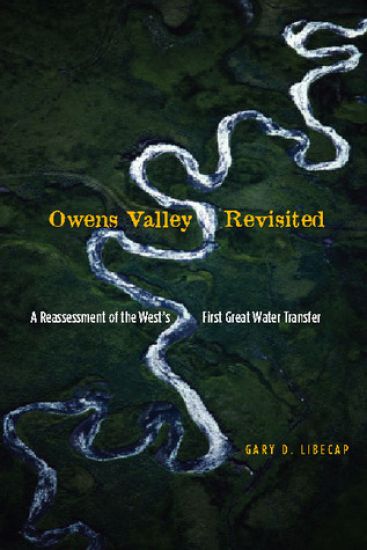
In the contemporary West, pressures to more effectively reallocate water to meet growing urban and environmental demands are increasing as environmental awareness grows and climate change threatens existing water supplies. The legacy of Owens Valley raises concerns about how reallocation can occur. Although it took place over seventy years ago, the water transfer from Owens Valley to Los Angeles still plays an important role in perceptions of how water markets work. The memory of Owens Valley transfer is one of theft and environmental destruction at the hands of Los Angeles. In reassessing the infamous transfer, one could say that there was no "theft." Owens Valley landowners fared well in their land and water sales, earning more than if they had stayed in agriculture. In another sense, however, "theft" did occur. The water was not literally stolen, but there was a sharp imbalance in gains from the trade—with most of the benefits going to Los Angeles. Owens Valley, then, demonstrates the importance of distributional issues in water trades when the stakes are large. Los Angeles water rights in the Owens Valley and Mono Basin have again been a front-page issue since 1970. New environmental and recreational values and air pollution concerns have ushered in demands to curtail the shipment of water from source regions for urban use. Owen's Valley Revisited: A Reassesment of the West's First Great Water Transfer carefully explores how these sagas were addressed, considering the costs involved, and alternative approaches that might have resulted in more rapid and less contentious remedies. This analysis offers insights to guide the ongoing conversation about water politics and the future thereof.
Approaches to Teaching
Gary D. Fenstermacher; Jonas F. Soltis; Matthew N. Sanger
Teachers' College Press
2009
nidottu
This popular text continues using the format of the three approaches - The Executive, The Facilitator, and The Liberationist. For the Fifth Edition, the authors add four new case studies: 'Scripted Teaching', 'Accountability and Merit', 'What is the Value of Caring Relationships?' and 'School Funding'. Using these and other realistic case studies, they explore the strengths and weaknesses of each approach so that teachers can critically assess their own philosophical positions on teaching. Teachers are urged to ask themselves such questions as: What is the main goal of teaching? What is the most important purpose of education? What do I expect my students to eventually become? Is the way I structure my teaching influenced by how I view my role and goals? This updated edition also adds a new section called 'Topics and Resources' to encourage further inquiry into teaching.Approaches to Teaching is one of the five books in the highly regarded Teachers College Press THINKING ABOUT EDUCATION SERIES, now in its Fifth Edition. All of the books in this series are designed to help pre- and in-service teachers bridge the gap between theory and practice.

The study of spline functions is an outgrowth of basic mathematical concepts arising from calculus, analysis and numerical analysis. Spline modelling affects a number of fields: statistics; computer graphics; CAD programming, and other areas of applied mathematics.
In this first critical study of the French-language poetry written in Nazi prisons, transit camps, and concentration camps, Gary D. Mole demonstrates how this poetry cannot simply be treated with reverence or as incidental historical documentation. Situating the poetry within the wider context of concentration camp culture, Mole engages in aesthetic and moral issues, offers extensive thematic readings - both of the reality transcribed by the poets and of spiritual and religious resistance to dehumanization - and submits the poetry to a stylistic and linguistic analysis under the joint rubric of memory and innovation. Lucidly written, this interdisciplinary book makes accessible to the specialist and nonspecialist reader an unjustly neglected corpus and argues persuasively for its reinsertion into the continuing process of the memorialization of the Nazi deportation from France.

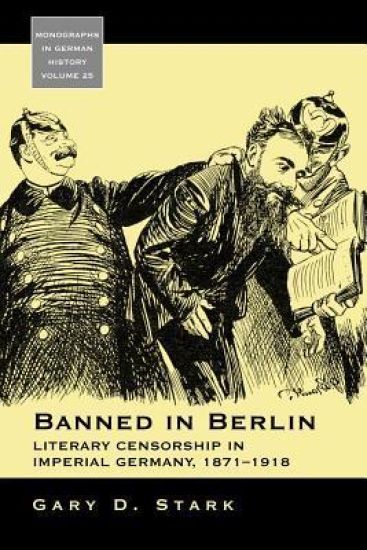
Imperial Germany’s governing elite frequently sought to censor literature that threatened established political, social, religious, and moral norms in the name of public peace, order, and security. It claimed and exercised a prerogative to intervene in literary life that was broader than that of its Western neighbors, but still not broad enough to prevent the literary community from challenging and subverting many of the social norms the state was most determined to defend. This study is the first systematic analysis in any language of state censorship of literature and theater in imperial Germany (1871–1918). To assess the role that formal state controls played in German literary and political life during this period, it examines the intent, function, contested legal basis, institutions, and everyday operations of literary censorship as well as its effectiveness and its impact on authors, publishers, and theater directors.

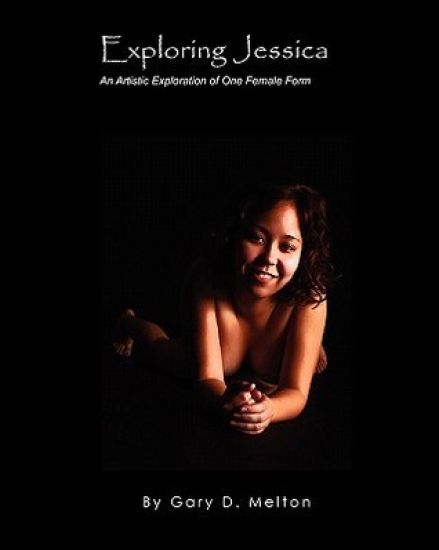
Exploring Jessica: An Artistic Exploration of One Female Figure
Gary D. Melton
Goofy Rooster Publishing
2010
nidottu

Nine Women Revealed: Intimate Revelations of Nine Real Women in Images and Words
Gary D. Melton
Goofy Rooster Publishing
2010
nidottu
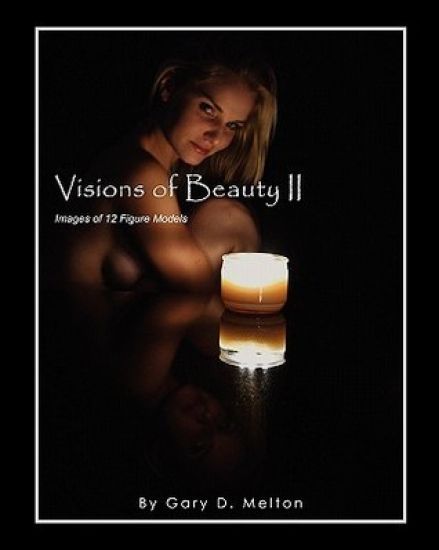
Visions of Beauty II: Images of 12 Figure Models
Gary D. Melton
Goofy Rooster Publishing
2010
nidottu