Kirjojen hintavertailu. Mukana 12 390 323 kirjaa ja 12 kauppaa.

Kirjahaku

Etsi kirjoja tekijän nimen, kirjan nimen tai ISBN:n perusteella.

1000 tulosta hakusanalla Georges Adrien Crapelet

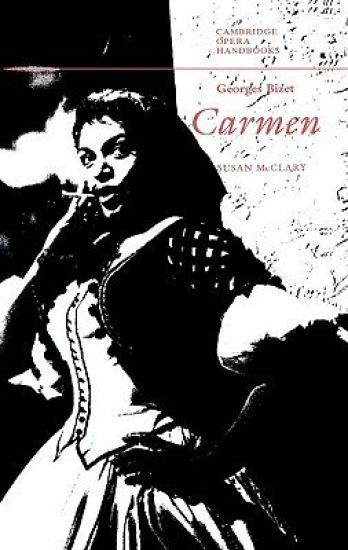
Georges Bizet: Carmen

Georges Bizet: Carmen

McClary Susan

Cambridge University Press
1992
pokkari
Bizet’s Carmen is probably the best known opera of the standard repertoire, yet its very familiarity often prevents us from approaching it with the seriousness it deserves. This handbook explores the opera in a number of contexts, bringing to the surface the controversies over gender, race, class and musical propriety that greeted its premiere and that have been rekindled by the recent spate of film versions. Beginning with a study of the Mérimée story by Peter Robinson and an examination of the social tensions in nineteenth-century France that inform both that story and the opera, the book traces the latter through its genesis and reception. The central core of the book presents a close reading of the opera that offers new interpretive possibilities. The handbook concludes with discussions of four films based on the opera: Carmen Jones and the versions of Carmen by Carlos Saura, Peter Brook, and Francesco Rosi. The volume contains a bibliography, music examples, and a synopsis.
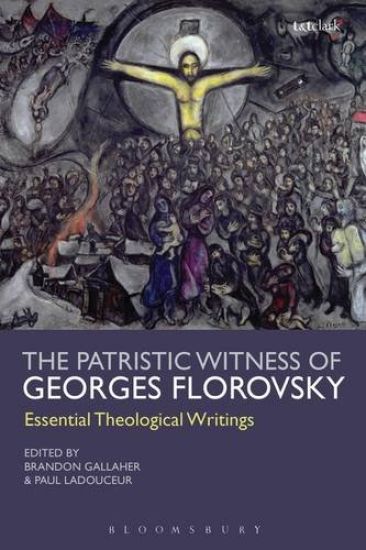
The Patristic Witness of Georges Florovsky

The Patristic Witness of Georges Florovsky

Georges Florovsky

Continuum International Publishing Group Ltd.
2016
pokkari
This book is a collection of major articles and texts by Georges Florovsky (1893-1979), an important twentieth-century theologian, historian, ecumenist and patristic scholar. It includes representative and widely influential but now largely inaccessible writings, some newly translated, with explanatory and bibliographical notes, covering all periods of his career and divided into four major thematic sections: 1) Creation and Incarnation; 2) The Nature of Theology; 3) Ecclesiology and Ecumenism; 4) Scripture, Worship and Eschatology.A foreword by Metropolitan Kallistos Ware presents both personal accounts of contacts with Georges Florovsky and key elements of Florovsky's theological vision, in the context of the continuing relevance of his work. The Introduction by Brandon Gallaher and Paul Ladouceur gives a theological and historical overview of Florovsky's work, relating it to trends in both modern Roman Catholic and Protestant theology and outlining his importance to contemporary ecumenism, patristics and Orthodox thought and life. The book includes explanatory notes, translation of patristic citations and an index.
The Patristic Witness of Georges Florovsky

The Patristic Witness of Georges Florovsky

Georges Florovsky
Continuum International Publishing Group Ltd.
2019
sidottu
Georges Florovsky (1893-1979) was one of the most prominent Orthodox theologians and ecumenists of the twentieth century. His call for a return to patristic writings as a source of modern theological reflection had a powerful impact not only on Orthodox theology in the second half of the twentieth century, but on Christian theology in general. Florovsky was also a major Orthodox voice in the ecumenical movement for four decades and he is one of the founders of the World Council of Churches. This book is a collection of major theological writings by George Florovsky. It includes representative and widely influential but now largely inaccessible texts, many newly translated for this book, divided into four thematic sections: Creation, Incarnation and Redemption, The Nature of Theology, Ecclesiology and Ecumenism, and Scripture, Worship and Eschatology. A foreword by Metropolitan Kallistos Ware presents the theological vision of Georges Florovsky and discusses the continuing relevance of his work both for Orthodox theology and for modern theology in general. The introduction by the Editors provides a theological and historical overview of Florovsky theology in teh context of his biography. The book includes explanatory notes, translation of patrisitc citations and an index.
The Patristic Witness of Georges Florovsky

The Patristic Witness of Georges Florovsky

Georges Florovsky
T. T.Clark Ltd
2020
nidottu
Georges Florovsky (1893-1979) was one of the most prominent Orthodox theologians and ecumenists of the twentieth century. His call for a return to patristic writings as a source of modern theological reflection had a powerful impact not only on Orthodox theology in the second half of the twentieth century, but on Christian theology in general. Florovsky was also a major Orthodox voice in the ecumenical movement for four decades and he is one of the founders of the World Council of Churches.This book is a collection of major theological writings by George Florovsky. It includes representative and widely influential but now largely inaccessible texts, many newly translated for this book, divided into four thematic sections: Creation, Incarnation and Redemption, The Nature of Theology, Ecclesiology and Ecumenism, and Scripture, Worship and Eschatology.A foreword by Metropolitan Kallistos Ware presents the theological vision of Georges Florovsky and discusses the continuing relevance of his work both for Orthodox theology and for modern theology in general. The introduction by the Editors provides a theological and historical overview of Florovsky theology in teh context of his biography. The book includes explanatory notes, translation of patrisitc citations and an index.
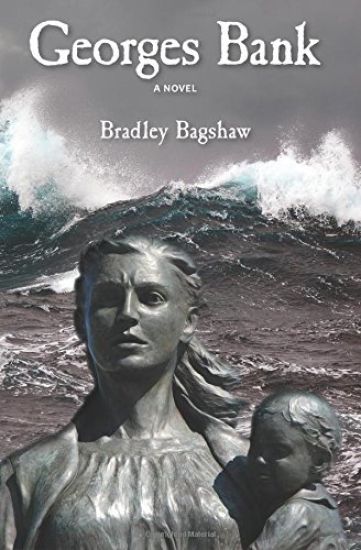
Georges Bank

Georges Bank

Bradley Bagshaw

Clyde Hill Publishing
2018
nidottu
A work of historical fiction, Georges Bank is written in the timeless tradition of such maritime novels as C.S. Forrester's Hornblower series, Joseph Conrad's Typhoon and Pat Conroy's Prince of Tides. Georges Bank is a nineteenth century tale of power and greed set in the stormy waters off Gloucester, Massachusetts and in the steamy fishermen brothels ashore. Maggie O'Grady, an Irish immigrant, becomes pregnant after an encounter with her first employer, a rich Boston merchant, who discards her penniless in a Gloucester brothel. Maggie raises her son in the brothel and in time finds love with a fisherman. The book chronicles their struggles at sea and ashore. It climaxes in a courtroom battle fought by two fishing widows against a heartless boat owner, and Maggie's personal battle with the Boston merchant for the affections of their son.
Georges Melies

Georges Melies

Elizabeth Ezra

Manchester University Press
2000
nidottu
Before the turn of the twentieth century, before the nickelodeon, even before the first cinemas, Georges Méliès began making movies.. Directing, editing, producing, designing, and starring in over 500 films between 1896 to 1912, Méliès was also the first cinematic auteur.. This is the first study of Méliès's films to appear in English in over twenty years and the only book to interpret his work using the tools of modern film analysis.. Locates the roots of modern narrative cinema in Méliès's work, identifying techniques of editing and mise-en-scène previously thought to have originated with D. W. Griffith.
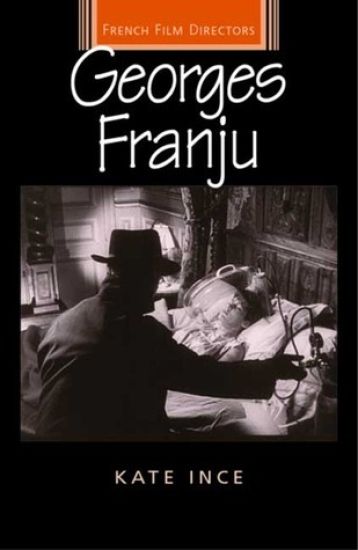
Georges Franju

Georges Franju

Kate Ince

Manchester University Press
2005
sidottu
‘Georges Franju' is the fullest study to date of this little-known French director, the co-founder of the Cinémathèque française, and the first book on him in English since 1967. Born in 1912, but only enjoying his real debut as a director in 1948 with his notorious documentary about Parisian abattoirs 'Le Sang des bêtes', Franju went on to make thirteen more courts métrages and eight longs métrages, including his horror classic 'Les Yeux sans visage'. Ince takes a new approach to Franju's films, investigating the areas of genre and gender, and grouping the films thematically rather than chronologically. A chapter on Franju's cinematic aesthetics offers a new synthesis of existing writings, combined with the author's responses to the films. A full introduction and conclusion set Franju's directorial career in the context of his lifelong commitment to France's cinema institutions.'Georges Franju' will be essential reading on Franju, and of great interest to researchers, academics and students in film studies
Georges Franju

Georges Franju

Kate Ince

Manchester University Press
2011
nidottu
‘Georges Franju' is the fullest study to date of this little-known French director, the co-founder of the Cinémathèque française, and the first book on him in English since 1967. Born in 1912, but only enjoying his real debut as a director in 1948 with his notorious documentary about Parisian abattoirs 'Le Sang des bêtes', Franju went on to make thirteen more courts métrages and eight longs métrages, including his horror classic 'Les Yeux sans visage'. Ince takes a new approach to Franju's films, investigating the areas of genre and gender, and grouping the films thematically rather than chronologically. A chapter on Franju's cinematic aesthetics offers a new synthesis of existing writings, combined with the author's responses to the films. A full introduction and conclusion set Franju's directorial career in the context of his lifelong commitment to France's cinema institutions.'Georges Franju' will be essential reading on Franju, and of great interest to researchers, academics and students in film studies
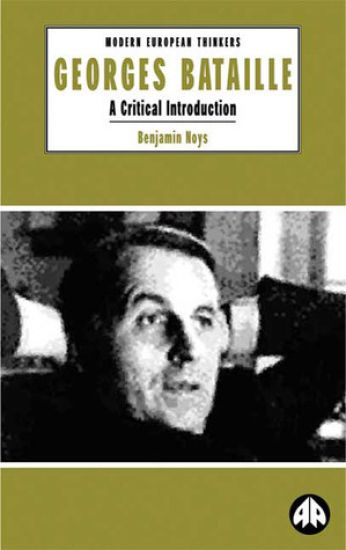
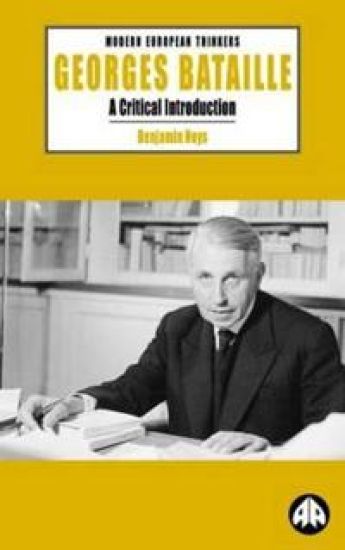
Georges Bataille

Georges Bataille

Benjamin Noys

Pluto Press
2000
pokkari
This is a guide to the life and work of the French intellectual Georges Bataille, best known as the author of the celebrated erotic novel, The Story of the Eye. Benjamin Noys introduces Bataille as a writer out of step with the dominant intellectual trends of his day - surrealism and existentialism - and shows that it was his very marginality that accounted in large part for his subsequent importance for the post-structuralists and the counterculture, in Europe and in the United States. Treating Bataille's work as a whole rather than focusing, as other studies have done, on aspects of his work (i.e. as social theory or philosophy), Noys' study is intended to be sensitive to the needs of students new to Bataille's work while at the same time drawing on the latest research on Bataille to offer new interpretations of Bataille's oeuvre for more experienced readers. This is the first clear, introductory reading of Bataille in English - challenging current reductive readings, and stressing the range of disciplines affected by Bataille's work, at a time when interest in Bataille is growing.
Georges Bataille

Georges Bataille

PLUTO PRESS
2000
sidottu
This is a guide to the life and work of the French intellectual Georges Bataille, best known as the author of the celebrated erotic novel, The Story of the Eye. Benjamin Noys introduces Bataille as a writer out of step with the dominant intellectual trends of his day - surrealism and existentialism - and shows that it was his very marginality that accounted in large part for his subsequent importance for the post-structuralists and the counterculture, in Europe and in the United States. Treating Bataille's work as a whole rather than focusing, as other studies have done, on aspects of his work (i.e. as social theory or philosophy), Noys' study is intended to be sensitive to the needs of students new to Bataille's work while at the same time drawing on the latest research on Bataille to offer new interpretations of Bataille's oeuvre for more experienced readers. This is the first clear, introductory reading of Bataille in English - challenging current reductive readings, and stressing the range of disciplines affected by Bataille's work, at a time when interest in Bataille is growing.
Georges Bataille: Essential Writings

Georges Bataille: Essential Writings

Michael Richardson

SAGE Publications Inc
1998
sidottu
Georges Bataille's work is an essential reference in any discussion of modernity and postmodernity. An important influence on Foucault, Derrida and post-structuralism, Bataille is a thinker of key significance. This volume makes a selection from the entire body of his academic work, showing how his thinking on sacrifice, eroticism, taboo and transgression, and the nature of identity inform his social theory. Bataille - Essential Writings will be the standard introductory text to this profound and difficult thinker.
Georges Bataille: Essential Writings

Georges Bataille: Essential Writings

Michael Richardson

SAGE Publications Inc
1998
nidottu
Georges Bataille's work is an essential reference in any discussion of modernity and postmodernity. An important influence on Foucault, Derrida and post-structuralism, Bataille is a thinker of key significance. This volume makes a selection from the entire body of his academic work, showing how his thinking on sacrifice, eroticism, taboo and transgression, and the nature of identity inform his social theory. Bataille - Essential Writings will be the standard introductory text to this profound and difficult thinker.
Georges Bataille

Georges Bataille

Paul Hegarty

SAGE Publications Inc
2000
nidottu
Long recognized in France as a central figure in French cultural thought, the range and significance of Batille's ideas are now being grasped in the English speaking world. His influence on Derrida, Foucault, Kristeva and Baudrillard is now more clearly understood and Bataille has emerged as a front-rank cultural theorist who posed questions and paradoxes that were extraordinarily prescient. This book offers a comprehensive and detailed presentation and analysis of the full range of his writings - political, philosophical, aesthetic, literary, anthropological and cultural. And tackles his thoughts on waste, sacrifice, death, eroticism, surplus, ecstasy and drunkenness, offering the best available guide to this challenging and utterly unique thinker.
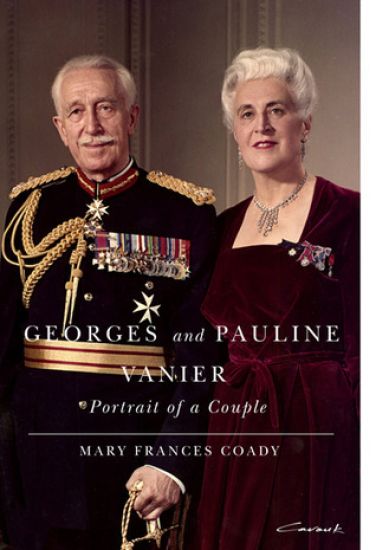
Georges and Pauline Vanier

Georges and Pauline Vanier

Mary Frances Coady

McGill-Queen's University Press
2011
sidottu
Georges and Pauline Vanier follows their lives and travels across the world - from Canadian military life to the League of Nations, from the inner circles of British government to their harrowing escape from Nazi-occupied France - detailing their disappointments and triumphs during social and political turbulence. With insight and sympathy, Mary Frances Coady tells their dramatic personal story. Revealing their remarkably vibrant personalities, she details the couple's support of the French resistance as well as Georges Vanier's pleas for the Canadian government to accept refugees fleeing Hitler's horrors and his effort to broaden immigration policy. She also recounts the importance of their religious convictions, their controversial standing among Quebecers, and their early advocacy of official bilingualism. An invigorating and well-told tale of their lasting legacies, Georges and Pauline Vanier is the definitive account of the enduring contributions the Vaniers made to the world and to their country.
Georges Bataille and the Mysticism of Sin

Georges Bataille and the Mysticism of Sin

Peter Tracey Connor

Johns Hopkins University Press
2003
pokkari
When Sartre referred to Georges Bataille as a "new mystic," he meant the label as an insult. Sartre considered mysticism to be a less rigorous mode of inquiry than philosophy-especially dangerous where the writings of mystics adapt philosophical terminology for different purposes. In Georges Bataille and the Mysticism of Sin, Peter Connor argues that literary scholars, eager to represent Bataille as a philosopher or as an early deconstructionist, have tended to neglect or misunderstand Bataille's interest in mysticism. Connor's study corrects this distorted view of Bataille, giving us a more complete picture of the complex and influential writer. With careful attention to Bataille's historical and intellectual context, Connor raises many important questions: What drew Bataille to the mystics? How did he conceive of their thought in relation to his own? And what is the connection between mysticism and morality? This last question raises an especially interesting issue for Bataille, an atheist whom readers generally associate with images of transgression and sin. Through examination of Bataille's writings-including Inner Experience and his underappreciated final book, Tears of Eros-Connor shows the surprising connection between Bataille's mysticism and his sense of personal and political ethics. Mysticism, Connor argues, lies at the heart of Bataille's double identity as an intellectual and as a kind of anarchic prophet.
Georges Bataille

Georges Bataille

Rodolphe Gasché

Stanford University Press
2012
sidottu
This book investigates what Bataille, in "The Pineal Eye," calls mythological representation: the mythological anthropology with which this unusual thinker wished to outflank and undo scientific (and philosophical) anthropology. Gasché probes that anthropology by situating Bataille's thought with respect to the quatrumvirate of Schelling, Hegel, Nietzsche, and Freud. He begins by showing what Bataille's understanding of the mythological owes to Schelling. Drawing on Hegel, Nietzsche, and Freud, he then explores the notion of image that constitutes the sort of representation that Bataille's innovative approach entails. Gasché concludes that Bataille's mythological anthropology takes on Hegel's phenomenology in a systematic fashion. By reading it backwards, he not only dismantles its architecture, he also ties each level to the preceding one, replacing the idealities of philosophy with the phantasmatic representations of what he dubs "low materialism." Phenomenology, Gasché argues, thus paves the way for a new "science" of phantasms.
Georges Bataille

Georges Bataille

Rodolphe Gasché

Stanford University Press
2012
pokkari
This book investigates what Bataille, in "The Pineal Eye," calls mythological representation: the mythological anthropology with which this unusual thinker wished to outflank and undo scientific (and philosophical) anthropology. Gasché probes that anthropology by situating Bataille's thought with respect to the quatrumvirate of Schelling, Hegel, Nietzsche, and Freud. He begins by showing what Bataille's understanding of the mythological owes to Schelling. Drawing on Hegel, Nietzsche, and Freud, he then explores the notion of image that constitutes the sort of representation that Bataille's innovative approach entails. Gasché concludes that Bataille's mythological anthropology takes on Hegel's phenomenology in a systematic fashion. By reading it backwards, he not only dismantles its architecture, he also ties each level to the preceding one, replacing the idealities of philosophy with the phantasmatic representations of what he dubs "low materialism." Phenomenology, Gasché argues, thus paves the way for a new "science" of phantasms.