

Kirjahaku
Etsi kirjoja tekijän nimen, kirjan nimen tai ISBN:n perusteella.
1000 tulosta hakusanalla Gerard


Gerard or The world, the flesh, and the devil: a novel, by M. E. Braddo: Mary Elizabeth Braddon
M. E. Braddon
Createspace Independent Publishing Platform
2016
nidottu
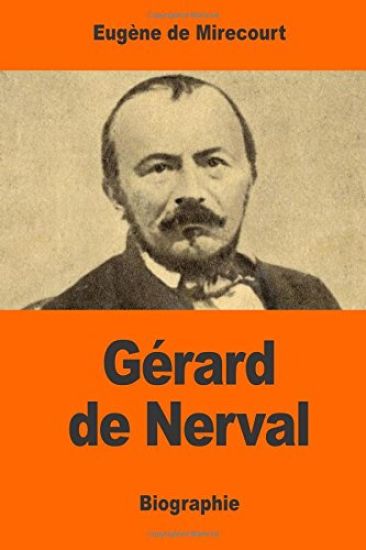
" ... G rard de Nerval ne s'est jamais fourvoy dans le gu pier des r volutions; jamais en politique il n'a salu le drapeau d'aucun syst me. Il ressemble tous les coeurs honn tes, tous les hommes d'un sens droit, que l'ambition n'aveugle pas: il est du parti de la France. Une fois, une seule fois, on a pu le voir en col re, lui si doux et si placide; ce fut le jour o M. Buloz, de la Revue des Deux-Mondes, pr tendit que les Illumin s contenaient des germes de socialisme. L'auteur, indign , cria, temp ta, protesta contre les coupures. On crut que l'agneau se m tamorphoserait en lion..."


Gerard: A Tale of Light and Dark: A Ridiculous Vampire Fantasy Novel
Daniel Fuller
Independently Published
2018
nidottu
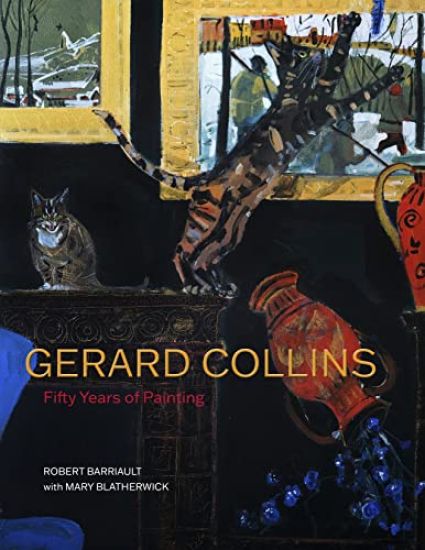
The art of Gerard Collins resists categorisation. Over a 50-year career, Collins’s conceptual imagination and dizzying array of influences has produced a body of work as eclectic as it is stimulating. His oeuvre, ranging from still lifes to landscapes, from realism to neo-conceptualism, remains undeniably embedded in Saint John, while partaking in — and pushing against — national and international conversations about art and theory. Featuring over 75 reproductions of Collins’s work, including examples from his famous Women in Hats, 100 Portraits, and Harlequin series, Gerard Collins: Fifty Years of Painting is the first book to encompass Collins’s entire career, from his early training at St. Martin’s School of Art and under the “NSCAD school,” to his return to Saint John and pandemic-era experiments with online pop-up galleries. Robert Barriault, a contemporary of Collins at NSCAD, develops a fresh critical methodology to analyze Collins’s enigmatic vocabulary, drawing connections and identifying distinctive features of Collins’s massive body of work.

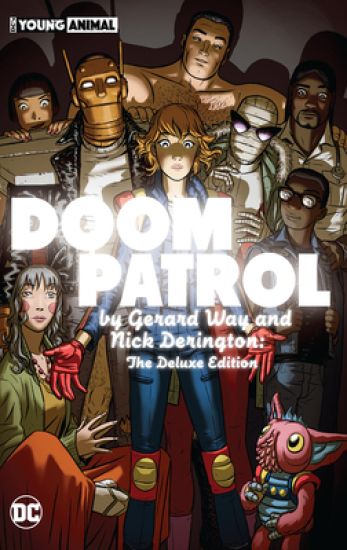
Doom Patrol by Gerard Way and Nick Derington: The Deluxe Edition
Gerard Way; Nick Derington
DC Comics
2023
sidottu
Grant Morrison's classic misfit team-the Doom Patrol-is reintroduced by Eisner Award-winning writer and rock star Gerard Way! The Doom Patrol will go on an epic road trip around the solar system, facing off against the unusual and bizarre including the fanatical fitness fiends of planet Orbius and the Marathon Eternal. Big changes are coming for these unusual heroes, including Robotman coming to terms with his new life as a human. Front man to My Chemical Romance and the author of The Umbrella Academy, Gerard Way is no stranger to strangeness. He's taken the Doom Patrol from within a gyro to the edges of the universe, and you can't wait to see where he'll take them next! Doom Patrol by Gerard Way and Nick Derington: The Deluxe Edition explores the fringes of a universe created by one of our generation's most unimaginable minds! This collection includes Doom Patrol #1-12 (2016-2018) and tales from Doom Patrol Vol. 2: Nada, Doom Patrol: Weight of the Worlds #1-7!

**Back-of-the-Book Summary: **Dive into the revolutionary journey of Gerard Dee, the unapologetic icon advocating for Black trans rights through the dynamic realm of Kiki Ballroom. Who the Fuck Is Gerard Dee? explores his rise from grassroots artistry to an emblem of empowerment for marginalized communities. Discover how Dee blended performance with activism, challenged societal norms, and created inclusive spaces that resonate beyond the runway. This compelling narrative sheds light on the struggles and triumphs that shape Dees unparalleled legacy, propelling a new generation towards collective liberation and representation in a world often rife with discrimination.
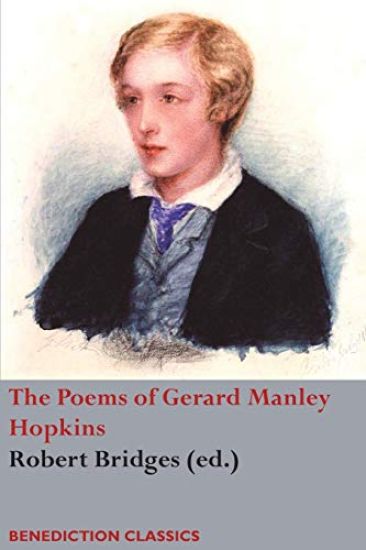
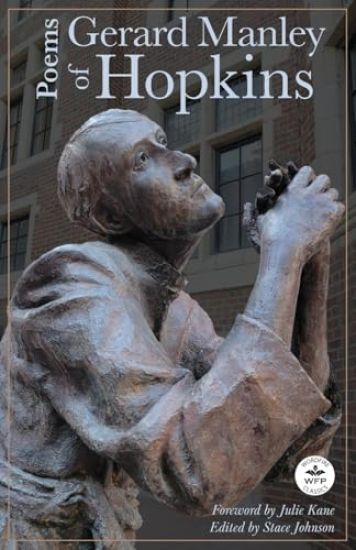
Gerard Manley Hopkins, a leading Victoria poet, known for his innovative style, is considered as influential as T.S. Eliot in initiating the modern movement in poetry. This edition is edited by Robert Bridges, poet laureate, and lifelong friend of Hopkins.

Gerard Manley Hopkins, a leading Victoria poet, known for his innovative style, is considered as influential as T.S. Eliot in initiating the modern movement in poetry. This edition is edited by Robert Bridges, poet laureate, and lifelong friend of Hopkins.
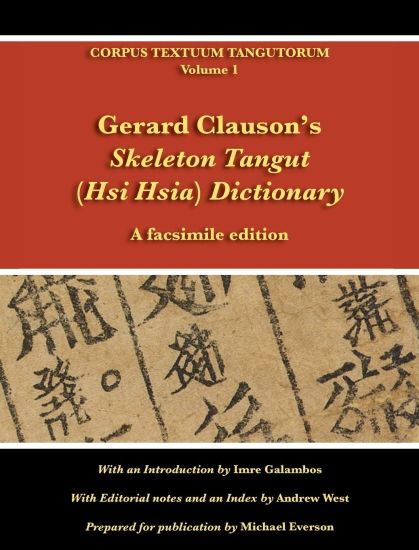
Gerard Clauson's Skeleton Tangut (Hsi Hsia) Dictionary
Evertype
2019
sidottu
Sir Gerard Clauson's "Skeleton Tangut (Hsi Hsia) Dictionary" survives as an unpublished manuscript because the author felt that he could not complete it without additional Tangut material. He began compiling the dictionary around 1938 but had to abandon the idea when it became clear that no more Tangut texts held in the USSR would be accessible in the foreseeable future. In the 1950s he deposited the manuscript and his other notes on Tangut studies in the Library of the School of Oriental and African Studies, University of London, with the aim of making them available to anyone engaged in the study of Tangut. He believed that the dictionary represented a solid structure which could be enriched with more lexical data once more Tangut texts were published. This facsimile edition makes his work accessible to a wider audience, in order to stimulate further research on the Tangut language. "Corpus d104uum Tangutorum" is a series presenting a variety of resources relevant to the study of Tangut, also known as Xixia, the northeastern Tibeto-Burman language of the Western Xia empire, attested from 1036-1502.
Gerard Manley Hopkins and Tractarian Poetry
Margaret Johnson
Ashgate Publishing Limited
1997
sidottu
Gerard Manley Hopkins and Tractarian Poetry for the first time locates Hopkins and his work within the vital aesthetic and religious cultures of his youth. It introduces some of the most powerful cultural influences on his poetry as well as some of the most influential poets, from the well-known fellow convert John Henry Newman to the almost forgotten historian and poet Richard Dixon. From within the context of Hopkins' developing catholic sensibilities it assesses the impact of and his responses to issues of the time which related to his own religious and aesthetic perceptions, and provides a rich and intricate background against which to view both his early, often neglected poetry and the justly famous, idiosyncratic and deeply moving verse of his mature years. By detailing the influences Tractarian poetry had upon Hopkins' early work, and applying these to the productions of his later years, Gerard Manley Hopkins and Tractarian Poetry demonstrates how Hopkins' best known, mature works evolved from his upbringing in the Church of England and remained always indebted to this early culture. It offers readings of his works in light of a new appraisal of the contexts from which Hopkins himself grew, providing a fresh approach to this most challenging and rewarding of poets.

Gerard Manley Hopkins Annual 1992
Michael Sundermeier; Desmond Egan
Creighton University,U.S.
1992
sidottu
The "Gerard Manley Hopkins Annual, 1992" is published in association with the Hopkins Society, which sponsors the Gerard Manley Hopkins International Summer School held in Montasterevin, a few miles outside Dublin, Ireland. This annual is planned as the first to collect the best writings on Hopkins and his poetry written in a single year. The selections are not restricted to the papers delivered at the Summer School, but rather are chosen to capture its spirit and quality of scholarship. In his introduction to the work, Michael Sundermeier describes the contributions to the 1992 Annual. The first selection by the scholar and writer, Hugh Kenner, makes a surprising comparison between Hopkins and Alexander Pope. In "Hopkins and the County Kildare" Norman White aims to create a three-dimensional portrait of the poet in the later years of his life. Giuseppe Serpillo considers the difficulties of translating Hopkins into Italian. Michael Sundermeier's essay is an attempt to put Hopkins' attitude toward nature in historical perspective and to distinguish it from modern perspectives. The nature and quality of friendship, divine and human, expressed in Hopkins' work is the focus of the essay by Domenico Pezzini. Joseph Feeney traces Hopkins' life-long struggle with the Ignatian worldview which he acquired as a Jesuit. Russell Murphy illustrates Hopkins' position on poetry's ability to convey universal truth by positioning him, thematically, between Arnold and Teilhard. Finally, in the review section of the book, Jude Nixon, Ben Collins, Michael Allsopp, and Desmond Egan give thoughtful assessments of four major works on Hopkins.

Gerard Manley Hopkins Annual 1992
Michael Sundermeier; Desmond Egan
CREIGHTON UNIVERSITY,U.S.
1992
pokkari
The "Gerard Manley Hopkins Annual, 1992" is published in association with the Hopkins Society, which sponsors the Gerard Manley Hopkins International Summer School held in Montasterevin, a few miles outside Dublin, Ireland. This annual is planned as the first to collect the best writings on Hopkins and his poetry written in a single year. The selections are not restricted to the papers delivered at the Summer School, but rather are chosen to capture its spirit and quality of scholarship. In his introduction to the work, Michael Sundermeier describes the contributions to the 1992 Annual. The first selection by the scholar and writer, Hugh Kenner, makes a surprising comparison between Hopkins and Alexander Pope. In "Hopkins and the County Kildare" Norman White aims to create a three-dimensional portrait of the poet in the later years of his life. Giuseppe Serpillo considers the difficulties of translating Hopkins into Italian. Michael Sundermeier's essay is an attempt to put Hopkins' attitude toward nature in historical perspective and to distinguish it from modern perspectives. The nature and quality of friendship, divine and human, expressed in Hopkins' work is the focus of the essay by Domenico Pezzini. Joseph Feeney traces Hopkins' life-long struggle with the Ignatian worldview which he acquired as a Jesuit. Russell Murphy illustrates Hopkins' position on poetry's ability to convey universal truth by positioning him, thematically, between Arnold and Teilhard. Finally, in the review section of the book, Jude Nixon, Ben Collins, Michael Allsopp, and Desmond Egan give thoughtful assessments of four major works on Hopkins.