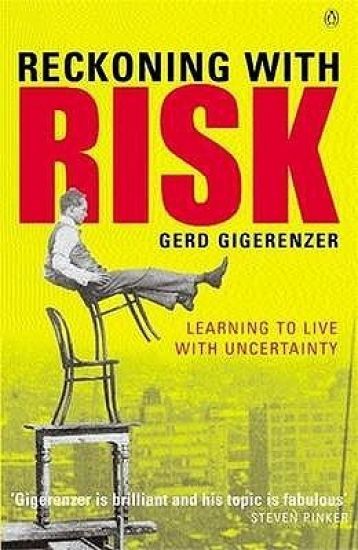
Gerd Gigerenzer's Reckoning with Risk: Learning to Live with Uncertainty illustrates how we can learn to make sense of statistics and turn ignorance into insight. However much we want certainty in our lives, it feels as if we live in an uncertain and dangerous world. But are we guilty of wildly exaggerating the chances of some unwanted event happening to us? Are we misled by our ignorance of the reality of risk? Far too many of us, argues Gerd Gigerenzer, are hampered by our own innumeracy, while statistics are often presented to us in highly confusing ways. With real world examples, such as the incidence of errors in tests for breast cancer or HIV, or in DNA fingerprinting, and the manipulation of statistics for evidence in court, he shows that our difficulty in thinking about numbers can easily be overcome. 'Indispensable ... The book will change the attentive reader's way of looking at the world' Sunday Telegraph 'An important book ... the reader is presented with a powerful set of tools for understanding statistics ... anyone who wants to take responsibility for their own medical choices should read it' New Scientist 'Gigerenzer makes clear thinking easier' Evening Standard 'More than ever, citizens need to know how to evaluate risk ... This book should be pressed into the palms of ' Independent Gerd Gigerenzer is Director of the Center for Adaptive Behavior and Cognition at the Max Planck Institute for Human Development in Berlin and former Professor of Psychology at the University of Chicago. He has published two academic books on heuristics, Simple Heuristics That Make Us Smart and Bounded Rationality: The Adaptive Toolbox as well as a popular science book, Gut Feelings: Short Cuts to Better Decision Making.
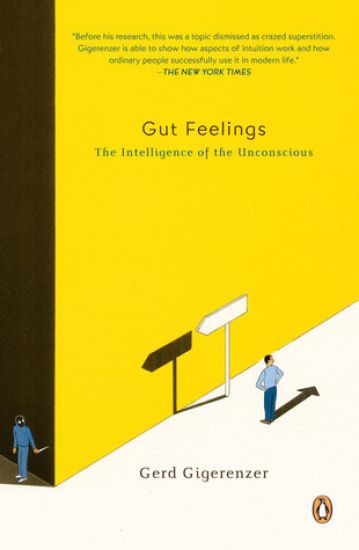
In Gut Feelings: Short Cuts to Better Decision Making psychologist and behavioural expert Gerd Gigerenzer reveals the secrets of fast and effective decision-making. A sportsman can catch a ball without calculating its speed or distance. A group of amateurs beat the experts at playing the stock market. A man falls for the right woman even though she's 'wrong' on paper. All these people succeeded by trusting their instincts - but how does it work? As Gerd Gigerenzer explains, in an uncertain world, sometimes we have to ignore too much information and rely on our brain's 'short cut', or heuristic. By explaining how intuition works and analyzing the techniques that people use to make good decisions - whether it's in personnel selection or heart surgery - Gigerenzer will show you the hidden intelligence of the unconscious mind. 'Fascinating and provocative ... Gut Feelings may well be the recipe for a simpler, less stressful life' Sunday Times 'Gigerenzer's writing is catchily optimistic and slyly funny ... Devilish' Steven Poole, Guardian 'The science behind the phenomenon cited in the bestseller Blink ... useful and clearly written' Business Week 'Gigerenzer is brilliant' Stephen Pinker Gerd Gigerenzer is Director of the Center for Adaptive Behavior and Cognition at the Max Planck Institute for Human Development in Berlin and former Professor of Psychology at the University of Chicago. He has published two academic books on heuristics, Simple Heuristics That Make Us Smart and Bounded Rationality: The Adaptive Toolbox as well as a popular science book, Reckoning with Risk.
Why is split second decision-making superior to deliberation? Gut Feelings delivers the science behind Malcolm Gladwell's Blink Reflection and reason are overrated, according to renowned psychologist Gerd Gigerenzer. Much better qualified to help us make decisions is the cognitive, emotional, and social repertoire we call intuition?a suite of gut feelings that have evolved over the millennia specifically for making decisions. ?Gladwell drew heavily on Gigerenzer's research. But Gigerenzer goes a step further by explaining just why our gut instincts are so often right. Intuition, it seems, is not some sort of mystical chemical reaction but a neurologically based behavior that evolved to ensure that we humans respond quickly when faced with a dilemma? (BusinessWeek).
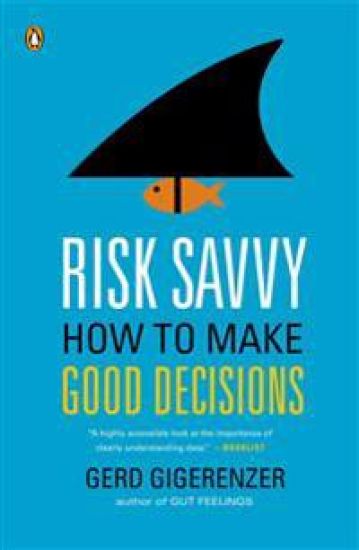
A new eye-opener on how we can make better decisions--by the author of Gut Feelings In this age of big data we often trust that expert analysis--whether it's about next year's stock market or a person's risk of getting cancer--is accurate. But, as risk expert Gerd Gigerenzer reveals in his latest book, Risk Savvy, most of us, including doctors, lawyers, and financial advisors, often misunderstand statistics, leaving us misinformed and vulnerable to exploitation. Yet there's hope. In Risk Savvy, Gigerenzer gives us an essential guide to the science of good decision making, showing how ordinary people can make better decisions for their money, their health, and their families. Here, Gigerenzer delivers the surprising conclusion that the best results often come from considering less information and listening to your gut.
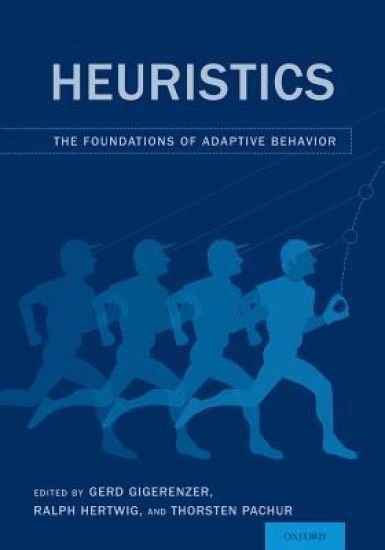
How do people make decisions when time is limited, information unreliable, and the future uncertain? Based on the work of Nobel laureate Herbert Simon and with the help of colleagues around the world, the Adaptive Behavior and Cognition (ABC) Group at the Max Planck Institute for Human Development in Berlin has developed a research program on simple heuristics, also known as fast and frugal heuristics. In the social sciences, heuristics have been believed to be generally inferior to complex methods for inference, or even irrational. Although this may be true in "small worlds " where everything is known for certain, we show that in the actual world in which we live, full of uncertainties and surprises, heuristics are indispensable and often more accurate than complex methods. Contrary to a deeply entrenched belief, complex problems do not necessitate complex computations. Less can be more. Simple heuristics exploit the information structure of the environment, and thus embody ecological rather than logical rationality. Simon (1999) applauded this new program as a "revolution in cognitive science, striking a great blow for sanity in the approach to human rationality. " By providing a fresh look at how the mind works as well as the nature of rationality, the simple heuristics program has stimulated a large body of research, led to fascinating applications in diverse fields from law to medicine to business to sports, and instigated controversial debates in psychology, philosophy, and economics. In a single volume, the present reader compiles key articles that have been published in journals across many disciplines. These articles present theory, real-world applications, and a sample of the large number of existing experimental studies that provide evidence for people's adaptive use of heuristics.
Oxford Classical Texts, also known as Scriptorum Classicorum Bibliotheca Oxoniensis, provide authoritative, clear, and reliable editions of ancient texts, with apparatus criticus on each page. This five volume work is a new critical text edition of the only surviving ancient commentary on Plato's Timaeus, in which Proclus encompasses seven centuries of philosophical reflection on Plato's cosmology. For many authors belonging to the Platonic tradition, Proclus' commentary is the only extant source. For late Neoplatonic authors such as Proclus, writing commentaries on works by Plato and others was in fact a way to present their own highly original philosophical doctrines. Apart from being an important source text for the historiography of philosophy, this commentary on the Timaeus thus also provides a unique access way to Proclus' own Neoplatonic views on cosmology, theology, physics, and metaphysics. This new edition is based on a thorough re-examination of the entire manuscript tradition, which has led to a complete understanding of the relation between all extant manuscripts, including the Paris palimpsest BNF Supplément grec 921, belonging to the so-called 'collection philosophique' (9th century). On the basis of digitally enhanced UV photos, the scriptio inferior of this palimpsest (containing parts of books IV and V) was made nearly fully accessible. The study of the manuscript tradition and the apparatus fontium take stock of more than 100 years of study of this circumstantial text. The edition of the text is preceded by a substantial introduction, and followed, for each book, by the edition of the scholia to the text. The final volume also comprises an edition of the remaining fragments of the lost part of the text, including an Arabic fragment, edited by Rüdiger Arnzen.
Oxford Classical Texts, also known as Scriptorum Classicorum Bibliotheca Oxoniensis, provide authoritative, clear, and reliable editions of ancient texts, with apparatus criticus on each page. This five volume work is a new critical text edition of the only surviving ancient commentary on Plato's Timaeus, in which Proclus encompasses seven centuries of philosophical reflection on Plato's cosmology. For many authors belonging to the Platonic tradition, Proclus' commentary is the only extant source. For late Neoplatonic authors such as Proclus, writing commentaries on works by Plato and others was in fact a way to present their own highly original philosophical doctrines. Apart from being an important source text for the historiography of philosophy, this commentary on the Timaeus thus also provides a unique access way to Proclus' own Neoplatonic views on cosmology, theology, physics, and metaphysics. This new edition is based on a thorough re-examination of the entire manuscript tradition, which has led to a complete understanding of the relation between all extant manuscripts, including the Paris palimpsest BNF Supplément grec 921, belonging to the so-called 'collection philosophique' (9th century). On the basis of digitally enhanced UV photos, the scriptio inferior of this palimpsest (containing parts of books IV and V) was made nearly fully accessible. The study of the manuscript tradition and the apparatus fontium take stock of more than 100 years of study of this circumstantial text. The edition of the text is preceded by a substantial introduction, and followed, for each book, by the edition of the scholia to the text. The final volume also comprises an edition of the remaining fragments of the lost part of the text, including an Arabic fragment, edited by Rüdiger Arnzen.
Oxford Classical Texts, also known as Scriptorum Classicorum Bibliotheca Oxoniensis, provide authoritative, clear, and reliable editions of ancient texts, with apparatus criticus on each page. This five volume work is a new critical text edition of the only surviving ancient commentary on Plato's Timaeus, in which Proclus encompasses seven centuries of philosophical reflection on Plato's cosmology. For many authors belonging to the Platonic tradition, Proclus' commentary is the only extant source. For late Neoplatonic authors such as Proclus, writing commentaries on works by Plato and others was in fact a way to present their own highly original philosophical doctrines. Apart from being an important source text for the historiography of philosophy, this commentary on the Timaeus thus also provides a unique access way to Proclus' own Neoplatonic views on cosmology, theology, physics, and metaphysics. This new edition is based on a thorough re-examination of the entire manuscript tradition, which has led to a complete understanding of the relation between all extant manuscripts, including the Paris palimpsest BNF Supplément grec 921, belonging to the so-called 'collection philosophique' (9th century). On the basis of digitally enhanced UV photos, the scriptio inferior of this palimpsest (containing parts of books IV and V) was made nearly fully accessible. The study of the manuscript tradition and the apparatus fontium take stock of more than 100 years of study of this circumstantial text. The edition of the text is preceded by a substantial introduction, and followed, for each book, by the edition of the scholia to the text. The final volume also comprises an edition of the remaining fragments of the lost part of the text, including an Arabic fragment, edited by Rüdiger Arnzen.
Oxford Classical Texts, also known as Scriptorum Classicorum Bibliotheca Oxoniensis, provide authoritative, clear, and reliable editions of ancient texts, with apparatus criticus on each page. This five volume work is a new critical text edition of the only surviving ancient commentary on Plato's Timaeus, in which Proclus encompasses seven centuries of philosophical reflection on Plato's cosmology. For many authors belonging to the Platonic tradition, Proclus' commentary is the only extant source. For late Neoplatonic authors such as Proclus, writing commentaries on works by Plato and others was in fact a way to present their own highly original philosophical doctrines. Apart from being an important source text for the historiography of philosophy, this commentary on the Timaeus thus also provides a unique access way to Proclus' own Neoplatonic views on cosmology, theology, physics, and metaphysics. This new edition is based on a thorough re-examination of the entire manuscript tradition, which has led to a complete understanding of the relation between all extant manuscripts, including the Paris palimpsest BNF Supplément grec 921, belonging to the so-called 'collection philosophique' (9th century). On the basis of digitally enhanced UV photos, the scriptio inferior of this palimpsest (containing parts of books IV and V) was made nearly fully accessible. The study of the manuscript tradition and the apparatus fontium take stock of more than 100 years of study of this circumstantial text. The edition of the text is preceded by a substantial introduction, and followed, for each book, by the edition of the scholia to the text. The final volume also comprises an edition of the remaining fragments of the lost part of the text, including an Arabic fragment, edited by Rüdiger Arnzen.
Based on documents collected in six European countries, European Socialists Respond to Fascism: Ideology, Activism and Contingency in the 1930s is a transnational study of largely parallel developments in Austria, Belgium, France, Germany, and Spain in the years 1933-1936. Triggered into action by the shock effect of the Nazi rise to power in Germany, socialists throughout Western Europe entered an unusually active period of practical reorientation and debate over political strategy which helped determine the contours of European politics up to the outbreak of World War II and beyond. Stressing the transnational dimension of this process while simultaneously integrating local, regional, and national factors, this work finds that it was social democracy, rather than communism, that acted as the primary vehicle for radical change among European marxists during the 1930s. Following major figures within the European left and the significant events that made up the inter-war period, Gerd-Rainer Horn demonstrates the interconnectedness of Europe's interwar socialists. Finally, Horn manages to relate these findings to the ongoing interdisciplinary debate on structure, agency, and contingency in the historical process.
Simple Heuristics That Make Us Smart invites readers to embark on a new journey into a land of rationality that differs from the familiar territory of cognitive science and economics. Traditional views of rationality tend to see decision makers as possessing superhuman powers of reason, limitless knowledge, and all of eternity in which to ponder choices. To understand decisions in the real world, we need a different, more psychologically plausible notion of rationality, and this book provides it. It is about fast and frugal heuristics--simple rules for making decisions when time is pressing and deep thought an unaffordable luxury. These heuristics can enable both living organisms and artificial systems to make smart choices, classifications, and predictions by employing bounded rationality. But when and how can such fast and frugal heuristics work? Can judgments based simply on one good reason be as accurate as those based on many reasons? Could less knowledge even lead to systematically better predictions than more knowledge? Simple Heuristics explores these questions, developing computational models of heuristics and testing them through experiments and analyses. It shows how fast and frugal heuristics can produce adaptive decisions in situations as varied as choosing a mate, dividing resources among offspring, predicting high school drop out rates, and playing the stock market. As an interdisciplinary work that is both useful and engaging, this book will appeal to a wide audience. It is ideal for researchers in cognitive psychology, evolutionary psychology, and cognitive science, as well as in economics and artificial intelligence. It will also inspire anyone interested in simply making good decisions.
Where do new ideas come from? What is social intelligence? Why do social scientists perform mindless statistical rituals? This vital book is about rethinking rationality as adaptive thinking: to understand how minds cope with their environments, both ecological and social. Gerd Gigerenzer proposes and illustrates a bold new research program that investigates the psychology of rationality, introducing the concepts of ecological, bounded, and social rationality. His path-breaking collection takes research on thinking, social intelligence, creativity, and decision-making out of an ethereal world where the laws of logic and probability reign, and places it into our real world of human behavior and interaction. Adaptive Thinking is accessibly written for general readers with an interest in psychology, cognitive science, economics, sociology, philosophy, artificial intelligence, and animal behavior. It also teaches a practical audience, such as physicians, AIDS counselors, and experts in criminal law, how to understand and communicate uncertainties and risks.
Gerd Gigerenzer's influential work examines the rationality of individuals not from the perspective of logic or probability, but from the point of view of adaptation to the real world of human behavior and interaction with the environment. Seen from this perspective, human behavior is more rational than it might otherwise appear. This work is extremely influential and has spawned an entire research program. This volume (which follows on a previous collection, Adaptive Thinking, also published by OUP) collects his most recent articles, looking at how people use "fast and frugal heuristics" to calculate probability and risk and make decisions. It includes a newly writen, substantial introduction, and the articles have been revised and updated where appropriate. This volume should appeal, like the earlier volumes, to a broad mixture of cognitive psychologists, philosophers, economists, and others who study decision making.
The adult brain of mammals, including non-human primates and humans, continuously generates new neurons throughout life, contributing to brain function in both health and disease. Since its discovery in 1965, adult neurogenesis has fascinated both scientific and public audiences. Could adult neurogenesis be a fountain of youth in our brains and an untapped resource for neuroregeneration? While it has been found that adult neurogenesis contributes only minimally to regeneration, the discoveries about new neurons over the past few decades, especially following the identification of neural stem cells in the brain in the 1990s, are even more intriguing. Adult neurogenesis, which is primarily limited to two canonical regions--the subventricular zone and olfactory bulb on one side, and the dentate gyrus of the hippocampus on the other--is regulated by behavioral activity, results in lasting changes in neuronal networks, and critically contributes to key brain functions, particularly in learning and memory. Adult neurogenesis challenges many traditional concepts of brain function. In this new edition, Dr Kempermann presents cutting-edge research on the generation of new neurons in the adult brain. This comprehensive book delves into the history of the field and provides clear introductions to neural stem cell biology and neuronal development. Adult Neurogenesis Third Edition includes chapters on neurogenesis in the olfactory system and hippocampus and gains insights into the neurogenic zones and their unique properties. The author also examines brain regions with suspected or disputed neurogenic potential. With extensive coverage of the function and regulation of adult neurogenesis, this essential resource includes a section on species comparisons and evolutionary aspects, highlighting adult neurogenesis in humans. Concluding with a chapter on the medical implications, Adult Neurogenesis Third Edition is an indispensable guide for anyone interested in the future of brain health and regeneration.
Western European Liberation Theology is the first comprehensive survey of the development of a distinct, progressive variant of Catholicism in twentieth-century Western Europe. This Left Catholicism served to lay the basis for the subsequent events and evolutions associated with Vatican II. Initially emerging within the boundaries of Catholic Action, fuelled by the growing power and self-confidence of the Catholic laity, a series of challenges to received wisdom and an array of novel experiments were launched in various corners of Western Europe. The moment of liberation from Nazi occupation and world war in 1944/45 turned out to be the highpoint of these optimistic paradigm shifts. Concentrating on interrelated developments in theology, Catholic politics and apostolic social action, Gerd-Rainer Horn integrates evidence from Italian, French and Belgian national contexts. Drawing on his research in over twenty archives between Leuven and Rome, he highlights the role of organisations, social movements, and intellectual trends. The pivotal contributions of key individuals are assessed, from theologians such as Jacques Maritain and Emmanuel Mounier, to the millenarian activist priests, Don Zeno Saltini and Don Primo Mazzolari. In conclusion Horn suggests that first-wave Western European Left Catholicism served as an inspiration - and constituted a prototype - for subsequent Third World Liberation Theology.
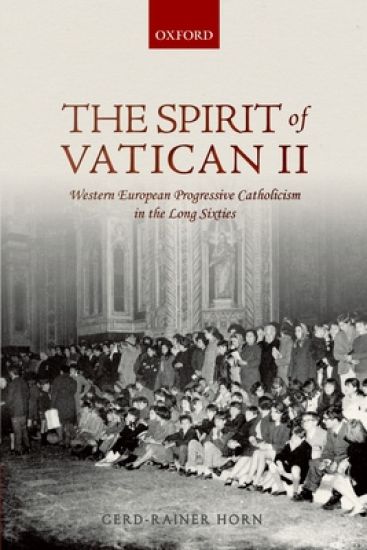
Vatican II profoundly changed the outlook and the message of the Catholic Church. After decades, if not centuries, in which Catholic public opinion appeared to be primarily oriented towards the distant past and bygone societal models, suddenly the Catholic Church embraced the world as it was, and it joined in the struggle to create a radiant future. The Sixties were a time of great socio-cultural and political ferment in Europe as a whole. Especially the second half of the 1960s and the first half of the 1970s witnessed an astounding range of 'new' and 'old' social movements reaching for the sky. Catholic activists provided fuel to the fire in more ways than one. Catholics had embarked on the quest for new horizons for some years prior to the sudden growth of secular activism in and around the magic year of 1968. When secular radicals joined up with Catholic activists, a seemingly unstoppable dynamic was unleashed. This book covers five crucial contributions by Catholic communities to the burgeoning atmosphere of those turbulent years: a) the theological innovations of Vatican II, which made such an unprecedented engagement of Catholics possible in the first place, but also post-conciliar theological developments; b) the resurgence of the worker priest experiment, and the first-ever creation of autonomous organisations of radical parish priests; c) the simultaneous creation of grassroots organisations - base communities - by (mostly) lay activists across the continent; d) the crucial roles of Catholic students in the multiform student movements shaping Europe in these years; e) the indispensable contributions of Catholic workers who helped shape - and often initiated - the wave of militant contestations shaking up labour relations after 1968.
Based on documents collected in six European countries, European Socialists Respond to Fascism: Ideology, Activism and Contingency in the 1930s is a transnational study of largely parallel developments in Austria, Belgium, France, Germany, and Spain in the years 1933-1936. Triggered into action by the shock effect of the Nazi rise to power in Germany, socialists throughout Western Europe entered an unusually active period of practical reorientation and debate over political strategy which helped determine the contours of European politics up to the outbreak of World War II and beyond. Stressing the transnational dimension of this process while simultaneously integrating local, regional, and national factors, this work finds that it was social democracy, rather than communism, that acted as the primary vehicle for radical change among European marxists during the 1930s. Following major figures within the European left and the significant events that made up the inter-war period, Gerd-Rainer Horn demonstrates the interconnectedness of Europe's interwar socialists. Finally, Horn manages to relate these findings to the ongoing interdisciplinary debate on structure, agency, and contingency in the historical process.