
Kirjahaku
Etsi kirjoja tekijän nimen, kirjan nimen tai ISBN:n perusteella.
1000 tulosta hakusanalla Giulio Mozzi
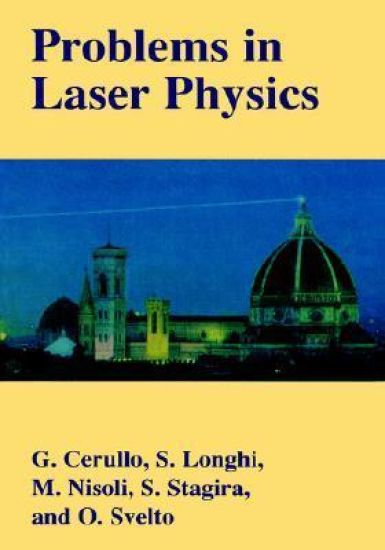
Problems in Laser Physics
Giulio Cerullo; Stefano Longhi; Mauro Nisoli; S. Stagira; Orazio Svelto
Kluwer Academic/Plenum Publishers
2001
nidottu
There is hardly any book that aims at solving problems typically encountered in the laser field, and this book intends to fill the void. Following some initial exercises related to general aspects in laser physics (Chapt. 1), the subsequent problems are organized along the following topics: (i) Interaction of radiation with matter either made of atoms or ions, weakly interacting with surrounding species, or made of more complicated elements such as molecules or semiconductors (Chapters 2 and 3). (ii) Wave propagation in optical media and optical resonators (Chapters 4 and 5). (iii) Optical and electrical pumping processes and systems (Chapter 6): (iv) Continuous wave and transient laser behaviors (Chapters 7 and 8). (v) Solid-state, dye, semiconductor, gas and X-ray lasers (Chapters 9 and 10). (vi) Proper ties of the output beam and beam transformation by amplification, frequency conversion and pulse compression or expansion (Chapters 11 and 12). Problems are proposed here and solved following the contents of Orazio Svelto's Principles of Lasers (fourth edition; Plenum Press, New York, 1998). Whenever needed, equations and figures of the book mentioned above are currently used with an appropriate reference [e. g. , Eq. (1. Ll) of the book is referred to as Eq. (Ll. 1) of PL]. One can observe, however, that the types of problems proposed and discussed are of general validity and many of these problems have actually been suggested by our own long-time experience in performing theoretical and experimental researches in the field.
This title is printed in full color throughout. From one of the most original and influential neuroscientists at work today, here is an exploration of consciousness unlike any other--as told by Galileo, who opened the way for the objectivity of science and is now intent on making subjective experience a part of science as well. Galileo's journey has three parts, each with a different guide. In the first, accompanied by a scientist who resembles Francis Crick, he learns why certain parts of the brain are important and not others, and why consciousness fades with sleep. In the second part, when his companion seems to be named Alturi (Galileo is hard of hearing; his companion's name is actually Alan Turing), he sees how the facts assembled in the first part can be unified and understood through a scientific theory--a theory that links consciousness to the notion of integrated information (also known as phi). In the third part, accompanied by a bearded man who can only be Charles Darwin, he meditates on how consciousness is an evolving, developing, ever-deepening awareness of ourselves in history and culture--that it is everything we have and everything we are. Not since G del, Escher, Bach has there been a book that interweaves science, art, and the imagination with such originality. This beautiful and arresting narrative will transform the way we think of ourselves and the world.

The Renaissance was not a spontaneous cultural explosion, but rather an evolution and cross-fertilization of artistic, philosophical, and scientific principles. This reference presents and examines the rich and varied world of music in Renaissance Europe. Giulio Ongaro offers an advanced technical knowledge of music, presented accessibly in a multidisciplinary approach. After an introductory essay on the cultural backdrop of the Renaissance, narrative chapters provide an overview of Renaissance music, recreate the lives of Renaissance musicians, describe the different genres of music, and explain the relationships between Renaissance music and dance. Coverage also includes musical instruments from the period and the business of music publishing during this period. These chapters synthesize music theory, history, and culture into a comprehensive narrative on music throughout Continental Europe and the British Isles. Illustrations, chapter bibliographies, a timeline, and a subject index complete the volume. In many ways, this is a companion volume to Music from the Age of Shakespeare in its accessible, interdisciplinary examination of music history. Ongaro's volume on Renaissance Music synthesizes music theory, history, and culture into a comprehensive narrative on music throughout Continental Europe and the British Isles
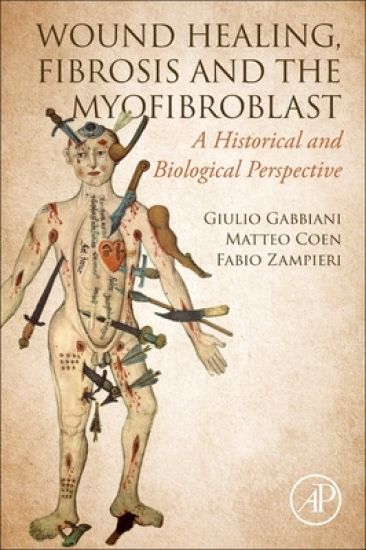
Wound Healing, Fibrosis, and the Myofibroblast
Giulio Gabbiani; Matteo Coen; Fabio Zampieri
Academic Press Inc
2021
nidottu
Wound Healing, and the Myofibroblast: A Historical and Biological Perspective is the fruit of an interdisciplinary and international collaboration involving a historian of medicine (Dr. Zampieri), a physician (Dr. Coen), and a researcher (Prof. Gabbiani, world-renowned for his discovery of the myofibroblast). This book aims to draw a concise yet complete description of the conceptual evolution of wound healing, fibrosis and fibrosis-related pathologies from antiquity to present time, as well as commenting on the role of the myofibroblast and the key cell type essential for tissue repair and fibrosis (from its identification in 1971 throughout its 50-years-old history). By viewing this complex and century-long history from different perspectives, the book's authors aim to draw an exhaustive overview, with the hope of inspiring new and fruitful basic and clinical research.
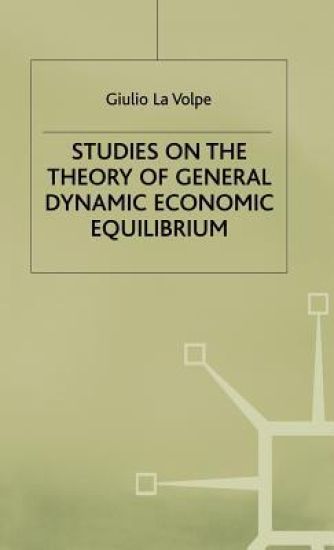
Studies on the Theory of General Dynamic Economic Equilibrium
Giulio La Volpe; trans Helen Ampt
Palgrave Macmillan
1993
sidottu
This book presents a theory of the general dynamic economic equilibrium which is a development of the static theory of Walras and Pareto. The work has built up an analytical model of the effective, current movement of an economic system, founded on the logic of the individual changing programmes - a basis for finding out the laws of all types of endogenous and exogenous movements of the economy. Indeed, the model can be used in the treatment of the typical problems of dynamic economics, by means of the author's method of variational dynamic analysis.
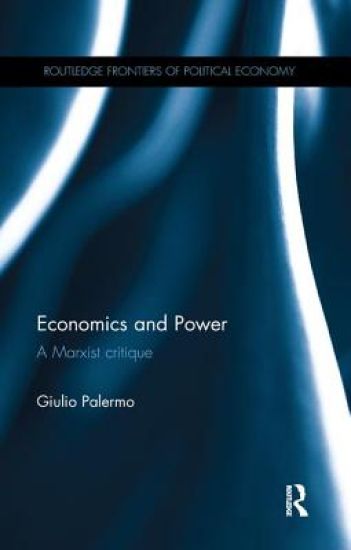
In the economic debate, power is defined and studied mainly as an interpersonal relation occurring out of perfect competition. This is a consequence of the combination of methodological individualism and the assumption of competition as a natural and everlasting coordinating mechanism, operating without any sort of coercion. This methodology, however, is not adequate to analyze the forms of social coercion that characterize capitalism. Economics and Power criticizes the main theories of power developed in economic literature, analyzing ultraliberal contractualism to radical political economics, and ultimately suggesting a Marxist conception of power and coercion in capitalism. Palermo’s ontological argument is rooted in the philosophy of ‘critical realism’.This unique volume presents his main finding as being that the essential coercive mechanism of capitalism is competition. Capitalist power is not caused by a lack of competition, but by the central role it plays in this mode of production. Following this, the chapters reconstruct a Marxian conception of power where it is analyzed as a social relation and argues that perfect competition does in fact exist under the disguise of capitalist power. This book criticizes the construct of power and the underlying ideas surrounding perfect competition. This book is of interest to those who study political economy, as well as economic theory and philosophy.

Introduction to Credit Risk focuses on analysis of credit risk, derivatives, equity investments, portfolio management, quantitative methods, and risk management. In terms of application, this book can be used as an important tool to explain how to generate data rows of expected exposure to counterparty credit risk. The book also directs the reader on how to visualize, in real time, the results of this data, generated with a Java tool.Features Uses an in-depth case study to illustrate multiple factors in counterparty credit risk exposures Suitable for quantitative risk managers at banks, as well as students of finance, financial mathematics, and software engineering Provides the reader with numerous examples and applicationsGiulio Carlone has an MBA, a PhD, and a Master’s degree in Computer Science from the University of Italy. He is a member of the software system engineering staff of the Department of Computer Science at University College London. He has 20 years of practical experience in technical software engineering and quantitative finance engineering in the commercial sector. His research interests include the use of communication strategies and the implementation of plans and projects using financial software for requirement specifications, requirements analysis, and architectural design.
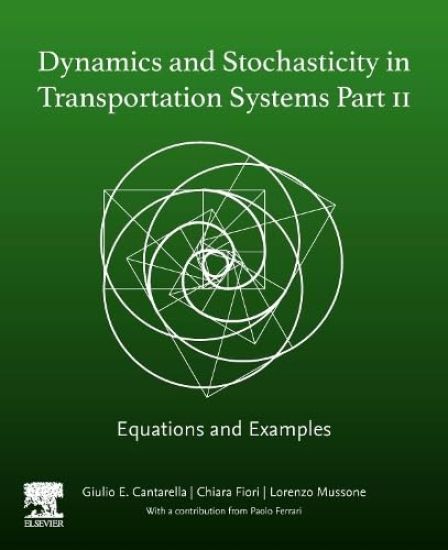
Dynamics and Stochasticity in Transportation Systems Part II
Giulio E Cantarella; Chiara Fiori; Lorenzo Mussone
Elsevier - Health Sciences Division
2023
nidottu
Dynamics and Stochasticity in Transportation Systems Part II: Equations and Examples goes beyond theory and mathematical models to give readers a practical understanding of dynamic and stochastic assignment modeling approaches in transportation systems. After an introduction in Chapter One, following chapters present recent advances, reviews of contents of the corresponding chapters in Giulio Cantarella’s previous book, discussions on numerical examples, comprehensive summaries, and final remarks. Readers will appreciate the fully discussed numerical examples, applications to real cases, review of recent developments and other materials not easily available in the literature, including long proofs. This book bridges mathematical theory with operational needs in a way that no current book does with practical, real-world cases and examples. Academics, researchers, and instructors as well as professionals, practitioners, and consultants will find this a valuable resource for solving network equilibrium problems in transportation systems analysis.

Compelled by the emperor Nero to commit suicide at age 25 after writing uncomplimentary poems, Latin poet Lucan nevertheless left behind a significant body of work, including the Bellum Civile (Civil War). Sometimes also called the Pharsalia, this epic describes the war between Julius Caesar and Pompey.Author Giulio Celotto provides an interpretation of this civil war based on the examination of an aspect completely neglected by previous scholarship: Lucan’s literary adaptation of the cosmological dialectic of Love and Strife.According to a reading that has found favor over the last three decades, the poem is an unconventional epic that does not conform to Aristotelian norms: Lucan composes a poem characterized by fragmentation and disorder, lacking a conventional teleology, and whose narrative flow is constantly delayed. Celotto’s study challenges this interpretation by illustrating how Lucan invokes imagery of cosmic dissolution, but without altogether obliterating epic norms. The poem transforms them from within, condemning the establishment of the Principate and the Julio-Claudian dynasty.

Cosmopolitan Power in International Relations
Giulio M. Gallarotti
Cambridge University Press
2010
pokkari
How can nations optimize their power in the modern world system? Realist theory has underscored the importance of hard power as the ultimate path to national strength. In this vision, nations require the muscle and strategies to compel compliance and achieve their full power potential. But in fact, changes in world politics have increasingly encouraged national leaders to complement traditional power resources with more enlightened strategies oriented around the use of soft power resources. The resources to compel compliance have to be increasingly integrated with the resources to cultivate compliance. Only through this integration of hard and soft power can nations truly achieve their greatest strength in modern world politics, and this realization carries important implications for competing paradigms of international relations. The idea of power optimization can only be delivered through the integration of the three leading paradigms of international relations: Realism, Neoliberalism, and Constructivism.

Spanning millennia and continents, here is a stunningly revealing history of how the distribution of water has shaped human civilization. Boccaletti, of The Nature Conservancy, "tackles the most important story of our time: our relationship with water in a world of looming scarcity" (Kelly McEvers, NPR Host). Writing with authority and brio, Giulio Boccaletti--honorary research associate at the Smith School of Enterprise and the Environment, University of Oxford--shrewdly combines environmental and social history, beginning with the earliest civilizations of sedentary farmers on the banks of the Nile, the Tigris, and the Euphrates Rivers. Even as he describes how these societies were made possible by sea-level changes from the last glacial melt, he incisively examines how this type of farming led to irrigation and multiple cropping, which, in turn, led to a population explosion and labor specialization. We see with clarity how irrigation's structure informed social structure (inventions such as the calendar sprung from agricultural necessity); how in ancient Greece, the communal ownership of wells laid the groundwork for democracy; how the Greek and Roman experiences with water security resulted in systems of taxation; and how the modern world as we know it began with a legal framework for the development of water infrastructure. Extraordinary for its monumental scope and piercing insightfulness, Water: A Biography richly enlarges our understanding of our relationship to--and fundamental reliance on--the most elemental substance on earth.

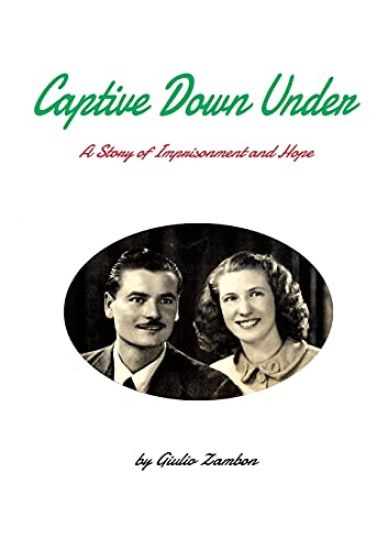
Captive Down Under is the story of Rosario Roccafiorita, a lieutenant in the Italian army during WWII who was captured in North Africa at the beginning of 1941 and sent to Australia as a prisoner of war. After September 1943, when Italy surrenders to the Allies, Rosario, like thousands of other Italian prisoners, is sent to work on a farm. There, he finds in the farmer's daughter the love of his life. When he is forcibly repatriated to Italy after five and a half dramatic years of captivity, Rosario finds a country in ruins. All he can think of is returning to Australia and to his Clare.

This is a collection of essays I wrote over a period of several years. They encapsulate many of my thoughts on ethics, science, society, religion, and politics I developed living and working in eight cities of five different countries speaking four different languages.
A bold new conception of the republic for a planet in crisis Republicanism is arguably the most powerful political idea in history, an extraordinary feat of human imagination that balances individual liberty with collective responsibility. The Environmental Republic reclaims this idea as the path to sustaining our life together on a changing planet, reframing our relationship to the environment not as a constraint on liberty but as its republican foundation. Giulio Boccaletti argues that we must renew our commitment to freedom and civic responsibility through popular sovereignty. He presents the environmental republic as a necessary alternative to blind faith in technocratic management, the shallow moralizing and apocalyptic rhetoric of some activists, and the disingenuous skepticism of vested interests. Our environmental challenges are not simply about “agreeing on the facts” or living within technical limitations—they reflect a deeper failure of political institutions. Drawing on the history of ideas and real-world examples, Boccaletti presents a political framework that places our relationship to our surroundings at the heart of how we exercise our voice, coordinate collective action, and define development itself. Offering hope in an anxious age of rising authoritarianism and widespread pessimism, The Environmental Republic challenges the false choice between environmental protection and human freedom, showing how place-based institutions can deliver both sustainability and human development through true self-governance.

Italian ironwork from Roman times, through Medieval centuries, and up to Neo Classical designs of the early nineteenth century comprise this collection of 100 photographs from Italian sources. They depict trellises, grilles, gates, fencing, household lighting, fireplace accoutrements, and door hardware that will inspire today's designers. Their origins in hill towns of Ialy are recorded for many images. This is authentic ironwork for contractors, decorators, and homeowners to enjoy.
Mother Tongues and Other Reflections on the Italian Language
Giulio Lepschy
University of Toronto Press
2002
sidottu
Italian is unique among modern European languages, for although it has a history going back eight centuries, it has only consolidated as a spoken national language during the twentieth century. Previously, it was a written, literary language, and people spoke regional dialects that were strikingly different from each other. This has intriguing implications for understanding notions such as mother tongue, native speaker, and literary language, and Giulio Lepschy discusses these and other issues in this collection of six scholarly essays on the Italian language. Lepschy also explores a little understood aspect of Italian prosody (the system of secondary stresses), and analyzes a Venetian play of the Renaissance, La Veniexiana, in which a 'gendered' reading helps to clarify some grammatically controversial passages. These aspects of the play had been examined by Carlo Dionisotti, the eminent Italianist whose life and works are the subject of the final essay. Lepschy's approach combines the insights of modern linguistic theory and the findings of fresh and original philological investigations. His essays will be essential to anyone interested in the Italian language.
Rethinking the Filioque with the Greek Fathers
Giulio Maspero; Sarah Coakley
WILLIAM B EERDMANS PUBLISHING CO
2023
sidottu
Does the Holy Spirit proceed only from the Father--or also from the Son? Protestants and Roman Catholics might immediately answer the latter and wonder why their Orthodox friends protest. Historically one of the major obstacles to Christian unity across the East-West divide, the Filioque--the part of the Latin translation of the Nicene Creed claiming the Holy Spirit proceeds from the Father and the Son--still bedevils Trinitarian theologians today. How can the church possibly achieve unity in the face of this dogmatic difference, implacable for over a millennium? Giulio Maspero shows us how the answer can be found in history. In the fourth century, when Pneumatomachians denied the divinity of the Holy Spirit, the Cappadocian Fathers came to a relational understanding of the most elusive person of the Trinity: the Holy Spirit was conceived of as the glory and power eternally exchanged between the Father and the Son. In fact, this understanding is still fundamentally shared by Eastern and Western Christians. Examining Syriac traditions as an example, Maspero observes that both Syriac and Latin lack the linguistic precision to describe the nature of the Holy Spirit's procession from the Trinity in the same way as Greek, hence the ambiguous Filioque. Yet what might be seen on the surface as a mere translation error reveals deep questions about the triune nature of God. With rigorous theological argument, Maspero ultimately proposes a way forward for East and West--one based not on centuries of polemics, but on a common tradition established by the Greek Fathers. Essential reading for the ecumenically minded theologian, Rethinking the Filioque with the Greek Fathers takes a crucial step toward Christian unity.