Kirjojen hintavertailu. Mukana 12 358 595 kirjaa ja 12 kauppaa.

Kirjahaku

Etsi kirjoja tekijän nimen, kirjan nimen tai ISBN:n perusteella.

1000 tulosta hakusanalla Graham Smith

W. S. Graham

W. S. Graham

David Nowell Smith

Oxford University Press
2022
sidottu
On the peripheries of UK poetry culture during his lifetime, W. S. Graham is now recognized one of the great poets of the twentieth century. In the first concerted study of Graham's poetics in a generation, David Nowell Smith argues that Graham is exemplary for the poetics of the mid-century: his extension of modernist explorations of rhythm and diction; his interweaving of linguistic and geographic places; his dialogue with the plastic arts; and the tensions that run through his work, between philosophical seriousness and play, solitude and sociality, regionalism and cosmopolitanism, the heft and evanescence of poetry's medium. Drawing on newly unearthed archival materials, Nowell Smith orients Graham's poetics around the question of the 'art object'. Graham sought to craft his poems into honed, finished 'objects'; yet he was also aware that the poem's 'finished object' is never wholly finished. Graham's work thus facilitates a broader reflection on language as a medium for art-making.

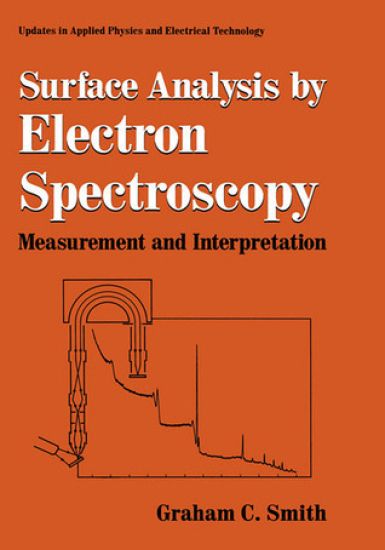
Surface Analysis by Electron Spectroscopy

Surface Analysis by Electron Spectroscopy

Graham C. Smith

Kluwer Academic/Plenum Publishers
1994
sidottu
This book is t~e fifth in aseries of scientific textbooks designed to cover advances in selected research fields from a basic and general view­ point. The reader is taken carefully but rapidly through the introductory material in order that t~e significance of recent developments can be understood with only limited initial knowledge. The inclusion in the Appendix of the abstracts of many of the more important papers in the field provides further assistance for the non-specialist, and acts as aspringboard to supplementary reading for those who wish to consult the original liter­ ature. Surface analysis has been the subject of numerous books and review articles, and the fundamental scientific principles of t~e more popular techniques are now reasonably weIl established. This book is concerned with the very powerful techniques of Auger electron and X-ray photoelectron spectroscopy (AES and XPS), with an emphasis on how they may be performed as part of a modern analytical facility. Since the development of AES and XPS in the late 1960s and early 1970s there have been great strides forward in the sensitivities and resolutions of the instrumentation. Simultaneously, these spectroscopies have undergone a veritable explosion, both in their acceptance alongside more routine ana1ytical techniques and in the range of problems and materials to which they are applied. As a result, many researchers in industry and in academia now come into contact with AES and XPS not as specialists, but as users.
Disaster Management in Archives, Libraries and Museums

Disaster Management in Archives, Libraries and Museums

Graham Matthews; Yvonne Smith

Ashgate Publishing Limited
2009
sidottu
This important book assesses the current state of disaster management in archives, libraries and museums in the UK and around the world, and provides recommendations for addressing current and future threats. Following an introductory outline of the topic and terminology, the authors provide a short history of the development of disaster management in the cultural heritage sector. They illustrate a basic framework for effective disaster management by reviewing disaster control plan practice from around the world. Through examining and identify the key issues affecting disaster management in archives, libraries and museums, the authors discuss a priority structure for future implementation. This book will be key reading for scholars and students of archive studies, library and information and museum management. It will also be extremely useful for professionals and policy makers involved in disaster management planning at a local and national level.
Disaster Management in Archives, Libraries and Museums

Disaster Management in Archives, Libraries and Museums

Graham Matthews; Yvonne Smith

Routledge
2016
nidottu
This important book assesses the current state of disaster management in archives, libraries and museums in the UK and around the world, and provides recommendations for addressing current and future threats. Following an introductory outline of the topic and terminology, the authors provide a short history of the development of disaster management in the cultural heritage sector. They illustrate a basic framework for effective disaster management by reviewing disaster control plan practice from around the world. Through examining and identify the key issues affecting disaster management in archives, libraries and museums, the authors discuss a priority structure for future implementation. This book will be key reading for scholars and students of archive studies, library and information and museum management. It will also be extremely useful for professionals and policy makers involved in disaster management planning at a local and national level.
Surface Analysis by Electron Spectroscopy

Surface Analysis by Electron Spectroscopy

Graham C. Smith

Springer-Verlag New York Inc.
2013
nidottu
This book is t~e fifth in aseries of scientific textbooks designed to cover advances in selected research fields from a basic and general view­ point. The reader is taken carefully but rapidly through the introductory material in order that t~e significance of recent developments can be understood with only limited initial knowledge. The inclusion in the Appendix of the abstracts of many of the more important papers in the field provides further assistance for the non-specialist, and acts as aspringboard to supplementary reading for those who wish to consult the original liter­ ature. Surface analysis has been the subject of numerous books and review articles, and the fundamental scientific principles of t~e more popular techniques are now reasonably weIl established. This book is concerned with the very powerful techniques of Auger electron and X-ray photoelectron spectroscopy (AES and XPS), with an emphasis on how they may be performed as part of a modern analytical facility. Since the development of AES and XPS in the late 1960s and early 1970s there have been great strides forward in the sensitivities and resolutions of the instrumentation. Simultaneously, these spectroscopies have undergone a veritable explosion, both in their acceptance alongside more routine ana1ytical techniques and in the range of problems and materials to which they are applied. As a result, many researchers in industry and in academia now come into contact with AES and XPS not as specialists, but as users.
Friendship and the Political

Friendship and the Political

Graham M. Smith

Imprint Academic
2011
pokkari
This book reappraises the idea of "friendship" in contemporary political thought. Friendship was a central notion for the Ancients, being regarded as a political ideal to rank alongside justice. The author explores the possibilities for theorising friendship in modern times through an examination of three seminal thinkers: Kierkegaard, Nietzsche and Schmitt. He shows that friendship is a vital descriptive, analytic and normative idea in contemporary political thought, identifying and valuing the horizontal moral and affective affinities that bind political communities. Reappraised in this way, friendship is shown to play an important role in redeveloping the contours of current debates around liberalism, communitarianism, community, social cohesion, civil society, justice, power, and ultimately our understanding of the political itself.
Cutting Tool Technology

Cutting Tool Technology

Graham T. Smith

Springer London Ltd
2008
sidottu
It is a well acknowledged fact that virtually all of our modern-day components and assemblies rely to some extent on machining operations in their manufacturing process. Thus, there is clearly a substantive machining requirement which will continue to be of prime importance for the foreseeable future. Cutting Tool Technology provides a comprehensive guide to the latest developments in the use of cutting tool technology. The book covers new machining and tooling topics such as high-speed and hard-part machining, near-dry and dry-machining strategies, multi-functional tooling, ‘diamond-like’ and ‘atomically-modified’ coatings, plus many others. Also covered are subjects important from a research perspective, such as micro-machining and artificial intelligence coupled to neural network tool condition monitoring. A practical handbook complete with troubleshooting tables for common problems, Cutting Tool Technology is an invaluable reference for researchers, manufacturers and users of cutting tools.
Cutting Tool Technology

Cutting Tool Technology

Graham T. Smith

Springer London Ltd
2010
nidottu
It is a well acknowledged fact that virtually all of our modern-day components and assemblies rely to some extent on machining operations in their manufacturing process. Thus, there is clearly a substantive machining requirement which will continue to be of prime importance for the foreseeable future. Cutting Tool Technology provides a comprehensive guide to the latest developments in the use of cutting tool technology. The book covers new machining and tooling topics such as high-speed and hard-part machining, near-dry and dry-machining strategies, multi-functional tooling, ‘diamond-like’ and ‘atomically-modified’ coatings, plus many others. Also covered are subjects important from a research perspective, such as micro-machining and artificial intelligence coupled to neural network tool condition monitoring. A practical handbook complete with troubleshooting tables for common problems, Cutting Tool Technology is an invaluable reference for researchers, manufacturers and users of cutting tools.
Industrial Metrology

Industrial Metrology

Graham T. Smith

Springer London Ltd
2010
nidottu
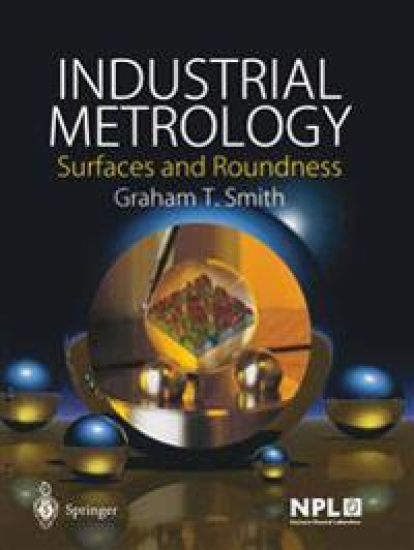
The subject of this book is surface metrology, in particular two major aspects: surface texture and roundness. It has taken a long time for manufacturing engineers and designers to realise the usefulness of these features in quality of conformance and quality of design. Unfortunately this awareness has come at a time when engineers versed in the use and specification of surfaces are at a premium. Traditionally surface metrology usage has been dictated by engineers who have served long and demanding apprenticeships, usually in parallel with studies leading to technician-level qualifications. Such people understood the processes and the achievable accuracies of machine tools, thereby enabling them to match production capability with design requirements. This synergy, has been made possible by the understanding of adherence to careful metrological procedures and a detailed knowledge of surface measuring instruments and their operation, in addition to wider inspection room techniques. With the demise in the UK of polytechnics and technical colleges, this source of skilled technicians has all but dried up. The shortfall has been made up of semi­ skilled craftsmen, or inexperienced graduates who cannot be expected to satisfy tradition al or new technology needs. Miniaturisation, for example, has had a pro­ found effect. Engineering parts are now routinely being made with nanometre surface texture and fiatness. At these molecular and atomic scales, the engineer has to be a physicist.
Industrial Metrology

Industrial Metrology

Graham T. Smith

Springer London Ltd
2002
sidottu
The subject of this book is surface metrology, in particular two major aspects: surface texture and roundness. It has taken a long time for manufacturing engineers and designers to realise the usefulness of these features in quality of conformance and quality of design. Unfortunately this awareness has come at a time when engineers versed in the use and specification of surfaces are at a premium. Traditionally surface metrology usage has been dictated by engineers who have served long and demanding apprenticeships, usually in parallel with studies leading to technician-level qualifications. Such people understood the processes and the achievable accuracies of machine tools, thereby enabling them to match production capability with design requirements. This synergy, has been made possible by the understanding of adherence to careful metrological procedures and a detailed knowledge of surface measuring instruments and their operation, in addition to wider inspection room techniques. With the demise in the UK of polytechnics and technical colleges, this source of skilled technicians has all but dried up. The shortfall has been made up of semi­ skilled craftsmen, or inexperienced graduates who cannot be expected to satisfy tradition al or new technology needs. Miniaturisation, for example, has had a pro­ found effect. Engineering parts are now routinely being made with nanometre surface texture and fiatness. At these molecular and atomic scales, the engineer has to be a physicist.
Via Ferratas of the Italian Dolomites: Vol 2

Via Ferratas of the Italian Dolomites: Vol 2

Graham Fletcher; John Smith

CICERONE PRESS
2024
nidottu
Guidebook to the via ferrata routes of the southern Italian Dolomites. This guide covers via ferrata routes in the major mountain ranges of Civetta, Schiara and Pala as well as those to the west in the Brenta. A significant addition (and, as far as we are aware, not previously published in any English language guidebook) is the inclusion of routes around the northern end of Lake Garda and the Piccole Dolomites north of Vicenza. Here the mountains are generally lower and you can enjoy ferrata climbing over a much extended season, with some routes accessible for most of the year. This is the second in a series of two guidebooks to the via ferratas of the Italian Dolomites. (Volume One covers the eastern, northern and central areas of the Dolomites, while Volume Two completes the picture, focusing on the southern, Brenta and Lake Garda areas.)
Machine Tool Metrology

Machine Tool Metrology

Graham T. Smith

Springer International Publishing AG
2016
sidottu
Maximizing reader insights into the key scientific disciplines of Machine Tool Metrology, this text will prove useful for the industrial-practitioner and those interested in the operation of machine tools. Within this current level of industrial-content, this book incorporates significant usage of the existing published literature and valid information obtained from a wide-spectrum of manufacturers of plant, equipment and instrumentation before putting forward novel ideas and methodologies.Providing easy to understand bullet points and lucid descriptions of metrological and calibration subjects, this book aids reader understanding of the topics discussed whilst adding a voluminous-amount of footnotes utilised throughout all of the chapters, which adds some additional detail to the subject. Featuring an extensive amount of photographic-support, this book will serve as a key reference text for all those involved in the field.
Machine Tool Metrology

Machine Tool Metrology

Graham T. Smith

Springer International Publishing AG
2018
nidottu
Maximizing reader insights into the key scientific disciplines of Machine Tool Metrology, this text will prove useful for the industrial-practitioner and those interested in the operation of machine tools. Within this current level of industrial-content, this book incorporates significant usage of the existing published literature and valid information obtained from a wide-spectrum of manufacturers of plant, equipment and instrumentation before putting forward novel ideas and methodologies.Providing easy to understand bullet points and lucid descriptions of metrological and calibration subjects, this book aids reader understanding of the topics discussed whilst adding a voluminous-amount of footnotes utilised throughout all of the chapters, which adds some additional detail to the subject. Featuring an extensive amount of photographic-support, this book will serve as a key reference text for all those involved in the field.
CNC Machining Technology

CNC Machining Technology

Graham T. Smith

Springer-Verlag Berlin and Heidelberg GmbH Co. K
1993
nidottu
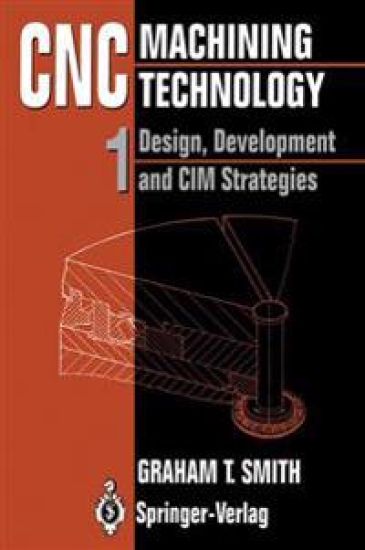
The first part of Volume I outlines the origins and development of CNC machine tools. It explains the construction of the equipment and also discusses the various elements necessary to ensure high quality of production. The second part considers how a company justifies the purchase of either cells or systems and illustrates why simulation exercises are essential prior to a full implementation. Communication protocols as well as networking topologies are examined. Finally, the important high-speed machining developments and the drive towards ultra-high precision are mentioned. Following a brief historical introduction to cutting tool development, chapters 1 and 2 of Volume II explain why CNC requires a change in cutting tool technology from conventional methods. A presentation is given of the working knowledge of cutting tools and cutting fluids which is needed to make optimal use of the productive capacity of CNC machines. Since an important consideration for any machine tool is how one can locate and restrain the workpiece in the correct orientation and with the minimum of set-up time, chapter 3 is concerned with workholding technology. Volume III deals with CNC programming. It has been written in conjunction with a major European supplier of controllers in order to give the reader a more consistent and in-depth understanding of the logic used to program such machines. It explains how why and where to program specific features of a part and how to build them up into complete programs. Thus, the reader will learn about the main aspects of the logical structure and compilation of a program. Finally, there is a brief review of so me of the typical controllers currently available from both universal and proprietary builders.
CNC Machining Technology

CNC Machining Technology

Graham T. Smith

Springer-Verlag Berlin and Heidelberg GmbH Co. K
1993
nidottu
This is the second volume of three designed to give an insight into the current state of CNC technology with a focus on practical applications. Following a brief historical introduction to cutting tool development, chapters 1 and 2 explain why CNC requires a change in cutting tool technology from conventional methods. A presentation is given of the working knowledge of cutting tools and cutt ing fluids which is needed to make optimal use of the productive capacity of CNC machines. Since an important consideration for any machine tool is how one can locate and restrain the workpiece in the correct orientation and with the minimum of set-u p time, chapter 3 is concerned with workholding technology. The author draws on his extensive experience as a practitioner and teacher. The text is thoroughly practical in character and generously illustrated with diagrams and photographs.
The Bankruptcy of Economics: Ecology, Economics and the Sustainability of the Earth

The Bankruptcy of Economics: Ecology, Economics and the Sustainability of the Earth

Joseph Wayne Smith; Graham Lyons; Gary Sauer-Thompson

Palgrave Macmillan
1999
sidottu
We live in times of uncertainty and insecurity, at a personal, national and global level. Writers such as Samuel P. Huntington and Robert D. Kaplan, respectively, have spoken of an emerging 'clash of civilizations' and of 'coming anarchy'. This book is also concerned with the future of civilization, in particular with the conflict between economic growth and the sustainability of the biophysical lifesupport systems of the planet, arguing that the flawed system of orthodox neo-classical economics has justified the modernist belief in the necessity of unending economic growth and the ceaseless exploitation of nature.