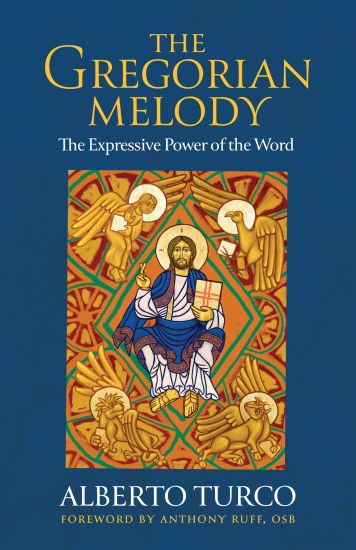
The Gregorian Melody is a resource of music pedagogy that centers on one of the most ancient musical repertoires honored by the church and music historians. Though it may not be common to see the word expressive describing Gregorian chant, a repertoire often associated with subdued solemnity, this volume by renowned scholar and practitioner Alberto Turco includes an abundance of insights into the Gregorian art and proposes that chant is first and foremost sung prayer, an interaction of word and melody, which both include proper and appropriate expression. The material included in this resource is foundational as it lays out the elements of the Gregorian melody through a careful analysis of first principles. It will be useful as an introduction to Gregorian chant and for helping readers to understand the Gregorian melody. Readers of all levels may turn to this book to sing the liturgical chant with a deepened appreciation for the expressive power of the Word.
Historians have long relied on Bede’s Ecclesiastical History for their narrative of early Christian Anglo-Saxon England, but what material lay behind Bede’s own narrative? What were his sources and how reliable were they? How much was based on contemporary material? How much on later evidence? What was rhetoric? What represents his own agendas, deductions or even inventions? This book represents the first systematic attempt to answer these questions for Bede’s History, taking as a test case the coherent narrative of the Gregorian mission and the early Church in Kent. Through this critique, it becomes possible, for the first time, to catalogue Bede’s sources and assess their origins, provenance and value – even reconstructing the original shape of many that are now lost. The striking paucity of his primary sources for the period emerges clearly. This study explains the reason why this was the case. At the same time, Bede is shown to have had access to a greater variety of texts, especially documentary, than has previously been realised.This volume thus reveals Bede the historian at work, with implications for understanding his monastery, library and intellectual milieu together with the world in which he lived and worked. It also showcases what can be achieved using a similar methodology for the rest of the Ecclesiastical History and for other contemporary works.Most importantly, thanks to this study, it is now feasible – indeed necessary – for subsequent historians to base their reconstructions of the events of c.600 not on Bede but on his sources. As a result, this book lays the foundations for future work on the conversion of Anglo-Saxon England and offers the prospect of replacing and not merely refining Bede’s narrative of the history of early Christian Kent.
Basic Gregorian Chant And Sight Reading by Demetria, Mary is a comprehensive guide to learning the basics of Gregorian chant and sight reading. The book is aimed at beginners who have little or no experience with this type of music. The book begins with an introduction to the history and significance of Gregorian chant, including its origins and use in religious ceremonies. It then moves on to cover the basics of music theory, including notes, rhythm, and key signatures.The bulk of the book is dedicated to teaching readers how to read and sing Gregorian chant. It covers the different types of chant, including simple and complex chants, and provides step-by-step instructions on how to read and sing them. The book also includes exercises and practice pieces to help readers develop their skills.In addition to teaching readers how to read and sing Gregorian chant, the book also covers important topics such as proper breathing techniques, vocal warm-ups, and posture. It also includes a glossary of musical terms and a brief history of Gregorian chant.Overall, Basic Gregorian Chant And Sight Reading by Demetria, Mary is an excellent resource for anyone interested in learning how to sing Gregorian chant. It provides clear and concise instructions, as well as plenty of practice exercises, making it a great choice for beginners.Church Musicians Bookshelf, Series 2, No. 3.This scarce antiquarian book is a facsimile reprint of the old original and may contain some imperfections such as library marks and notations. Because we believe this work is culturally important, we have made it available as part of our commitment for protecting, preserving, and promoting the world's literature in affordable, high quality, modern editions, that are true to their original work.
""George Greenman and Company, Shipbuilders of Mystic, Connecticut: A History of the Company and the Ships They Built"" is a comprehensive account of the renowned shipbuilding company that operated in Mystic, Connecticut, between 1852 and 1899. Written by Thomas Albert Stevens, a prominent historian and scholar, this book provides an in-depth look at the history of the company and the ships they built.The book covers the early years of the company, including its founding by George Greenman and his brothers, and the challenges they faced in establishing themselves in the highly competitive shipbuilding industry. It then delves into the company's heyday, when it was one of the leading shipbuilders in the United States, constructing vessels for both commercial and military use.Throughout the book, Stevens provides detailed descriptions of the ships that were built by George Greenman and Company, including their design, construction, and use. He also explores the impact that the company had on the local community, as well as the wider maritime industry.In addition to its historical content, ""George Greenman and Company, Shipbuilders of Mystic, Connecticut"" also features a wealth of archival photographs and illustrations, providing readers with a visual glimpse into the world of shipbuilding in the 19th century. Overall, this book is an essential read for anyone interested in the history of shipbuilding, maritime commerce, or the development of the United States in the 19th century.Marine Historical Association, V1, No. 12.This scarce antiquarian book is a facsimile reprint of the old original and may contain some imperfections such as library marks and notations. Because we believe this work is culturally important, we have made it available as part of our commitment for protecting, preserving, and promoting the world's literature in affordable, high quality, modern editions, that are true to their original work.
The 18th century was a wealth of knowledge, exploration and rapidly growing technology and expanding record-keeping made possible by advances in the printing press. In its determination to preserve the century of revolution, Gale initiated a revolution of its own: digitization of epic proportions to preserve these invaluable works in the largest archive of its kind. Now for the first time these high-quality digital copies of original 18th century manuscripts are available in print, making them highly accessible to libraries, undergraduate students, and independent scholars.Medical theory and practice of the 1700s developed rapidly, as is evidenced by the extensive collection, which includes descriptions of diseases, their conditions, and treatments. Books on science and technology, agriculture, military technology, natural philosophy, even cookbooks, are all contained here.++++The below data was compiled from various identification fields in the bibliographic record of this title. This data is provided as an additional tool in helping to insure edition identification: ++++British LibraryT146938London: printed for the author; and sold by M. Cooper; and may be had at all the book and pamphlet-sellers in His Majesty's dominions, 1751. 4],48p.; 8
The 18th century was a wealth of knowledge, exploration and rapidly growing technology and expanding record-keeping made possible by advances in the printing press. In its determination to preserve the century of revolution, Gale initiated a revolution of its own: digitization of epic proportions to preserve these invaluable works in the largest archive of its kind. Now for the first time these high-quality digital copies of original 18th century manuscripts are available in print, making them highly accessible to libraries, undergraduate students, and independent scholars.This collection reveals the history of English common law and Empire law in a vastly changing world of British expansion. Dominating the legal field is the Commentaries of the Law of England by Sir William Blackstone, which first appeared in 1765. Reference works such as almanacs and catalogues continue to educate us by revealing the day-to-day workings of society.++++The below data was compiled from various identification fields in the bibliographic record of this title. This data is provided as an additional tool in helping to insure edition identification: ++++British LibraryT114087The last four leaves comprise a broadside, 'Memorial verses adapted to the Gregorian account, .. ', which has been cut into two, and each part folded. A reissue of the 1751 edition, with a reset titlepage, and with the addition of the 'Memorial verses'.London: printed for the author, and sold at his house; and may be had of M. Cooper, 1752. 4],48, 8]p.; 8
The Henry Bradshaw Society was established in 1890 in commemoration of Henry Bradshaw, University Librarian in Cambridge and a distinguished authority on early medieval manuscripts and liturgies, who died in 1886. The Society was founded 'for the editing of rare liturgical texts'; its principal focus is on the Western (Latin) Church and its rites, and on the medieval period in particular, from the sixth century to the sixteenth (in effect, from the earliest surviving Christian books until the Reformation). Liturgy was at the heart of Christian worship, and during the medieval period the Christian Church was at the heart of Western society. Study of medieval Christianity in its manifold aspects - historical, ecclesiastical, spiritual, sociological - inevitably involves study of its rites, and for that reason Henry Bradshaw Society publications have become standard source-books for an understanding of all aspects of the middle ages. Moreover, many of the Society's publications have been facsimile editions, and these facsimiles have become cornerstones of the science of palaeography. The society was founded for the editing of rare liturgical texts; its principal focus is on the Western (Latin) Church and its rites, and on the medieval period in particular, from the sixth century to the Reformation. Study of medieval Christianity - at the heart of Western society - inevitably involves study of its rites, and the society's publications are essential to an understanding of all aspects (historical, ecclesiastical, spiritual, sociological) of the middle ages.
The Kyriale is an ideal resource to participate in Mass, not only for the choir, but also the clergy and congregation. This slim volume includes all of the chants for the ordinary parts of the Mass, as organized in the 1961 Graduale Romanum.Complete Order of Mass of the 1962 Roman Missal (Traditional Latin Mass), in Latin and EnglishChanted responses are printed in-lineThe full 18 Gregorian Mass settings of the Vatican Edition Kyriale Romanum The Vatican Edition Credo chants (I, II, III, and IV)"Ad libitum" chants of the Kyrie, Gloria, Sanctus, and Agnus DeiSeasonal antiphons of the Blessed Virgin Mary from the Antiphonale Romanum
Fåglar, fjärilar, hundar, hjortar och andra djur som du kan färglägga i vilka färger som helst! 24 bilder som passar både barn och vuxna. Illustratören Sofia Gregersen har samlat några av alla de djur som återfinns i hennes tidigare barnböcker och gjort om dem till färgläggningsbilder.
Observera att förlaget som ger ut denna produkt baserar innehållet i sina produkter på fria källor som Wikipedia. Boken är med stor sannolikhet endast ett utdrag ur dessa informationskällor, alltså inte en vanlig bok i den bemärkelsen.