Kirjojen hintavertailu. Mukana 11 717 486 kirjaa ja 12 kauppaa.

Kirjahaku

Etsi kirjoja tekijän nimen, kirjan nimen tai ISBN:n perusteella.

1000 tulosta hakusanalla Gregory L. Matloff

Bridge Over Troubled Waters

Bridge Over Troubled Waters

Gregory L. Grose

AuthorHouse
2004
nidottu
In Bridge Over Troubled Waters, Gregory L. Grose outlines seven steps for liberating our communities from the moral decay that has spread like a new strain of hopelessness, frustrating our approach to God. The author explores the dilemma that seems to be at core of all human striving, and in one final sweep of biblical insight he takes us from that contemporary crisis across the bridge that lands us into the waiting arms of Jesus. This is a must read book for anyone remotely interested in understanding the dynamics that fuel the proliferation of youth violence and crime in our cities.
Compassion and Healing in Medicine and Society

Compassion and Healing in Medicine and Society

Gregory L. Fricchione

Johns Hopkins University Press
2012
sidottu
Reconciling the scientific principles of medicine with the love essential for meaningful care is not an easy task, but it is one that Gregory L. Fricchione performs masterfully in Compassion and Healing in Medicine and Society. At the core of this book is a thought-provoking analysis of the relationship between evolutionary science and neuroscience. Fricchione theorizes that the cries for attachment made by seriously ill patients reflect an underlying evolutionary tenet called the separation challenge-attachment solution process. The pleadings of patients, he explains, are verbal expressions of the history of evolution itself. By exploring the roots of a patient's attachment needs, we come face to face with a critical component of natural selection and the evolutionary process. Medicine engages with the separation challenge-attachment solution process on many levels of scientific knowledge and human meaning and healing. Fricchione applies these concepts to medical care and encourages physicians to fully understand them so they can better treat their patients. Compassionate humanistic care promotes physical, emotional, and spiritual healing precisely because it is consonant with how life, the brain, and humanity have evolved. It is therefore not a luxury of modern medical care but an essential part of it. Fricchione advocates an attachment-based medical system, one in which physicians evaluate stress and resiliency and prescribe an integrative treatment plan for the whole person designed to accentuate the propensity to health. There is a wisdom or perennial philosophy based on compassionate love that, Fricchione stresses, the medical community must take advantage of in designing future health care-and society must appreciate as it faces its separation challenges.
Applied Grammatology

Applied Grammatology

Gregory L. Ulmer

Johns Hopkins University Press
2020
pokkari
Originally published in 1984. In Applied Grammatology, Gregory Ulmer provides an extraordinary introduction to the third, "applied" phase of grammatology, the "science of writing," outlined by Jacques Derrida in Of Grammatology. Ulmer looks to the later experimental works of Derrida (beginning with Glas and continuing through Truth in Painting and The Post Card). In these, he discovers a critical methodology radically different from the deconstruction for which Derrida is known. At the same time, he finds the source of a new pedagogy for all the humanities, one based on grammatology and appropriate to the era of audiovisual communications in which we live. Detractors of Derrida often accuse him of superficial wordplay and of using images and puns as nonfunctional subversions of academic conventions. Ulmer argues that there is, in fact, a fully developed use of homonyms in Derrida's style, which produces its own distinctive knowledge and insight. Derrida's experiments with images, moreover—his expansion of descriptions of everyday objects such as umbrellas, matchboxes, and post cards into cognitive models—serve to reveal a simplicity underlying intellectual discourse, which could be used to eliminate the gap separating the general public from specialists in cultural studies. Comparing the stylistic innovations of Derrida with Jacques Lacan's use of puns and diagrams, with the German performance artist Joseph Beuys's demonstration of models, and with the "montage writing" of the films of Sergei Eisenstein, Ulmer explores the possibility of deriving a postmodernist pedagogy from Derrida's texts. The first study to suggest the full potential of the program available in Derrida's writings, Applied Grammatology is also the first outline of a Derridean alternative to deconstructionism. With its shift away from Derrida's philosophical studies to his experimental texts, Ulmer's book aims to inaugurate a new movement in the American adaptation of contemporary French theory.
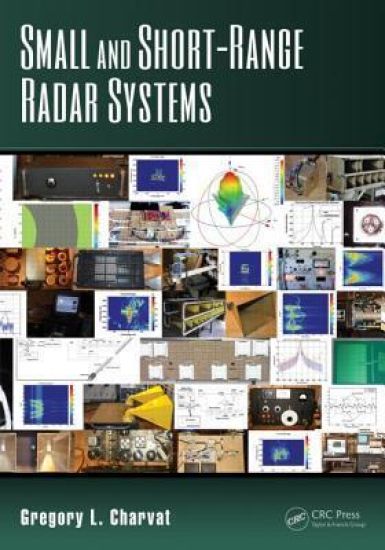
Small and Short-Range Radar Systems

Small and Short-Range Radar Systems

Gregory L. Charvat

CRC Press Inc
2014
sidottu
Radar Expert, Esteemed Author Gregory L. Charvat on CNN and CBSAuthor Gregory L. Charvat appeared on CNN on March 17, 2014 to discuss whether Malaysia Airlines Flight 370 might have literally flown below the radar. He appeared again on CNN on March 20, 2014 to explain the basics of radar, and he explored the hope and limitations of the technology involved in the search for Flight 370 on CBS on March 22, 2014.Get His Book NowCoupling theory with reality, from derivation to implementation of actual radar systems, Small and Short-Range Radar Systems analyzes and then provides design procedures and working design examples of small and short-range radar systems. Discussing applications from automotive to through-wall imaging, autonomous vehicle, and beyond, the practical text supplies high-level descriptions, theoretical derrivations, back-of-envelope calculations, explanations of processing algorithms, and case studies for each type of small radar system covered, including continuous wave (CW), ultrawideband (UWB) impulse, linear frequency modulation (FM), linear rail synthetic aperture radar (SAR), and phased array. This essential reference: Explains how to design your own radar devicesDemonstrates how to process data from small radar sensorsProvides real-world, measured radar data to test algorithms before investing development timeComplete with downloadable MATLAB® scripts and actual radar measurements, Small and Short-Range Radar Systems empowers you to rapidly develop small radar technology for your application.
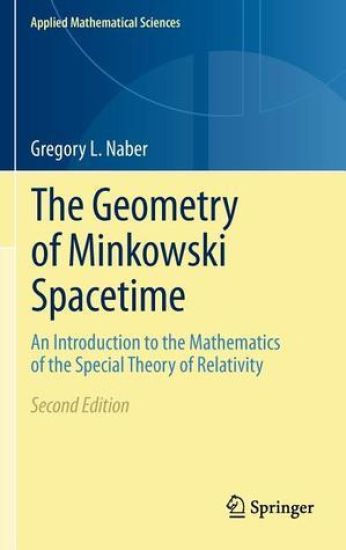
The Geometry of Minkowski Spacetime

The Geometry of Minkowski Spacetime

Gregory L. Naber

Springer-Verlag New York Inc.
2010
nidottu
This book offers a presentation of the special theory of relativity that is mathematically rigorous and yet spells out in considerable detail the physical significance of the mathematics. It treats, in addition to the usual menu of topics one is accustomed to finding in introductions to special relativity, a wide variety of results of more contemporary origin. These include Zeeman’s characterization of the causal automorphisms of Minkowski spacetime, the Penrose theorem on the apparent shape of a relativistically moving sphere, a detailed introduction to the theory of spinors, a Petrov-type classification of electromagnetic fields in both tensor and spinor form, a topology for Minkowski spacetime whose homeomorphism group is essentially the Lorentz group, and a careful discussion of Dirac’s famous Scissors Problem and its relation to the notion of a two-valued representation of the Lorentz group. This second edition includes a new chapter on the de Sitter universe which is intended to serve two purposes. The first is to provide a gentle prologue to the steps one must take to move beyond special relativity and adapt to the presence of gravitational fields that cannot be considered negligible. The second is to understand some of the basic features of a model of the empty universe that differs markedly from Minkowski spacetime, but may be recommended by recent astronomical observations suggesting that the expansion of our own universe is accelerating rather than slowing down. The treatment presumes only a knowledge of linear algebra in the first three chapters, a bit of real analysis in the fourth and, in two appendices, some elementary point-set topology. The first edition of the book received the 1993 CHOICE award for Outstanding Academic Title. Reviews of first edition: “… a valuable contribution to the pedagogical literature which will be enjoyed by all who delight in precise mathematics and physics.” (American Mathematical Society, 1993) “Where many physics texts explain physical phenomena by means of mathematical models, here a rigorous and detailed mathematical development is accompanied by precise physical interpretations.” (CHOICE, 1993) “… his talent in choosing the most significant results and ordering them within the book can’t be denied. The reading of the book is, really, a pleasure.” (Dutch Mathematical Society, 1993)
Topology, Geometry and Gauge fields

Topology, Geometry and Gauge fields

Gregory L. Naber

Springer-Verlag New York Inc.
2010
sidottu
This is a book on topology and geometry and, like any books on subjects as vast as these, it has a point-of-view that guided the selection of topics. Naber takes the view that the rekindled interest that mathematics and physics have shown in each other of late should be fostered and that this is best accomplished by allowing them to cohabit. The book weaves together rudimentary notions from the classical gauge theory of physics with the topological and geometrical concepts that became the mathematical models of these notions. We ask the reader to come to us with some vague notion of what an electromagnetic field might be, a willingness to accept a few of the more elementary pronouncements of quantum mechanics, a solid background in real analysis and linear algebra and some of the vocabulary of modern algebra. To such a reader we offer an excursion that begins with the definition of a topological space and finds its way eventually to the moduli space of anti-self-dual SU(2) connections on S4 with instanton number -1. Iwould go over both volumes thoroughly and make some minor changes in terminology and notation and correct any errors I find. In this new edition, a chapter on Singular Homology will be added as well as minor changes in notation and terminology throughout and some sections have been rewritten or omitted. Reviews of First Edition: “It is unusual to find a book so carefully tailored to the needs of this interdisciplinary area of mathematical physics...Naber combines a knowledge of his subject with an excellent informal writing style." (NZMS Newletter) "...this book should be very interesting for mathematicians and physicists (as well as other scientists) who are concerned with gauge theories." (Zentralblatt Fuer Mathematik)
The Geometry of Minkowski Spacetime

The Geometry of Minkowski Spacetime

Gregory L. Naber

Springer-Verlag New York Inc.
2011
sidottu
This book offers a presentation of the special theory of relativity that is mathematically rigorous and yet spells out in considerable detail the physical significance of the mathematics. It treats, in addition to the usual menu of topics one is accustomed to finding in introductions to special relativity, a wide variety of results of more contemporary origin. These include Zeeman’s characterization of the causal automorphisms of Minkowski spacetime, the Penrose theorem on the apparent shape of a relativistically moving sphere, a detailed introduction to the theory of spinors, a Petrov-type classification of electromagnetic fields in both tensor and spinor form, a topology for Minkowski spacetime whose homeomorphism group is essentially the Lorentz group, and a careful discussion of Dirac’s famous Scissors Problem and its relation to the notion of a two-valued representation of the Lorentz group. This second edition includes a new chapter on the de Sitter universe which is intended to serve two purposes. The first is to provide a gentle prologue to the steps one must take to move beyond special relativity and adapt to the presence of gravitational fields that cannot be considered negligible. The second is to understand some of the basic features of a model of the empty universe that differs markedly from Minkowski spacetime, but may be recommended by recent astronomical observations suggesting that the expansion of our own universe is accelerating rather than slowing down. The treatment presumes only a knowledge of linear algebra in the first three chapters, a bit of real analysis in the fourth and, in two appendices, some elementary point-set topology. The first edition of the book received the 1993 CHOICE award for Outstanding Academic Title. Reviews of first edition: “… a valuable contribution to the pedagogical literature which will be enjoyed by all who delight in precise mathematics andphysics.” (American Mathematical Society, 1993) “Where many physics texts explain physical phenomena by means of mathematical models, here a rigorous and detailed mathematical development is accompanied by precise physical interpretations.” (CHOICE, 1993) “… his talent in choosing the most significant results and ordering them within the book can’t be denied. The reading of the book is, really, a pleasure.” (Dutch Mathematical Society, 1993)
Topology, Geometry and Gauge fields

Topology, Geometry and Gauge fields

Gregory L. Naber

Springer-Verlag New York Inc.
2011
sidottu
A study of topology and geometry, beginning with a comprehensible account of the extraordinary and rather mysterious impact of mathematical physics, and especially gauge theory, on the study of the geometry and topology of manifolds. The focus of the book is the Yang-Mills-Higgs field and some considerable effort is expended to make clear its origin and significance in physics. Much of the mathematics developed here to study these fields is standard, but the treatment always keeps one eye on the physics and sacrifices generality in favor of clarity. This second edition has replaced a brief appendix in the first on the Seiberg-Witten equations with a much more detailed survey of Donaldson-Witten Theory and the Witten Conjecture regarding the relationship between Donaldson and Seiberg-Witten invariants.A large number of exercises are included to encourage active participation on the part of the reader.Review from first edition:"It is unusual to find a book so carefully tailored to the needs of this interdisciplinary area of mathematical physics...Naber combines a knowledge of his subject with an excellent informal writing style."SIAM REVIEW