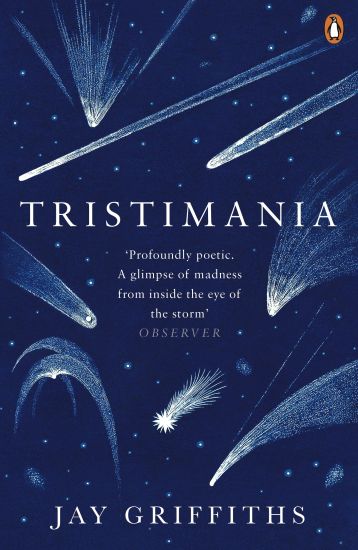
A stark, lyrical and personal account of the psyche in crisis from the bestselling author of Wild and Kith"I want to describe it for those who have never experienced it but who perhaps know someone with it. If this book can befriend just one person in that terrifying loneliness, it will be worth writing."Tristimania tells the story of a devastating year-long episode of manic depression, culminating in a long solo pilgrimage across Spain. Recording the experience of mania as has rarely been done before, Jay Griffiths shows how the condition is at once terrifying and also profoundly creative, both tricking and treating the psyche. An intimate and raw journey of mental health and recovery, Tristimania illuminates something of the universal human spirit.'Profoundly poetic. A glimpse of madness from inside the eye of the storm' Observer
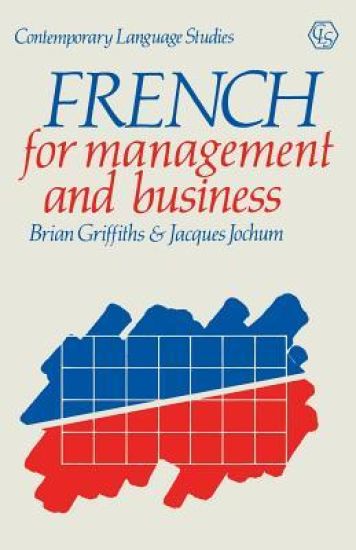
Aimed at those who wish to gain sufficient proficiency in French in order to carry on business, this book attempts to equip students with a text which will consolidate their basic language skills while establishing the intellectual foundation for advanced language work.
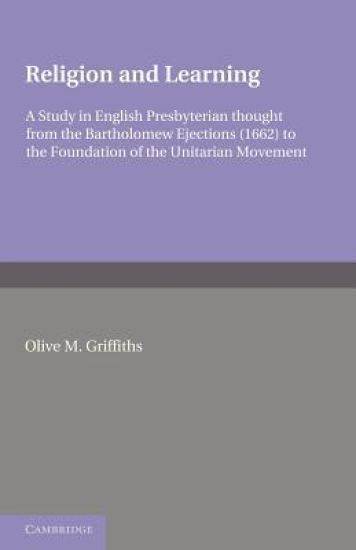
Originally published in 1935, this book examines the history of the English Presbyterian movement in terms of its connection with the surrounding cultural environment. Covering the period between 1662 and the formation of Unitarianism during the early nineteenth century, it provides a detailed analysis of the movement and its ideas. The relationship between Presbyterian thought and contemporary developments in science and philosophy is given particular attention. From this perspective, the history of the Presbyterian movement can be seen as forming part of the larger question of the relationship between secular learning and religious credenda. This is a fascinating book that will be of value to anyone with an interest in religious or cultural history.
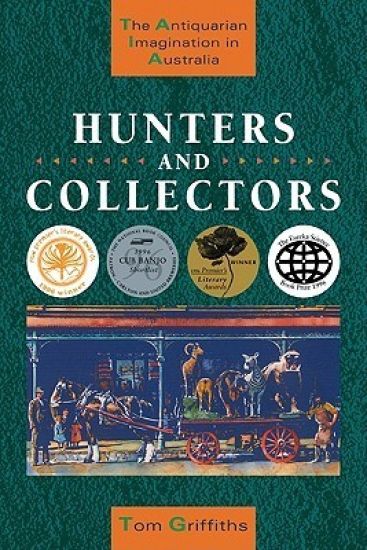
Hunters and Collectors is about historical consciousness and environmental sensibilities in European Australia from the mid-nineteenth century to the present. It is in part a collective biography of amateur antiquarians, archaeologists, naturalists, journalists and historians: people who shaped the Australian historical imagination. Dr Griffiths illuminates the way these avid collectors and investigators of the Australian land and of its indigenous inhabitants contributed a sense of identity at colony-wide and eventually nationwide level. He also considers the rise of professional history, anthropology and archaeology in the universities, which ignored the efforts of the amateurs. Griffiths shows how the seemingly trivial activities of these hunters and collectors feed into the political and environmental debates of the 1990s. This book is outstanding in its originality, interpretative insight and literary flair.
Here is an introduction to the history of English writing from East and West Africa drawing on a range of texts from the slave diaspora to the post-war upsurge in African English language and literature from these regions.
Reference for aquatic directors, managers, and supervisors responsible for beaches at all levels of parks, camps, and clubs. Also for lawyers, land planners, and students studying land planning, recreation or sport management, or hospitality management.
'Tense . . . stylish' Guardian'Truly chilling' Woman***In a dark, dark woodIn Summer 1990, Caroline and Joanna are sent to stay with their great aunt, Dora, to spend their holidays in a sunlit village near the Forest of Dean. The countryside is a welcome change from the trauma they know back home in the city; a chance to make the world a joyful playground again. But in the shadowy woods at the edge of the forest hide secrets that will bring their innocence to a distressing end and make this a summer they will never forget.There was a dark, dark houseYears later, a shocking act of violence sends Joanna back to Witchwood. In her great aunt's lonely and dilapidating cottage, she will attempt to unearth the secrets of that terrifying summer and come to terms with the haunting effects it has left on her life. But in her quest to find answers, who can she trust? And will she be able to survive the impending danger from those trying to bury the truth?***'Tense, intriguing, with a satisfying twist' Western Mail'Eerie and tense' Morning Star
Einstein's theory of general relativity is a theory of gravity and, as in the earlier Newtonian theory, much can be learnt about the character of gravitation and its effects by investigating particular idealised examples. This book describes the basic solutions of Einstein's equations with a particular emphasis on what they mean, both geometrically and physically. Concepts such as big bang and big crunch-types of singularities, different kinds of horizons and gravitational waves, are described in the context of the particular space-times in which they naturally arise. These notions are initially introduced using the most simple and symmetric cases. Various important coordinate forms of each solution are presented, thus enabling the global structure of the corresponding space-time and its other properties to be analysed. The book is an invaluable resource both for graduate students and academic researchers working in gravitational physics.
2012 IPPY Bronze Award in the Cookbook category (Independent Publisher Book Awards)ForeWord Reviews 2012 Book of the Year Award Finalist (TBA)2013 James Beard Foundation Book Awards, Nominee FinalistBorn from the principles of the local food movement, a growing number of people are returning to hunting and preparing fish and game for their home tables. Afield: A Chef's Guide to Preparing and Cooking Wild Game and Fish is at once a manifesto for this movement and a manual packed with everything the new hunter needs to know. Wild foods, when managed responsibly, are sustainable, ethical, and delicious, and author Jesse Griffiths combines traditional methods of hunting, butchering, and preparing fish and game with 85 mouthwatering recipes.Afield throws open the doors of field dressing for novice and experienced hunters alike, supplying the know-how for the next logical step in the local, sustainable food movement. Stemming from a commitment to locally grown vegetables and nose-to-tail cooking, Griffiths is an expert guide on this tour of tradition and taste, offering a combination of hunting lessons, butchery methods, recipes, including how to scale, clean, stuff, fillet, skin, braise, fry and more. Fellow hunting enthusiast and food photographer Jody Horton takes you into the field, follows Griffiths step-by-step along the way and then provides you with exquisite plate photograph of the finished feasts. Filled with descriptive stories and photographs, Afield takes the reader along for the hunt, from duck and dove to deer and wild hog. Game and fish include:Doves, Deer, Hogs, Squirrel, Rabbits, Ducks, Geese, Turkey, Flounder, White Bass, Crabs, Catfish, and more.
Jay Griffiths is a tour guide for anyone who has ever wished to commune with the side of our human psyche that remains in touch with the wild. Equally at home among the "sea gypsy" Bajo people who live off the coast of Thailand and forage their food from the ocean floor, drinking the psychedelic ayahuasca plant with Amazonian shamans, or joining an Inuit whale hunt at the northern tip of Canada, Griffiths takes readers on an adventure both charted and un-chartable. She divides her meditations on these travels into sections named after the ancient elemental properties of the universe--Earth, Air, Fire, Ice, and Water--because her subject matter is not merely the places traveled to but the depths of mind and the cultural narratives revealed by place. It is a universal story told of far-flung groups of humans, with vastly different ways of life, connected through the varied wilderness that sustains them. By describing the ways in which human societies and the human mind have developed in response to the wilder elements of our homelands, Savage Grace reveals itself as a benediction for the emotional, intellectual, and physical nourishment that people continue to draw from the natural world. Under the sway of Griffiths' charisma, her poetic prose, and her deeply learned and persuasive case for the wild roots of our shared human being, we learn that we are all, each and every one of us, a force of nature.
While traveling the world in order to write her award winning book Wild, Jay Griffiths became increasingly aware of the huge differences in how childhood is experienced in various cultures. One central riddle, in particular captured her imagination: why are so many children in Euro-American cultures unhappy - and why is it that children in traditional cultures seem happier? In A Country Called Childhood, Griffiths seeks to discover why we deny our children the freedoms of space, time and the natural world. Visiting communities as far apart as West Papua and the Arctic as well as the UK, and delving into history, philosophy, language and literature, she explores how children's affinity for nature is an essential and universal element of childhood. It is a journey deep into the heart of what it means to be a child, and it is central to all our experiences, young and old.
"There are galaxies within the human mind, and madness wants to risk everything for the daring flight, reckless and beautiful and crazed. Everyone knows Icarus fell.But I love him for the fact that he dared to fly. Mania unfurls the invitation to fly too high, too near the sun..."Tristimania is a stark and lyrical account of the psyche in crisis. It tells the story of a devastating year-long episode of manic depression, culminating in a long solo pilgrimage across Spain. The book is rare in recording the experience of mania and shows how the condition is at once terrifying and also profoundly creative, both tricking and treating the psyche. In exploring its literary influence, Griffiths looks at Shakespeare's work, and examines the Trickster role, tracing its mercuriality through the character of Mercury. An intimate, raw journey, the book illuminates something of the universal human spirit.
A new edition of a classic work of spiritual discovery. "I sit here on the veranda of my cell, watching the sun set behind the trees, and recall the day, nearly fifty years ago, when I watched the same suns setting over the playing-fields at school. My cell is a thatched hut surrounded by trees. I can listen to the birds singing as I did then, and watch the trees making dark patterns against the sky as the light fades, but I have travelled a long way both in space and time since then. . . ." Bede Griffiths (1907-1993), a British-born Benedictine monk, moved to India in 1955, adopted the appearance of a Hindu sannyasi--one whose whole life is focused on the search for God--and became one of the great pioneers of East-West dialogue. In Return to the Center Griffiths offers the fruits of a lifetime spent in prayer and meditation. He believes that modern humans have lost touch with the center of their own life, and therefore with life itself. This center is "the place of meeting where the different religious traditions of the world have their source, and the ultimate meaning of human existence is to be found. . . . For a Christian this is manifested in the person of Jesus Christ." Griffiths illuminates the way for us each to find our own way back to the center by looking at the truths of Hinduism and Buddhism through a Christian lens. In these short reflections he reflects "on what India has done to me, on how my mind has developed, on the changes which have taken place in my way of life and in the depths of my soul." This edition is augmented by an additional chapter that narrates his move from England to India, describing what he was seeking and what he found. In addition, a lengthy introduction by Cyprian Consiglio, former prior of New Camaldoli Hermitage in Big Sur, offers a biographical profile of Griffiths and assesses his significance as a "Christocentric perrenialist."
'People would have known about Australia before they saw it. Smoke billowing above the sea spoke of a land that lay beyond the horizon. A dense cloud of migrating birds may have pointed the way. But the first Australians were voyaging into the unknown.'Soon after Billy Griffiths joins his first archaeological dig as camp manager and cook, he is hooked. Equipped with a historian's inquiring mind, he embarks on a journey through time, seeking to understand the extraordinary deep history of the Australian continent.Deep Time Dreaming is the passionate product of that journey. It investigates a twin revolution: the reassertion of Aboriginal identity in the second half of the twentieth century, and the uncovering of the traces of ancient Australia. It explores what it means to live in a place of great antiquity, with its complex questions of ownership
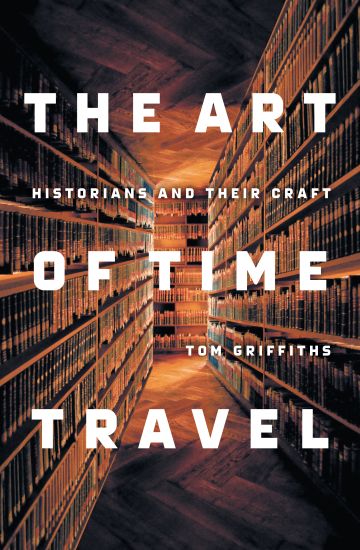
No matter how practised we are at history, it always humbles us. No matter how often we visit the past, it always surprises us. The art of time travel is to maintain critical poise and grace in this dizzy space.' In this landmark book, eminent historian and award-winning author Tom Griffiths explores the craft of discipline and imagination that is history. Through portraits of fourteen historians, including Inga Clendinnen, Judith Wright, Geoffrey Blainey and Henry Reynolds, Griffiths traces how a body of work is formed out of a lifelong dialogue between past evidence and present experience. With meticulous research and glowing prose, he shows how our understanding of the past has evolved, and what this changing history reveals about us. Passionate and elegant, The Art of Time Travel conjures fresh insights into the history of Australia and renews our sense of the historian's craft.
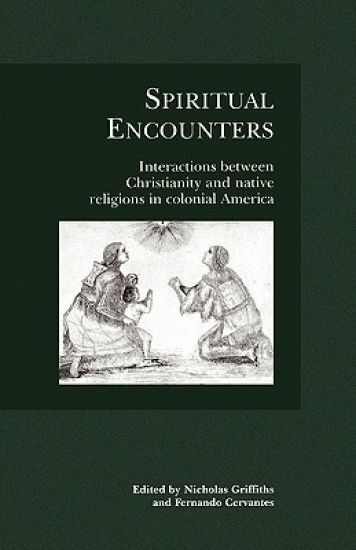
Encounters between religions and the resulting questions pertaining to belief and faith are among the most intriguing subjects with which scholars grapple. How do people adjust, accommodate, resist, reinterpret and harmonize different systems of belief? Do religious conversions often mask more worldly concerns such as political power, economic well being, and the ability to control one's destiny? Specifically adopting a cross-hemispheric approach, this volume draws on experiences of religious change principally in hispanophone America, but also in anglophone and francophone America, in order to transcend cultural frontiers, illuminate the circumstances and conditions which determined the form that spiritual encounters took across the hemisphere, and encourage a comparative approach.
In may 2000, German foreign minister Joschka Fischer dramatically injected new life into the debate on the future course of integration by suggesting that a 'core' of the EU members should move ahead of the rest and negotiate a federal treaty among themselves. The fact that, in the early 1950s, the six founding members of the ECSC and the EEC had tried to do exactly that, has scarcely entered the discussion. This book rediscovers the history of the draft of European Political Community treaty that was completed in march 1953 but abandoned by the governments of the Six eighteen months later. This volume represents the first comprehensive study on Europe's first constitution drawing on the archives of all the participating states. The EPC episode involved discussions of joint defence policy, the framework for future economic integration, foreign policy coordination and the democratisation of European institutions. The book also draws a range of parallels between the situation today, where an overburdened European Union is ill-equipped for the challenge of accepting new members, and the situation in the early 1950s. The challenges then were similar to those faced today, and the arguments then employed for and against closer integration bear an uncanny resemblance to those employed fifty years later. Professor Griffiths has written a study of the apst to inform the present, without sacrificing integrity as either an historian or a social scientist. This book rediscovers the history of the draft of European Political Community treaty that was completed in march 1953 but abandoned by the governments of the Six eighteen months later. This volume represents the first comprehensive study on Europe's first constitution drawing on the archives of all the participating states. The EPC episode involved discussions of joint defence policy, the framework for future economic integration, foreign policy coordination and the democratisation of European institutions. The book also draws a range of parallels between the situation today, where an overburdened European Union is ill-equipped for the challenge of accepting new members, and the situation in the early 1950s