A fantastic and philosophical vision of the apocalypse by one of the most striking Italian novelists of the twentieth century. From his solitary buen retiro in the mountains, the last man on earth drives to the capital Chrysopolis to see if anyone else has survived the Vanishing. But there's no one else, living or dead, in that city of "holy plutocracy," with its fifty-six banks and as many churches. He'd left the metropolis to escape his fellow humans and their striving, but to find that the entire human race has evaporated in an instant is more than he had bargained for. Guido Morselli's arresting post-apocalyptic novel, written just before he died, a suicide, in 1973, depicts a man much like the author himself--lonely, brilliant, difficult--and a world much like our own, mesmerized by money, speed, and machines. He travels around searching for signs of life at the US army base--palm trees, convertibles, and missile bays under the roadway--and scouts the well-appointed kitchens of his alpine valley's grand hotels for provisions, all the while brooding on the limits of human vision: his own, but also that of humankind. Meanwhile, life itself--the rest of nature--is just beginning to flourish now that human beings are gone. A precocious portrait of our Anthropocene world and a philosophical last will and testament from a great Italian outsider.
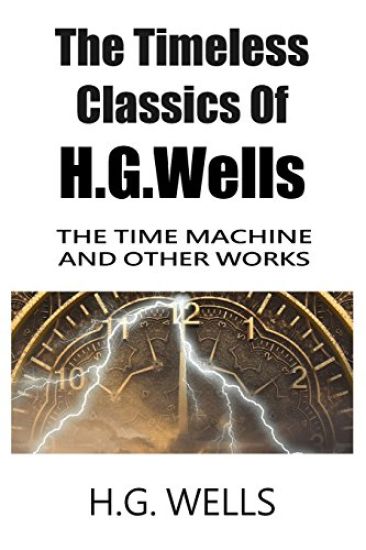
The Timeless Classics of H.G.Wells brings together three of Wells best novels: The Time Machine, The Invisible Man and The Island Of Doctor Moreau all in one volume. " Science Fiction at it's best "
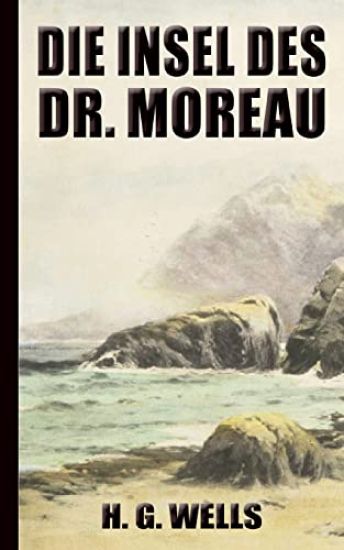
H. G. Wells: Die Insel des Dr. Moreau Neu editierte 2022er-Ausgabe, mit erl uternden Fu noten Auf einer Schiffspassage im Pazifischen Ozean vor der K ste S damerikas wird Edward Prendick nach einem Streit mit dem K pt'n in einem Beiboot ausgesetzt. Er kann sich auf eine nahe Insel retten, auf der andere Passagiere des Segelschiffs an Land gehen. Dort findet er eine seltsame, h chst verst rende Welt vor, in der Zwitterwesen aus Mensch und Tier leben. Urheber des Horrors ist der mysteri se Dr. Moreau, ein aus London stammender Wissenschaftler, unterst tzt von seinem Assistenten Montgomery. Prendick erf hrt nach und nach mehr ber die Experimente Moreaus; und die Abgr nde, die sich vor ihm auftun, werden immer schauderhafter. Die Sache eskaliert, nachdem Moreau von einer seiner Kreaturen angefallen wird ...
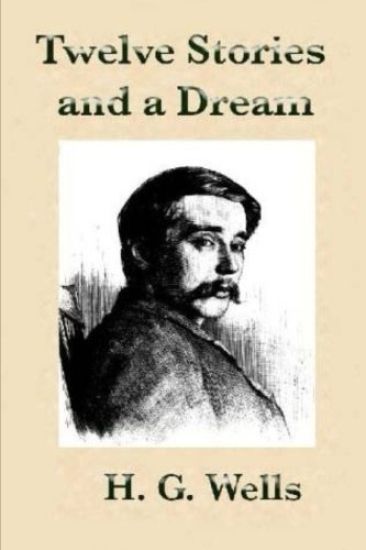
Twelve Stories and a Dream by H.G Wells. Thirteen short stories by HG Wells, the master of speculative fiction Included in this collection is "Mr Skelmersdale in Fairyland" where a man finds his way into fairyland where a fairy queen tries to seduce him away from his human fianc e. In other stories a ghost gets stuck and can't get back to the "other side", a man decides to try being a god for a few months, a magic shop sells "the real thing", a scientist sells time in a bottle, a body is stolen (while its owner is still alive) and a man dreams or does he?
The Island of Doctor Moreau is an 1896 science fiction novel, by English author, H. G. Wells. The text of the novel is the narration of Edward Prendick, a shipwrecked man rescued by a passing boat who is left on the island home of Doctor Moreau, who creates human-like hybrid beings from animals via vivisection. The novel deals with a number of philosophical themes, including pain and cruelty, moral responsibility, human identity, and human interference with nature. 2] Wells described the novel as "an exercise in youthful blasphemy". The Island of Doctor Moreau is a classic of early science fiction 3] and remains one of Wells's best-known books, and has been adapted to film and other media on many occasions.Herbert George Wells (21 September 1866 - 13 August 1946)-known as H. G. Wells-was a prolific English writer in many genres, including the novel, history, politics, social commentary, and textbooks and rules for war games. Wells is now best remembered for his science fiction novels and is called a "father of science fiction", along with Jules Verne and Hugo Gernsback. His most notable science fiction works include The Time Machine (1895), The Island of Doctor Moreau (1896), The Invisible Man (1897), and The War of the Worlds (1898). He was nominated for the Nobel Prize in Literature four times.
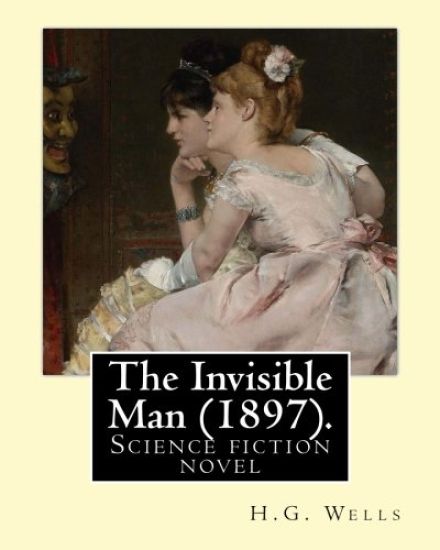
The Invisible Man is a 1897 science fiction novel, originally serialized in Pearson's Magazine. The Invisible Man of the title is "Griffin", a scientist who theorizes that if a person's refractive index is changed to exactly that of air and his body does not absorb or reflect light, then he will not be visible. He successfully carries out this procedure on himself, but cannot become visible again, becoming mentally unstable as a result.Herbert George Wells (21 September 1866 - 13 August 1946)-known as H. G. Wells-was a prolific English writer in many genres, including the novel, history, politics, social commentary, and textbooks and rules for war games. Wells is now best remembered for his science fiction novels and is called a "father of science fiction", along with Jules Verne and Hugo Gernsback. His most notable science fiction works include The Time Machine (1895), The Island of Doctor Moreau (1896), The Invisible Man (1897), and The War of the Worlds (1898). He was nominated for the Nobel Prize in Literature four times.
The Invisible Man is a science fiction novella by H. G. Wells. Originally serialized in Pearson's Weekly in 1897, it was published as a novel the same year. The Invisible Man of the title is Griffin, a scientist who has devoted himself to research into optics and invents a way to change a body's refractive index to that of air so that it neither absorbs nor reflects light and thus becomes invisible. He successfully carries out this procedure on himself, but fails in his attempt to reverse it. While its predecessors, The Time Machine and The Island of Doctor Moreau, were written using first-person narrators, Wells adopts a third-person objective point of view in The Invisible Man. A mysterious man, Griffin, arrives at the local inn of the English village of Iping, West Sussex, during a snowstorm. The stranger wears a long-sleeved, thick coat and gloves; his face is hidden entirely by bandages except for a fake pink nose; and he wears a wide-brimmed hat. He is excessively reclusive, irascible, and unfriendly. He demands to be left alone and spends most of his time in his rooms working with a set of chemicals and laboratory apparatus, only venturing out at night. While Griffin is staying at the inn, hundreds of strange glass bottles (that he calls his luggage) arrive. Many local townspeople believe this to be very strange. He becomes the talk of the village. Meanwhile, a mysterious burglary occurs in the village. Griffin is running out of money and is trying to find a way to pay for his board and lodging. When his landlady demands that he pay his bill and quit the premises, he reveals part of his invisibility to her in a fit of pique. An attempt to apprehend the stranger is frustrated when he undresses to take advantage of his invisibility, fights off his would-be captors, and flees to the downs. There Griffin coerces a tramp, Thomas Marvel, into becoming his assistant. With Marvel, he returns to the village to recover three notebooks that contain records of his experiments. When Marvel attempts to betray the Invisible Man to the police, Griffin chases him to the seaside town of Port Burdock, threatening to kill him. Marvel escapes to a local inn and is saved by the people at the inn, but Griffin escapes. Marvel later goes to the police and tells them of this "invisible man," then requests to be locked up in a high-security jail. Griffin's furious attempt to avenge his betrayal leads to his being shot. He takes shelter in a nearby house that turns out to belong to Dr. Kemp, a former acquaintance from medical school. To Kemp, he reveals his true identity: the Invisible Man is Griffin, a former medical student who left medicine to devote himself to optics. Griffin recounts how he invented chemicals capable of rendering bodies invisible, and, on impulse, performed the procedure on himself. Griffin tells Kemp of the story of how he became invisible. He explains how he tried the invisibility on a cat, then himself. Griffin burned down the boarding house he was staying in, along with all the equipment he used to turn invisible, to cover his tracks; but he soon realised that he was ill-equipped to survive in the open. He attempted to steal food and clothes from a large department store, and eventually stole some clothing from a theatrical supply shop and headed to Iping to attempt to reverse the invisibility. Now he imagines that he can make Kemp his secret confederate, describing his plan to begin a "Reign of Terror" by using his invisibility to terrorise the nation.... Herbert George Wells (21 September 1866 - 13 August 1946)-known as H. G. Wells-was a prolific English writer in many genres, including the novel, history, politics, social commentary, and textbooks and rules for war games. Wells is now best remembered for his science fiction novels and is called a "father of science fiction", along with Jules Verne and Hugo Gernsback.
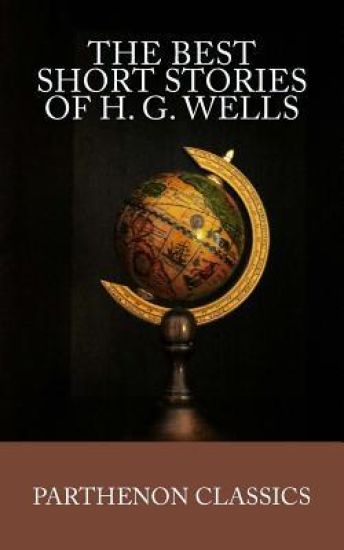
This collection of some of the best of H G W ells'' stories includes The Strange Orchid, The Lord of the D ynamos, In the Abyss, The Cone and The Red Room. Herbert George "H. G." Wells (21 September 1866 - 13 August 1946) was an English writer. He was prolific in many genres, including the novel, history, politics, social commentary, and textbooks and rules for war games. Wells is now best remembered for his science fiction novels and is called a "father of science fiction", along with Jules Verne and Hugo Gernsback. His most notable science fiction works include The Time Machine (1895), The Island of Doctor Moreau (1896), The Invisible Man (1897), and The War of the Worlds (1898). He was nominated for the Nobel Prize in Literature four times.
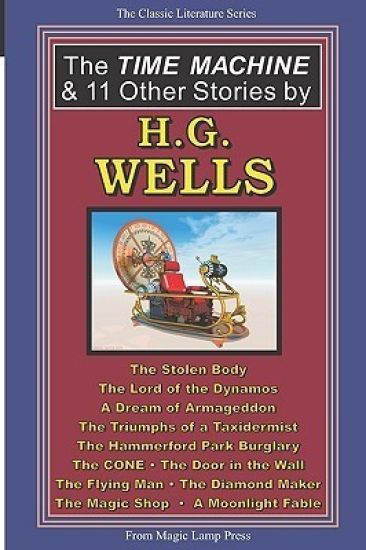
The Time Machine is a novel by H. G. Wells, first published in 1895 and later directly adapted into at least two theatrical films of the same name as well as at least one television and a large number of comic book adaptations. It indirectly inspired many more works of fiction in all media. Considered by many to be one of the greatest science fiction novels of all time, this 38,000 word novella is generally credited with the popularization of the concept of time travel using a vehicle that allows an operator to travel purposefully and selectively. The term "time machine", coined by Wells, is now universally used to refer to such a vehicle. Also included in this book are 11 additional stories by Wells, including: "The Stolen Body" "The Lord of the Dynamos" "A Dream of Armageddon" "The Triumphs of a Taxidermist" "The Hammerford Park Burglary" "The Cone" "The Door in the Wall" "The Flying Man" "The Diamond Maker" "The Magic Shop" "A Moonlight Fable"
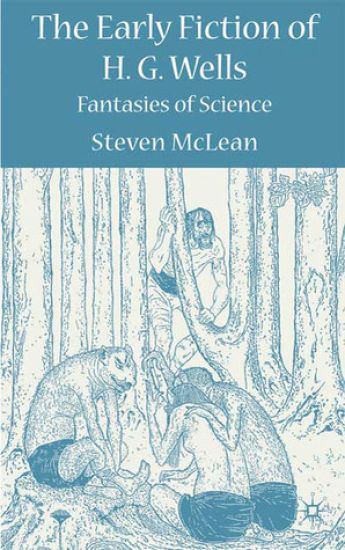
This book explores the relationship between H.G. Wells's scientific romances and the discourses of science in the 1890s and early years of the twentieth century. It investigates how Wells utilizes his early fiction to participate in a range of topical scientific disputes and, increasingly, as a means to instigate social reform.