

Kirjahaku
Etsi kirjoja tekijän nimen, kirjan nimen tai ISBN:n perusteella.
1000 tulosta hakusanalla Heinz Strunk
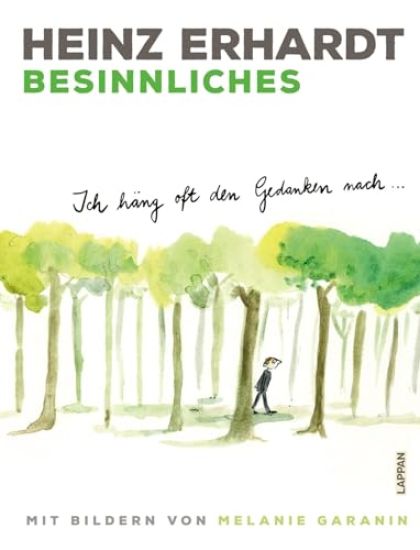
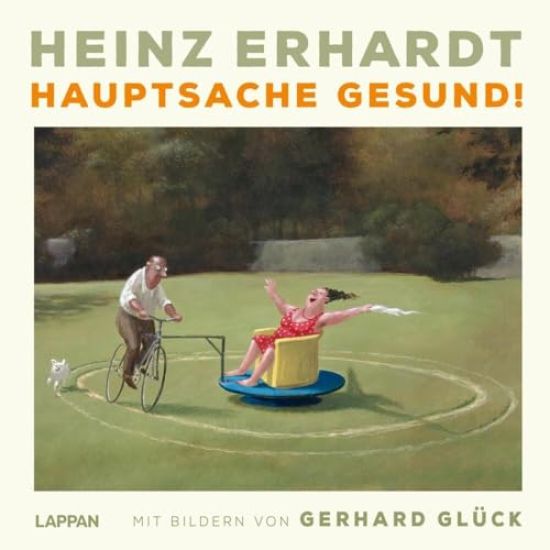

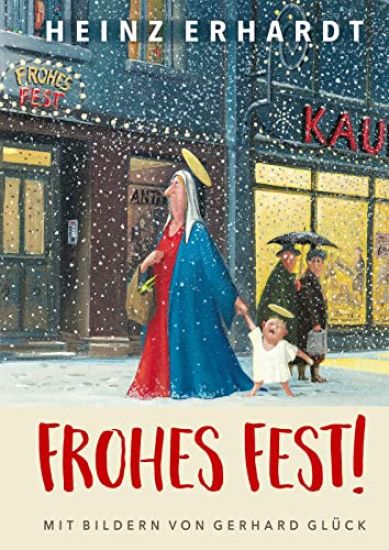
Frohes Fest! Weihnachten mit Heinz Erhardt und Bildern von Gerhard Glück
Heinz Erhardt
Lappan Verlag
2020
sidottu
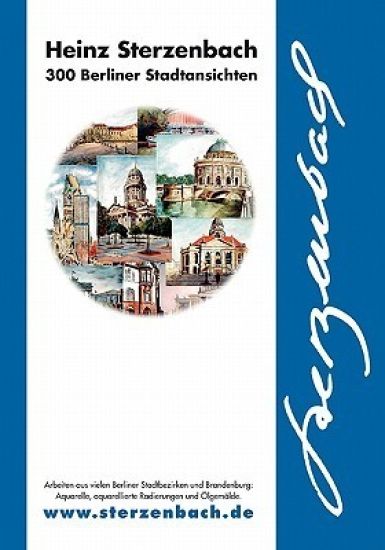
HEINZ STERZENBACH, geb. 1941 in Marialinden, Rhein.- Berg.-Kreis, lebt seit 1969 in Berlin. Berliner Stadtansichten sind eins seiner bevorzugten Themenkreise. Die Stärke der Bilder ist ihr Realismus. "Der Stil und der Inhalt der Bilder kommen gut an. Jeder kann sich etwas unter den Bildern vorstellen" (Berliner Zeitung). "Detailliebe und ungewöhnliche Blickwinkel... und ein glasklarer idyllischer Realismus,... zeichnen sie aus, besonders immer dann, wenn Sterzenbach das alte "Dörfliche" seiner neuen Heimat entdeckt". (Der NordBerliner) "Was den 58jährigen Künstler an der Architekturmalerei fasziniert, ist die "Konservierung ästhetischer Baukultur und die Möglichkeit, Gebäude über ihren Abriß hinaus zu erhalten".(Der Tagesspiegel) "Fachwerkhäuser, idyllische Dorfkirchen oder reich verzierte Gebäude aus der Gründerzeit zählen zu seinen bevorzugten Motiven". (Spandauer Volksblatt) Es gibt viele Bildbände über Berlin, aber meist haben sie einen thematischen Schwerpunkt oder es werden nur die highlights gezeigt. In dem neuen Katalog von Heinz Sterzenbach findet der interessierte Berlin-Liebhaber erstmalig Bilder aus fast allen Bezirken und Ortsteilen von Berlin und Umgebung in einem Katalog. Die Bezirke und Ortsteile sind alphabetisch geordnet.

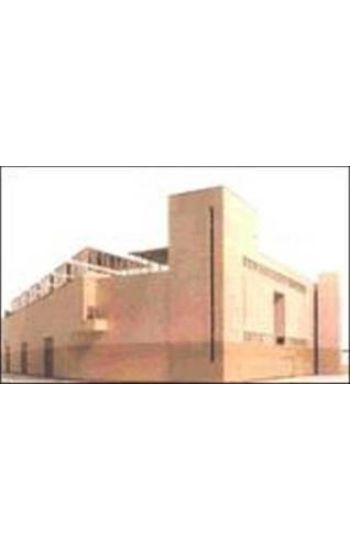
Heinz Tesar, Sammlung Essl, Klosterneuberg, Austria
Gottfried Knapp
Edition Axel Menges
2002
sidottu
Text in English and German. Heinz Tesar's buildings occupy a very particular place on the Austrian architectural scene, which is anyway populated by a lot of individualists. There is a great deal of creative imagination at work here, which always operates outside the scope of modern routine. The town of Klosterneuburg, north of Vienna, has become something like an artistic home for Tesar. The Schomerhaus, an office building whose huge oval central hall leaves convention far behind, and the Protestant church, which has a rounded floor plan like a tear-drop, were now followed by the impressive museum he has built here to house 4000 objects from the private Essl collection, which includes the most important collection of Austrian art after 1945. The floor plan is based on a triangle. Above a storage floor that runs the whole length of the building three individually shaped architectural entities are grouped around a green courtyard. The elaborately orchestrated section of the building on the short leg of the triangle accommodates the entrance foyer, staircase, library, offices and a flat.The long side of the triangle contains the hall for temporary exhibitions extending over two storeys; on the lower floor it is glazed on the courtyard side, and in the upper storey it is lit partly from the side and partly from the skylights in the slightly undulating roof. The hypotenuse is made up of a sequence of parallel galleries; they are topped by lanterns, which admit a great deal of daylight. Finally, Tesar gives the cubic building an organic touch with a curved flourish at the tip of the triangle. Following Gehry and Zumthor, who have recently made important contributions to the theme of art museums, Tesar is now offering a variant that responds very physically to its surroundings, creating individual spaces with a variety of light.
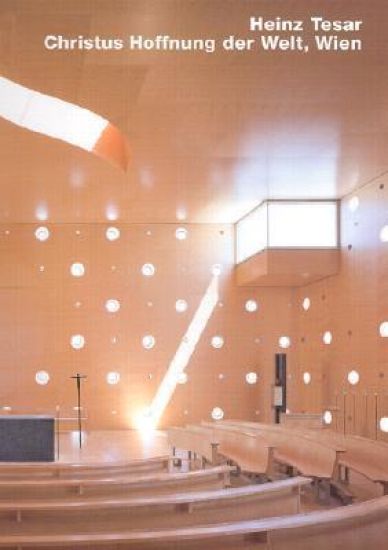
Heinz Tesar: Christus, Hoffnung der Welt, Donau City, Wien
Immo Boyken
Edition Axel Menges
2002
sidottu
Text in English and German. The church rises to the challenge of providing a spiritual centre for Donau City, the new residential and commercial centre on the opposite bank of the Danube -- not as an act of coronation for the city in the sense of Taut's urban crown, as a temple or cathedral, but as miniature, as a demonstration of the power of the quiet as opposed to the loud, as an 'oasis in the diaspora', to use Karl Rahner's formulation about the parishes of the future. The building gives an impression of starkness: a hard cube, cut off at the corners, clad with sheets of black chromium steel. But it is only stark at first glance. A second glance shows that the hardness is a friendly hardness: because of the reflections that the material admits; because of the grid of the large-format sheets, to which the brightly gleaming drill-holes that cover the walls like fine gossamer respond; because of circular apertures that allow light to shine outwards after dark; because of large, rectangular windows in the receding corners that create a contrast with the closed quality of the building. Inside the starkness gives way altogether: a light space, which one comes into through an art-fully designed entrance. Originally a sparse covering for the space, which thrives mainly because of the light material -- birch wood -, because of the arrangement of the pews, which is as lively as it is peaceful -- segments of circles of different sizes, surrounding the dark syenite altar block in the form of an open circle -- and especially because of the wide range of circular light sources that render the introverted interior transparent, the large windows that create islands of light, the free-form aperture in the ceiling, which sends light gliding down on to the altar. Heinz Tesar's church continues a tradition of forward-looking modern church building, from Rudolf Schwarz's Fronleichnamskirche in Aachen via Egon Eiermann's Kaiser-Wilhelm-Gedachtniskirche in Berlin, Franz Fueg's Piuskirche in Meggen on Lake Lucerne to the new Herz-Jesu-Kirche in Munich by Allmann, Sattler and Wappner; and alongside all this there is also the tradition of a genuinely Viennese development of this theme, from Otto Wagner's Kirche am Steinhof to Ottokar Uhl's parish church Katharina von Siena.
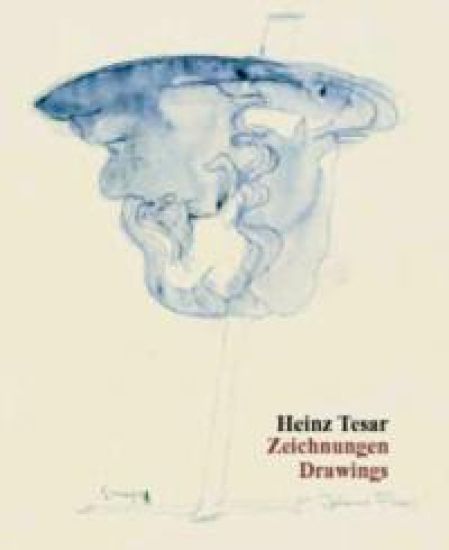
Text in English and German. This book presents a selection from all Tesar's creative periods and an essay introduces the background to this art and its current positioning, which not least raises theoretical questions about the relationship between pictorial art and architecture. Tesar's drawings are presented as a project that turns a vision of Modernism into reality within a manageable personal sphere. The vision conjures up, as modern creative work is condemned to becoming increasingly specialised, an alternative 'art as a life practice', but -- and this is the present level of perception -- one that can ultimately be realised only in individual art projects.
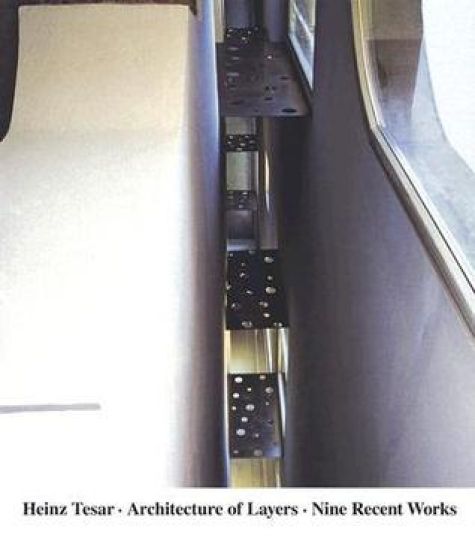
Heinz Tesar's architecture is associated with holistic ideas, and is 'value-conservative' in this sense. But at the same time, this architecture relates to its time, is modern, frank and open to consensus in a subjective dialectic between connection and isolation. However, this holistic concept is not concerned with hierarchical orders, but with relative weighting in a denomination process. Tesar is someone who names things, a 'baptist' who makes his objects that have acquired form individual and thus unmistakable.

HEINZ ERHARDT SEINE LIEDER
HAL LEONARD
2017
Tuntematon sidosasu
Fr Gesang und Klavier.

Heinz Butz - Kleinskulpturen
Sieveking Verlag
2022
nidottu