Kirjojen hintavertailu. Mukana 12 390 323 kirjaa ja 12 kauppaa.

Kirjahaku

Etsi kirjoja tekijän nimen, kirjan nimen tai ISBN:n perusteella.

1000 tulosta hakusanalla Helene Cixous

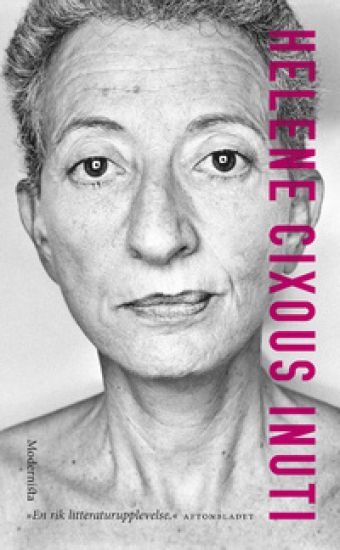
Inuti

Inuti

Hélène Cixous

Modernista
2015
pokkari
Inuti handlar om en kärlek utan gräns, om en flicka som håller en hemlighet inom sig: hennes döda far finns kvar i världen, rör sig hela tiden i hennes närhet. Den hemlige fadern uppfyller alla tomrum och sträcker ut sig oändligt, över horisonten och upp till stjärnorna. Dottern följer honom världen runt, så långt hon nu kan gå på sina dödliga ben. Hélène Cixous barndomsmiljö i Algeriet är platsen för ett starkt känslomässigt drama, där en liten flicka förlorar sin far och föds till författarinna. Det är första gången en bok ur Cixous internationellt inflytelserika författarskap översätts till svenska. Inuti, som var Cixous debutbok, belönades med Prix Médicis när den publicerades 1969.Pressröster:»[...] lika mycket poetik som poesi, essä som roman, självbiografi som fiktion. [...] en rik litteraturupplevelse.«HANNA NORDENHÖK, AFTONBLADET»Allt som händer, händer i språket. Och det är mycket. Flickans sorg och vrede skrivs fram genom ett minutiöst, subversivt språkarbete: poetiskt, lekfullt, desperat, erotiskt. Översättarna är sannerligen värda en eloge. Cixous skrivande tvingar fram en långsam, lyssnande läs­art som är öppen för djärva språng i tanke, känsla och språk.«MAGNUS PERSSON, SVENSKA DAGBALDET
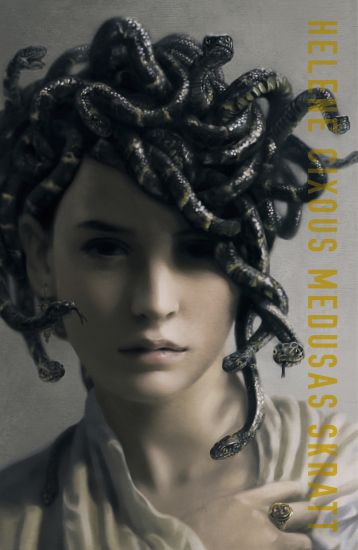
Medusas skratt

Medusas skratt

Hélène Cixous

Modernista
2015
nidottu
En feministisk klassiker äntligen på svenska. »En essä som på sina blygsamma 30 sidor är upprorisk och utopisk, vildsint och het.« THERESE ERIKSSON, SVD»Medusas skratt har verkligen sina särskilda språkpärlor. Man måste till exempel bara älska dess vanvördiga humor, som i de många sarkasmerna om kastrationen och det manliga ståndet.« HANNA NORDENHÖK, EXPRESSEN»Medusas skratt blir sin egen teori. Hélène Cixous plockar sönder och synar uttrycken, låter kaos och kosmos mötas i kaosmos genom dikotomin i det franska verbet voler (att flyga, att stjäla) beskriver hon en stöld av språket som en väg till flykt.« HENRIK SAHL JOHANSSON, UNT»Vid sidan av Simone de Beauvoir och Luce Irigaray framstår Hélène Cixous som en av de mest betydande franska feminister som inspirerat kvinnor att våga bryta med den manliga dominansen.« LENA KÅRELAND, SVENSKA DAGBLADETMedusas skratt av Hélène Cixous har kommit att höra till kärnan av den feministiska kritiken. Ett manifest för frigörelse från patriarkatets strypgrepp genom skriften. Med lika delar poetisk och filosofisk kraft uppmanas kvinnor i världen att engagera sig i sina egna kroppar och dokumentera det i en ny écriture feminine. En feministisk klassiker och en av det sena 1900-talets stora franska essäer, nu för första gången på svenska.I översättning av Sara Gordan och Kerstin Munck.HÉLÈNE CIXOUS, född 1937 i Oran i Algeriet, är en fransk feminist, filosof, romanförfattare, dramatiker och litteraturvetare. Medusas skratt [Le Rire de la Méduse, 1975] är den mest inflytelserika av hennes essäer.»Medusas skratt är ett friskt inlägg i den feministiska debatten idag. Kanske för att den inte ens är en debatt, ingen åsikt, utan riktar sig till kvinnorna-människorna. De 'hemliga härskarinnor' som varit tysta så länge, som nu en och en måste lämna sina gömställen och ta den 'mörka kontinenten' i besittning.« IDA THUNSTRÖM, TIDNINGEN KULTUREN»Det är en både lyckad och lycklig text, en text att bli upplivad av. Den är optimistisk: ett stridsrop. Att börja skriva innebär att övervinna komplexen, varningarna, förbuden. Att bejaka. Att skriva blir för Cixous att ställa sig i det positivas tjänst.« BJÖRN KOHLSTRÖM, BERNUROm Hélène Cixous roman »Inuti« [översättning: Sara Gordan och Kerstin Munck, 2008]:»Lika mycket poetik som poesi, essä som roman, självbiografi som fiktion. En rik litteraturupplevelse.« HANNA NORDENHÖK, AFTONBLADET»Allt som händer, händer i språket. Och det är mycket. Flickans sorg och vrede skrivs fram genom ett minutiöst, subversivt språkarbete: poetiskt, lekfullt, desperat, erotiskt. Översättarna är sannerligen värda en eloge. Cixous skrivande tvingar fram en långsam, lyssnande läsart som är öppen för djärva språng i tanke, känsla och språk.« MAGNUS PERSSON, SVENSKA DAGBLADET
Att komma till skriften

Att komma till skriften

Hélène Cixous

Modernista
2019
nidottu
»Vid sidan av Simone de Beauvoir och Luce Irigaray framstår Hélène Cixous som en av de mest betydande franska feminister som inspirerat kvinnor att våga bryta den manliga dominansen. I hennes författarskap sätts våra könsidentiteter i gungning.« Lena Kåreland, SvDFör första gången i svensk översättningJudinna, kvinna, uppvuxen i Algeriet, faderlös förutsättningarna tycktes försvinnande små när Hélène Cixous en gång krävde sin rätt att beträda den franska litteraturens Heliga Trädgård. I essän Att komma till skriften [La venue à l écriture, 1976] reflekterar Hélène Cixous över utgångspunkterna för sitt skrivande. Hon ställer sin sedermera berömda fråga om en ny écriture féminine, men med en mer självbiografisk och personlig utgångspunkt än annars. Det handlar om relationerna mellan skriften, främlingskapet, exilen, sorgen och döden. Eller om relationerna mellan skriften, givandet, närandet, kärleken, livet. Om relationerna mellan allt det ovanstående - och att vara kvinna. Incitamentet är förlösande: Cixous talar om att skriva sig »förbi väggen« - »bli floden«. Att komma till skriften är en självbiografiskt hållen Cixous- essä som med tiden rönt klassikerstatus. För första gången utkommer nu texten på svenska, i översättning av Sara Gordan. HÉLÈNE CIXOUS, född 1937 i Oran, Algeriet, är en fransk feminist, romanförfattare, filosof och litteraturvetare. Cixous grundade det första centret för feministiska studier på ett europeiskt universitet i Paris. Hennes essäkonst har gett Cixous status som en av den poststrukturalistiska feministiska teorins mödrar.
Medusas skratt

Medusas skratt

Hélène Cixous

Modernista
2017
nidottu
»Vid sidan av Simone de Beauvoir och Luce Irigaray framstår Hélène Cixous som en av de mest betydande franska feminister som inspirerat kvinnor att våga bryta med den manliga dominansen. I hennes författarskap sätts våra könsidentiteter i gungning.« Svenska Dagbladet»Medusas skratt har verkligen sina särskilda språkpärlor. Man måste till exempel bara älska dess vanvördiga humor, som i de många sarkasmerna om kastrationen och det manliga ståndet.« ExpressenMedusas skratt av Hélène Cixous har kommit att höra till kärnan av den feministiska kritiken. Ett manifest för frigörelse från patriarkatets strypgrepp genom skriften. Med lika delar poetisk och filosofisk kraft uppmanas kvinnor i världen att engagera sig i sina egna kroppar och dokumentera det i en ny écriture feminine. En feministisk klassiker och en av det sena 1900-talets stora franska essäer, nu för första gången på svenska. I översättning av Sara Gordan och Kerstin Munck.HÉLÈNE CIXOUS, född 1937 i Oran i Algeriet, är en fransk feminist, filosof, litteraturvetare, dramatiker och författare. Med över 50 skönlitterära titlar på verklistan och som tidigare husdramaturg på Thêatre du Soleil är hon en av vår tids största och viktigaste berättare. Hennes författarskap har belönats med bland annat Prix Marguerite Duras [2014] och Prix Marguerite Yourcenar [2016].»Medusas skratt är ett friskt inlägg i den feministiska debatten idag. Kanske för att den inte ens är en debatt, ingen åsikt, utan riktar sig till kvinnorna-människorna. De 'hemliga härskarinnor' som varit tysta så länge, som nu en och en måste lämna sina gömställen och ta den 'mörka kontinenten' i besittning.« Tidningen Kulturen»Medusas skratt blir sin egen teori. Hélène Cixous plockar sönder och synar uttrycken, låter kaos och kosmos mötas i kaosmos - genom dikotomin i det franska verbet voler (att flyga, att stjäla) beskriver hon en stöld av språket som en väg till flykt.« UNT
Från Osnabrücks station till Jerusalem
»Som att försöka navigera i en liten eka på ett stormigt hav av känslor och motkänslor. Jag låter mig vaggas in i Hélène Cixous glana litterära värld.« Sinziana Ravini, AftonbladetAtt resa till Osnabrück är att resa till Jerusalem, det är att finna och förlora. Det är att gräva fram hemligheter, återuppväcka döda, ge ordet till de stumma. Och det är att förlora den absoluta friheten i att vara jude eller judinna eller inte vara det när man vill, en frihet jag åtnjuter villkorligt.Berättarjagets mor är död, och med henne alla berättelser om Osnabrück, staden som under nazismen plötsligt vände sig mot och började mörda sina egna medborgare.I sökandet efter sina flydda eller mördade släktingar finner berättaren en Kung Lear-liknande historia, om en fader som flydde till sin dotter i Jerusalem men blev avvisad och tvingades tillbaka till Tyskland. Med poetisk skärpa skriver Hélène Cixous de dödas vittnesmål, med utgångspunkt i frågan om vem som ska bevara historien när de sista som minns har dött. I svensk översättning av Sara Gordan och Kerstin Munck.HÉLÈNE CIXOUS, född 1937 i Oran i Algeriet, är en fransk feminist, filosof, litteraturvetare, dramatiker och författare. Med över 50 skönlitterära titlar på verklistan och som tidigare husdramaturg på Thêatre du Soleil är hon en av vår tids största och viktigaste berättare. Hennes författarskap har belönats med bland annat Prix Marguerite Duras [2014] och Prix Marguerite Yourcenar [2016].
Sisään kirjoittamiseen

Sisään kirjoittamiseen

Hélène Cixous

Aporia kustannus
2022
nidottu
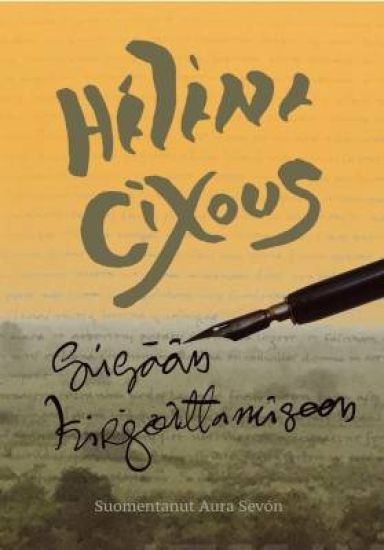
Vaan jos minulle ei silloin olisi annettu rajatonta tilaa, en olisi kirjoittanut sitä, minkä kuulen. Sillä kirjoitan Rakkautta varten; alkaen ja lähtien Rakkaudesta. Kirjoitan Rakkaudesta. Kirjoittaa: rakastaa, toisistaan erottamattomat. Kirjoittaminen on rakkauden ele. Suuri ele. Sisään kirjoittamiseen on itsenäinen osa laajempaa tekstikokoelmaa Entre l'écriture, joka ilmestyi Ranskassa vuonna 1986 ja kokosi yhteen kirjoituksia vuosilta 1975-1984. Niissä käsitellään muun muassa yhtä feministisen ajattelun kiehtovinta ja kiistellyintä kysymystä, niin kutsuttua naiskirjoitusta, écriture féminine. Teoksen syvästi henkilökohtainen ote tuo kirjoittajansa lähelle lukijaa samalla kun hätkähdyttävän moniselitteinen kieli tempaa pyörteisiinsä pohtimaan kirjoittamisen liikkeelle panevia voimia - ja sen esteitä, syitä ja edellytyksiä. Teoksen täydentää Cixous'n ilmaisua ja tuotantoa koskeva laaja katsaus, jossa suomentaja Aura Sevón avaa Cixous'n kääntämisen mahdollisuuksia koskevaa keskustelua sekä pohtii kirjan suomennostyön erityispiirteitä ja siinä tehtyjä ratkaisuja.
Angst

Angst

Hélène Cixous

Silver Press
2026
nidottu
A woman replays her abandonment by her mother, who is sometimes addressed as a male mother-god. She is also abandoned by her lover, to whom she is in thrall. She tries repeatedly to make or receive phone calls with the beloved figures, without success. She waits for their letters and imagines their contents. In a dream-like, torrid sequence, suffering, fear, fatigue and imperfection are apostrophised. Forgetting is examined and toyed with from every angle. Mythical hybrid creatures are invoked: a snake-headed lion, wolf-snakes, a wolf-peacock. How did this come to be? In a cunningly, wittily wrought rush, the unique, unpredictable voice of the narrator speaks from multiple perspectives to express powerful anguish and, ultimately, catharsis.
Incinarration

Incinarration

Hélène Cixous

SEAGULL BOOKS LONDON LTD
2026
sidottu
A genre-defying book about survival, transformation, and the human ability to rise from the ashes. Hélène Cixous’s powerful new book, masterfully translated by Peggy Kamuf, is a vivid journey through fire. From the ashes of wars, wildfires, and upheaval, Cixous traces a dramatic path across time—from the Second World War and the Nazi occupation of Oran to the European wildfires of 2022—weaving a rich, intimate narrative that merges history, autobiography, and myth. With her piercing, lyrical voice, Cixous confronts the human cost of destruction and upheaval, and asks a universal question: What do we carry with us when everything we know is falling to ashes? In Incinarration, Cixous finds hope in the power of words, memory, and imagination to illuminate our darkest moments and redeem the future. As forests burn and regimes collapse, Cixous shows us how stories become a form of resistance—a way to remember, to bear testimony, and to find renewal in the face of oblivion.
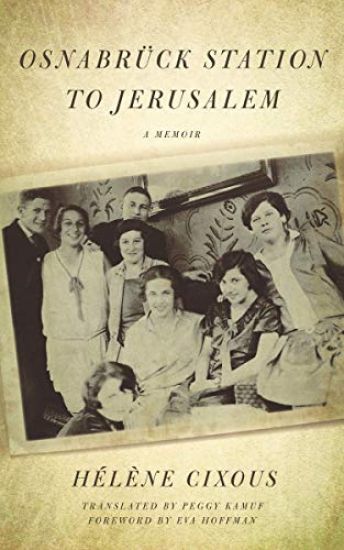
Osnabrück Station to Jerusalem

Osnabrück Station to Jerusalem

Hélène Cixous; Eva Hoffman

FORDHAM UNIVERSITY PRESS
2020
sidottu
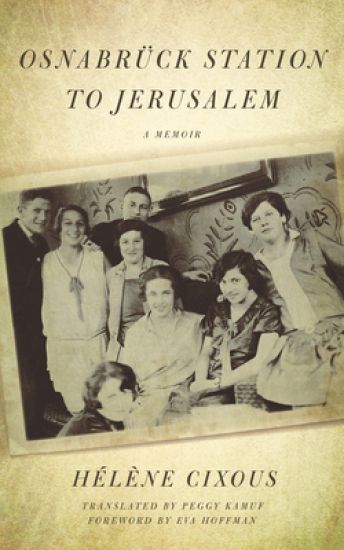
An inventive literary account of Cixous's remarkable journey to her mother's birthplace Winner, French Voices Award for Excellence in Publication and Translation For about eighty years, the Jonas family of Osnabrück were part of a small but vibrant Jewish community in this mid-size city of Lower Saxony. After the war, Osnabrück counted not a single Jew. Most had been deported and murdered in the camps, others emigrated if they could and if they managed to overcome their own inertia. It is this inertia and failure to escape that Hélène Cixous seeks to account for in Osnabrück Station to Jerusalem. Vicious anti-Semitism hounded all of Osnabrück's Jews long before the Nazis' rise to power in 1933. So why did people wait to leave when the threat was so patent, so in-their-face? Drawn from the stories told to Cixous by her mother, Ève, and grandmother, Rosalie (Rosi), this literary work reimagines fragments of Ève's and Rosi's stories, including the death of Ève's uncle, Onkel André. Piecing together the story of Andreas Jonas from what she was told and from what she envisages, Cixous recounts the tragedy of the one she calls the King Lear of Osnabrück, who followed his daughter to Jerusalem only to be sent away by her and to return to Osnabrück in time to be deported to a death camp. Cixous wanders the streets of the city she had heard about all her life in her mother's and grandmother's stories, digs into its archives, meets city officials, all the while wondering if she should have come. These hesitations and reflections in the present, often voiced in dialogues staged with her own son or daughter, are woven with scenes from her childhood in Algeria and the half-remembered, half-invented stories of the Jonas family, making Osnabrück Station to Jerusalem one of the author's most intensely engaging books. This work received the French Voices Award for excellence in publication and translation. French Voices is a program created and funded by the French Embassy in the United States and FACE (French American Cultural Exchange).
Osnabrück Station to Jerusalem

Osnabrück Station to Jerusalem

Hélène Cixous; Eva Hoffman

FORDHAM UNIVERSITY PRESS
2022
pokkari
An inventive literary account of Cixous's remarkable journey to her mother's birthplace Winner, French Voices Award for Excellence in Publication and Translation For about eighty years, the Jonas family of Osnabrück were part of a small but vibrant Jewish community in this mid-size city of Lower Saxony. After the war, Osnabrück counted not a single Jew. Most had been deported and murdered in the camps, others emigrated if they could and if they managed to overcome their own inertia. It is this inertia and failure to escape that Hélène Cixous seeks to account for in Osnabrück Station to Jerusalem. Vicious anti-Semitism hounded all of Osnabrück's Jews long before the Nazis' rise to power in 1933. So why did people wait to leave when the threat was so patent, so in-their-face? Drawn from the stories told to Cixous by her mother, Ève, and grandmother, Rosalie (Rosi), this literary work reimagines fragments of Ève's and Rosi's stories, including the death of Ève's uncle, Onkel André. Piecing together the story of Andreas Jonas from what she was told and from what she envisages, Cixous recounts the tragedy of the one she calls the King Lear of Osnabrück, who followed his daughter to Jerusalem only to be sent away by her and to return to Osnabrück in time to be deported to a death camp. Cixous wanders the streets of the city she had heard about all her life in her mother's and grandmother's stories, digs into its archives, meets city officials, all the while wondering if she should have come. These hesitations and reflections in the present, often voiced in dialogues staged with her own son or daughter, are woven with scenes from her childhood in Algeria and the half-remembered, half-invented stories of the Jonas family, making Osnabrück Station to Jerusalem one of the author's most intensely engaging books. This work received the French Voices Award for excellence in publication and translation. French Voices is a program created and funded by the French Embassy in the United States and FACE (French American Cultural Exchange).
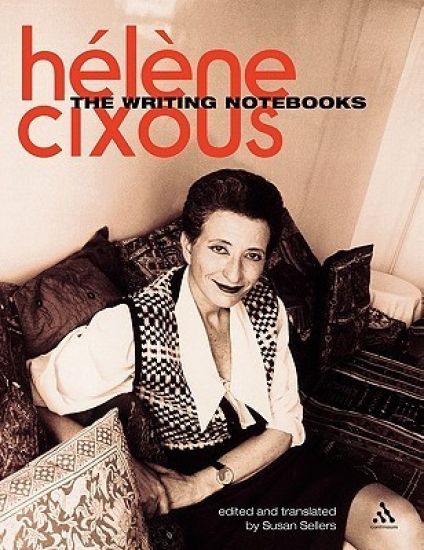
The Writing Notebooks

The Writing Notebooks

Helene Cixous; Susan Sellers

Continuum International Publishing Group Ltd.
2006
nidottu
Hne Cixous is among the most influential and original literary critics and feminist thinkers of our time. This volume reproduces - for the first time, in any language - a collection of pages from her original writing notebooks, offering a unique insight into her radical thought and work. The material gathered here ranges across the full spectrum of Cixous' writing, including the concept of criture minine, and the starting points and sources of inspiration for her poetry and prose. The editor's introduction succinctly outlines the central tenets of Cixous' theory of writing. Each extract is accompanied by editorial commentary and a translation, both by Susan Sellers. The book concludes with an interview with Cixous herself, in which she discusses the writing process, her own criticism, fiction and poetry and the value and importance of these notebooks. Students and teachers of literature, psychoanalysis, philosophy and feminist theory will find this an illuminating and inspiring collection of writings. Edited by Susan Sellers, Professor of English and Related Literature at the Univeristy of St Andrews.
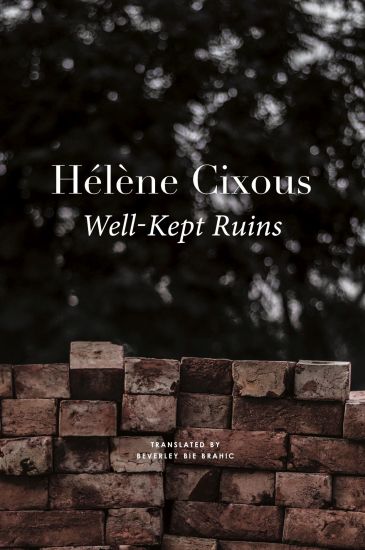
Well–Kept Ruins

Well–Kept Ruins

Hélène Cixous; Beverley Bie Brahic

SEAGULL BOOKS LONDON LTD
2023
sidottu
A genre-defying book from one of France’s most well-known philosopher-writers. In the Lower Saxony region of northwestern Germany sits the city of Osnabrück. This is where, in 1648, the Peace of Westphalia was signed, bringing the Thirty Years’ War and one of the most calamitous periods of European history to an end. But the city was later to witness another calamity. Today, as one walks through Old Synagogue Street in a rich neighborhood of Osnabrück, one might miss noticing a pile of pale stones held together by chicken wire that sits between two fashionable homes. These are the well-kept ruins from behind which stares a gaping space—a place of memory and oblivion. Four polished plaques tell the tale of the horror-filled night of November 9, 1938—today known as Kristallnacht—when the synagogue that had stood on this spot was desecrated, looted, set on fire, and eventually demolished by Hitler’s forces. On the same day, ninety parishioners were imprisoned by the Gestapo and eventually sent to the Buchenwald concentration camp. Osnabrück was also home to Eve Klein, a member of the city’s early-twentieth-century Jewish community and the mother of author Hélène Cixous. In Well-Kept Ruins, Cixous returns to the historic city in 2019 and reflects on the remains of the synagogue that “express the life lost, the life kept.” Walking the streets of the city, plumbing the depths of the past along with her own family’s history, looking deep into the future, and punctuating her poetic prose with haunting photographs, Cixous explores the ruins at the heart of humanity. Part memoir, part philosophical meditation, Well-Kept Ruins is a genre-defying and timely reflection of the contemporary human condition.
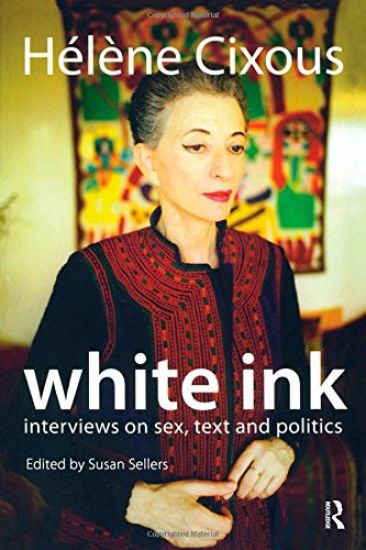
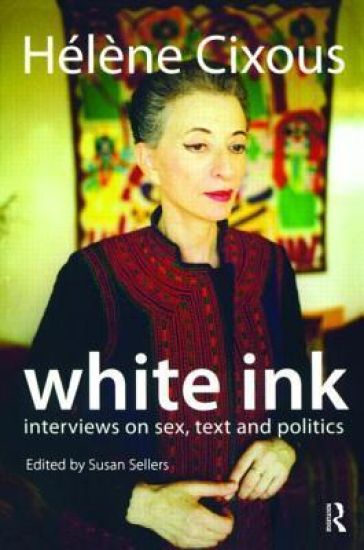
White Ink

White Ink

Helene Cixous; Susan Sellers

Acumen Publishing Ltd
2008
sidottu
Helene Cixous is widely regarded as one of the world's most influential feminist writers and thinkers. "White Ink" brings together her most revealing interviews, available in English for the first time. Spanning over four decades and including a new interview with the editor Susan Sellers, this collection presents a brilliant, running commentary on the subjects at the heart of Cixous' writing.Here, Cixous discusses her books and her creative process, her views on and insights into literature, philosophy, theatre, politics, aesthetics, faith and ethics, human relations and the state of the world. As she responds to interviewers' questions, Cixous is prompted to reflect on her roles and activities as poet, playwright, feminist theorist, professor of literature, philosopher, woman, Jew. Each interview is a remarkable performance, an event in language and thought where Cixous' celebrated intellectual and poetic force can be witnessed 'in action'. The accessibility of the interview format provides an excellent starting-point for readers new to Cixous, while those already familiar with her work will find unexpected insights and fresh elucidations of her thought.
White Ink

White Ink

Helene Cixous; Susan Sellers

Acumen Publishing Ltd
2008
nidottu
Helene Cixous is widely regarded as one of the world's most influential feminist writers and thinkers. "White Ink" brings together her most revealing interviews, available in English for the first time. Spanning over four decades and including a new interview with the editor Susan Sellers, this collection presents a brilliant, running commentary on the subjects at the heart of Cixous' writing. Here, Cixous discusses her books and her creative process, her views on and insights into literature, philosophy, theatre, politics, aesthetics, faith and ethics, human relations and the state of the world.As she responds to interviewers' questions, Cixous is prompted to reflect on her roles and activities as poet, playwright, feminist theorist, professor of literature, philosopher, woman, Jew. Each interview is a remarkable performance, an event in language and thought where Cixous' celebrated intellectual and poetic force can be witnessed 'in action'. The accessibility of the interview format provides an excellent starting-point for readers new to Cixous, while those already familiar with her work will find unexpected insights and fresh elucidations of her thought.
The Newly Born Woman

The Newly Born Woman

Helene Cixous; Catherine Clement; Sandra M. Gilbert

I.B. Tauris
1997
nidottu
This work seeks to uncover the veiled structures of language and society that have situated women in an "imaginary zone", a zone of exclusion. It is an exploration and a dialogue between its two authors, and an exposition of Cixous's influential strategy of "ecriture feminine". Through their readings of historical, literary, psychoanalytical texts, presenting the sorceress, the hysteric, the Tarantella, Penthesileia and Cleopatra among many others, Cixous and Clement explore what is hidden and repressed in culture.
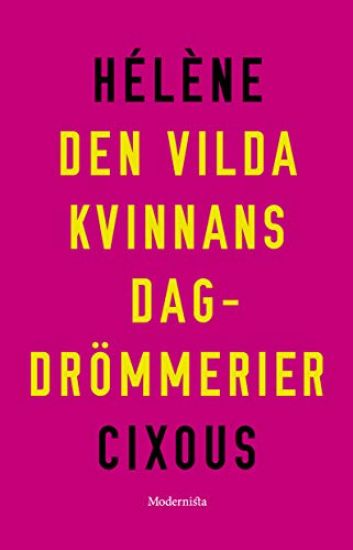
Den vilda kvinnans dagdrömmerier

Den vilda kvinnans dagdrömmerier

Hélène Cixous; Hanna Nordenhök

Modernista
2021
nidottu
»Som att försöka navigera i en liten eka på ett stormigt hav av känslor och motkänslor. Jag låter mig vaggas in i Hélène Cixous glana litterära värld.« Sinziana Ravini, Aftonbladet »...allt jag önskade var deras Stad och deras Algeriet [...] så snart det fanns fransmän var jag hänförelse, vapen, där det fanns araber var jag hopp och sår. Jag är oskiljbarab, tänkte jag. Det är en outhärdlig relation att ha till sig själv.«Hélène Cixous skildrar här sin barndoms obesvarade kärlek till Algeriet. Bokens syskonpar har förlorat sin far, juden och läkaren som mer än allt annat ville vara bror med araberna. I hans ställe drömmer de om Cykeln som ska ge dem tillgång till landet, men det blir inte som de tänkt sig. Grannungarna retas och skrattar åt dem, det är krig både mellan barnen, könen och de vuxna och Vichyregimens antisemitiska lagar tillämpas även i det koloniserade Algeriet. I översättning av Sara Gordan och Kholod Saghir, med ett efterord av författaren och kritikern Hanna Nordenhök.HÉLÈNE CIXOUS, född 1937 i Oran i Algeriet, är en fransk feminist, filosof, litteraturvetare, dramatiker och författare. Med över 50 skönlitterära titlar på verklistan och som tidigare husdramaturg på Thêatre du Soleil är hon en av vår tids största och viktigaste berättare. Hennes författarskap har belönats med bland annat Prix Marguerite Duras [2014] och Prix Marguerite Yourcenar [2016].»Jag älskar Cixous sätt att uttrycka sig. Hon har en otrolig förmåga att kunna förmedla det innersta på ett naturligt och poetiskt vis.« Litteraturvetare
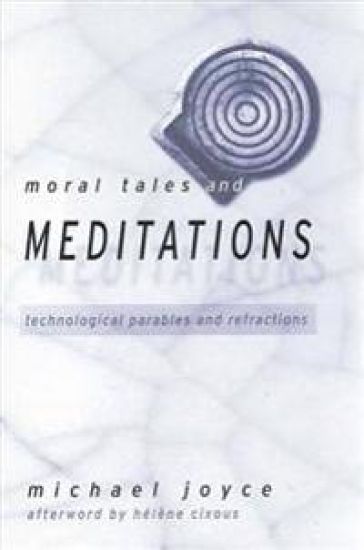
Moral Tales and Meditations

Moral Tales and Meditations

Michael Joyce; Helene Cixous

State University of New York Press
2002
pokkari
Provocative essays and short tales that explore the effect of technology and new media on our everyday lives. Novelist, cyber-theorist, and widely acclaimed hypertext fiction writer Michael Joyce weaves an evocative and provocative set of brief essays and short parable-like fictions into a compelling collection of meditations on how technology and new media affect our culture and everyday lives. Taken together, these pieces present a writer's reflections on a life of sudden changes at the edge of an uncertain future. They continue Joyce's effort to construct what in previous collections he has called "theoretical narratives." Here, however, Joyce turns from reflections to what he terms "refractions," alluding to the turning or bending a wave undergoes when it passes from one medium into another of different density. Through these refractions, he formulates an understanding of the wave of change we face as human beings in a multimediated age.
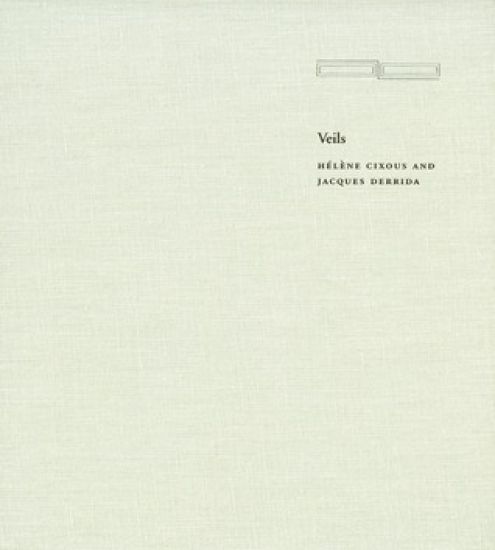
Veils

Veils

Cixous Helene; Derrida Jacques

Stanford University Press
2002
sidottu
Something of a historical event, this book combines loosely "autobiographical" texts by two of the most influential French intellectuals of our time. "Savoir," by Hélène Cixous, is a brief but densely layered account of her experience of recovered sight after a lifetime of severe myopia, an experience that ends with the unexpected turn of grieving for what is lost. Her literary inventiveness mines the coincidence in French between the two verbs savoir (to know) and voir (to see). Jacques Derrida's "A Silkworm of One's Own" complexly muses on a host of autobiographical, philosophical, and religious motifs—including his varied responses to "Savoir." The two texts are accompanied by six beautiful and evocative drawings that play on the theme of drapery over portions of the body. Veils suspends sexual difference between two homonyms: la voile (sail) and le voile (veil). A whole history of sexual difference is enveloped, sometimes dissimulated here—in the folds of sails and veils and in the turns, journeys, and returns of their metaphors and metonymies. However foreign to each other they may appear, however autonomous they may be, the two texts participate in a common genre: autobiography, confession, memoirs. The future also enters in: by opening to each other, the two discourses confide what is about to happen, the imminence of an event lacking any common measure with them or with anything else, an operation that restores sight and plunges into mourning the knowledge of the previous night, a "verdict" whose threatening secret remains out of reach by our knowledge.