Focusing on the difference between lower-level perceptual processes in the “neural unconscious” and higher-order thought in the frontal lobes, this open access book shows how Herman Melville sought to reclaim the fluid world of the sensory, with its precategorical and radically egalitarian impulses. By studying this previously underexamined facet of Melville’s work, this book offers an essential corrective to the “pathology paradigm,” which demonizes departures from a neurological norm and feasts on pejorative categorization. The neurodiversity movement arose precisely as a response to how so-called “mental disorders” have been described, understood, and treated. Unlike standard neuroscientific or psychiatric investigation, Melville’s work doesn’t strive to explain typical functioning through the negative and, in the process, to shore up a regime of normalcy. To the contrary, it exploits the lack of congealed diagnoses in the 19th Century, much more neutrally asking the question: what can an atypical body-mind do? Steeped in current studies about autism, Alzheimer’s, Capgras and Fregoli syndromes, Mirror-touch synesthesia, phantom limb syndrome, stuttering, and tinnitus, and fully conversant with Melville scholarship, Phenomenological Primitives demonstrates what the humanities can contribute to the sciences and what the sciences can contribute to the humanities.The ebook editions of this book are available open access under a CC BY-NC-ND 4.0 licence on bloomsburycollections.com. Open access was funded in part by Grinnell College.
Focusing on the difference between lower-level perceptual processes in the "neural unconscious" and higher-order thought in the frontal lobes, this open access book shows how Herman Melville sought to reclaim the fluid world of the sensory, with its precategorical and radically egalitarian impulses. By studying this previously underexamined facet of Melville's work, this book offers an essential corrective to the "pathology paradigm," which demonizes departures from a neurological norm and feasts on pejorative categorization. The neurodiversity movement arose precisely as a response to how so-called "mental disorders" have been described, understood, and treated. Unlike standard neuroscientific or psychiatric investigation, Melville's work doesn't strive to explain typical functioning through the negative and, in the process, to shore up a regime of normalcy. To the contrary, it exploits the lack of congealed diagnoses in the 19th Century, much more neutrally asking the question: what can an atypical body-mind do? Steeped in current studies about autism, Alzheimer's, Capgras and Fregoli syndromes, Mirror-touch synesthesia, phantom limb syndrome, stuttering, and tinnitus, and fully conversant with Melville scholarship, Phenomenological Primitives demonstrates what the humanities can contribute to the sciences and what the sciences can contribute to the humanities. The ebook editions of this book are available open access under a CC BY-NC-ND 4.0 licence on bloomsburycollections.com. Open access was funded in part by Grinnell College.
The 18th century was a wealth of knowledge, exploration and rapidly growing technology and expanding record-keeping made possible by advances in the printing press. In its determination to preserve the century of revolution, Gale initiated a revolution of its own: digitization of epic proportions to preserve these invaluable works in the largest archive of its kind. Now for the first time these high-quality digital copies of original 18th century manuscripts are available in print, making them highly accessible to libraries, undergraduate students, and independent scholars.Medical theory and practice of the 1700s developed rapidly, as is evidenced by the extensive collection, which includes descriptions of diseases, their conditions, and treatments. Books on science and technology, agriculture, military technology, natural philosophy, even cookbooks, are all contained here.++++The below data was compiled from various identification fields in the bibliographic record of this title. This data is provided as an additional tool in helping to insure edition identification: ++++British LibraryT084422Doubtfully by Herman Boerhaave.London: printed in the year, 1743. 56p.; 8
The 18th century was a wealth of knowledge, exploration and rapidly growing technology and expanding record-keeping made possible by advances in the printing press. In its determination to preserve the century of revolution, Gale initiated a revolution of its own: digitization of epic proportions to preserve these invaluable works in the largest archive of its kind. Now for the first time these high-quality digital copies of original 18th century manuscripts are available in print, making them highly accessible to libraries, undergraduate students, and independent scholars.Rich in titles on English life and social history, this collection spans the world as it was known to eighteenth-century historians and explorers. Titles include a wealth of travel accounts and diaries, histories of nations from throughout the world, and maps and charts of a world that was still being discovered. Students of the War of American Independence will find fascinating accounts from the British side of conflict. ++++The below data was compiled from various identification fields in the bibliographic record of this title. This data is provided as an additional tool in helping to insure edition identification: ++++Cambridge University LibraryT178138London: printed for, and sold by Tho. Bowles; and J. Bowles, 1739. 2]p., plates: maps; obl.2
The 18th century was a wealth of knowledge, exploration and rapidly growing technology and expanding record-keeping made possible by advances in the printing press. In its determination to preserve the century of revolution, Gale initiated a revolution of its own: digitization of epic proportions to preserve these invaluable works in the largest archive of its kind. Now for the first time these high-quality digital copies of original 18th century manuscripts are available in print, making them highly accessible to libraries, undergraduate students, and independent scholars.Western literary study flows out of eighteenth-century works by Alexander Pope, Daniel Defoe, Henry Fielding, Frances Burney, Denis Diderot, Johann Gottfried Herder, Johann Wolfgang von Goethe, and others. Experience the birth of the modern novel, or compare the development of language using dictionaries and grammar discourses. ++++The below data was compiled from various identification fields in the bibliographic record of this title. This data is provided as an additional tool in helping to insure edition identification: ++++British LibraryT099901Not in fact by Kramer, but by Christiane Benediete Eugenie Naubert. Originally published anonymously in 1788.London: printed for G. G. and J. Robinson, 1794. 3v.; 12
The 18th century was a wealth of knowledge, exploration and rapidly growing technology and expanding record-keeping made possible by advances in the printing press. In its determination to preserve the century of revolution, Gale initiated a revolution of its own: digitization of epic proportions to preserve these invaluable works in the largest archive of its kind. Now for the first time these high-quality digital copies of original 18th century manuscripts are available in print, making them highly accessible to libraries, undergraduate students, and independent scholars.Western literary study flows out of eighteenth-century works by Alexander Pope, Daniel Defoe, Henry Fielding, Frances Burney, Denis Diderot, Johann Gottfried Herder, Johann Wolfgang von Goethe, and others. Experience the birth of the modern novel, or compare the development of language using dictionaries and grammar discourses. ++++The below data was compiled from various identification fields in the bibliographic record of this title. This data is provided as an additional tool in helping to insure edition identification: ++++British LibraryT144038Not in fact by Kramer, but by Christiane Benedicte Eugenie Naubert.London: printed for G. G. and J. Robinson, 1796. 3v.; 12
The 18th century was a wealth of knowledge, exploration and rapidly growing technology and expanding record-keeping made possible by advances in the printing press. In its determination to preserve the century of revolution, Gale initiated a revolution of its own: digitization of epic proportions to preserve these invaluable works in the largest archive of its kind. Now for the first time these high-quality digital copies of original 18th century manuscripts are available in print, making them highly accessible to libraries, undergraduate students, and independent scholars.Western literary study flows out of eighteenth-century works by Alexander Pope, Daniel Defoe, Henry Fielding, Frances Burney, Denis Diderot, Johann Gottfried Herder, Johann Wolfgang von Goethe, and others. Experience the birth of the modern novel, or compare the development of language using dictionaries and grammar discourses. ++++The below data was compiled from various identification fields in the bibliographic record of this title. This data is provided as an additional tool in helping to insure edition identification: ++++British LibraryT144038Not in fact by Kramer, but by Christiane Benedicte Eugenie Naubert.London: printed for G. G. and J. Robinson, 1796. 3v.; 12
The 18th century was a wealth of knowledge, exploration and rapidly growing technology and expanding record-keeping made possible by advances in the printing press. In its determination to preserve the century of revolution, Gale initiated a revolution of its own: digitization of epic proportions to preserve these invaluable works in the largest archive of its kind. Now for the first time these high-quality digital copies of original 18th century manuscripts are available in print, making them highly accessible to libraries, undergraduate students, and independent scholars.Western literary study flows out of eighteenth-century works by Alexander Pope, Daniel Defoe, Henry Fielding, Frances Burney, Denis Diderot, Johann Gottfried Herder, Johann Wolfgang von Goethe, and others. Experience the birth of the modern novel, or compare the development of language using dictionaries and grammar discourses. ++++The below data was compiled from various identification fields in the bibliographic record of this title. This data is provided as an additional tool in helping to insure edition identification: ++++British LibraryT144038Not in fact by Kramer, but by Christiane Benedicte Eugenie Naubert.London: printed for G. G. and J. Robinson, 1796. 3v.; 12
The 18th century was a wealth of knowledge, exploration and rapidly growing technology and expanding record-keeping made possible by advances in the printing press. In its determination to preserve the century of revolution, Gale initiated a revolution of its own: digitization of epic proportions to preserve these invaluable works in the largest archive of its kind. Now for the first time these high-quality digital copies of original 18th century manuscripts are available in print, making them highly accessible to libraries, undergraduate students, and independent scholars.The Age of Enlightenment profoundly enriched religious and philosophical understanding and continues to influence present-day thinking. Works collected here include masterpieces by David Hume, Immanuel Kant, and Jean-Jacques Rousseau, as well as religious sermons and moral debates on the issues of the day, such as the slave trade. The Age of Reason saw conflict between Protestantism and Catholicism transformed into one between faith and logic -- a debate that continues in the twenty-first century.++++The below data was compiled from various identification fields in the bibliographic record of this title. This data is provided as an additional tool in helping to insure edition identification: ++++Bodleian Library (Oxford)N019403London: printed for Edward and Charles Dilly, 1775. 3v., plate: port.; 8
A comprehensive exploration of Melville's formative years, providing a new biographical foundation for today's generations of Melville readers Herman Melville: A Half Known Life, Volumes 1 and 2, follows Herman Melville's life from early childhood to his astonishing emergence as a bestselling novelist with the publication of Typee in 1846. These volumes comprise the first half of a comprehensive biography on Melville, grounded in archival research, new scholarship, and incisive critical readings. Author John Bryant, a distinguished Melville scholar, editor, critic, and educator, traces the events and experiences that shaped the many-stranded consciousness of one of literature’s greatest writers. This in-depth and innovative biography covers Melville's family history and literary friendships, his father-longing, god-hunger, and search for the hidden nature of Being, the genesis of his liberal politics, his empathy for African Americans, Native Americans, Polynesians, South Americans, and immigrants. Original perspectives on Melville’s earliest identities—orphaned son, sibling, farmer, teacher, debater, lover, actor, sailor—provide the context for Melville’s evolution as a writer. The biography presents new information regarding Melville's reading, his early orations and acting experience, his life at sea and on the road, and the unsettling death of his older, rival brother from mercury poisoning. It provides insights on experiences such as Melville's trauma at the loss of his father, his learning to write amidst a coterie siblings, his struggles to find work during economic depression, his journey West, his life in whaling and in the navy, and his vagabondage in the South Pacific during the moment of American and European imperial incursions. A significant addition to Melville scholarship, this important biographical work: Explores the nature and development of Melville's creative consciousness, through the lens of his revisions in manuscript and printAssesses Melville's sexual growth and exploration of the spectrum of his masculinitiesHighlights Melville's relevance in contemporary democratic societyDiscusses Melville's blending of dark humor and tragedy in his unique version of the picturesqueExamines the 'replaying' of Melville's life traumas throughout his entire works, from Typee, Omoo, Redburn, White-Jacket, Moby-Dick, Pierre, Israel Potter, and The Confidence-Man to his shorter works, including "Bartleby," his epic Clarel, his poetry, and his last novella Billy BuddCovers such cultural and historical events as the American revolution of his grandparents, the whaling industry, New York slavery, street life and theater in Manhattan, the transatlantic slave trade, the Jacksonian economy, Indian removal, Pacific colonialism, and westward expansion Written in an engaging style for scholars and general readers alike, Herman Melville: A Half Known Life, Volumes 1 and 2 is an indispensable new source of information and insights for those interested in Melville, 19th-century and modern literature and culture, and readers of general American history and literary culture.
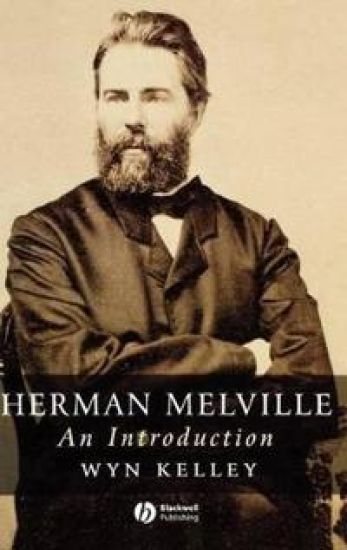
This unique introduction explores Herman Melville as he described himself in Billy Budd-"a writer whom few know." Moving beyond the recurring depiction of Melville as the famous author of Moby-Dick, this book traces his development as a writer while providing the basic tools for successful critical reading of his novels. Offers a brief introduction to Melville, covering all his major works Showcases Melville's writing process through his correspondence with Nathaniel Hawthorne Provides a clear sense of Melville's major themes and preoccupations Focuses on Typee, Moby-Dick, and Billy Budd in individual chapters Includes a biography, summary of key works, interpretation, commentary, and an extensive bibliography.
This unique introduction explores Herman Melville as he described himself in Billy Budd-"a writer whom few know." Moving beyond the recurring depiction of Melville as the famous author of Moby-Dick, this book traces his development as a writer while providing the basic tools for successful critical reading of his novels. Offers a brief introduction to Melville, covering all his major works Showcases Melville's writing process through his correspondence with Nathaniel Hawthorne Provides a clear sense of Melville's major themes and preoccupations Focuses on Typee, Moby-Dick, and Billy Budd in individual chapters Includes a biography, summary of key works, interpretation, commentary, and an extensive bibliography.
'Hibernation, dedication and one long-distance friendship that will never be forgotten: a must-have when a friend moves away.' KirkusWhat do you do when your best friend in the whole wide world has to move a long way away? Promise to write to each other ALL the time and to stay best friends FOREVER, that’s what. But it’s easier said than done – especially when your best friend seems to be having much more fun than you are . . .Join Herman the bear on a lift-the-flap adventure as he embarks upon one epic journey to deliver a very special letter and to ensure that his friendship with Henry the raccoon really is FOREVER. From Tom Percival, the bestselling author of the Big Bright Feelings series.
From author and illustrator Tom Percival, creator of the bestselling Big Bright Feelings series: Herman and Henry are back and they are going on holiday in this fabulously funny follow-up to Herman's Letter. With lift-the-flap postcards!Herman and Henry are having a great time camping in the great outdoors. Well, Herman is. Henry seems a little distracted. He must be having fun, though – everyone loves camping, don't they?Join Herman and Henry, best friends forever, on a camping adventure that neither of them will forget – for very different reasons!A fabulously funny story by the creator of Herman's Letter, with lift-the-flap postcards inside.