Play Up and Play the Game (1973) examines the type of fictional hero most embodied in the work and character, poetry and philosophy of Sir Henry Newbolt. ‘Newbolt Man’, imbued with the spirit of fairplay, loyalty, fearlessness, conformity (while remaining slightly philistine and sexless), can be traced in the work of Rider Haggard, Conan Doyle, Edgar Wallace, Anthony Hope and P.C. Wren. The book traces his development from the Victorian schoolboy (Tom Brown’s School Days and Kipling) to the twentieth-century secret agent (Buchan’s Richard Hannay), and on to his demise in Sheriff’s Journey’s End and Aldington’s Death of a Hero.
Play Up and Play the Game (1973) examines the type of fictional hero most embodied in the work and character, poetry and philosophy of Sir Henry Newbolt. ‘Newbolt Man’, imbued with the spirit of fairplay, loyalty, fearlessness, conformity (while remaining slightly philistine and sexless), can be traced in the work of Rider Haggard, Conan Doyle, Edgar Wallace, Anthony Hope and P.C. Wren. The book traces his development from the Victorian schoolboy (Tom Brown’s School Days and Kipling) to the twentieth-century secret agent (Buchan’s Richard Hannay), and on to his demise in Sheriff’s Journey’s End and Aldington’s Death of a Hero.
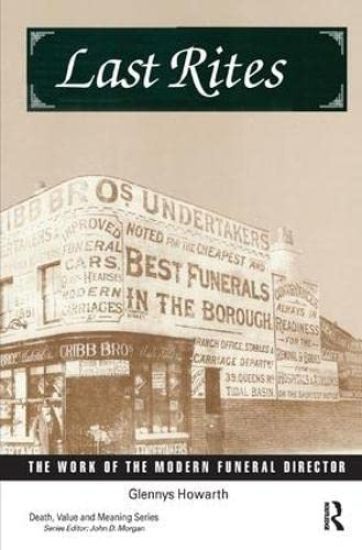
First Published in 2017. This book examines death rituals and the social significance of undertaking in western society and presents an ethnographic account of funeral directing in an area of east London which, for the purposes of anonymity. It is concerned with undertakers' perceptions and organization of death rituals.
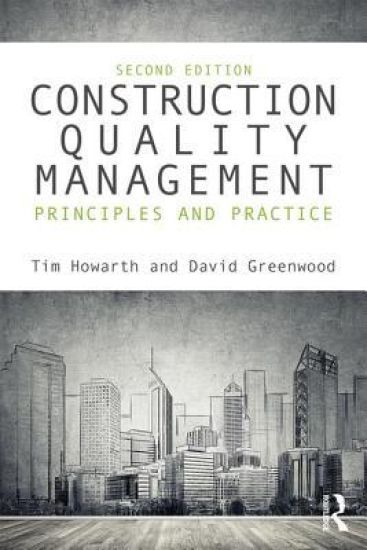
Quality management is essential for facilitating the competitiveness of modern day commercial organisations. Excellence in quality management is a requisite for construction organisations who seek to remain competitive and successful. The challenges presented by competitive construction markets and large projects that are dynamic and complex necessitate the adoption and application of quality management approaches.This new edition of Construction Quality Management provides a comprehensive evaluation of quality management systems and tools. Their effectiveness in achieving project objectives is explored, as well as applications in corporate performance enhancement. Both the strategic and operational dimensions of quality assurance are addressed by focusing on providing models of best practice.The reader is supported throughout by concise and clear explanations and with self-assessment questions. Practical case study examples show how various evaluative-based quality management systems and tools have been applied. Subjects covered include: business objectives – the stakeholder satisfaction methodology organisational culture and Health and Safety quality philosophy evaluation of organisational performance continuous quality improvement and development of a learning organisation.New chapters consider the influence of Building Information Modelling (BIM) on quality management. The text should be of interest to construction industry senior managers, practicing professionals and academics. It is also an essential resource for undergraduate and postgraduate students of construction management, project management and business management courses.
Quality management is essential for facilitating the competitiveness of modern day commercial organisations. Excellence in quality management is a requisite for construction organisations who seek to remain competitive and successful. The challenges presented by competitive construction markets and large projects that are dynamic and complex necessitate the adoption and application of quality management approaches.This new edition of Construction Quality Management provides a comprehensive evaluation of quality management systems and tools. Their effectiveness in achieving project objectives is explored, as well as applications in corporate performance enhancement. Both the strategic and operational dimensions of quality assurance are addressed by focusing on providing models of best practice.The reader is supported throughout by concise and clear explanations and with self-assessment questions. Practical case study examples show how various evaluative-based quality management systems and tools have been applied. Subjects covered include: business objectives – the stakeholder satisfaction methodology organisational culture and Health and Safety quality philosophy evaluation of organisational performance continuous quality improvement and development of a learning organisation.New chapters consider the influence of Building Information Modelling (BIM) on quality management. The text should be of interest to construction industry senior managers, practicing professionals and academics. It is also an essential resource for undergraduate and postgraduate students of construction management, project management and business management courses.
This study, by a sociologist, provides the most rigorous and comprehensive review to appear so far of R. D. Laing's work and theoretical development. Martin Howarth-Williams considers that Laing's insights into such controversial issues as the divided self and the politics of the family are of an importance that transcends their basis in clinical psychiatry and that they have a special significance for sociology. Using the Progressive/Regressive Method of Jean-Paul Sartre, the author illuminates the internal coherence of Laing's aims through the various stages of his work and shows how his ideas are shaped by consistent philosophic presuppositions and influences underlying his work.To give as complete an account as possible of Laing's interests and to relate them to the broad stream of his thought, the author explores Laing's involvement in other non-psychiatric realms – especially politics, religion and eastern mysticism. Material has been secured from a wide variety of recent sources which include interviews, films, TV appearances and the author's own personal recollections of informal talks given by Laing.In the final section of the book Martin Howarth-Williams isolates the concept of 'Intelligibility', which he demonstrates to be the unifying theme central to Laing's theory and shows how this can be used as the basis for a critique of recent developments in sociological theory as well as a starting point towards a genuinely dialectical sociology.
This study, by a sociologist, provides the most rigorous and comprehensive review to appear so far of R. D. Laing's work and theoretical development. Martin Howarth-Williams considers that Laing's insights into such controversial issues as the divided self and the politics of the family are of an importance that transcends their basis in clinical psychiatry and that they have a special significance for sociology. Using the Progressive/Regressive Method of Jean-Paul Sartre, the author illuminates the internal coherence of Laing's aims through the various stages of his work and shows how his ideas are shaped by consistent philosophic presuppositions and influences underlying his work.To give as complete an account as possible of Laing's interests and to relate them to the broad stream of his thought, the author explores Laing's involvement in other non-psychiatric realms – especially politics, religion and eastern mysticism. Material has been secured from a wide variety of recent sources which include interviews, films, TV appearances and the author's own personal recollections of informal talks given by Laing.In the final section of the book Martin Howarth-Williams isolates the concept of 'Intelligibility', which he demonstrates to be the unifying theme central to Laing's theory and shows how this can be used as the basis for a critique of recent developments in sociological theory as well as a starting point towards a genuinely dialectical sociology.
Title: Jan: an Afrikander. A tale.]Publisher: British Library, Historical Print EditionsThe British Library is the national library of the United Kingdom. It is one of the world's largest research libraries holding over 150 million items in all known languages and formats: books, journals, newspapers, sound recordings, patents, maps, stamps, prints and much more. Its collections include around 14 million books, along with substantial additional collections of manuscripts and historical items dating back as far as 300 BC.The FICTION & PROSE LITERATURE collection includes books from the British Library digitised by Microsoft. The collection provides readers with a perspective of the world from some of the 18th and 19th century's most talented writers. Written for a range of audiences, these works are a treasure for any curious reader looking to see the world through the eyes of ages past. Beyond the main body of works the collection also includes song-books, comedy, and works of satire. ++++The below data was compiled from various identification fields in the bibliographic record of this title. This data is provided as an additional tool in helping to insure edition identification: ++++ British Library Howarth, Anna; 1897. 319 p.; 8 . 012623.f.28.
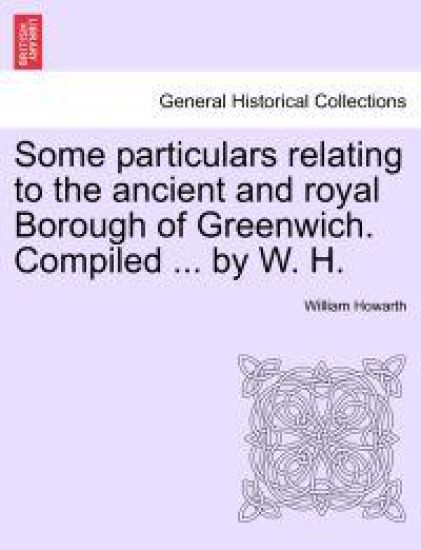
Title: Some particulars relating to the ancient & royal Borough of Greenwich. Compiled ... by W. H.Publisher: British Library, Historical Print EditionsThe British Library is the national library of the United Kingdom. It is one of the world's largest research libraries holding over 150 million items in all known languages and formats: books, journals, newspapers, sound recordings, patents, maps, stamps, prints and much more. Its collections include around 14 million books, along with substantial additional collections of manuscripts and historical items dating back as far as 300 BC.The GENERAL HISTORICAL collection includes books from the British Library digitised by Microsoft. This varied collection includes material that gives readers a 19th century view of the world. Topics include health, education, economics, agriculture, environment, technology, culture, politics, labour and industry, mining, penal policy, and social order. ++++The below data was compiled from various identification fields in the bibliographic record of this title. This data is provided as an additional tool in helping to insure edition identification: ++++ British Library Howarth, William; 1882. 128 p.; 8 . 10350.bbb.23.
The Irish Writers: Literature And Nationalism, 1880-1940 is a book written by Herbert Howarth that examines the relationship between Irish literature and nationalism during the period of 1880 to 1940. The book provides a comprehensive analysis of the literary works produced by Irish writers during this time and how they were influenced by the political and social climate of the era. Howarth explores the themes of identity, language, and culture that were prevalent in Irish literature and how they contributed to the development of Irish nationalism. He also examines the role of prominent Irish writers such as W.B. Yeats, James Joyce, and Sean O'Casey in shaping the literary landscape of Ireland and their impact on the nationalist movement. The book provides a detailed account of the historical events that shaped Irish literature during this period and how it reflected the aspirations of the Irish people for independence and self-determination. Overall, The Irish Writers: Literature And Nationalism, 1880-1940 is a valuable resource for anyone interested in the history of Irish literature and its relationship with Irish nationalism.Additional Authors Include George Moore And Lady Gregory.This scarce antiquarian book is a facsimile reprint of the old original and may contain some imperfections such as library marks and notations. Because we believe this work is culturally important, we have made it available as part of our commitment for protecting, preserving, and promoting the world's literature in affordable, high quality, modern editions, that are true to their original work.
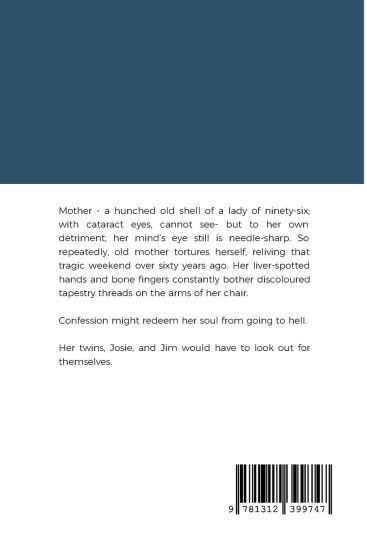
Memories can haunt us even if they are not our own. Kaye Howarth There are two types of legacies one can leave behind: 1. Positive 2. Negative. Mother - a hunched old shell of a lady of ninety-six; with cataract eyes, cannot see- but to her own detriment, her mind's eye still is needle-sharp. So repeatedly, old mother tortures herself, reliving that tragic weekend over sixty years ago. Her liver-spotted hands and bone fingers constantly bother discoloured tapestry threads on the arms of her chair. Confession might redeem her soul from going to hell. Her twins, Josie, and Jim would have to look out for themselves.
This is not a recipe book. It is a database of ingredient information that should assist the home or craft brewer in creating their own recipes in order to attempt the replication of commercial beers, many of which are no longer in production. Instructions on how to convert the supplied ingredient information into recipes customised to the brewer's own equipment and technique are provided. This book also provides inspiration to brewers wishing to experiment with different ingredients since it gives an interesting insight into how professional brewers have used them in their own brews. This third edition includes data for more beers and breweries including a new category for historical beers. Finally, this book should also be of interest to the discerning beer enthusiast who is curious about what goes into their favourite drink.
This book is about designing the effective classroom curriculum. The authors argue that an effective classroom curriculum should be the goal of every teacher in every classroom around the world: effective that is for every student, not just those who find school easy! But how does one go about designing a classroom curriculum that is effective? What are the essential ingredients and how should these ingredients be organised for teaching effect? What role does Technology play in such classroom plans?In this book Lynch, Smith and Howarth provide an insight into these questions by providing a text that focuses on classroom teaching diagnostic and design strategies. Their intent in writing such a book is to enable the classroom teacher to develop, teach and assess a classroom curriculum where learning success for all students is the central goal.This text is compulsive reading for the teacher who wants to make a difference in their classrooms.
This is not a recipe book. It is a database of ingredient information that should assist the home or craft brewer in creating their own recipes in order to attempt the replication of commercial beers, many of which are no longer in production. Instructions on how to convert the supplied ingredient information into recipes customised to the brewer's own equipment and technique are provided. This book also provides inspiration to brewers wishing to experiment with different ingredients since it gives an interesting insight into how professional brewers have used them in their own brews. This third edition includes data for more beers and breweries including a new category for historical beers. Finally, this book should also be of interest to the discerning beer enthusiast who is curious about what goes into their favourite drink.