Kirjojen hintavertailu. Mukana 11 342 296 kirjaa ja 12 kauppaa.

Kirjahaku

Etsi kirjoja tekijän nimen, kirjan nimen tai ISBN:n perusteella.

1000 tulosta hakusanalla Humor Heals Us

Humor in Irish Literature

Humor in Irish Literature

Don L. F. Nilsen

Greenwood Press
1996
sidottu
Ireland has generated an inordinately large number of storytellers, and Irish short stories bear a striking resemblance to Irish jokes. The tradition of telling jokes and stories in pubs resulted in the core of Irish-written literature, and many Irish short stories have the same narrative structure as the jokes on which they are based. This reference is a comprehensive guide to humor in Irish literature from the 16th century to the present day. An introductory essay discusses the essential nature of Irish humor, and how Irish humor developed out of pain and tragedy that resulted in a diaspora. The chapters that follow are devoted to particular centuries. Each chapter includes entries for individual authors, with entries arranged chronologically to show the development of humor over time. Each entry discusses the nature of humor in the author's works and includes a bibliography. A detailed index allows alphabetical access to information on authors and subjects.
Humor in Eighteenth-and Nineteenth-Century British Literature
During the 18th and 19th centuries in Britain there was a wide range of literary humor. Much of this humor was satiric, ranging from the sharp barbs of Pope and Swift to the more subtle but stinging wordplay of Addison. In the 18th century, Richardson, Fielding, Smollett, and Sterne wrote humorous novels, in which they criticized society. The period was largely dominated by satire, in which the dunce was a common figure. There was a proliferation of satires in prose and verse, along with satiric operas, pamphlets, and other writings. During the 19th century, writers such as Dickens, Thackeray, Eliot, and Carlyle continued to use humor to comment on the issues of their day, though their writings were often far more gentle than those of their predecessors.This reference book is a comprehensive guide to how British writers of the 18th and 19th centuries used humor in their works. An introductory chapter overviews humor in British literature of the era. The sections that follow then treat humor in British literature of the 18th century and of the early, middle, and later 19th century. Each of these sections includes a short introduction, followed by chronologically arranged profiles of various authors. Each profile discusses how the author used humor and includes extensive bibliographic information. A thorough index allows the reader to access information alphabetically, while the chronological arrangement of the profiles shows how humor in British literature evolved over time.
Humor in British Literature, From the Middle Ages to the Restoration
Humor began in British literature during the Middle Ages, when Chaucer developed the storytelling tradition along with the ironies that resulted from the juxtaposition of people from different classes and points of view. Shakespeare later developed vernacular and street humor in his comedies, festive humor in his romances and histories, and dark humor in his tragedies. During the Restoration, Congreve established the Comedy of Manners. This book overviews scholarship in humor in British literature from the Middle Ages through the seventeenth century. Chapters are devoted to particular centuries, with authors listed individually within each chapter. Each entry discusses the role of humor in the author's work and includes a bibliography.The volume begins with an introductory essay on the origins of British humor in the Middle Ages. Chapters then examine British literary humor during particular centuries. Each chapter begins with an overview of humor during that time period. Entries for individual authors follow, with each entry discussing the role of humor in the author's work and providing a bibliography of modern studies. Entries are arranged chronologically to show the development of humor over time, while an index allows alphabetical access to individual authors.
Humor and Chinese Culture

Humor and Chinese Culture

Xiaodong Yue

Routledge
2019
nidottu
This book addresses psychological studies of humour in Chinese societies. It starts by reviewing how the concept of humour evolves in Chinese history, and how it is perceived by Confucianism, Taoism, and Buddhism respectively. It then compares differences in the Western and the Chinese perceptions of humor and discusses empirical studies that were conducted to examine such differences. It also discusses the cultural origin and empirical evidence of the Chinese ambivalence about humor and presents empirical findings that illustrate its existence. Having done these, it proceeds to discuss psychological studies that examine how humour is related to various demographic, dispositional variables as well as how humour is related to creativity in Chinese societies. It also discusses how humour is related to emotional expressions and mental health in Chinese society as well. It concludes with a discussion on how workplace humor is reflected and developed in Chinese contexts. Taken together, this book attempts to bring together the theoretical propositions, empirical studies, and cultural analyses of humor in Chinese societies.
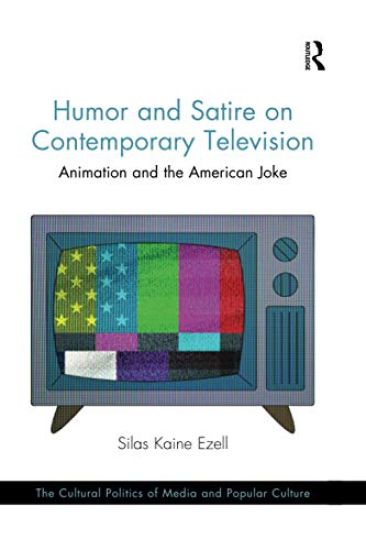
Humor and Satire on Contemporary Television
This book examines contemporary American animated humor, focusing on popular animated television shows in order to explore the ways in which they engage with American culture and history, employing a peculiarly American way of using humor to discuss important cultural issues. With attention to the work of American humorists, such as the Southwest humorists, Mark Twain, Dorothy Parker, and Kurt Vonnegut, and the question of the extent to which modern animated satire shares the qualities of earlier humor, particularly the use of setting, the carnivalesque, collective memory, racial humor, and irony, Humor and Satire on Contemporary Television concentrates on a particular strand of American humor: the use of satire to expose the gap between the American ideal and the American experience. Taking up the notion of ’The Great American Joke’, the author examines the discursive humor of programmes such as The Simpsons, South Park , Family Guy , King of the Hill, Daria, American Dad!, The Boondocks, The PJs and Futurama . A study of how animated television programmes offer a new discourse on a very traditional strain of American humor, this book will appeal to scholars and students of popular culture, television and media studies, American literature and visual studies, and contemporary humor and satire.
Humor in Advertising
Humor has long been one of the most common approaches used in advertising. Whether in a big televised event like the Super Bowl or in new forms of digital advertising, everyone is exposed to funny ads, some of which both entertain the audience and help sell a product. Yet, the use of humor in advertising is complex; clearly not all humorous ads are successful.This comprehensive volume both summarizes the cumulative state of knowledge on humor in advertising and provides new cutting-edge research on key topics such as humor’s use in conjunction with emotional and sexual appeals, its use in digital advertising, and issues related to gender and cross-cultural applicability. Special emphasis is placed on defining humorous advertising and types of humor used, as well as outlining what conditions work for advertisers. The chapters examine humor in advertising and add insights on several cutting-edge issues in this stream of research. An overview article summarizing the overall body of literature accumulated over 50 years of research on humorous advertising defines types of humorous appeals. The degree to which humor is effective and the boundary conditions associated with when and how it works best in advertising is discussed. New research articles further contribute to cumulative knowledge by exploring the interaction of humor with other issues and techniques such as whether it travels internationally, gender issues, its use in conjunction with emotional and sexual appeals, and its presence in the digital contexts. The book concludes with an in-depth look at the evolution of humorous appeals over the oldest traditional advertising medium—outdoor advertising.The chapters in this book were originally published in International Journal of Advertising.
Humor in Advertising

Humor in Advertising

TAYLOR FRANCIS LTD
2023
nidottu
Humor has long been one of the most common approaches used in advertising. Whether in a big televised event like the Super Bowl or in new forms of digital advertising, everyone is exposed to funny ads, some of which both entertain the audience and help sell a product. Yet, the use of humor in advertising is complex; clearly not all humorous ads are successful.This comprehensive volume both summarizes the cumulative state of knowledge on humor in advertising and provides new cutting-edge research on key topics such as humor’s use in conjunction with emotional and sexual appeals, its use in digital advertising, and issues related to gender and cross-cultural applicability. Special emphasis is placed on defining humorous advertising and types of humor used, as well as outlining what conditions work for advertisers. The chapters examine humor in advertising and add insights on several cutting-edge issues in this stream of research. An overview article summarizing the overall body of literature accumulated over 50 years of research on humorous advertising defines types of humorous appeals. The degree to which humor is effective and the boundary conditions associated with when and how it works best in advertising is discussed. New research articles further contribute to cumulative knowledge by exploring the interaction of humor with other issues and techniques such as whether it travels internationally, gender issues, its use in conjunction with emotional and sexual appeals, and its presence in the digital contexts. The book concludes with an in-depth look at the evolution of humorous appeals over the oldest traditional advertising medium—outdoor advertising.The chapters in this book were originally published in International Journal of Advertising.
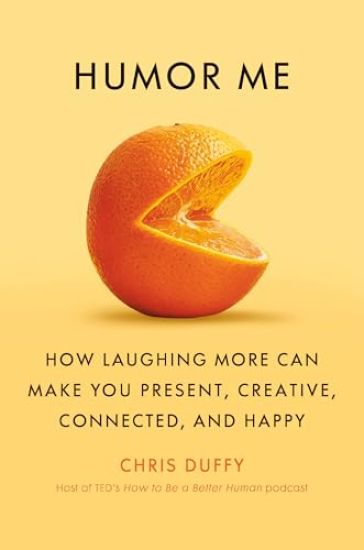
Humor Me: How Laughing More Can Make You Present, Creative, Connected, and Happy
From a comedian and host of a hit TED podcast, a hilarious and enlightening guide to laughing your way into a fuller life. Ten years ago, when Chris Duffy was an exhausted fifth grade teacher, he taught the funniest person he's ever met: 11-year-old Gary C. Gary was the school newspaper's official food critic, blasting cafeteria pizza for looking like cardboard and alleging that the baked beans weren't "beany" enough. These days, Duffy is a comedian and the host of a podcast with millions of listeners, but he's never forgotten the joy of laughing with Gary during that bleak Boston winter. Gary taught him that a life without a sense of humor isn't much of a life at all. With curiosity and wit, Duffy takes us on a journey to learn how a good laugh can bring us closer to the good life. When he endeavors to pay more attention to the world around him, he discovers that his once-dreary commute is laugh-out-loud funny: think a rider catching a pigeon with his bare hands and Duffy's very own Russian mystic doppelganger. Using psychology and the wisdom of fellow comedians, Duffy reveals that a sense of humor can turn you into the kind of person others want to be around, someone who can be honest about their flaws without beating themselves up. It can teach us how to show up more generously in our most important relationships and how to handle the most painful parts of life without giving into despair. For anyone who has tried out meditation, a new year's resolution or gratitude practice as a self-improvement strategy, HUMOR ME offers a fresh and exciting path to greater presence, creativity, connection and joy.
Humor in the Classroom

Humor in the Classroom

Nancy Bell; Anne Pomerantz

Routledge
2015
sidottu
Humor in the Classroom provides practical, research-based answers to questions that educational researchers and language teachers might have about the social and cognitive benefits that humor and language play afford in classroom discourse and additional language learning. The book considers the ways in which humor, language play, and creativity can construct new possibilities for classroom identity, critique prevailing norms, and reconfigure particular relations of power. Humor in the Classroom encourages educational researchers and language teachers to take a fresh look at the workings of humor in today’s linguistically diverse classrooms and makes the argument for its role in building a stronger foundation for studies of classroom discourse, theories of additional language development, and approaches to language pedagogy.
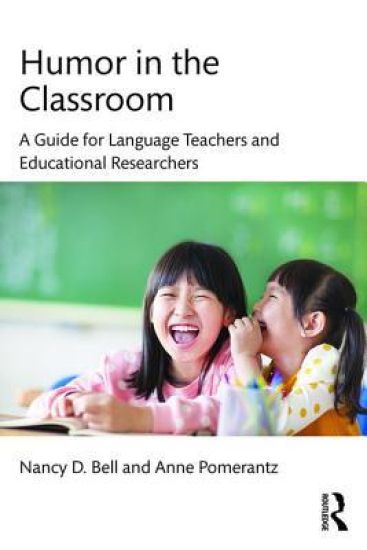
Humor in the Classroom

Humor in the Classroom

Nancy Bell; Anne Pomerantz

Routledge
2015
nidottu
Humor in the Classroom provides practical, research-based answers to questions that educational researchers and language teachers might have about the social and cognitive benefits that humor and language play afford in classroom discourse and additional language learning. The book considers the ways in which humor, language play, and creativity can construct new possibilities for classroom identity, critique prevailing norms, and reconfigure particular relations of power. Humor in the Classroom encourages educational researchers and language teachers to take a fresh look at the workings of humor in today’s linguistically diverse classrooms and makes the argument for its role in building a stronger foundation for studies of classroom discourse, theories of additional language development, and approaches to language pedagogy.
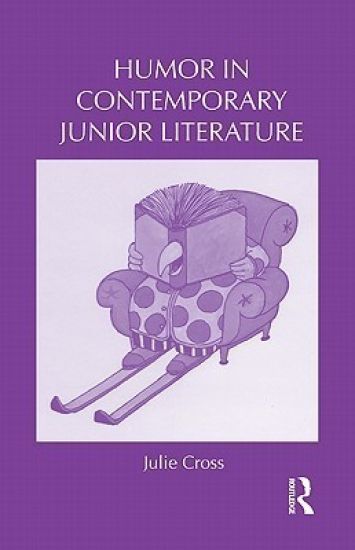
Humor in Contemporary Junior Literature
In this new book, Julie Cross examines the intricacies of textual humor in contemporary junior literature, using the tools of literary criticism and humor theory. Cross investigates the dialectical paradoxes of humor and debunks the common belief in oppositional binaries of ‘simple’ versus ‘complex’ humor. The varied combinations of so-called high and low forms of humor within junior texts for young readers, who are at such a crucial stage of their reading and social development, provide a valuable commentary upon the culture and values of contemporary western society, making the book of considerable interest to scholars of both children’s literature and childhood studies.Cross explores the ways in which the changing content, forms and functions of the many varied combinations of humor in junior texts, including the Lemony Snickett series, reveal societal attitudes towards young children and childhood. The new compounds of seemingly paradoxical high and low forms of humor, in texts for developing readers from the 1960s onwards, reflect and contribute to contemporary society’s hesitant and uneven acceptance of the emergent paradigm of children’s rights, abilities, participation and empowerment. Cross identifies four types of potentially subversive/transgressive humor which have emerged since the 1960s which, coupled with the three main theories of humor – relief, superiority and incongruity theories – enables a long-overdue charting of developments in humor within junior texts. Cross also argues that the gradual increase in the compounding of the simple and the complex provide opportunities for young readers to play with ambiguous, complicated ideas, helping them embrace the complexities and contradictions of contemporary life.
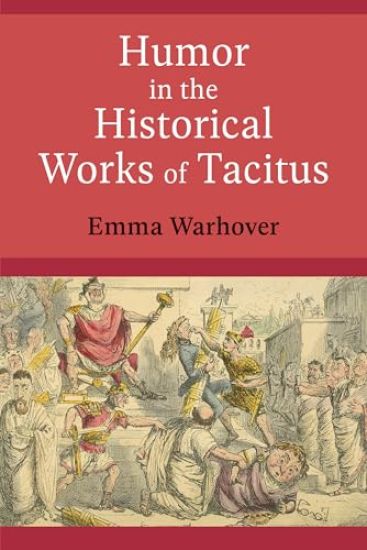
Humor in the Historical Works of Tacitus

Humor in the Historical Works of Tacitus

Emma Warhover

UNIVERSITY OF MICHIGAN PRESS
2026
sidottu
Emma Warhover's Humor in the Historical Works of Tacitus explores how the ancient Roman historian Tacitus incorporated humor into his historical works and unveil the significance of these humorous motifs. Since the historian was one of the most important ancient sources on Rome's emperors Tiberius, Claudius, and Nero, readers of Tacitus have long been challenged by his purposely opaque style, full of unbalanced grammatical constructions and end-of-the-sentence surprises. Tacitus' strange prose style reflects the remarkable times about which he writes, when emperors made bizarre and contradictory demands on their subjects and told obvious lies to cover up the cruelty of their regimes. In serious texts like Tacitus' historical works, humor can expose hypocrisy in the powerful, demonstrate the absurdity of imperial pronouncements, and simultaneously communicate why such offenses were allowed to stand. Warhover argues that major elements of Tacitus' distinctive style, such as variatio, appendix sentences, and sententiae, create humor and that Tacitus used it deliberately to emphasize the incongruities that emerged from the principate. By using humor, Tacitus followed Roman rhetorical traditions evident in Cicero and Quintilian, who agree that humor is an important tool for criticism, and is therefore not an amusement or decoration, but an integral part of his historiographic construction.
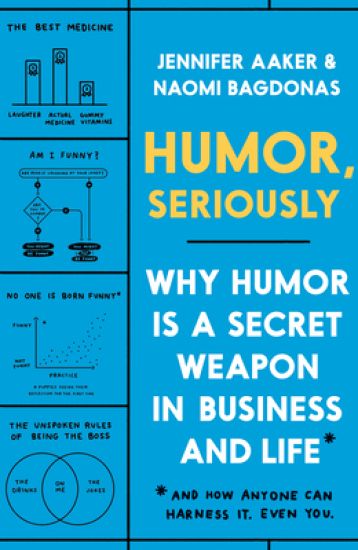
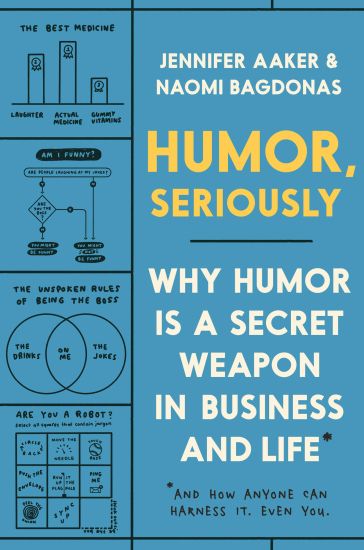
Humor, Seriously: Why Humor Is a Secret Weapon in Business and Life (and How Anyone Can Harness It. Even You.)
WALL STREET JOURNAL, LOS ANGELES TIMES, AND USA TODAY BESTSELLER - Anyone--even you --can learn how to harness the power of humor in business (and life), based on the popular class at Stanford's Graduate School of Business. Don't miss the authors' TED Talk, "Why great leaders take humor seriously," online now. "The ultimate guide to using the magical power of funny as a tool for leadership and a force for good."--Daniel H. Pink, #1 New York Times bestselling author of When and Drive We are living through a period of unprecedented uncertainty and upheaval in both our personal and professional lives. So it should come as a surprise to exactly no one that trust, human connection, and mental well-being are all on the decline. This may seem like no laughing matter. Yet, the research shows that humor and laughter are among the most valuable tools we have at our disposal for strengthening bonds and relationships, diffusing stress and tension, boosting resilience, and performing when the stakes are high. That's why Jennifer Aaker and Naomi Bagdonas teach the popular course Humor: Serious Business at the Stanford Graduate School of Business, where they help some of the world's most hard-driving, blazer-wearing business minds infuse more humor and levity into their work and lives. In Humor, Seriously, they draw on findings by behavioral scientists, world-class comedians, and inspiring business leaders to reveal how humor works and--more important--how you can use more of it, better. Aaker and Bagdonas unpack the theory and application of humor: what makes something funny, how to mine your life for material, and simple ways to identify and leverage your unique humor style. They show how to use humor to rebuild vital connections; appear more confident, competent, and authentic at work; and foster cultures where levity and creativity can thrive. President Dwight David Eisenhower once said, "A sense of humor is part of the art of leadership, of getting along with people, of getting things done." If Dwight David Eisenhower, the second least naturally funny president (after Franklin Pierce), thought humor was necessary to win wars, build highways, and warn against the military-industrial complex, then you might consider learning it too.
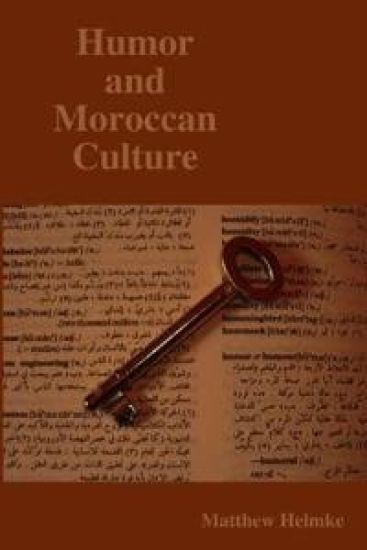
Humor and Moroccan Culture

Humor and Moroccan Culture

Matthew Helmke

Matthew Helmke
2007
pokkari
This project started as a language learning experiment. Matthew Helmke was sitting in a cafe with a Moroccan having a discussion in Moroccan Arabic. The friend told a joke and it was quickly discovered that vocabulary alone would not insure an understanding of humor. This prompted a question, "What did I miss?" In this book, Matthew Helmke explores the hidden aspects of Moroccan culture. These are the things that Moroccans know inherently, without being taught. The result is an intriguing look through the eyes of an American trying to make sense of Moroccan culture.
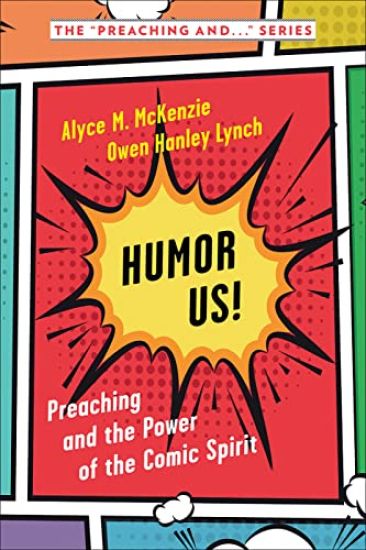
Humor Us!: Preaching and the Power of the Comic Spirit

Humor Us!: Preaching and the Power of the Comic Spirit

Alyce M. McKenzie; Owenhanley Lynch

WESTMINSTER JOHN KNOX PRESS
2023
nidottu
Homiletics textbooks often discourage the use of humor in preaching, regarding it as trivializing or distracting. The result is that many preachers have failed to understand humor's positive power, demoting it to the opening joke to get a guaranteed guffaw to warm up the crowd. Humor Us , the second volume in the "Preaching and..." series, is a collaborative effort by homiletician Alyce M. McKenzie and humor scholar Owen Hanley Lynch that promotes humor, a force capable of great good, to its rightful place in the pulpit. Establishing humor as a divine gift, Humor Us opens to preachers the world of humor studies with its positive portrayal of humor's usefulness to speak truth to power, unite people in their common humanity, and strengthen them to cope and survive in tough times. Humor Us helps preachers understand how humor works and shows them, in very practical and specific ways, how preachers can put it to work in their sermons. It combines the wealth of knowledge of two highly regarded scholars-practitioners to show how humor can become a potent tool for sharing the good news in sermons. McKenzie and Lynch prove that humor, when applied thoughtfully, can foster compassion and a sense of common humanity, help challenge an unjust status quo, and invite listeners into a shared experience of the presence of God.