

Kirjahaku
Etsi kirjoja tekijän nimen, kirjan nimen tai ISBN:n perusteella.
524 tulosta hakusanalla IMBERT SAINT-AMAND

Marie Antoinette and the End of the old Regime
Imbert De Saint-Amand; Perry Thomas Sergeant
Hansebooks
2016
pokkari

The book "" The Duchess of Berry and the Court of Charles X, has been considered important throughout the human history, and so that this work is never forgotten we have made efforts in its preservation by republishing this book in a modern format for present and future generations. This whole book has been reformatted, retyped and designed. These books are not made of scanned copies and hence the text is clear and readable.


This book "" The Happy Days of the Empress Marie Louise "", has been considered important throughout the human history, and so that this work is never forgotten we have made efforts in its preservation by republishing this book in a modern format for present and future generations. This whole book has been reformatted, retyped and designed. These books are not made of scanned copies and hence the text is clear and readable.

Marie Antoinette and the Downfall of Royalty has been regarded as significant work throughout human history, and in order to ensure that this work is never lost, we have taken steps to ensure its preservation by republishing this book in a contemporary format for both current and future generations. This entire book has been retyped, redesigned, and reformatted. Since these books are not made from scanned copies, the text is readable and clear.

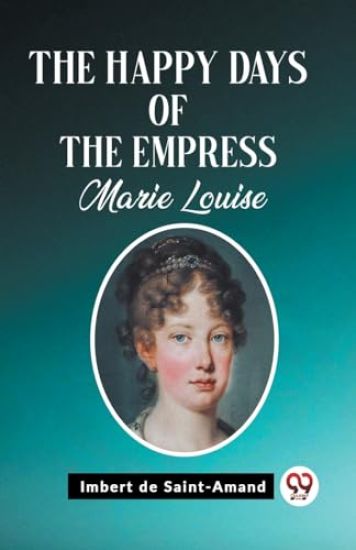
The Happy Days of the Empress Marie Louise (Edition2023)
Imbert De Saint-Amand
Double 9 Books LLP
2024
nidottu
"The Happy Days of the Empress Marie Louise" by Imbert de Saint-Amand is a captivating biography that transports readers to the heart of the Napoleonic era's imperial court. Through meticulous research and vivid storytelling, Saint-Amand paints a rich portrait of Empress Marie Louise, shedding light on her complex relationship with Napoleon Bonaparte and the turbulent times in French history. Set against the backdrop of courtly life in the early 19th century, the biography delves into the intricacies of royal romance, political alliances, and dynastic struggles. Readers are immersed in the world of European royalty, where intrigue and power play a central role in shaping destinies. Saint-Amand's narrative skillfully navigates the complexities of Marie Louise's role as Empress consort, highlighting the challenges she faced amidst the political turmoil of the time. From the splendor of the imperial court to the shadows of dynastic struggles, the biography offers a compelling glimpse into the life of a remarkable woman navigating the corridors of power. "The Happy Days of the Empress Marie Louise" stands as a testament to Saint-Amand's expertise in French history and his ability to bring the past to life with flair and insight.








Les Femmes de Versailles. La Cour de Marie-Antoinette
Arthur Le´on Imbert de Saint-Amand; Queen Marie Antoinette
British Library, Historical Print Editions
2011
pokkari

Marie Antoinette At The Tuileries, 1789-1791
Arthur Leon Imbert de Saint-Amand
Nobel Press
2010
nidottu
This book, "Marie Antoinette At The Tuileries, 1789-1791", by Arthur Leon Imbert de Saint-Amand, is a replication of a book originally published before 1902. It has been restored by human beings, page by page, so that you may enjoy it in a form as close to the original as possible. This book was created using print-on-demand technology. Thank you for supporting classic literature.
Marie Antoinette and the Downfall of Royalty
Baron Arthur Leon Imbert de Saint-Amand
Createspace Independent Publishing Platform
2018
nidottu
In 1789, it was still an exceptional thing for the nobility to emigrate. In 1792, it is the rule. Those among the nobles who have had the courage to remain at Paris in the midst of the furnace, so as to make a rampart for the King of their bodies, seem half ashamed of their generous conduct. The illusions of worldliness have been dispelled. Nearly every salon was open in 1789. In 1792, they are nearly all closed; those of the magistrates and the great capitalists as well as those of the aristocracy. Etiquette is still observed at the Tuileries, but there is no question of f tes; no balls, no concerts, none of that elegance and animation which once made the court a rendezvous of pleasures. In 1789, illusions, dreams, a na ve expectation of the age of gold, were to be found everywhere. In 1792, eclogues and pastoral poetry are beginning to go out of fashion. The diapason of hatred is pitched higher. Already there is powder and a smell of blood in the air. A general instinct forebodes that France and Europe are on the verge of a terrible duel. On both sides passions have touched their culminating point. Distrust and uneasiness are universal. Every day the despotism of the clubs becomes more threatening. The Jacobins do not reign yet, but they govern. Deputies who, if left to.