Kirjojen hintavertailu. Mukana 11 244 527 kirjaa ja 12 kauppaa.

Kirjahaku

Etsi kirjoja tekijän nimen, kirjan nimen tai ISBN:n perusteella.

1000 tulosta hakusanalla Ingmar Simonsson

Morality from Compassion

Morality from Compassion

Ingmar Persson

Oxford University Press
2021
sidottu
According to Arthur Schopenhauer, compassion is the basis of morality. He sees concern for justice as a negative form of compassion, directed at not harming anyone, as opposed to the more far-reaching, positive form of benefiting. He thinks a higher degree of compassion involves realizing that the spatio-temporal separation of individuals is illusory and that in reality they are all identical. Such compassion is impartial and all-encompassing. Compassion is suited to be the centre of morality because its object are negative feelings, and only these are real. Contrary to these Schopenhauerian claims, it is here argued that compassion must be supplemented with attitudes like sympathy and benevolence because positive feelings exist alongside negative feelings; that a concern for justice, though morally essential, is independent of these attitudes which are based on empathy; that these attitudes involve not identifying oneself with others, but taking personal identity as insignificant in empathically imagining how others feel. Schopenhauer is however right that, though these attitudes are spontaneously partial, this can be corrected. His morality is also interesting in raising the question rarely discussed in philosophical ethics of how moral virtue relates to ascetic self-renunciation. Both of these ideals are highly demanding, but the book ends by arguing that this is no objection to their validity.
Unfit for the Future

Unfit for the Future

Ingmar Persson; Julian Savulescu

Oxford University Press
2014
nidottu
Unfit for the Future argues that the future of our species depends on our urgently finding ways to bring about radical enhancement of the moral aspects of our own human nature. We have rewritten our own moral agenda by the drastic changes we have made to the conditions of life on earth. Advances in technology enable us to exercise an influence that extends all over the world and far into the future. But our moral psychology lags behind and leaves us ill equipped to deal with the challenges we now face. We need to change human moral motivation so that we pay more heed not merely to the global community, but to the interests of future generations. It is unlikely that traditional methods such as moral education or social reform alone can bring this about swiftly enough to avert looming disaster, which would undermine the conditions for worthwhile life on earth forever. Persson and Savulescu maintain that it is likely that we need to explore the use of new technologies of biomedicine to change the bases of human moral motivation. They argue that there are in principle no philosophical or moral objections to such moral bioenhancement. Unfit for the Future challenges us to rethink our attitudes to our own human nature, before it is too late.
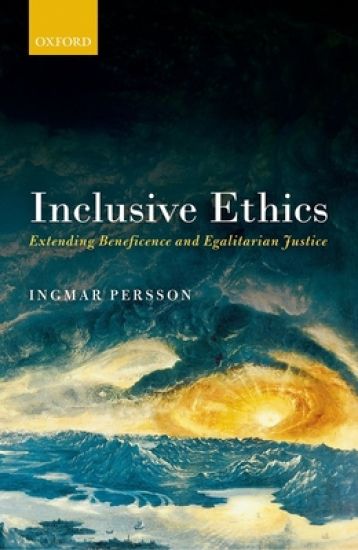
Inclusive Ethics

Inclusive Ethics

Ingmar Persson

Oxford University Press
2017
sidottu
Inclusive Ethics begins from two ideas which are part of our everyday morality, namely that we have a moral reason to benefit or do good to other beings, and that justice requires these benefits to be distributed equally. A morality comprising these two general principles will be exceedingly hard to apply as these principles will have to be balanced against each in an intuitive fashion, but also because the notion of what benefits beings is quite complex, comprising both experiential components of pleasure and successful exercises of autonomy. Ingmar Persson argues that, on philosophical reflection, these ideas turn out to be more far-reaching than we imagine. In particular, the reason to benefit commits us to benefit beings by bringing them into existence. Further, since grounds that are commonly used to justify that some are better off than others - such as their being more deserving or having rights to more - are untenable, justice requires a more extensive equality. The book concludes by reflecting on the problems of getting people to accept a morality which differs markedly from the morality with which they have grown up.
Reasons in Action

Reasons in Action

Ingmar Persson

Oxford University Press
2019
sidottu
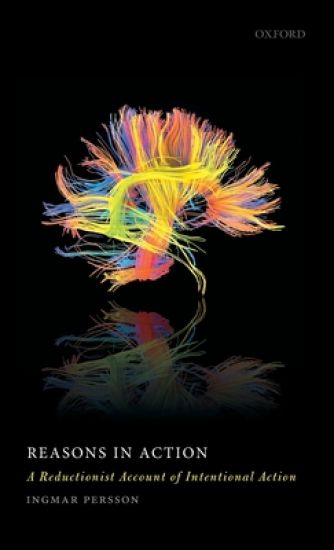
Ingmar Persson offers an original view of the processes of human action: deliberating on the basis of reasons for and against actions, making a decision about what to do, and from there implementing the decision in action in a way that makes the action intentional. Persson's analysis is mainly developed to suit physical actions, though how it needs to be modified to cover mental acts is also discussed. The interpretation of intentional action that is presented is reductionist in the sense that it does not appeal to any concepts that are distinctive of the domain of action theory, such as a unique type of agent-causation, or irreducible mental acts, like acts of will, volitions, decisions, or tryings. Nor does it appeal to any unanalyzed attitudes or states essentially related to intentional action, like intentions and desires to act. Instead, the intentionality of actions is construed as springing from desires conceived as physical states of agents which cause facts because of the way agents think of them. A sense of our having responsibility that is sufficient for our acting for reasons is also sketched out.
The Retreat of Reason

The Retreat of Reason

Ingmar Persson

Clarendon Press
2005
sidottu
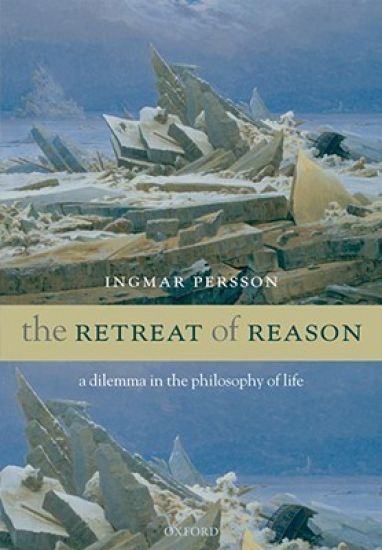
One of the main original aims of philosophy was to give us guidance about how to live our lives. The ancient Greeks typically assumed that a life led in accordance with reason, a rational life, would also be the happiest or most fulfilling. Ingmar Persson's book resumes this project, which has been largely neglected in contemporary philosophy. But his conclusions are very different; by exploring the irrationality of our attitudes to time, our identity, and our responsibility, Persson shows that the aim of living rationally conflicts not only with the aim of leading the most fulfilling life, but also with the moral aim of promoting the maximization and just distribution of fulfilment for all. Persson also argues that neither the aim of living rationally nor any of the fulfilment aims can be rejected as less rational than any other. We thus face a dilemma of either having to enter a retreat of reason, insulated from everyday attitudes, or making reason retreat from its aspiration to be the sole controller of our attitudes. The Retreat of Reason explores three areas in which there is a conflict between the rational life and a life dedicated to maximization of fulfilment. Persson contends that living rationally requires us to give up, first, our temporal biases; secondly, our bias towards ourselves; and, thirdly, our responsibility to the extent that it involves the notion of desert and desert-entailing notions. But giving up these attitudes is so overwhelmingly hard that the effort to do so not only makes our own lives less fulfilling, but also obstructs our efficient pursuit of the moral aim of promoting a maximum of justly distributed fulfilment. Ingmar Persson brings back to philosophy the ambition of offering a broad vision of the human condition. The Retreat of Reason challenges and disturbs some of our most fundamental ideas about ourselves.
The Retreat of Reason

The Retreat of Reason

Ingmar Persson

Oxford University Press
2008
nidottu
One of the main original aims of philosophy was to give us guidance about how to live our lives. The ancient Greeks typically assumed that a life led in accordance with reason, a rational life, would also be the happiest or most fulfilling. Ingmar Persson's book resumes this project, which has been largely neglected in contemporary philosophy. But his conclusions are very different; by exploring the irrationality of our attitudes to time, our identity, and our responsibility, Persson shows that the aim of living rationally conflicts not only with the aim of leading the most fulfilling life, but also with the moral aim of promoting the maximization and just distribution of fulfilment for all. Persson also argues that neither the aim of living rationally nor any of the fulfilment aims can be rejected as less rational than any other. We thus face a dilemma of either having to enter a retreat of reason, insulated from everyday attitudes, or making reason retreat from its aspiration to be the sole controller of our attitudes. The Retreat of Reason explores three areas in which there is a conflict between the rational life and a life dedicated to maximization of fulfilment. Persson contends that living rationally requires us to give up, first, our temporal biases; secondly, our bias towards ourselves; and, thirdly, our responsibility to the extent that it involves the notion of desert and desert-entailing notions. But giving up these attitudes is so overwhelmingly hard that the effort to do so not only makes our own lives less fulfilling, but also obstructs our efficient pursuit of the moral aim of promoting a maximum of justly distributed fulfilment. Ingmar Persson brings back to philosophy the ambition of offering a broad vision of the human condition. The Retreat of Reason challenges and disturbs some of our most fundamental ideas about ourselves.
Unfit for the Future

Unfit for the Future

Ingmar Persson; Julian Savulescu

Oxford University Press
2012
sidottu
Unfit for the Future argues that the future of our species depends on our urgently finding ways to bring about radical enhancement of the moral aspects of our own human nature. We have rewritten our own moral agenda by the drastic changes we have made to the conditions of life on earth. Advances in technology enable us to exercise an influence that extends all over the world and far into the future. But our moral psychology lags behind and leaves us ill equipped to deal with the challenges we now face. We need to change human moral motivation so that we pay more heed not merely to the global community, but to the interests of future generations. It is unlikely that traditional methods such as moral education or social reform alone can bring this about swiftly enough to avert looming disaster, which would undermine the conditions for worthwhile life on earth forever. Persson and Savulescu maintain that it is likely that we need to explore the use of new technologies of biomedicine to change the bases of human moral motivation. They argue that there are in principle no philosophical or moral objections to such moral bioenhancement. Unfit for the Future? challenges us to rethink our attitudes to our own human nature, before it is too late.
From Morality to the End of Reason

From Morality to the End of Reason

Ingmar Persson

Oxford University Press
2013
sidottu
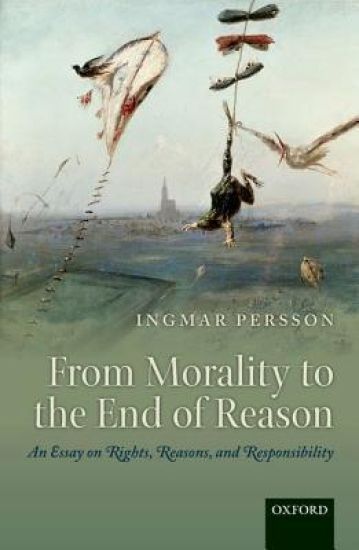
Many philosophers think that if you're morally responsible for a state of affairs, you must be a cause of it. Ingmar Persson argues that this strand of common sense morality is asymmetrical, in that it features the act-omission doctrine, according to which there are stronger reasons against performing some harmful actions than in favour of performing any beneficial actions. He analyses the act-omission doctrine as consisting in a theory of negative rights, according to which there are rights not to have one's life, body, and property interfered with, and a conception of responsibility as being based on causality. This conception of responsibility is also found to be involved in the doctrine of double effect. The outcome of Persson's critical examination of these ideas is that reasons of rights are replaced by reasons of beneficence, and we are made responsible for what is under the influence of our practical reasons. The argument gives rise to a symmetrical, consequentialist morality which is more demanding but less authoritative than common sense morality, because reasons of beneficence are weaker than reasons of rights. It is also argued that there are no non-naturalist external practical reasons, and all practical reasons are desire-dependent: so practical reasons cannot be universally binding. The question is whether such a morality possesses enough authority to command our compliance. This seems necessary in order for us to cope with the greatest moral problems of our time, such as aid to developing countries and anthropogenic climate change.
A Magic Lantern

A Magic Lantern

Ingmar Bergman

University of Chicago Press
2007
nidottu
When a film is not a document, it is a dream...At the editing table, when I run the strip of film through, frame by frame, I still feel that dizzy sense of magic of my childhood." Bergman, who has conveyed this heady sense of wonder and vision to moviegoers for decades, traces his lifelong love affair with film in his breathtakingly visual autobiography, "The Magic Lantern". More grand mosaic than linear account, Bergman's vignettes trace his life from a rural Swedish childhood through his work in theater to Hollywood's golden age, and a tumultuous romantic history that includes five wives and more than a few mistresses. Throughout, Bergman recounts his life in a series of deeply personal flashbacks that document some of the most important moments in twentieth-century filmmaking as well as the private obsessions of the man behind them. Ambitious in scope yet sensitively wrought, "The Magic Lantern" is a window to the mind of one of our era's great geniuses.
The Development of Energy Policy in the European Union
This book uniquely details the longer-term integration of energy policy in the EU, from its inception to the contemporary ‘Energy Union’, whilst also bringing it fully up to date regarding its place in current climate discussions, the European Green Deal, REPowerEU, the European Climate Law and the struggle to achieve net zero.Analysing the policy area from a perspective that explains current developments through economic processes, path dependence, and political decisions over time, the book identifies the factors and mechanisms that enable and constrain actors and energy policy development. It contributes to the broader debate about institutional design and (European) integration in the energy sector, examining key legislation, the motives of actors complying with institutional rules, and the idiosyncratic factors that contribute to continuity and account for change.This book will be of key interest to scholars, students and practitioners/policymakers interested in European energy policy and energy/environmental governance, and more broadly to European politics and theories of European integration, international political economy, public policy, international organisations, and global governance.
Passwort Akte

Passwort Akte

Ingmar Ephraim Zastrow

Createspace Independent Publishing Platform
2015
nidottu
Ihre Passw rter und Login-Daten unzug nglich f r Hacker und immer Griffbereit Im unauff lligen Taschenbuch-Format erweckt die Passwort-Akte im B cherregal keinerlei Aufsehen. Ein einfacher aber effektiver Weg, sie vor unberechtigtem Zugriff zu sch tzen. Da digitale Daten immer angreifbar sind, ist die Passwort-Akte eine clevere L sung f r alle diejenigen, die sich nicht auf Cloud-Dienste oder elektronische Passwort-Manager verlassen wollen. Details zum Buch Unauff lliges Design, dass sich auf den ersten Blick nicht von anderen Taschenb chern unterscheidet A-Z Sortierung f r eine bersichtliche Dokumentation s mtlicher Passw rter und Zugangsdaten Gen gend Platz f r Passwort- nderungen und Notizen Thematische Bereiche f r E-Mail-Adressen, Provider, Netzwerk, Ger te und Lizenzen Tipps zur Erstellung sicherer Pass rter