
Kirjahaku
Etsi kirjoja tekijän nimen, kirjan nimen tai ISBN:n perusteella.
1000 tulosta hakusanalla Isaac Luke
Selected Writings Of Isaac M. Wise
Isaac Mayer Wise; David (EDT) Philipson; Louis (EDT) Grossmann
Kessinger Pub
2008
pokkari
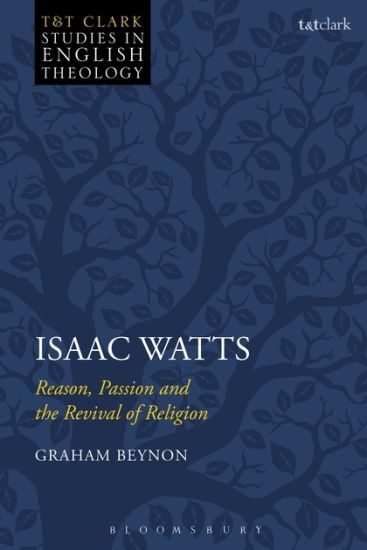
Isaac Watts was an important but relatively unexamined figure and this volume offers a description of his theology, specifically identifying his position on reason and passion as foundational. The book shows how Watts modified a Puritan inherence on both topics in the light of the thought of his day. In particular there is an examination of how he both took on board and reacted against aspects of Enlightenment and sentimentalist thought. Watts’ position on these foundational issued of reason and passion are then shown to lie behind his more practical works to revive the church.Graham Beynon examines the motivation for Watts’ work in writing hymns, and the way in which he wrote them; and discusses his preaching and prayer. In each of these practical topics Watts’s position is compared to earlier Puritans to show the difference his thinking on reason and passion makes in practice. Isaac Watts is shown to have a coherent position on the foundational issues of reason and passion which drove his view of revival of religion.

Isaac Watts was an important but relatively unexamined figure and this volume offers a description of his theology, specifically identifying his position on reason and passion as foundational. The book shows how Watts modified a Puritan inherence on both topics in the light of the thought of his day. In particular there is an examination of how he both took on board and reacted against aspects of Enlightenment and sentimentalist thought. Watts’ position on these foundational issued of reason and passion are then shown to lie behind his more practical works to revive the church.Graham Beynon examines the motivation for Watts’ work in writing hymns, and the way in which he wrote them; and discusses his preaching and prayer. In each of these practical topics Watts’s position is compared to earlier Puritans to show the difference his thinking on reason and passion makes in practice. Isaac Watts is shown to have a coherent position on the foundational issues of reason and passion which drove his view of revival of religion.

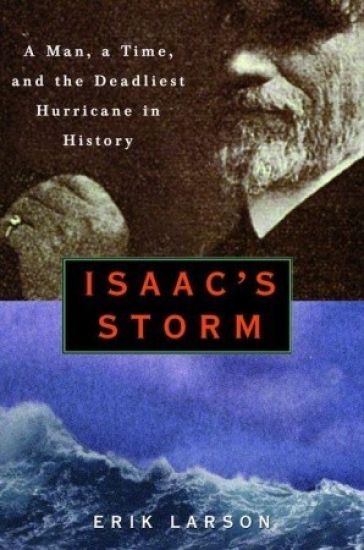
Isaac's Storm: A Man, a Time, and the Deadliest Hurricane in History
Erik Larson
Crown Publishing Group (NY)
1999
sidottu
NEW YORK TIMES BESTSELLER - The riveting true story of the Galveston hurricane of 1900, still the deadliest natural disaster in American history--from the acclaimed author of The Devil in the White City "A gripping account ... fascinating to its core, and all the more compelling for being true." --The New York Times Book ReviewSeptember 8, 1900, began innocently in the seaside town of Galveston, Texas. Even Isaac Cline, resident meteorologist for the U.S. Weather Bureau failed to grasp the true meaning of the strange deep-sea swells and peculiar winds that greeted the city that morning. Mere hours later, Galveston found itself submerged in a monster hurricane that completely destroyed the town and killed over six thousand people--and Isaac Cline found himself the victim of a devastating personal tragedy. Using Cline's own telegrams, letters, and reports, the testimony of scores of survivors, and our latest understanding of the science of hurricanes, Erik Larson builds a chronicle of one man's heroic struggle and fatal miscalculation in the face of a storm of unimaginable magnitude.



Isaac Newton's Papers and Letters on Natural Philosophy and Related Documents
Harvard University Press
1978
sidottu


Isaac the Infidel: Isaac Newton's Scientific and Undisclosed Biblical Discoveries
James E. McNabney
James E. McNabney
2016
nidottu
From The Courts To The Streetz: The Autobiography of Isaac "Ike-Moe" Williams
Isaac Williams
U Can Publishing LLC
2017
nidottu
The true life story of a Dallas native once considered one of the city's best basketball players in the late 1980's. He attended Spruce High School from 1986 to 1989. He only played 3 years of high school and 3 years of college. He was the first ball player in the history of the Dr. Pepper Tournament in 1989 to lose the championship game and still be named MVP. He was named All-State and Honorable Mention All-American in the 1989.He went on to play college ball at the University of New Mexico, where he led the Lobos to their first Western Athletic Conference (WAC) and was named Tournament (MVP), and 1st team All -Conference. He later became the 24th Leading scorer in Lobo's history in only 3 years of play. He became a free agent with the Los Angeles Lakers and was drafted 3rd round in the CBA. After leaving the CBA, he played in the United States Basketball League, and later overseas in Caracas, Venezuela. Then it all went bad. He made a drastic turn to the street life, where he fell into the bottomless pit of the underworld. Fallen. Never to get up. But he survived to tell his story. This is my story. "From The Court To The Streets."

Isaac Newton and the Laws of Motion (Inventions and Discovery)
Gianopolous Andrea
Capstone Press
2019
nidottu
Shows how inventors, scientists and businesspeople have shaped the world.
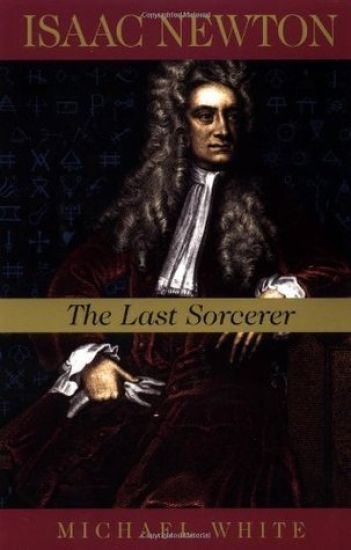
Unknown to all but a few, Newton was a practicing alchemist who dabbled with the occult, a tortured, obsessive character who searched for an understanding of the universe by whatever means possible. Sympathetic yet balanced, Michael White's Isaac Newton offers a revelatory picture of Newton as a genius who stood at the point in history where magic ended and science began.

Isaac Newton had an extraordinary idea. He believed the physical universe and everything in it could be described in exact detail using mathematical relationships. He formulated a law of gravity that explained why objects fall downwards, how the moon causes the tides, and why planets and comets orbit the sun.While Newton’s work has been added to over the years, his basic approach remains at the heart of the scientific worldview. Yet Newton’s own had little in common with that of a modern scientist. He believed the universe was created to a precise and rational design – a design that was fully understood by the earliest people. Over time this knowledge was lost, and Newton considered it his life’s work to rediscover it, whether through applied mathematics or a painstaking study of the Bible and other ancient texts. In chasing his impossible goal, Newton managed to contribute more to our understanding of the universe than anyone else in history.