Kirjojen hintavertailu. Mukana 11 342 296 kirjaa ja 12 kauppaa.

Kirjahaku

Etsi kirjoja tekijän nimen, kirjan nimen tai ISBN:n perusteella.

1000 tulosta hakusanalla J Collier

Developing Effective Student Peer Mentoring Programs
At a time when college completion is a major issue, and there is particular concern about the retention of underserved student populations, peer mentoring programs offer one solution to promoting student success. This is a comprehensive resource for creating, refining and sustaining effective student peer mentoring programs. While providing a blueprint for successfully designing programs for a wide range of audiences – from freshmen to doctoral students – it also offers specific guidance on developing programs targeting three large groups of under-served students: first-generation students, international students and student veterans.This guidebook is divided into two main sections. The opening section begins by reviewing the issue of degree non-completion, as well as college adjustment challenges that all students and those in each of the targeted groups face. Subsequent chapters in section one explore models of traditional and non-traditional student transition, persistence and belonging, address what peer mentoring can realistically achieve, and present a rubric for categorizing college student peer-mentoring programs. The final chapter in section one provides a detailed framework for assessing students’ adjustment issues to determine which ones peer mentoring programs can appropriately address. Section two of the guidebook shifts from the theoretical to the practical by covering the nuts and bolts of developing a college student peer-mentoring program. The initial chapter in section two covers a range of design issues including establishing a program timeline, developing a budget, securing funding, getting commitments from stakeholders, hiring staff, recruiting mentors and mentees, and developing policies and procedures. Subsequent chapters analyze the strengths and limitations of different program delivery options, from paired and group face-to-face mentoring to their e-mentoring equivalents; offer guidance on the creation of program content and resources for mentors and mentees, and provide mentor training exercises and curricular guidelines. Section two concludes by outlining processes for evaluating programs, including setting goals, collecting appropriate data, and methods of analysis; and by offering advice on sustaining and institutionalizing programs. Each chapter opens with a case study illustrating its principal points. This book is primarily intended as a resource for student affairs professionals and program coordinators who are developing new peer-mentoring programs or considering refining existing ones. It may also serve as a text in courses designed to train future peer mentors and leaders.
A Perceptual Study of Intonation

A Perceptual Study of Intonation

J. T. Hart; R. Collier; A. Cohen

Cambridge University Press
2006
pokkari
This book presents an experimental-phonetic approach to the study of intonation, defined as the ensemble of pitch variations in speech. It brings together in a single volume a detailed explication of the stylization method used in the analysis of intonation; theoretical insights and the experimental evidence that supports them, the results of physiological measurements that substantiate hypotheses about the production of intonation; and applications arising from the research. Johan't Hart, Rene Collier and Antonie Cohen argue that a perception-oriented approach, carried out by studying the perceptual consequences of deliberate manipulations of the speech signal, is the only way in which it can be decided what, out of the abundant information in the acoustic domain, is important for the listener and hence may be relevant for communication. The method they employ is fruitful not only for the analysis of Dutch, but also of British English, German and Russian intonation.
A Perceptual Study of Intonation

A Perceptual Study of Intonation

J. T. Hart; R. Collier; A. Cohen

Cambridge University Press
1990
sidottu
This book presents an experimental-phonetic approach to the study of intonation, defined as the ensemble of pitch variations in speech. It brings together in a single volume a detailed explication of the stylisation method used in the analysis of intonation; theoretical insights and the experimental evidence that supports them, the results of physiological measurements that substantiate hypotheses about the production of intonation; and applications arising from the research. Johan’t Hart, Rene Collier, and Antonie Cohen argue that a perception-oriented approach, carried out by studying the perceptual consequences of deliberate manipulations of the speech signal, is the only way in which it can be decided what, out of the abundant information in the acoustic domain, is important for the listener, and hence may be relevant for communication. The method they employ has been shown to be fruitful not only for the analysis of Dutch, but also of British English, German and Russian intonation. This book is a comprehensive and authoritative presentation of research carried out in the ‘Dutch school of intonation’. Phoneticians and speech scientists will find this account of the innovative and unique features of the Dutch approach invaluable.
Oxford Case Histories in Gastroenterology and Hepatology

Oxford Case Histories in Gastroenterology and Hepatology

Alissa J. Walsh; Otto C. Buchel; Jane Collier; Simon P.L. Travis

Oxford University Press
2010
nidottu
Based around the core curriculum for specialist trainees in gastroenterology and hepatology, this book contains 50 well-structured, peer-reviewed cases gathered from the Oxford Hospitals, comprehensively covering the various disorders of the gastrointestinal system. Each case comprises a brief clinical history and relevant examination findings, details of investigations including examples of medical imaging, followed by questions on differential diagnosis and management and detailed answers and discussion. The text is complemented by numerous black and white illustrations, including radiographic images, and 24 colour images. The question-and-answer format is designed to enhance the reader's diagnostic ability and clinical understanding.
The Political Economy of Economic Growth in Africa, 1960–2000: Volume 1

The Political Economy of Economic Growth in Africa, 1960–2000: Volume 1

Benno J. Ndulu; Stephen A. O'Connell; Robert H. Bates; Paul Collier; Chukwuma C. Soludo

Cambridge University Press
2009
pokkari
The period from 1960 to 2000 was one of remarkable growth and transformation in the world economy. Why did most of Sub-Saharan Africa fail to develop over this period? Why did a few small African economies succeed spectacularly? The Political Economy of Economic Growth in Africa, 1960–2000 is by far the most ambitious and comprehensive assessment of Africa's post-independence economic performance to date. Volume 1 examines the impact of resource wealth and geographical remoteness on Africa's growth and develops a new dataset of governance regimes covering all of Sub-Saharan Africa. Separate chapters analyze the dominant patterns of governance observed over the period and their impact on growth, the ideological formation of the political elite, the roots of political violence and reform, and the lessons of the 1960–2000 period for contemporary growth strategy.
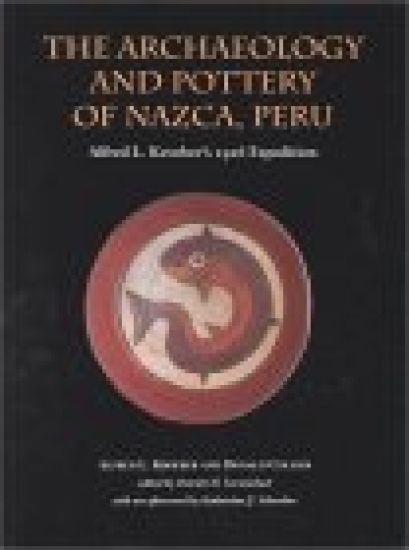
The Archaeology and Pottery of Nazca, Peru

The Archaeology and Pottery of Nazca, Peru

Alfred Kroeber; Donald Collier; Katharina J. Schreiber

AltaMira Press,U.S.
1998
sidottu
When Alfred Kroeber left Lima, Peru for the ruins of the Nazca region in July 1926, he could have had no inkling of the importance of what he would uncover. Nor would he have guessed that his excavation report would not appear until the end of the century, completed by Donald Collier and Patrick Carmichael after Kroeber's death in 1960. Kroeber's report contains what is still the only complete analysis and seriation of the beautiful painted pottery of Nazca, complete with over 400 photographs and drawings of objects uncovered in the excavations, some in full color. His report is also notable for its rare discussion of Nazca architecture, its description of cloth, hair bundles and other artifact groups, its accurate analysis of Nazca human remains, and even for one of the earliest descriptions and photographs of the famous Nazca lines. With careful editing by Collier and Carmichael, Kroeber's work is far ahead of its time methodologically and is still an important source document for contemporary archaeology and art history of South America. A final chapter by Katharina J. Schreiber puts Kroeber's work in the context of contemporary Nazca studies, including a reassessment of the sites discovered in the 1926 expedition. Important for both professional and avocational anthropologists, archaeologists, art historians, and those interested in the history of anthropology. Published in cooperation with The Field Museum, Chicago, Illinois
Ealy Family Heritage: Documenting Our Legacy

Ealy Family Heritage: Documenting Our Legacy

Bob Ealy Family Book Team; Melvin J. Collier

Createspace Independent Publishing Platform
2016
nidottu
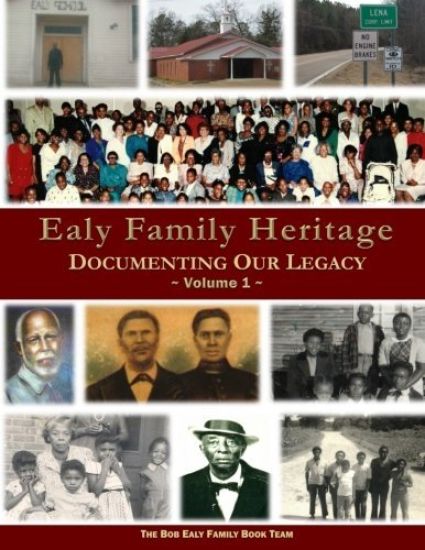
Ealy Family Heritage, Documenting Our Legacy is a fascinating body of work that not only documents the Ealy Family's history back to the 1700s, but it also captures the history of the Leake County, Mississippi communities where the family's presence dates back to circa 1835. That was when the family patriarch, Robert "Big Bob" Ealy, was transported to central Mississippi from Nash County, North Carolina as an enslaved young man. His enslaver, William "Billy" Eley, used him as a breeder. With his wife Jane Parrott, Big Bob Ealy had 12 children. Three additional children have been found. Because of his forced task of slave breeding, more will likely be unearthed in the future due to DNA technology. This first volume documents over 3,500 descendants. The family ancestral homes are the Lena and Tuscola communities of Leake County, but many descendants also resided and still live in Leake, Scott, Rankin, Hinds, and Madison County, Mississippi. During the 20th Century Great Migration, scores of Ealys migrated to Chicago, Detroit, Indianapolis, Milwaukee, Las Vegas, and other points North and West. Ealy Family Heritage, Documenting Our Legacy highlights four key areas - family, community, church, and school. These topics help to provide a comprehensive history of the family. A family history is more than just names, places, and dates. That's boring. However, this book is like no other family publication because it is chockfull of pictures, stories, and memories from family elders and others about the family, the communities, the churches, and the early schools for African Americans in southern Leake County. Oral history is a major part of family history research, as it gives life to the deceased ancestors. Ealy Family Heritage, Documenting Our Legacy was authored by Melvin J. Collier, a renowned genealogy researcher and author of two genealogical books, Mississippi to Africa, A Journey of Discovery and 150 Years Later, Broken Ties Mended. Collier is a great great grandson of Big Bob & Jane Ealy. He first heard his paternal grandmother, the late Mrs. Willie Ealy Collier, utter Big Bob's name from her lips when he was a teenager. Consequently, he began his genealogy research of the Ealy Family in 1993, nearly three years after his grandmother's passing, recalling much of the information she relayed to him. He has currently traced the Ealy Family's history back to Big Bob's mother, Annie, who was born circa 1795. Her name was given to numerous descendants. Collier discovered an unfortunate saga that involved the "ownership" of Annie and three of her children. They were the subject of an 1832 North Carolina court case, William Hunt vs. Edwin Bass et al, 17 N.C. 292, which went all the way to the North Carolina Supreme Court. Collier's research has also taken Jane Parrott's family history back to the 1700s to Lunenburg County and Brunswick County, Virginia. He has also uncovered autosomal DNA evidence of the family's African roots. In Ealy Family Heritage, Documenting Our Legacy, Collier uniquely combines the process of genealogy research with story-telling. He discloses how he researched the enslaved ancestors of Big Bob and Jane, while still telling the stories of their lives and their descendants' lives during slavery and afterwards. This also makes this book a great publication for even non-descendants who are interested in African American genealogy research. This book can also serve as a great template on how to organize and write a family history book. Whether if one is an Ealy descendant or not, this book is a great educational resource. Questions can be sent to [email protected].
Learning Through Serving

Learning Through Serving

Christine M. Cress; Peter J. Collier; Vicki L. Reitenauer

Stylus Publishing
2013
sidottu
This substantially expanded new edition of this widely-used and acclaimed text maintains the objectives and tenets of the first. It is designed to help students understand and reflect on their community service experiences both as individuals and as citizens of communities in need of their compassionate expertise. It is designed to assist faculty in facilitating student development of compassionate expertise through the context of service in applying disciplinary knowledge to community issues and challenges. In sum, the book is about how to make academic sense of civic service in preparing for roles as future citizen leaders.Each chapter has been developed to be read and reviewed, in sequence, over the term of a service-learning course. Students in a semester course might read just one chapter each week, while those in a quarter-term course might need to read one to two chapters per week. The chapters are intentionally short, averaging 8 to 14 pages, so they do not interfere with other course content reading.This edition presents four new chapters on Mentoring, Leadership, Becoming a Change Agent, and Short-Term Immersive and Global Service-Learning experiences. The authors have also revised the original chapters to more fully address issues of social justice, privilege/power, diversity, intercultural communication, and technology; have added more disciplinary examples; incorporated additional academic content for understanding service-learning issues (e.g., attribution theory); and cover issues related to students with disabilities, and international students.This text is a student-friendly, self-directed guide to service-learning that:Develops the skills needed to succeedClearly links service-learning to the learning goals of the courseCombines self-study and peer-study workbook formats with activities that can be incorporated in class, to give teachers maximum flexibility in structuring their service-learning coursesPromotes independent and collaborative learningEqually suitable for courses of a few weeks’ or a few months’ durationShows students how to assess progress and communicate end-resultsWritten for students participating in service learning as a class, but also suitable for students working individually on a project.Instructor's ManualThis Instructor Manual discusses the following six key areas for aligning your course with use of Learning through Serving, whether you teach a senior-level high school class, freshman studies course, or a college capstone class:1. Course and syllabus design2. Community-partner collaboration3. Creating class community4. Strategic teaching techniques5. Developing intercultural competence6. Impact assessment
Learning Through Serving

Learning Through Serving

Christine M. Cress; Peter J. Collier; Vicki L. Reitenauer

Stylus Publishing
2013
nidottu
This substantially expanded new edition of this widely-used and acclaimed text maintains the objectives and tenets of the first. It is designed to help students understand and reflect on their community service experiences both as individuals and as citizens of communities in need of their compassionate expertise. It is designed to assist faculty in facilitating student development of compassionate expertise through the context of service in applying disciplinary knowledge to community issues and challenges. In sum, the book is about how to make academic sense of civic service in preparing for roles as future citizen leaders.Each chapter has been developed to be read and reviewed, in sequence, over the term of a service-learning course. Students in a semester course might read just one chapter each week, while those in a quarter-term course might need to read one to two chapters per week. The chapters are intentionally short, averaging 8 to 14 pages, so they do not interfere with other course content reading.This edition presents four new chapters on Mentoring, Leadership, Becoming a Change Agent, and Short-Term Immersive and Global Service-Learning experiences. The authors have also revised the original chapters to more fully address issues of social justice, privilege/power, diversity, intercultural communication, and technology; have added more disciplinary examples; incorporated additional academic content for understanding service-learning issues (e.g., attribution theory); and cover issues related to students with disabilities, and international students.This text is a student-friendly, self-directed guide to service-learning that:Develops the skills needed to succeedClearly links service-learning to the learning goals of the courseCombines self-study and peer-study workbook formats with activities that can be incorporated in class, to give teachers maximum flexibility in structuring their service-learning coursesPromotes independent and collaborative learningEqually suitable for courses of a few weeks’ or a few months’ durationShows students how to assess progress and communicate end-resultsWritten for students participating in service learning as a class, but also suitable for students working individually on a project.Instructor's ManualThis Instructor Manual discusses the following six key areas for aligning your course with use of Learning through Serving, whether you teach a senior-level high school class, freshman studies course, or a college capstone class:1. Course and syllabus design2. Community-partner collaboration3. Creating class community4. Strategic teaching techniques5. Developing intercultural competence6. Impact assessment
When We Become Ours

When We Become Ours

Shannon Gibney; Nicole Chung; Mariama J. Lockington; Meredith Ireland; Mark Oshiro; Stefany Valentine; Eric Smith; Kelley Baker; MeMe Collier; Susan Harness; Lisa Nopachai; Matthew Salesses; Sun Yung Shin; Lisa Wool-Rim Sjöblom; Jenny Heijun Wills

HARPERCOLLINS PUBLISHERS INC
2023
sidottu
"An emotion-filled collection." —Kirkus ReviewsA CCBC 2024 Choices for the Fiction for Young Adult category!Two teens take the stage and find their voice . . .A girl learns about her heritage and begins to find her community . . .A sister is haunted by the ghosts of loved ones lost . . .There is no universal adoption experience, and no two adoptees have the same story. This anthology for teens edited by Shannon Gibney and Nicole Chung contains a wide range of powerful, poignant, and evocative stories in a variety of genres.These tales from fifteen bestselling, acclaimed, and emerging adoptee authors genuinely and authentically reflect the complexity, breadth, and depth of adoptee experiences.This groundbreaking collection centers what it’s like growing up as an adoptee. These are stories by adoptees, for adoptees, reclaiming their own narratives. With stories by:Kelley BakerNicole ChungShannon GibneyMark OshiroMeMe CollierSusan Harness Meredith IrelandMariama J. LockingtonLisa NopachaiStefany ValentineMatthew SalessesLisa Wool-Rim SjöblomEric SmithJenny Heijun WillsSun Yung ShinForeword by Rebecca CarrollAfterword by JaeRan Kim, MSW, PhD
The Second World War

The Second World War

David Horner; Robin Havers; Alastair Finlan; Mark J Grove; Philip D. Grove; Paul Collier; Geoffrey Jukes; Russell Hart; Stephen A. Hart; Max Hastings

Osprey Publishing
2018
sidottu
Bringing together the work of nine leading historians, and superbly illustrated with contemporary photography and colour maps, The Second World War gives readers a comprehensive understanding of all aspects of history’s greatest conflict.The period from 1939 to 1945 saw some of the most devastating and remarkable events in living memory. Labouring beneath a daily burden of fear, sacrifice, deprivation and uncertainty, soldiers and civilians of all nationalities were driven to extremes of selfless loyalty, dogged determination or bitter cruelty by the demands of a world at war. This book tells the stories of the men and women who lived and died during the Second World War, from politicians to factory workers, and from High Command to the conscripted men on the front lines. The experience of war is brought to life through a wealth of contemporary documentation, private writings and historical research, whilst the political, military and historical significance of the war is assessed and examined. From Europe's Western and Eastern Fronts to the war at sea, and from the Pacific to the Mediterranean and North Africa, every fighting front of the Second World War is covered in this truly comprehensive volume.
Wildlife Study Design

Wildlife Study Design

Michael L. Morrison; William M. Block; M. Dale Strickland; Bret A. Collier; Markus J. Peterson

Springer-Verlag New York Inc.
2008
sidottu
We developed the first edition of this book because we perceived a need for a compilation on study design with application to studies of the ecology, conser- tion, and management of wildlife. We felt that the need for coverage of study design in one source was strong, and although a few books and monographs existed on some of the topics that we covered, no single work attempted to synthesize the many facets of wildlife study design. We decided to develop this second edition because our original goal – synthesis of study design – remains strong, and because we each gathered a substantial body of new material with which we could update and expand each chapter. Several of us also used the first edition as the basis for workshops and graduate teaching, which provided us with many valuable suggestions from readers on how to improve the text. In particular, Morrison received a detailed review from the graduate s- dents in his “Wildlife Study Design” course at Texas A&M University. We also paid heed to the reviews of the first edition that appeared in the literature.