Outdated management techniques cannont be expected to cope with the complex problems of modern business. Today's managers must have a better understanding of the internal structure of the firm and a clear picture of the firm's place within the economy as a whole. In the thoroughly revised and updated second edition of this highly original textbook for business students, W. D. Reekie, D. E. Allen and J. N. Crook examine contemporary management issues in an objective and well balanced fashion. A special feature of the book is its successful intergration of introductory financial analysis with microeconomic theory. It includes extensive sections on financial markets, distribution channels, industrial relations and government policies and stresses the overriding importance of market forces in business decision-making. The second edition incorporates all the changes created by 'big bang', new accounting standards, the EC and the harmoniation of reporting requirements as well as a completely revised discussion of taxation systems, industrial relations, pricing, small firms, privatizations and monopoly policy. It is an essential text for students and provides an up-to-date and complete introduction to the economics of modern business.
Nigel Pennick; John Matthews; Caroline Wise; Caitlín Matthews; Carol Clancy; R.J. Stewart; Bernard Nesfield-Cookson; Gareth Knight; Robert Stephenson; Geraldine Beskin; Chesca Potter; William Stukeley; Lewis Spence; Harold Bayley; Alan V. Insole; Ross Nichols
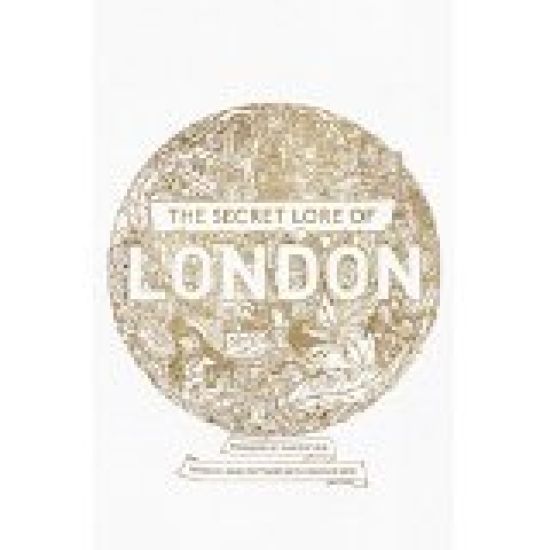
With a foreword by Iain Sinclair. London is an ancient city, whose foundation dates back literally thousands of years into the legendary prehistory of these islands. Not surprisingly it has accumulated a large number of stories, both historic and mythical, during this period, many of which, though faithfully recorded at the time, have lain almost forgotten in dusty libraries throughout the city. The Secret Lore of London is a guide to the legends, including a discussion of their importance as part of the oral tradition of Britain, combining Prehistoric, Celtic, Arthurian, Roman, Saxon and Norman levels - each of which has contributed to the many-layered life of the city. The first part contains a unique selection of essays (some printed here for the first time) by experts in their fields, each of whom possesses a unique interest in the legends of these islands, and who have written widely on associated themes. The second part of the book will consist of a Gazetteer of the sites mentioned which are still in existence, together with various other sites of associated interest, compiled by the Editor, the contributors, and members of the London Earth Mysteries Group. This part will be fully updated and extended to include many more sites. The result is a wide ranging and wholly fascinating book, with wide sales application possible. A series of appendixes will include William Stukley's extraordinary document The Brill, which relates to the ancient prehistoric sites around the area of present day St. Pancras, and excerpts from some of the best known 19th and early 20th century works on Legendary London by Lewis Spence and Harold BayleyContributors to the book are: Nigel PennickJohn MatthewsCaroline WiseCaitlín MatthewsCarol Clancy R.J. StewartBernard Nesfield-CooksonGareth KnightRobert StephensonGeraldine BeskinChesca PotterWilliam StukeleyLewis SpenceHarold BayleyAlan V. InsoleRoss Nichols
J.-J. Rousseau aux Francais. Par J. Martin.]Date de l'edition originale: 1802Ce livre est la reproduction fidele d'une oeuvre publiee avant 1920 et fait partie d'une collection de livres reimprimes a la demande editee par Hachette Livre, dans le cadre d'un partenariat avec la Bibliotheque nationale de France, offrant l'opportunite d'acceder a des ouvrages anciens et souvent rares issus des fonds patrimoniaux de la BnF.Les oeuvres faisant partie de cette collection ont ete numerisees par la BnF et sont presentes sur Gallica, sa bibliotheque numerique.En entreprenant de redonner vie a ces ouvrages au travers d'une collection de livres reimprimes a la demande, nous leur donnons la possibilite de rencontrer un public elargi et participons a la transmission de connaissances et de savoirs parfois difficilement accessibles.Nous avons cherche a concilier la reproduction fidele d'un livre ancien a partir de sa version numerisee avec le souci d'un confort de lecture optimal. Nous esperons que les ouvrages de cette nouvelle collection vous apporteront entiere satisfaction.Pour plus d'informations, rendez-vous sur www.hachettebnf.fr
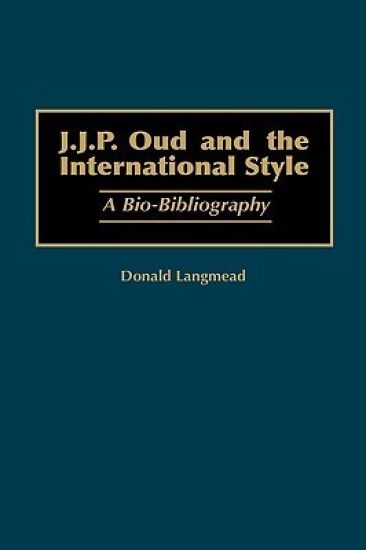
J.J.P. Oud was a famed modern architect; his European contemporaries are Le Corbusier, Walter Gropius, and Ludwig Mies van der Rohe. In Leiden in 1917, Oud, with the Dutch artist Theo van Doesburg and the expatriate Hungarian Vilmos Huszár, and fellow Hollanders Jan Wils and Bart van der Leck formed a collaboration between artists and architects a movement they called De Stijl. The loose knit group slowly disintegrated, but in terms of architectural style the movement sought a unity between art and society that flirted with Constructivism, developed theories of Neoplasticism, and what Oud called Cubism. Although these intellectualized theories seldom resulted in architectural realities, the realized projects were spectacular and they include Oud's director's hut at the Oud-Mathenesse housing development, 1923, and the facade of the Café De Unie, Rotterdam, 1925. This annotated bibliography documents not only the literature on Oud but also Oud's own writings. A biographical essay, this book examines the place afforded Oud in the international literature of architecture and traces his career which spanned fifty-seven years. Architectural students and scholars will benefit from this guide to the major archives, minor collections, and listing of Oud's projects and the books in his own professional library. Bibliographic entries are alphabetically arranged, by books and monographs and by journals, within chronological divisions. Entries are cross-referenced to a works list and index.
This historical survey of the discovery of the electron has been published to coincide with the centenary of the discovery. The text maps the life and achievements of J.J. Thomson, with particular focus on his ideas and experiments leading to the discovery. It describes Thomson's early years and education. It then considers his career at Cambridge, first as a fellow of Trinity, later as the head of the Cavendish Laboratory and finally as Master of Trinity and national spokesman for science. The core of the book is concerned with the work undertaken at the Cavendish, culminating in the discovery of "corpuscles", later named "electrons".; In the final two chapters, the immediate aftermath and implications of the work are described. These include the creation of the subject of atomic physics as well as the broader long term developments which can be traced from vacuum valves and the transistor through to the microelectronics revolution.
This work has been selected by scholars as being culturally important and is part of the knowledge base of civilization as we know it.This work is in the public domain in the United States of America, and possibly other nations. Within the United States, you may freely copy and distribute this work, as no entity (individual or corporate) has a copyright on the body of the work.Scholars believe, and we concur, that this work is important enough to be preserved, reproduced, and made generally available to the public. To ensure a quality reading experience, this work has been proofread and republished using a format that seamlessly blends the original graphical elements with text in an easy-to-read typeface.We appreciate your support of the preservation process, and thank you for being an important part of keeping this knowledge alive and relevant.