Kirjojen hintavertailu. Mukana 11 717 486 kirjaa ja 12 kauppaa.

Kirjahaku

Etsi kirjoja tekijän nimen, kirjan nimen tai ISBN:n perusteella.

1000 tulosta hakusanalla J.M. Coetzee

J. M. Coetzee in Context and Theory

J. M. Coetzee in Context and Theory

Continuum Publishing Corporation
2011
nidottu
Nobel Laureate and the first author to win the Booker Prize twice, J.M. Coetzee is perhaps the world's leading living novelist writing in English. Including an international roster of world leading critics and novelists, and drawing on new research, this innovative book analyses the whole range of Coetzee's work, from his most recent novels through his memoirs and critical writing. It offers a range of perspectives on his relationship with the historical, political, cultural and social context of South Africa. It also contextualises Coetzee's work in relation to his literary influences, colonial and post-colonial history, the Holocaust and colonial genocides, the 'politics' and meaning of the Nobel prize in South Africa and Coetzee's very public move from South Africa to Australia. Including a major unpublished essay by leading South African novelist Andre Brink, this book offers the most up-to-date study of Coetzee's work currently available.
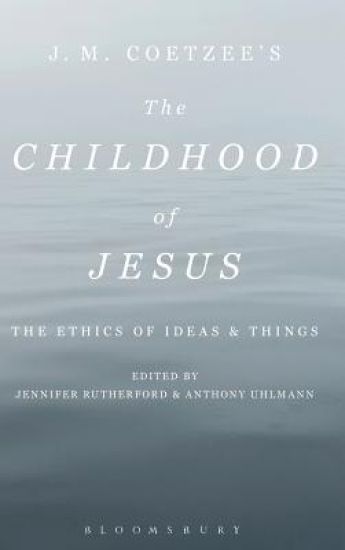
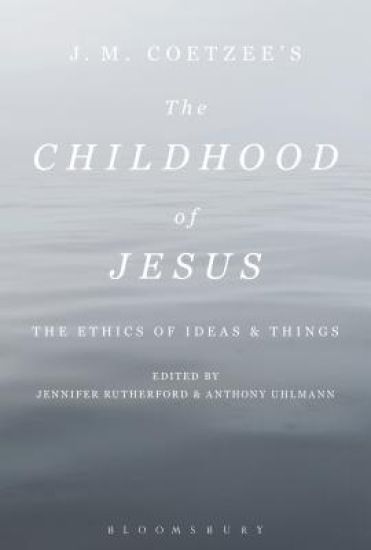
J. M. Coetzee’s The Childhood of Jesus
Since the controversy and acclaim that surrounded the publication of Disgrace (1999), the awarding of the Nobel Prize for literature and the publication of Elizabeth Costello: Eight Lessons (both in 2003), J. M. Coetzee’s status has begun to steadily rise to the point where he has now outgrown the specialized domain of South African literature. Today he is recognized more simply as one of the most important writers in the English language from the late 20th and early 21st century. Coetzee’s productivity and invention has not slowed with old age. The Childhood of Jesus, published in 2013, like Elizabeth Costello, was met with a puzzled reception, as critics struggled to come to terms with its odd setting and structure, its seemingly flat tone, and the strange affectless interactions of its characters. Most puzzling was the central character, David, linked by the title to an idea of Jesus. J.M. Coetzee’s The Childhood of Jesus: The Ethics of Ideas and Things is at the forefront of an exciting process of critical engagement with this novel, which has begun to uncover its rich dialogue with philosophy, theology, mathematics, politics, and questions of meaning.
J. M. Coetzee’s The Childhood of Jesus
Since the controversy and acclaim that surrounded the publication of Disgrace (1999), the awarding of the Nobel Prize for literature and the publication of Elizabeth Costello: Eight Lessons (both in 2003), J. M. Coetzee’s status has begun to steadily rise to the point where he has now outgrown the specialized domain of South African literature. Today he is recognized more simply as one of the most important writers in the English language from the late 20th and early 21st century. Coetzee’s productivity and invention has not slowed with old age. The Childhood of Jesus, published in 2013, like Elizabeth Costello, was met with a puzzled reception, as critics struggled to come to terms with its odd setting and structure, its seemingly flat tone, and the strange affectless interactions of its characters. Most puzzling was the central character, David, linked by the title to an idea of Jesus. J.M. Coetzee’s The Childhood of Jesus: The Ethics of Ideas and Things is at the forefront of an exciting process of critical engagement with this novel, which has begun to uncover its rich dialogue with philosophy, theology, mathematics, politics, and questions of meaning.
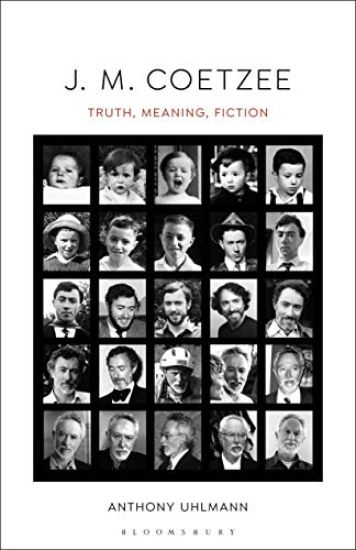
J. M. Coetzee

J. M. Coetzee

Anthony Uhlmann

Bloomsbury Academic USA
2020
nidottu
J. M. Coetzee: Truth, Meaning, Fiction illuminates the intellectual and philosophical interests that drive Coetzee’s writing. In doing so, it makes the case for Coetzee as an important and original thinker in his own right. Whilst looking at Coetzee’s writing career, from his dissertation through to The Schooldays of Jesus (2016), and interpreting running themes and scenarios, style and evolving attitudes to literary form, Anthony Uhlmann also offers revealing glimpses, informed by archival research, of Coetzee’s writing process. Among the main themes that Uhlmann sees in Coetzee’s writing, and which remains highly relevant today, is the awareness that there is truth in fiction, or that fiction can provide valuable insights into real world problems, and that there are also fictions of the truth: that we are surrounded, in our everyday lives, by stories we wish to believe are true. J. M. Coetzee: Truth, Meaning, Fiction offers a revealing new account of one of arguably our most important contemporary writers.
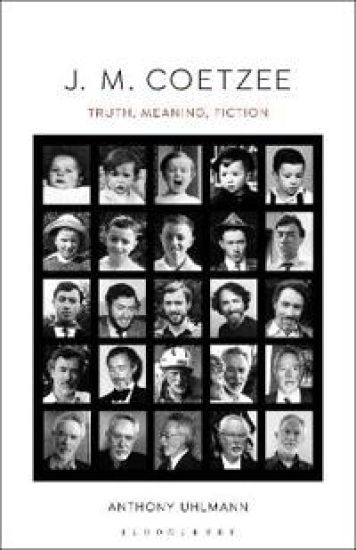
J. M. Coetzee

J. M. Coetzee

Anthony Uhlmann

Bloomsbury Academic USA
2020
sidottu
J. M. Coetzee: Truth, Meaning, Fiction illuminates the intellectual and philosophical interests that drive Coetzee’s writing. In doing so, it makes the case for Coetzee as an important and original thinker in his own right. Whilst looking at Coetzee’s writing career, from his dissertation through to The Schooldays of Jesus (2016), and interpreting running themes and scenarios, style and evolving attitudes to literary form, Anthony Uhlmann also offers revealing glimpses, informed by archival research, of Coetzee’s writing process. Among the main themes that Uhlmann sees in Coetzee’s writing, and which remains highly relevant today, is the awareness that there is truth in fiction, or that fiction can provide valuable insights into real world problems, and that there are also fictions of the truth: that we are surrounded, in our everyday lives, by stories we wish to believe are true. J. M. Coetzee: Truth, Meaning, Fiction offers a revealing new account of one of arguably our most important contemporary writers.
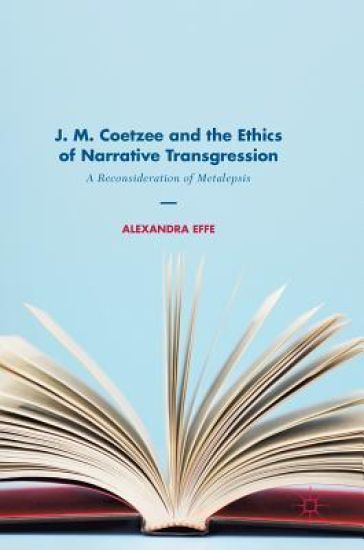
J. M. Coetzee and the Ethics of Narrative Transgression

J. M. Coetzee and the Ethics of Narrative Transgression

Alexandra Effe

Springer International Publishing AG
2017
sidottu
This book is about the metanarrative and metafictional elements of J. M. Coetzee’s novels. It draws together authorship, readership, ethics, and formal analysis into one overarching argument about how narratives work the boundary between art and life. On the basis of Coetzee’s writing, it reconsiders the concept of metalepsis, challenges common understandings of self-reflexive discourse, and invites us to rethink our practice as critics and readers.This study analyzes Coetzee’s novels in three chapters organized thematically around the author’s relation with character, reader, and self. Author and character are discussed on the basis of Foe, Slow Man, and Coetzee’s Nobel lecture, 'He and His Man'. Stories featuring the character Elizabeth Costello, or the figuration Elizabeth Curren, serve to elaborate the relation of author and reader. The study ends on a reading of Summertime, Diary of a Bad Year, and Dusklands as Coetzee’s engagement with autobiographical writing, analyzing the relation of author and self. It will appeal to readers with an interest in literary and narrative theory as much as to Coetzee scholars and advanced students.
J. M. Coetzee and the Ethics of Narrative Transgression

J. M. Coetzee and the Ethics of Narrative Transgression

Alexandra Effe

Springer International Publishing AG
2018
nidottu
This book is about the metanarrative and metafictional elements of J. M. Coetzee’s novels. It draws together authorship, readership, ethics, and formal analysis into one overarching argument about how narratives work the boundary between art and life. On the basis of Coetzee’s writing, it reconsiders the concept of metalepsis, challenges common understandings of self-reflexive discourse, and invites us to rethink our practice as critics and readers.This study analyzes Coetzee’s novels in three chapters organized thematically around the author’s relation with character, reader, and self. Author and character are discussed on the basis of Foe, Slow Man, and Coetzee’s Nobel lecture, 'He and His Man'. Stories featuring the character Elizabeth Costello, or the figuration Elizabeth Curren, serve to elaborate the relation of author and reader. The study ends on a reading of Summertime, Diary of a Bad Year, and Dusklands as Coetzee’s engagement with autobiographical writing, analyzing the relation of author and self. It will appeal to readers with an interest in literary and narrative theory as much as to Coetzee scholars and advanced students.
Critical Perspectives on J. M. Coetzee
Critical Perspectives on J.M. Coetzee is one of the first collections of critical essays on this major contemporary writer. The essays, written by an international cast of contributors, adopt a variety of approaches to Coetzee's often controversial work, taking care to place that work within its wider cultural context. Contributions include essays of more general import, ranging across Coetzee's oeuvre, as well as essays that analyse in more detail individual Coetzee novels. The collection also includes a preface by Coetzee's fellow South African, the internationally acclaimed writer Nadine Gordimer.
The Cambridge Introduction to J. M. Coetzee

The Cambridge Introduction to J. M. Coetzee

Dominic Head

Cambridge University Press
2009
pokkari
The South African novelist and Nobel Laureate J. M. Coetzee is widely studied around the world and attracts considerable critical attention. With the publication of Disgrace Coetzee began to enjoy popular as well as critical acclaim, but his work can be as challenging as it is impressive. This book is addressed to students and readers of Coetzee: it is an up-to-date survey of the writer's fiction and context, written accessibly for those new to his work. All of the fiction is discussed, and the brooding presence of the political situation in South Africa, during the first part of his career, is given serious attention in a comprehensive account of the author's main influences. The revealing strand of confessional writing in the latter half of Coetzee's career is given full consideration. This Introduction will help new readers understand and appreciate one of the most important and challenging authors in contemporary literature.
The Cambridge Introduction to J. M. Coetzee

The Cambridge Introduction to J. M. Coetzee

Head Dominic

Cambridge University Press
2009
sidottu
The South African novelist and Nobel Laureate J. M. Coetzee is widely studied around the world and attracts considerable critical attention. With the publication of Disgrace Coetzee began to enjoy popular as well as critical acclaim, but his work can be as challenging as it is impressive. This book is addressed to students and readers of Coetzee: it is an up-to-date survey of the writer's fiction and context, written accessibly for those new to his work. All of the fiction is discussed, and the brooding presence of the political situation in South Africa, during the first part of his career, is given serious attention in a comprehensive account of the author's main influences. The revealing strand of confessional writing in the latter half of Coetzee's career is given full consideration. This Introduction will help new readers understand and appreciate one of the most important and challenging authors in contemporary literature.
The Cambridge Companion to J. M. Coetzee
Nobel Laureate J. M. Coetzee is amongst the most acclaimed and widely studied of contemporary authors. The Cambridge Companion to J. M. Coetzee provides a compelling introduction for new readers, as well as fresh perspectives and provocations for those long familiar with Coetzee's works. All of Coetzee's published novels and autobiographical fictions are discussed at length, and there is extensive treatment of his translations, scholarly books and essays, and volumes of correspondence. Confronting Coetzee's works on the grounds of his practice, the chapters address his craft, his literary relations and horizons, and the relationship between his writings and other arts, disciplines and institutions. Written by an international team of contributors, this Companion offers a comprehensive introduction to this important writer, establishes new avenues of discovery, and explains Coetzee's undiminished ability to challenge and surprise his readers with inventive works of striking power and intensity.
The Cambridge Companion to J. M. Coetzee
Nobel Laureate J. M. Coetzee is amongst the most acclaimed and widely studied of contemporary authors. The Cambridge Companion to J. M. Coetzee provides a compelling introduction for new readers, as well as fresh perspectives and provocations for those long familiar with Coetzee's works. All of Coetzee's published novels and autobiographical fictions are discussed at length, and there is extensive treatment of his translations, scholarly books and essays, and volumes of correspondence. Confronting Coetzee's works on the grounds of his practice, the chapters address his craft, his literary relations and horizons, and the relationship between his writings and other arts, disciplines and institutions. Written by an international team of contributors, this Companion offers a comprehensive introduction to this important writer, establishes new avenues of discovery, and explains Coetzee's undiminished ability to challenge and surprise his readers with inventive works of striking power and intensity.
Critical Perspectives on J. M. Coetzee
Critical Perspectives on J.M. Coetzee is one of the first collections of critical essays on this major contemporary writer. The essays, written by an international cast of contributors, adopt a variety of approaches to Coetzee's often controversial work, taking care to place that work within its wider cultural context. Contributions include essays of more general import, ranging across Coetzee's oeuvre, as well as essays that analyse in more detail individual Coetzee novels. The collection also includes a preface by Coetzee's fellow South African, the internationally acclaimed writer Nadine Gordimer.
The Slow Philosophy of J. M. Coetzee

The Slow Philosophy of J. M. Coetzee

Jan Wilm

Bloomsbury Academic
2017
nidottu
In The Slow Philosophy of J.M. Coetzee Jan Wilm analyses Coetzee’s singular aesthetic style which, he argues, provokes the reader to read his works slowly. The effected ‘slow reading’ is developed into a method specifically geared to analyzing Coetzee’s singular oeuvre, and it is shown that his works productively decelerate the reading process only to dynamize the reader’s reflexion in a way that may be termed philosophical. Drawing on fresh archival material, this is the first study of its kind to explore Coetzee’s writing process as already slow; as a program of seemingly relentless revision which brings forth his uniquely dense and crystalline style. Through the incorporation of material from drafts and notebooks, this study is also the first to combine an exploration of the writer’s stylistic choices with a rigorous analysis of the reader’s responses. The book includes close readings of Coetzee's popular and lesser known work, including Disgrace, Waiting for the Barbarians, Elizabeth Costello, Life and Times of Michael K and Slow Man.
The Bloomsbury Handbook to J. M. Coetzee
J. M. Coetzee – novelist, essayist, public intellectual, and Nobel Laureate in Literature (2003) – is widely recognized as one of the towering literary figures of the last half century. With chapters written by leading and emerging scholars from across the world, The Bloomsbury Handbook to J. M. Coetzee offers the most comprehensive available exploration of the variety, range and significance of his work. The volume covers a wealth of topics, including: · The full span of Coetzee’s work from his poetry to his essays and major fiction, including Waiting for the Barbarians, Disgrace and the Jesus novels· Biographical details and archival approaches· Coetzee’s sources and influences, including engagements with Modernism, South African, Australian, Russian and Latin American literatures· Interdisciplinary perspectives, including on visual cultures, music, philosophy, computational systems and translation. The Bloomsbury Handbook to J. M. Coetzee provides indispensable scholarly perspectives, covers emerging debates and maps the future direction of Coetzee studies.
The Bloomsbury Handbook to J. M. Coetzee
J. M. Coetzee – novelist, essayist, public intellectual, and Nobel Laureate in Literature (2003) – is widely recognized as one of the towering literary figures of the last half century. With chapters written by leading and emerging scholars from across the world, The Bloomsbury Handbook to J. M. Coetzee offers the most comprehensive available exploration of the variety, range and significance of his work. The volume covers a wealth of topics, including: · The full span of Coetzee’s work from his poetry to his essays and major fiction, including Waiting for the Barbarians, Disgrace and the Jesus novels· Biographical details and archival approaches· Coetzee’s sources and influences, including engagements with Modernism, South African, Australian, Russian and Latin American literatures· Interdisciplinary perspectives, including on visual cultures, music, philosophy, computational systems and translation. The Bloomsbury Handbook to J. M. Coetzee provides indispensable scholarly perspectives, covers emerging debates and maps the future direction of Coetzee studies.
The Slow Philosophy of J. M. Coetzee

The Slow Philosophy of J. M. Coetzee

Jan Wilm

Bloomsbury Academic
2016
sidottu
In The Slow Philosophy of J.M. Coetzee Jan Wilm analyses Coetzee’s singular aesthetic style which, he argues, provokes the reader to read his works slowly. The effected ‘slow reading’ is developed into a method specifically geared to analyzing Coetzee’s singular oeuvre, and it is shown that his works productively decelerate the reading process only to dynamize the reader’s reflexion in a way that may be termed philosophical. Drawing on fresh archival material, this is the first study of its kind to explore Coetzee’s writing process as already slow; as a program of seemingly relentless revision which brings forth his uniquely dense and crystalline style. Through the incorporation of material from drafts and notebooks, this study is also the first to combine an exploration of the writer’s stylistic choices with a rigorous analysis of the reader’s responses. The book includes close readings of Coetzee's popular and lesser known work, including Disgrace, Waiting for the Barbarians, Elizabeth Costello, Life and Times of Michael K and Slow Man.
Disgrace by J. M. Coetzee (Book Analysis)

Disgrace by J. M. Coetzee (Book Analysis)

Bright Summaries

BrightSummaries.com
2019
pokkari
Unlock the more straightforward side of Disgrace with this concise and insightful summary and analysis This engaging summary presents an analysis of Disgrace by J. M. Coetzee. The novel follows the university professor David Lurie, who goes to live with his daughter Lucy on her smallholding after he is unceremoniously dismissed from his teaching post for seducing a student. There, he gets a glimpse of the new South Africa that has emerged following the end of apartheid and experiences a brutal attack that permanently alters his relationship with his daughter and his outlook on the world. Disgrace won the Man Booker Prize in 1999, making Coetzee the first writer to receive the award twice (following his 1983 win with Life and Times of Michael K). Find out everything you need to know about Disgrace in a fraction of the time This in-depth and informative reading guide brings you: - A complete plot summary- Character studies- Key themes and symbols- Questions for further reflection Why choose BrightSummaries.com?Available in print and digital format, our publications are designed to accompany you on your reading journey. The clear and concise style makes for easy understanding, providing the perfect opportunity to improve your literary knowledge in no time. See the very best of literature in a whole new light with BrightSummaries.com