Kirjojen hintavertailu. Mukana 12 398 988 kirjaa ja 12 kauppaa.

Kirjahaku

Etsi kirjoja tekijän nimen, kirjan nimen tai ISBN:n perusteella.

1000 tulosta hakusanalla JAMES E. DODDS

Fidelity to Our Imperfect Constitution

Fidelity to Our Imperfect Constitution

James E. Fleming

Oxford University Press Inc
2015
sidottu
In recent years, some have asked "Are we all originalists now?" and many have assumed that originalists have a monopoly on concern for fidelity in constitutional interpretation. In Fidelity to Our Imperfect Constitution, James Fleming rejects originalisms-whether old or new, concrete or abstract, living or dead. Instead, he defends what Ronald Dworkin called a "moral reading" of the United States Constitution, or a "philosophic approach" to constitutional interpretation. He refers to conceptions of the Constitution as embodying abstract moral and political principles-not codifying concrete historical rules or practices-and of interpretation of those principles as requiring normative judgments about how they are best understood-not merely historical research to discover relatively specific original meanings. Through examining the spectacular concessions that originalists have made to their critics, he shows the extent to which even they acknowledge the need to make normative judgments in constitutional interpretation. Fleming argues that fidelity in interpreting the Constitution as written requires a moral reading or philosophic approach. Fidelity commits us to honoring our aspirational principles, not following the relatively specific original meanings (or original expected applications) of the founders. Originalists would enshrine an imperfect Constitution that does not deserve our fidelity. Only a moral reading or philosophic approach, which aspires to interpret our imperfect Constitution so as to make it the best it can be, gives us hope of interpreting it in a manner that may deserve our fidelity.
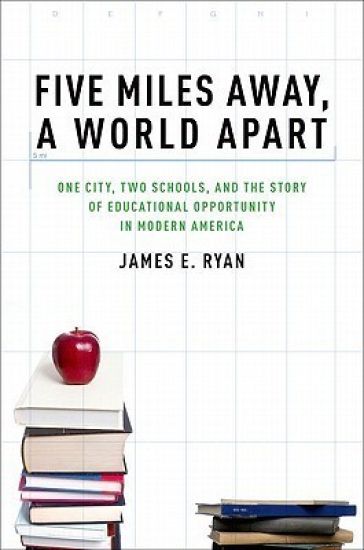
Five Miles Away, A World Apart

Five Miles Away, A World Apart

James E. Ryan

Oxford University Press Inc
2011
nidottu
How is it that, half a century after Brown v. Board of Education, educational opportunities remain so unequal for black and white students, not to mention poor and wealthy ones? In his important new book, Five Miles Away, A World Apart, James E. Ryan answers this question by tracing the fortunes of two schools in Richmond, Virginia--one in the city and the other in the suburbs. Ryan shows how court rulings in the 1970s, limiting the scope of desegregation, laid the groundwork for the sharp disparities between urban and suburban public schools that persist to this day. The Supreme Court, in accord with the wishes of the Nixon administration, allowed the suburbs to lock nonresidents out of their school systems. City schools, whose student bodies were becoming increasingly poor and black, simply received more funding, a measure that has proven largely ineffective, while the independence (and superiority) of suburban schools remained sacrosanct. Weaving together court opinions, social science research, and compelling interviews with students, teachers, and principals, Ryan explains why all the major education reforms since the 1970s--including school finance litigation, school choice, and the No Child Left Behind Act--have failed to bridge the gap between urban and suburban schools and have unintentionally entrenched segregation by race and class. As long as that segregation continues, Ryan forcefully argues, so too will educational inequality. Ryan closes by suggesting innovative ways to promote school integration, which would take advantage of unprecedented demographic shifts and an embrace of diversity among young adults. Exhaustively researched and elegantly written by one of the nation's leading education law scholars, Five Miles Away, A World Apart ties together, like no other book, a half-century's worth of education law and politics into a coherent, if disturbing, whole. It will be of interest to anyone who has ever wondered why our schools are so unequal and whether there is anything to be done about it.
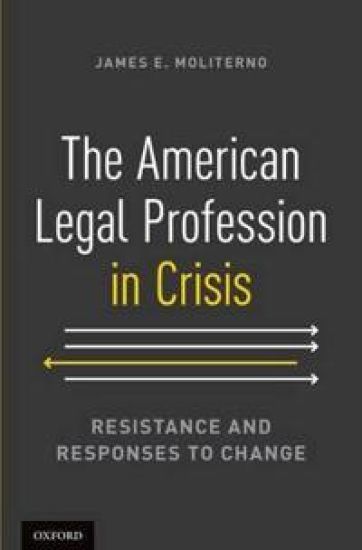
The American Legal Profession in Crisis

The American Legal Profession in Crisis

James E. Moliterno

Oxford University Press Inc
2013
sidottu
Central to the identity of the American legal profession are its systems of self-regulation. Throughout history, the legal profession has tried to hold tight to its traditional values and structure during times of self-identified crisis. The American Legal Profession in Crisis: Resistance and Responses to Change analyzes the efforts of the legal profession to protect and maintain the status quo even as the world around it changed. James E. Moliterno argues that with striking consistency, the profession has resisted the societal change happening around it, and sought to ban or discourage new models of legal representation created by such change. In response to every crisis, lawyers asked: "How can we stay even more 'the same' than we already are?" The legal profession has been an unwilling, capitulating entity to any transformation wrought by the overwhelming tide of change. Any proactive changes were mostly levied against the newest members of the legal community in order to preserve the status quo, so that when the legal profession did have to change, it did so only because the changes in society, culture, technology, economics, and globalization could not be denied. This book will demonstrate how the profession has held to its anachronistic ways at key crisis points in US history: Watergate, communist infiltration, arrival of waves of immigrants, the litigation explosion, the civility crisis, and the current economic crisis that blends with dramatic changes in technology and communications and globalization. Ultimately, the author urges the profession to look outward and forward to find in society and culture the causes and connections with these periodic crises. Doing so would allow the profession to grow with the society, solve problems with, rather than against, the flow of society, and be more attuned to the very society the profession claims to serve.
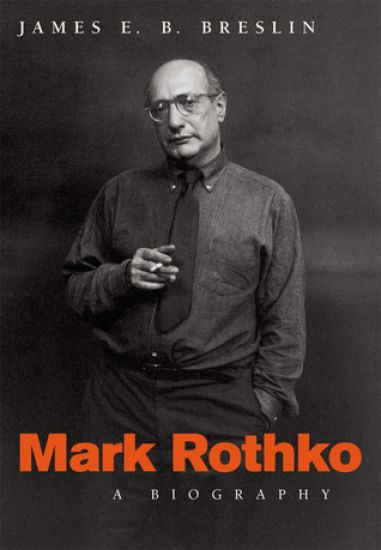
Mark Rothko

Mark Rothko

James E. B. Breslin

University of Chicago Press
2012
nidottu
This is a full-length biography of Mark Rothko, arguably one of the greatest artists of the 20th century. Drawing on exclusive access to his personal papers and over 100 interviews with artists, patrons and dealers, the author tells the story of a life in art: the personal costs and professional triumphs, the convergence of genius and ego, culture and commerce, that defined the New York art scene of the 1930s, 1940s and 1950s - the world of Abstract Expressionism, of Pollock, Rothko, de Kooning and Kline.
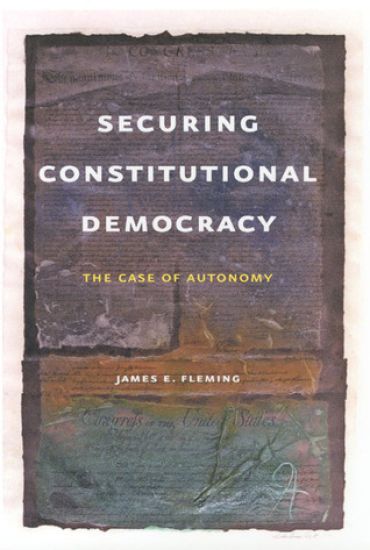
Securing Constitutional Democracy

Securing Constitutional Democracy

James E. Fleming

University of Chicago Press
2006
sidottu
Famously described by Louis Brandeis as "the most comprehensive of rights" and "the right most valued by civilized men," the right of privacy or autonomy is more embattled during modern times than any other. Debate over its meaning, scope, and constitutional status is so widespread that it all but defines the post-1960s era of constitutional interpretation. Conservative Robert Bork called it "a loose canon in the law," while feminist Catharine MacKinnon attacked it as the "right of men to be left alone to oppress women." Can a right with such prominent critics from across the political spectrum be grounded in constitutional law? In this book, James E. Fleming responds to these controversies by arguing that the right to privacy or autonomy should be grounded in a theory of securing constitutional democracy. His framework seeks to secure the basic liberties that are preconditions for deliberative democracy - to allow citizens to deliberate about the institutions and policies of their government - as well as deliberative autonomy - to enable citizens to deliberate about the conduct of their own lives. Together, Fleming shows, these two preconditions can afford everyone the status of free and equal citizenship in our morally pluralistic constitutional democracy.
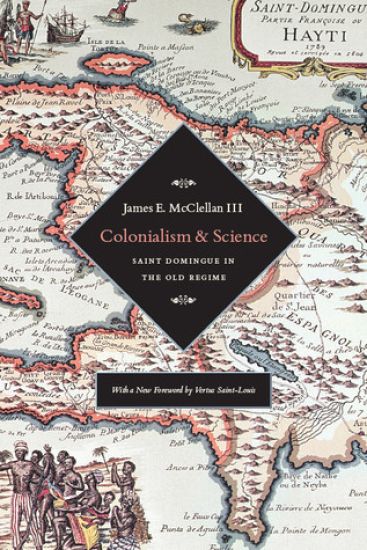
Colonialism and Science

Colonialism and Science

James E. McClellan III

University of Chicago Press
2010
nidottu
How was the character of science shaped by the colonial experience? In turn, how might we make sense of how science contributed to colonialism? Saint Domingue (now Haiti) was the world's richest colony in the eighteenth century and home to an active society of science - one of only three in the world at that time. In this deeply researched and pathbreaking study of the colony, James E. McClellan III first raised his incisive questions about the relationship between science and society that historians of the colonial experience are still grappling with today. Long hard to find, the book is now back in print, accompanied by a new foreword by Vertus Saint-Louis, a native of Haiti and a widely acknowledged expert on colonialism. Frequently cited as the crucial starting point in understanding the Haitian revolution, "Colonialism and Science" will be welcomed by students and scholars alike.
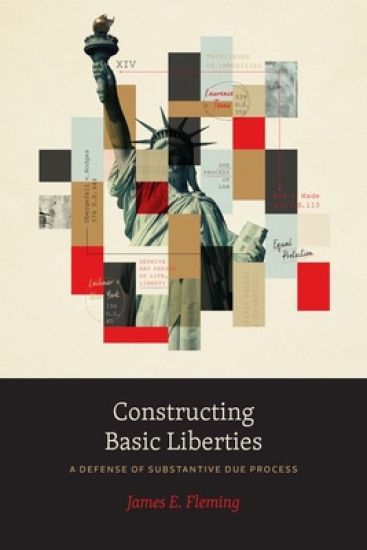
Constructing Basic Liberties

Constructing Basic Liberties

James E. Fleming

THE UNIVERSITY OF CHICAGO PRESS
2022
sidottu
A strong and lively defense of substantive due process. From reproductive rights to marriage for same-sex couples, many of our basic liberties owe their protection to landmark Supreme Court decisions that have hinged on the doctrine of substantive due process. This doctrine is controversial—a battleground for opposing views around the relationship between law and morality in circumstances of moral pluralism—and is deeply vulnerable today. Against recurring charges that the practice of substantive due process is dangerously indeterminate and irredeemably undemocratic, Constructing Basic Liberties reveals the underlying coherence and structure of substantive due process and defends it as integral to our constitutional democracy. Reviewing the development of the doctrine over the last half-century, James E. Fleming rebuts popular arguments against substantive due process and shows that the Supreme Court has constructed basic liberties through common law constitutional interpretation: reasoning by analogy from one case to the next and making complex normative judgments about what basic liberties are significant for personal self-government. Elaborating key distinctions and tools for interpretation, Fleming makes a powerful case that substantive due process is a worthy practice that is based on the best understanding of our constitutional commitments to protecting ordered liberty and securing the status and benefits of equal citizenship for all.
Constructing Basic Liberties

Constructing Basic Liberties

James E. Fleming

THE UNIVERSITY OF CHICAGO PRESS
2022
nidottu
A strong and lively defense of substantive due process. From reproductive rights to marriage for same-sex couples, many of our basic liberties owe their protection to landmark Supreme Court decisions that have hinged on the doctrine of substantive due process. This doctrine is controversial—a battleground for opposing views around the relationship between law and morality in circumstances of moral pluralism—and is deeply vulnerable today. Against recurring charges that the practice of substantive due process is dangerously indeterminate and irredeemably undemocratic, Constructing Basic Liberties reveals the underlying coherence and structure of substantive due process and defends it as integral to our constitutional democracy. Reviewing the development of the doctrine over the last half-century, James E. Fleming rebuts popular arguments against substantive due process and shows that the Supreme Court has constructed basic liberties through common law constitutional interpretation: reasoning by analogy from one case to the next and making complex normative judgments about what basic liberties are significant for personal self-government. Elaborating key distinctions and tools for interpretation, Fleming makes a powerful case that substantive due process is a worthy practice that is based on the best understanding of our constitutional commitments to protecting ordered liberty and securing the status and benefits of equal citizenship for all.
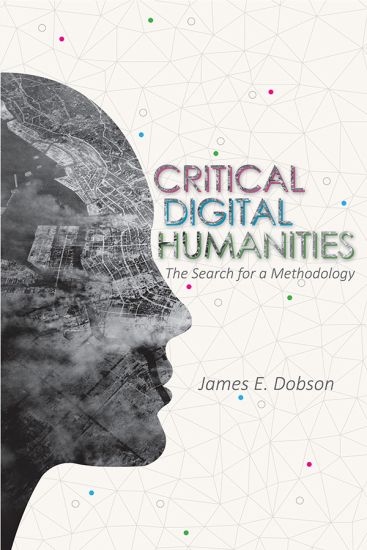
Critical Digital Humanities

Critical Digital Humanities

James E Dobson

University of Illinois Press
2019
sidottu
Can established humanities methods coexist with computational thinking? It is one of the major questions in humanities research today, as scholars increasingly adopt sophisticated data science for their work. James E. Dobson explores the opportunities and complications faced by humanists in this new era. Though the study and interpretation of texts alongside sophisticated computational tools can serve scholarship, these methods cannot replace existing frameworks. As Dobson shows, ideas of scientific validity cannot easily nor should be adapted for humanities research because digital humanities, unlike science, lack a leading-edge horizon charting the frontiers of inquiry. Instead, the methods of digital humanities require a constant rereading. At the same time, suspicious and critical readings of digital methodologies make it unwise for scholars to defer to computational methods. Humanists must examine the tools--including the assumptions that went into the codes and algorithms--and questions surrounding their own use of digital technology in research. Insightful and forward thinking, Critical Digital Humanities lays out a new path of humanistic inquiry that merges critical theory and computational science.
Critical Digital Humanities

Critical Digital Humanities

James E Dobson

University of Illinois Press
2019
nidottu
Can established humanities methods coexist with computational thinking? It is one of the major questions in humanities research today, as scholars increasingly adopt sophisticated data science for their work. James E. Dobson explores the opportunities and complications faced by humanists in this new era. Though the study and interpretation of texts alongside sophisticated computational tools can serve scholarship, these methods cannot replace existing frameworks. As Dobson shows, ideas of scientific validity cannot easily nor should be adapted for humanities research because digital humanities, unlike science, lack a leading-edge horizon charting the frontiers of inquiry. Instead, the methods of digital humanities require a constant rereading. At the same time, suspicious and critical readings of digital methodologies make it unwise for scholars to defer to computational methods. Humanists must examine the tools--including the assumptions that went into the codes and algorithms--and questions surrounding their own use of digital technology in research. Insightful and forward thinking, Critical Digital Humanities lays out a new path of humanistic inquiry that merges critical theory and computational science.
Cinema and Development in West Africa

Cinema and Development in West Africa

James E. Genova

Indiana University Press
2013
sidottu
Cinema and Development in West Africa shows how the film industry in Francophone West African countries played an important role in executing strategies of nation building during the transition from French rule to the early postcolonial period. James E. Genova sees the construction of African identities and economic development as the major themes in the political literature and cultural production of the time. Focusing on film both as industry and aesthetic genre, he demonstrates its unique place in economic development and provides a comprehensive history of filmmaking in the region during the transition from colonies to sovereign states.
Cinema and Development in West Africa

Cinema and Development in West Africa

James E. Genova

Indiana University Press
2013
pokkari
Cinema and Development in West Africa shows how the film industry in Francophone West African countries played an important role in executing strategies of nation building during the transition from French rule to the early postcolonial period. James E. Genova sees the construction of African identities and economic development as the major themes in the political literature and cultural production of the time. Focusing on film both as industry and aesthetic genre, he demonstrates its unique place in economic development and provides a comprehensive history of filmmaking in the region during the transition from colonies to sovereign states.
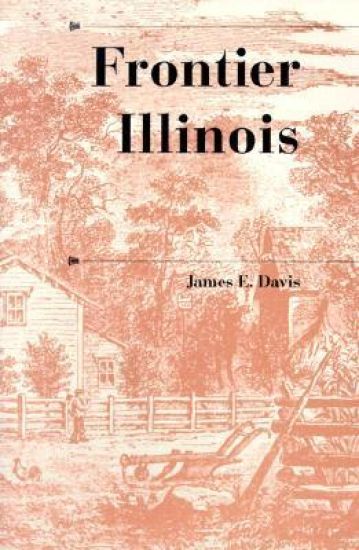
Frontier Illinois

Frontier Illinois

James E. Davis

Indiana University Press
2000
pokkari
Now in paperback! Frontier Illinois James E. Davis "A comprehensive, readable history of this distinctive prairie state before the Civil War. . . . This deft synthesis of existing knowledge is likely to become the standard modern history of Illinois." —Kirkus Reviews "Davis provides an incisive portrait of prairie society. . . . A fresh and sophisticated survey of early Illinois." —Choice "O, this is a delightful country!" one newly arrived settler wrote to a friend back East. Indeed, as James E. Davis shows, many newcomers found Illinois a hospitable and relatively peaceful place in which to start a new life. In this sweeping history of the making of the state, Davis tells the story of Illinois from the Ice Age to the eve of the Civil War. He describes the earliest Indian civilizations, the coming of LaSalle and Joliet and the founding of the French colony, the brief history of British Illinois, and the complex history of subsequent settlement that brought distinct cultural traditions to Illinois. A major theme of this book is the relative absence of violence, at least after the Blackhawk War of 1832, even over explosive issues such as slavery. Davis treats these developments in careful detail, while keeping the reader mindful of the experiences of Illinois' ordinary people. James E. Davis is William and Charlotte Gardner Professor of History and Professor of Geography at Illinois College. He is author of Frontier America, 1800–1840: A Comparative Demographic Analysis of the Settlement Process and Dreams to Dust. A History of the Trans-Appalachian Frontier series—Walter Nugent and Malcolm Rohrbough, general editors Sales territory is worldwide A History of the Trans-Appalachian Frontier 1998; 432 pages, 13 b&w photos, 5 maps, notes, bibl., index, 6 x 9 cloth 0-253-33423-3$39.95 L / £28.50 paper0-253-21406-8$18.95 t / £13.50
The Relative Inefficiency of Quotas

The Relative Inefficiency of Quotas

James E. Anderson

MIT Press
2003
pokkari
James Anderson has been a singular force in the research on tariffs versus quotas. In this book he demonstrates that in most reasonable circumstances, quotas are an inferior trade policy relative to import tariffs. He presents substantive new work on tariffs and quotas in imperfect competition and provides a better understanding of quotas and protection policies generally. In the current debate about protectionism, free trade, and "fair trade," Anderson's conclusions fly in the face of congressional approval of import quotas as a strategy to improve American life. While he does not advocate protectionism, he shows that import quotas and tariffs are far from equivalent, illustrating the efficiency of tariffs with case studies of specific commodities and products such as cheese and other milk products, and textiles. Anderson makes an original contribution to the treatments of tariffs and quotas by creating a general presumption in favor of tariffs when protection is unavoidable, and provides a useful integrated perspective on the large tariffs versus quotas literature.
Mobile Capital and Latin American Development

Mobile Capital and Latin American Development

James E. Mahon Jr.

Pennsylvania State University Press
1996
sidottu
Particularly timely in light of the recent Mexican peso crisis, Mobile Capital and Latin American Development examines the causes, consequences, and implications of the Latin American capital flight of the 1980s. It addresses the increasingly mobile and privatized nature of international capital and its power to shape economic policy in those countries.Through a comparison of the policy experiences of Argentina, Brazil, Chile, Colombia, Mexico, and Venezuela, James E. Mahon finds that those countries that suffered the most capital flight had previously faced fewer structural trade problems and had not reoriented their exchange policies to diversify exports and deal with exchange-market instability. Since the countries that stumbled worst into capital flight before the debt crisis were later among the most aggressive neoliberal reformers, Mahon discusses the ways in which overseas capital served as a kind of pressure for free-market reform. Finally, the idea that internationally mobile capital now can operate as a kind of senate—an arm of the wealthy few, guarding the established order against the arbitrary, dangerous tendencies of the executive and popular chamber—is examined with relation to theories of dependency and the institutionalization of democracy.
Mobile Capital and Latin American Development

Mobile Capital and Latin American Development

James E. Mahon Jr.

Pennsylvania State University Press
1996
pokkari
Particularly timely in light of the recent Mexican peso crisis, Mobile Capital and Latin American Development examines the causes, consequences, and implications of the Latin American capital flight of the 1980s. It addresses the increasingly mobile and privatized nature of international capital and its power to shape economic policy in those countries.Through a comparison of the policy experiences of Argentina, Brazil, Chile, Colombia, Mexico, and Venezuela, James E. Mahon finds that those countries that suffered the most capital flight had previously faced fewer structural trade problems and had not reoriented their exchange policies to diversify exports and deal with exchange-market instability. Since the countries that stumbled worst into capital flight before the debt crisis were later among the most aggressive neoliberal reformers, Mahon discusses the ways in which overseas capital served as a kind of pressure for free-market reform. Finally, the idea that internationally mobile capital now can operate as a kind of senate—an arm of the wealthy few, guarding the established order against the arbitrary, dangerous tendencies of the executive and popular chamber—is examined with relation to theories of dependency and the institutionalization of democracy.
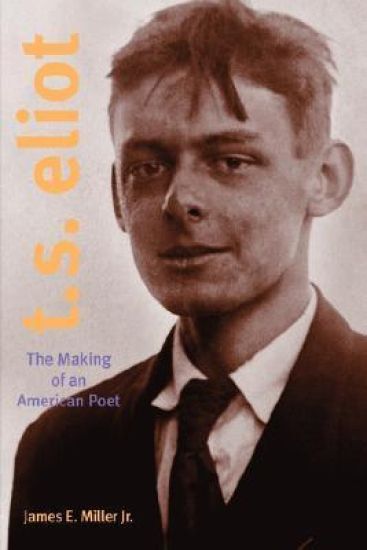
T. S. Eliot

T. S. Eliot

James E. Miller Jr.

Pennsylvania State University Press
2005
sidottu
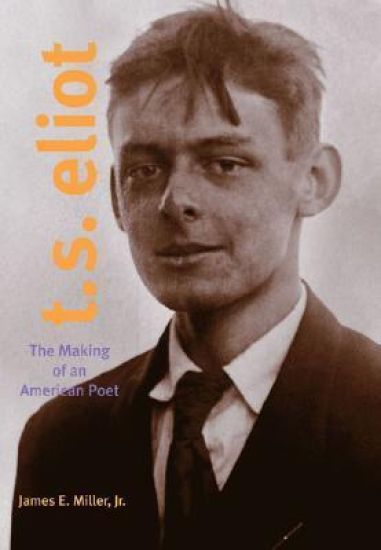
Late in his life T. S. Eliot, when asked if his poetry belonged in the tradition of American literature, replied: “I’d say that my poetry has obviously more in common with my distinguished contemporaries in America than with anything written in my generation in England. That I’m sure of. . . . In its sources, in its emotional springs, it comes from America.” In T. S. Eliot: The Making of an American Poet, James Miller offers the first sustained account of Eliot’s early years, showing that the emotional springs of his poetry did indeed come from America.Miller challenges long-held assumptions about Eliot’s poetry and his life. Eliot himself always maintained that his poems were not based on personal experience, and thus should not be read as personal poems. But Miller convincingly combines a reading of the early work with careful analysis of surviving early correspondence, accounts from Eliot’s friends and acquaintances, and new scholarship that delves into Eliot’s Harvard years. Ultimately, Miller demonstrates that Eliot’s poetry is filled with reflections of his personal experiences: his relationships with family, friends, and wives; his sexuality; his intellectual and social development; his influences.Publication of T. S. Eliot: The Making of an American Poet marks a milestone in Eliot scholarship. At last we have a balanced portrait of the poet and the man, one that takes seriously his American roots. In the process, we gain a fuller appreciation for some of the best-loved poetry of the twentieth century.
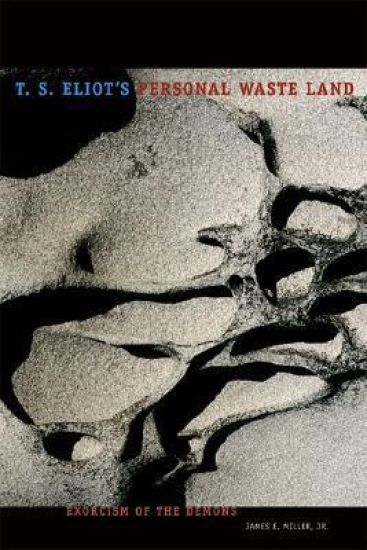
T. S. Eliot's Personal Waste Land

T. S. Eliot's Personal Waste Land

James E. Miller Jr.

Pennsylvania State University Press
2005
pokkari
A major reinterpretation, T. S. Eliot's Personal Waste Land: Exorcism of the Demons takes Eliot at his word in his reiterated statements that The Waste Land was not a "criticism of the contemporary world" but a personal "grouse against life." It is the first critical work to investigate in depth the sources of the poem in Eliot's life, with particular attention to Eliot's "Calamus"-like attachment to a French youth during Eliot's graduate year in Paris, his subsequent precipitate (and disastrous) marriage following the death of his young French friend in World War I, and his 1921 nervous breakdown (suffering from what he called "an aboulie and emotional derangement which has been a lifelong affliction") that led to the writing of The Waste Land. Yet the main thrust of this work is not on Eliot's life, but on his poetry, exploring ways in which the fragmentary details of his life shape and illuminate the poems. While some consideration is given to the early, confession-like "Ode" (later suppressed), and to the famous "familiar compound ghost" of the later Four Quartets, primary attention is focused on the original drafts of The Waste Land. The poem emerges from a meticulous and detailed reading of the manuscripts as indeed a kind of elegy for a dead friend, with links to Tennyson's In Memoriam and Whitman's "When Lilacs Last in the Dooryard Bloom'd," and thus not a piece of "social criticism" but an expression of anguish and pain and despair working toward resignation, resolution, and reconciliation. It becomes clear that this interpretation is not dependent on biographical conjecture and reconstruction, but flows inevitably from simple close scrutiny of the intricate evolution of The Waste Land; therefore the firm establishment of the full facts of Eliot's early life is unnecessary to this "meaning." In following Eliot's own frequent hints, this book offers a vital corrective to all the previous readings (or misreadings) of The Waste Land, and has important implications for the entire Modernist Movement.
T. S. Eliot

T. S. Eliot

James E. Miller Jr.

Pennsylvania State University Press
2008
pokkari
Late in his life T. S. Eliot, when asked if his poetry belonged in the tradition of American literature, replied: “I’d say that my poetry has obviously more in common with my distinguished contemporaries in America than with anything written in my generation in England. That I’m sure of. . . . In its sources, in its emotional springs, it comes from America.” In T. S. Eliot: The Making of an American Poet, James Miller offers the first sustained account of Eliot’s early years, showing that the emotional springs of his poetry did indeed come from America.Miller challenges long-held assumptions about Eliot’s poetry and his life. Eliot himself always maintained that his poems were not based on personal experience, and thus should not be read as personal poems. But Miller convincingly combines a reading of the early work with careful analysis of surviving early correspondence, accounts from Eliot’s friends and acquaintances, and new scholarship that delves into Eliot’s Harvard years. Ultimately, Miller demonstrates that Eliot’s poetry is filled with reflections of his personal experiences: his relationships with family, friends, and wives; his sexuality; his intellectual and social development; his influences.Publication of T. S. Eliot: The Making of an American Poet marks a milestone in Eliot scholarship. At last we have a balanced portrait of the poet and the man, one that takes seriously his American roots. In the process, we gain a fuller appreciation for some of the best-loved poetry of the twentieth century.
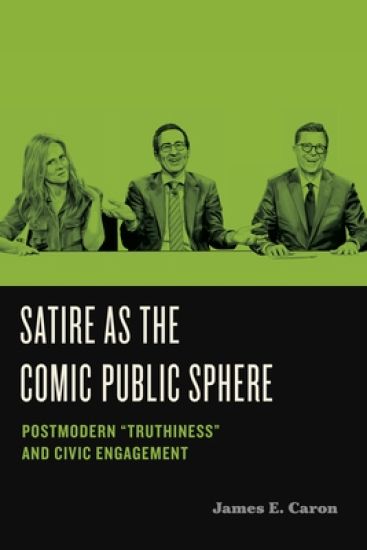
Satire as the Comic Public Sphere

Satire as the Comic Public Sphere

James E. Caron

Pennsylvania State University Press
2021
sidottu
Stephen Colbert, Samantha Bee, John Oliver, and Jimmy Kimmel—these comedians are household names whose satirical takes on politics, the news, and current events receive some of the highest ratings on television. In this book, James E. Caron examines these and other satirists through the lenses of humor studies, cultural theory, and rhetorical and social philosophy, arriving at a new definition of the comic art form. Tracing the history of modern satire from its roots in the Enlightenment values of rational debate, evidence, facts, accountability, and transparency, Caron identifies a new genre: “truthiness satire.” He shows how satirists such as Colbert, Bee, Oliver, and Kimmel—along with writers like Charles Pierce and Jack Shafer—rely on shared values and on the postmodern aesthetics of irony and affect to foster engagement within the comic public sphere that satire creates. Using case studies of bits, parodies, and routines, Caron reveals a remarkable process: when evidence-based news reporting collides with a discursive space asserting alternative facts, the satiric laughter that erupts can move the audience toward reflection and possibly even action as the body politic in the public sphere.With rigor, humor, and insight, Caron shows that truthiness satire pushes back against fake news and biased reporting and that the satirist today is at heart a citizen, albeit a seemingly silly one. This book will appeal to anyone interested in and concerned about public discourse in the current era, especially researchers in media studies, communication studies, political science, and literary and cultural studies.