Kirjojen hintavertailu. Mukana 11 244 527 kirjaa ja 12 kauppaa.

Kirjahaku

Etsi kirjoja tekijän nimen, kirjan nimen tai ISBN:n perusteella.

1000 tulosta hakusanalla JAMES JOYCE

James Joyce, Science, and Modernist Print Culture
This book makes an important intervention in the ongoing debates about modernism, science, and the divisions of early Twentieth-Century print culture. In order to establish Joyce's place in the nexus of modernism and scientific thought, Drouin uses the methods of periodical studies and textual criticism to examine the impact of Einstein's relativity theories on the development of Ulysses (1922) and Finnegans Wake (1939). Looking at experiments with space, time, motion, and perspective, it rigorously surveys discourse of science and the novel in the print culture networks connected to Joyce, with concrete analysis of avant-garde magazines, newspapers, popular science books, BBC pamphlets, and radio broadcasts between 1914 and 1939. These sources elucidate changes that Joyce made to the manuscripts, typescripts, and page proofs of certain episodes of his final two novels. The new evidence establishes for the first time the nature of the material link between Joyce and non-technical science, and the manner in which Ulysses and Finnegans Wake owe their structure and meaning to the humanistic issues associated with science during the wartime and inter-war years. In examining the relationships between Joyce's later work and the popular science industry, the book elucidates the often conflicting attitudes toward science in inter-war British print culture, filling in a piece of the puzzle that is modernism's relationship to the new physics and, simultaneously, the history of the novel.
James Joyce and the Politics of Egoism

James Joyce and the Politics of Egoism

Jean-Michel Rabaté

Cambridge University Press
2001
pokkari
In James Joyce and the Politics of Egoism a leading scholar approaches the entire Joycean canon through the concept of ‘egoism’. This concept, Jean-Michel Rabaté argues, runs throughout Joyce’s work, and involves and incorporates its opposite, ‘hospitality’, a term Rabaté understands as meaning an ethical and linguistic opening to ‘the other’. For Rabaté both concepts emerge from the fact that Joyce published crucial texts in the London based review The Egoist and later moved on to forge strong ties with the international Paris avant-garde. Rabaté examines the theoretical debates surrounding these connections, linking Joyce’s engagement with Irish politics with the aesthetic aspects of his texts. Through egoism, he shows, Joyce defined a literary sensibility founded on negation; through hospitality, Joyce postulated the creation of a new, utopian readership. Rabaté explores Joyce’s complex negotiation between these two poles in a study of interest to all Joyceans and scholars of modernism.
James Joyce, Sexuality and Social Purity

James Joyce, Sexuality and Social Purity

Katherine Mullin

Cambridge University Press
2007
nidottu
In James Joyce, Sexuality and Social Purity, Katherine Mullin offers a richly detailed account of Joyce's lifelong battle against censorship. Through prodigious archival research, Mullin shows Joyce responding to Edwardian ideologies of social purity by accentuating the 'contentious' or 'offensive' elements in his work. The censorious ambitions of the social purity movement, Mullin claims, feed directly into Joyce's writing. Paradoxically, his art becomes dependent on the very forces that seek to constrain and neutralize its revolutionary force. Acutely conscious of the dangers censorship presented to publication, Mullin shows Joyce revenging himself by energetically ridiculing purity campaigns throughout his fiction. Ulysses, A Portrait of the Artist as a Young Man and Dubliners all meticulously subvert purity discourse, as Joyce pastiches both the vice crusaders themselves and the imperilled 'Young Persons' they sought to protect. This important book will change the way Joyce is read and offers crucial insights into the sexual politics of Modernism.
James Joyce and the Difference of Language
James Joyce and the Difference of Language offers an alternative look at Joyce's writing by placing his language at the intersection of various critical perspectives: linguistics, philosophy, feminism, psychoanalysis, postcolonialism and intertextuality. Combining close textual analysis and theoretically informed readings, an international team of leading scholars explores how Joyce's experiments with language repeatedly challenge our ways of reading. Topics covered include reading Joyce through translations; the role of Dante's literary linguistics in Finnegans Wake; and the place of gender in Joyce's modernism. Two further essays illustrate aspects of Joyce's cultural politics in Ulysses and the ethics of desire in Finnegans Wake. Informed by debates in Joyce scholarship, literary studies and critical theory, and addressing the full range of his writing, this volume comprehensively examines the critical diversity of Joyce's linguistic practices. It is essential reading for all scholars of Joyce and modernism.
James Joyce and the Problem of Justice

James Joyce and the Problem of Justice

Joseph Valente

Cambridge University Press
2009
pokkari
This is the first full-length study of James Joyce to subject his work to ethical and political analysis. It addresses important issues in contemporary literary and cultural studies surrounding problems of justice, as well as discussions of gender, homosociality and the colonial condition. Valente uses an original theory and psychology of justice through which to explore both the well-known and the more obscure of Joyce's works. He traces the remarkable formal and stylistic evolution that defined Joyce's career, and his progressive attempt to negotiate the context of social difference in racial, colonial, class and sexual terms. By analysing Joyce's verbal strategies within both the psychobiographical and sociohistorical contexts, Valente unlocks the politics of Joyce's unconscious and reveals the legacy of Western political thought.
James Joyce and the Problem of Psychoanalysis

James Joyce and the Problem of Psychoanalysis

Thurston Luke

Cambridge University Press
2010
pokkari
From its very beginning, psychoanalysis sought to incorporate the aesthetic into its domain. Despite Joyce's deliberate attempt in his writing to resist this powerful hermeneutic, his work has been confronted by a long tradition of psychoanalytic readings. Luke Thurston argues that this very antagonism holds the key to how psychoanalytic thinking can still open up new avenues in Joycean criticism and literary theory. In particular, Thurston shows that Jacques Lacan's response to Joyce goes beyond the 'application' of theory: rather than diagnosing Joyce's writing or claiming to have deciphered its riddles, Lacan seeks to understand how it can entail an unreadable signature, a unique act of social transgression that defies translation into discourse. Thurston imaginatively builds on Lacan's work to illuminate Joyce's place in a wide-ranging literary genealogy that includes Shakespeare, Hogg, Stevenson and Wilde. This study should be essential reading for all students of Joyce, literary theory and psychoanalysis.
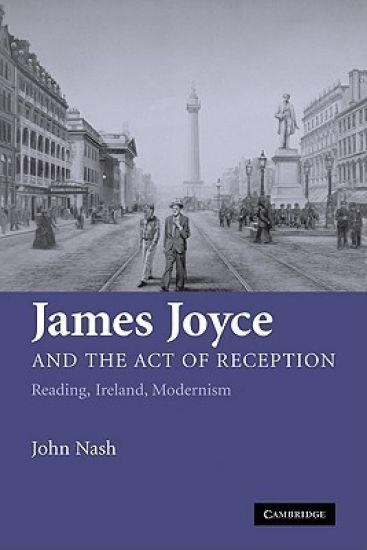
James Joyce and the Act of Reception

James Joyce and the Act of Reception

John Nash

Cambridge University Press
2010
pokkari
James Joyce and the Act of Reception is a detailed account of Joyce's own engagement with the reception of his work. It shows how Joyce's writing, from the earliest fiction to Finnegans Wake, addresses the social conditions of reading (particularly in Ireland). Most notably, it echoes and transforms the responses of some of Joyce's actual readers, from family and friends to key figures such as Eglinton and Yeats. This study argues that the famous 'unreadable' quality of Joyce's writing is a crucial feature of its historical significance. Not only does Joyce engage with the cultural contexts in which he was read but, by inscribing versions of his own contemporary reception within his writing, he determines that his later readers read through the responses of earlier ones. In its focus on the local and contemporary act of reception, Joyce's work is seen to challenge critical accounts of both modernism and deconstruction.
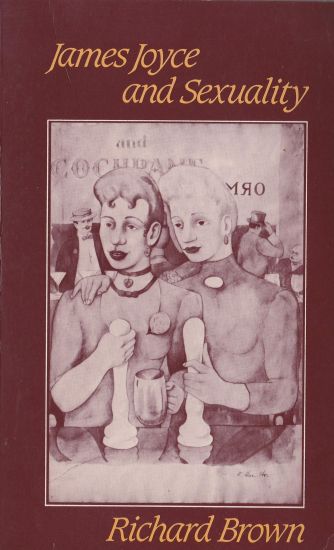
James Joyce and Sexuality

James Joyce and Sexuality

Richard Brown

Cambridge University Press
1988
pokkari
This highly original study seeks to correct the critical misapprehension that James Joyce was a figure who remained aloof and disengaged from the intellectual and social concerns of his time. By exploring Joyce’s interest in sexual questions, Dr Brown shows that, on the contrary, his work represents a more complex and subtle kind of engagement with such concerns. There are four main areas of interest. The first is Joyce’s extensive reading on the question of marriage and its impact on his work, a subject invested with greater interest through Joyce’s elopement with and delayed marriage to Nora Barnacle. The second is Joyce’s responsiveness to the new sexual ideology as expounded in the writings of Freud and Havelock Ellis. Thirdly, Dr Brown considers the feminist dimension of the oeuvre and explores Joyce’s profound concern with twentieth-century discussions of sexual divisions and difference, a topic hitherto neglected in the classic critical treatments. Finally, the book argues for a new type of Joycean aesthetic in which the major works are analysed as responses to readings of other texts. Dr Brown offers a substantial and original account of Joyce’s work as modern in its social ideas as well as in its literary form, and suggests how the stylistic modernity itself may be seen to arise in part as a response to the difficulties of dealing with sex.
James Joyce and the Problem of Justice

James Joyce and the Problem of Justice

Joseph Valente

Cambridge University Press
1995
sidottu
This is the first full-length study of James Joyce to subject his work to ethical and political analysis. It addresses important issues in contemporary literary and cultural studies surrounding problems of justice, as well as discussions of gender, homosociality and the colonial condition. Valente uses an original theory and psychology of justice through which to explore both the well-known and the more obscure of Joyce's works. He traces the remarkable formal and stylistic evolution that defined Joyce's career, and his progressive attempt to negotiate the context of social difference in racial, colonial, class and sexual terms. By analysing Joyce's verbal strategies within both the psychobiographical and sociohistorical contexts, Valente unlocks the politics of Joyce's unconscious and reveals the legacy of Western political thought.
James Joyce and the Question of History

James Joyce and the Question of History

James Fairhall

Cambridge University Press
1995
pokkari
This ground-breaking book situates Joyce in his historical moment, exploring his attitudes towards colonialism, nationalism, World War I, gender, and class. Although James Fairhall draws on a wide range of critical theories, his study is clearly written and is accessible to any reader interested in the relation between Joyce’s works and history.
James Joyce and the Difference of Language
James Joyce and the Difference of Language offers an alternative look at Joyce's writing by placing his language at the intersection of various critical perspectives: linguistics, philosophy, feminism, psychoanalysis, postcolonialism and intertextuality. Combining close textual analysis and theoretically informed readings, an international team of leading scholars explores how Joyce's experiments with language repeatedly challenge our ways of reading. Topics covered include reading Joyce through translations; the role of Dante's literary linguistics in Finnegans Wake; and the place of gender in Joyce's modernism. Two further essays illustrate aspects of Joyce's cultural politics in Ulysses and the ethics of desire in Finnegans Wake. Informed by debates in Joyce scholarship, literary studies and critical theory, and addressing the full range of his writing, this volume comprehensively examines the critical diversity of Joyce's linguistic practices. It is essential reading for all scholars of Joyce and modernism.
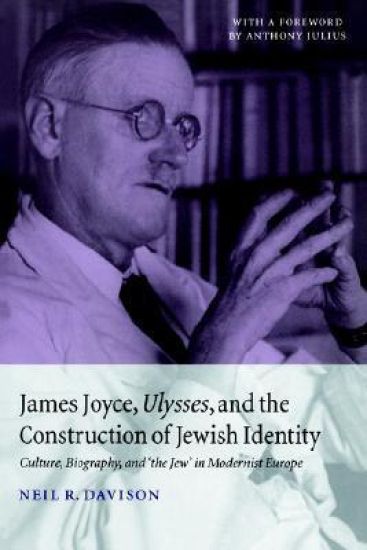
James Joyce, Ulysses, and the Construction of Jewish Identity

James Joyce, Ulysses, and the Construction of Jewish Identity

Neil R. Davison; Anthony Julius

Cambridge University Press
1998
pokkari
Representations of ‘the Jew’ have long been a topic of interest in Joyce studies. Neil Davison argues that Joyce’s lifelong encounter with pseudo-scientific, religious and political discourse about ‘the Jew’ forms a unifying component of his career. Davison offers new biographical material, and presents a detailed reading of Ulysses showing how Joyce draws on Christian folklore, Dreyfus Affair propaganda, Sinn Fein politics, and theories of Jewish sexual perversion and financial conspiracy. Throughout, Joyce confronts the controversy of ‘race’, the psychology of internalised stereotype, and the contradictions of fin-de-siècle anti-Semitism.
James Joyce, Sexuality and Social Purity

James Joyce, Sexuality and Social Purity

Katherine Mullin

Cambridge University Press
2003
sidottu
In James Joyce, Sexuality and Social Purity, Katherine Mullin offers a richly detailed account of Joyce's lifelong battle against censorship. Through prodigious archival research, Mullin shows Joyce responding to Edwardian ideologies of social purity by accentuating the 'contentious' or 'offensive' elements in his work. The censorious ambitions of the social purity movement, Mullin claims, feed directly into Joyce's writing. Paradoxically, his art becomes dependent on the very forces that seek to constrain and neutralize its revolutionary force. Acutely conscious of the dangers censorship presented to publication, Mullin shows Joyce revenging himself by energetically ridiculing purity campaigns throughout his fiction. Ulysses, A Portrait of the Artist as a Young Man and Dubliners all meticulously subvert purity discourse, as Joyce pastiches both the vice crusaders themselves and the imperilled 'Young Persons' they sought to protect. This important book will change the way Joyce is read and offers crucial insights into the sexual politics of Modernism.
James Joyce and the Problem of Psychoanalysis

James Joyce and the Problem of Psychoanalysis

Luke Thurston

Cambridge University Press
2004
sidottu
From its very beginning, psychoanalysis sought to incorporate the aesthetic into its domain. Despite Joyce's deliberate attempt in his writing to resist this powerful hermeneutic, his work has been confronted by a long tradition of psychoanalytic readings. Luke Thurston argues that this very antagonism holds the key to how psychoanalytic thinking can still open up new avenues in Joycean criticism and literary theory. In particular, Thurston shows that Jacques Lacan's response to Joyce goes beyond the 'application' of theory: rather than diagnosing Joyce's writing or claiming to have deciphered its riddles, Lacan seeks to understand how it can entail an unreadable signature, a unique act of social transgression that defies translation into discourse. Thurston imaginatively builds on Lacan's work to illuminate Joyce's place in a wide-ranging literary genealogy that includes Shakespeare, Hogg, Stevenson and Wilde. This study should be essential reading for all students of Joyce, literary theory and psychoanalysis.
James Joyce and the Act of Reception

James Joyce and the Act of Reception

John Nash

Cambridge University Press
2006
sidottu
James Joyce and the Act of Reception is a detailed account of Joyce's own engagement with the reception of his work. It shows how Joyce's writing, from the earliest fiction to Finnegans Wake, addresses the social conditions of reading (particularly in Ireland). Most notably, it echoes and transforms the responses of some of Joyce's actual readers, from family and friends to key figures such as Eglinton and Yeats. This study argues that the famous 'unreadable' quality of Joyce's writing is a crucial feature of its historical significance. Not only does Joyce engage with the cultural contexts in which he was read but, by inscribing versions of his own contemporary reception within his writing, he determines that his later readers read through the responses of earlier ones. In its focus on the local and contemporary act of reception, Joyce's work is seen to challenge critical accounts of both modernism and deconstruction.
James Joyce in Context

James Joyce in Context

Cambridge University Press
2009
sidottu
This collection of original, cohesive and concise essays charts the vital contextual backgrounds to Joyce's life and writing. The volume begins with a chronology of Joyce's publishing history, an analysis of his various biographies and a study of his many published and unpublished letters. It goes on to examine how his works were received in the main twentieth-century critical and theoretical schools. Most importantly, it places Joyce within multiple Irish, British and European contexts, providing a lively sense of the varied and changing world in which he lived, which formed him, and from which he wrote. The essays collectively show how Joyce was rooted in his times, how he is both a product and a critic of his multiple contexts, and how important he remains to the world of literature, criticism and culture.
James Joyce's Techno-Poetics

James Joyce's Techno-Poetics

Donald Theall

University of Toronto Press
1997
sidottu
James Joyce's Techno-Poetics is on the cutting edge of an original and exciting new trend in Joycean studies, as it combines the study of literature, technology, and communication to reveal James Joyce as 'a key figure in the history of cyberculture.' Donald Theall examines for the first time how Joyce conceived of the artist as an engineer and the artist's works as constructions, and reveals the importance of Joyce's understanding of the direction of a developing technoculture. Theall explores the interrelationships between the machinic and the processes of encoding, decoding, reading, writing, and interpreting in Joyce's self-reflexive treatment of the book in Finnegans Wake. By situating this project in relation to memory and cultural production, Theall argues that Joyce's radical paramodern poetic practice has important implications for a wide variety of subsequent cultural and theoretical movements: dramatism, poststructuralism, semiology, and hypertextuality. Theall places Joyce in the context of other modern thinkers, such as Benjamin and Bataille, and draws a direct line of influence from Joyce to Marshall McLuhan and Neuromancer author William Gibson. This is a remarkable and innovative work that makes an important contribution not only to Joycean studies, but to literary theory, modernism, cultural analysis, the history of ideas, and the relationship between literature, science, and technology.