Kirjojen hintavertailu. Mukana 12 415 910 kirjaa ja 12 kauppaa.

Kirjahaku

Etsi kirjoja tekijän nimen, kirjan nimen tai ISBN:n perusteella.

1000 tulosta hakusanalla JOSEPH H. CASEY S.J.

Language in the Americas

Language in the Americas

Joseph H. Greenberg

Stanford University Press
1987
sidottu
This book is concerned primarily with the evidence for the validity of a genetic unit, Amerind, embracing the vast majority of New World languages. The only languages excluded are those belonging to the Na-Dene and Eskimo- Aleut families. It examines the now widely held view that Haida, the most distant language genetically, is not to be included in Na-Dene. It confined itself to Sapir's data, although the evidence could have been buttressed considerably by the use of more recent materials. What survives is a body of evidence superior to that which could be adduced under similar restrictions for the affinity of Albanian, Celtic, and Armenian, all three universally recognized as valid members of the Indo-European family of languages. A considerable number of historical hypotheses emerge from the present and the forthcoming volumes. Of these, the most fundamental bears on the question of the peopling of the Americas. If the results presented in this volume and in the companion volume on Eurasiatic are valid, the classification of the world's languages based on genetic criteria undergoes considerable simplification.
Indo-European and Its Closest Relatives

Indo-European and Its Closest Relatives

Joseph H. Greenberg

Stanford University Press
2002
sidottu
The basic thesis of this two-volume work (Volume I. Grammar was published in 2000) is that the well known and extensively studied Indo-European family of languages is but a branch of a much larger Eurasiatic family that extends from Europe across northern Asia to North America. Eurasiatic is seen to consist of Indo-European, Uralic-Yukaghir, Altaic (Turkic, Mongolian, and Tungus-Manchu), Japanese-Korean-Ainu (possibly a distinct subgroup of Eurasiatic), Gilyak, Chukotian, and Eskimo-Aleut. The author asserts that the evidence presented in the two volumes for the validity of Eurasiatic as a single linguistic family confirms his hypothesis since the numerous and interlocking resemblances he finds among the various subgroups can only reasonably be explained by descent from a common ancestor. The present volume provides lexical evidence for the validity of Eurasiatic as a linguistic stock. Since some of the relevant etymological material has already been published in the work of some Nostraticists, this volume emphasizes those etymologies involving Ainu, Gilyak, Chukotian, and Eskimo-Aleut, languages generally omitted from Nostratic studies. The Eurasiatic family is itself most closely related to the Amerind family, with which it shares numerous roots. The Eurasiatic-Amerind family represents a relatively recent expansion (circa 15,000 BP) into territory opened up by the melting of the Arctic ice cap. Eurasiatic-Amerind stands apart from the other families of the Old World, among which the differences are much greater and represent deeper chronological groupings. The volume includes a classification of Eurasiatic languages, references cited, and semantic and phonetic indexes.
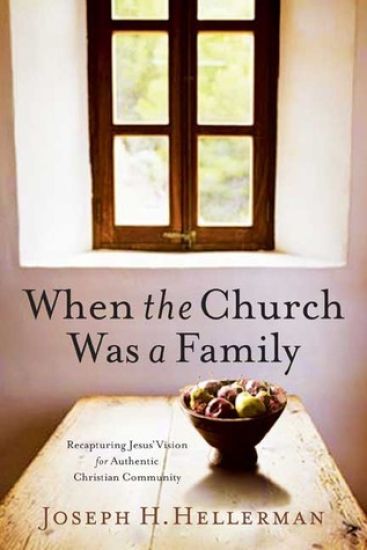
When the Church Was a Family

When the Church Was a Family

Joseph H. Hellerman

Broadman Holman Publishers
2009
nidottu
Spiritual formation occurs primarily in the context of community. But as the modern cultural norm of what social scientists call "radical American individualism" extends itself, many Christians grow lax in their relational accountability to the church. Faith threatens to become an "I" not "us," a "my God" not "our God" concern.When the Church Was a Family calls believers back to the wisdom of the first century, examining the early Christian church from a sociohistorical perspective and applying the findings to the evangelical church in America today. With confidence, author Joseph Hellerman writes intentionally to traditional church leaders and emerging church visionaries alike, believing what is detailed here about Jesus' original vision for authentic Christian community will deeply satisfy the relational longings of both audiences.
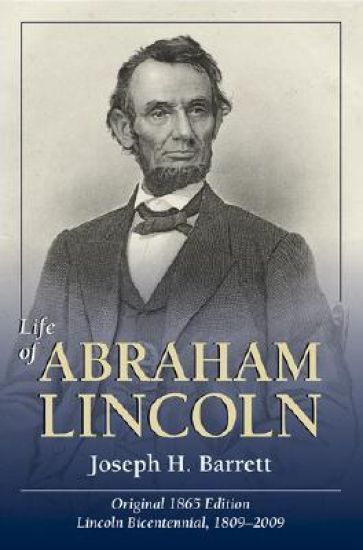
Life of Abraham Lincoln

Life of Abraham Lincoln

Joseph H. Barrett

Stackpole Books
2005
sidottu
Beautifully written in 1865 by a political contemporary, this is one of the greatest and most sensitive works of nineteenth-century American biographic literature. It contains Lincoln's most masterful speeches and writings, along with a contemporary, detailed exposition of Lincoln's views - and his political and military decisions - that held the Union together during the American Civil War. For years (and still today) it was and is an original source of information on Lincoln's life and work, masterfully woven together by Joseph Barrett.
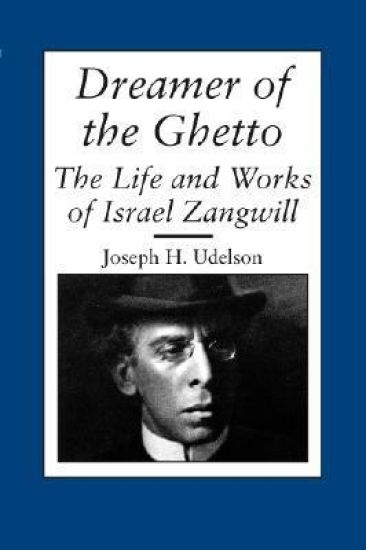
Dreamer of the Ghetto

Dreamer of the Ghetto

Joseph H. Udelson

The University of Alabama Press
2005
nidottu
"An impressive achievement. . . . Udelson provides a trenchant analysis of Zangwill's works set within a historical context, i.e., Jewish emancipation and the dilemma of how one might remain fully Jewish while becoming fully modern, that helps to illuminate Zangwill's life as well as his writings." Jewish Book News"By carefully following the threads of Zangwill's own divided self through the labyrinths of his life and writings, Udelson convinces us not only of the author's startling political prescience, but that he embodies attitudes now shared by almost all secular Jews as a result of events Zangwill did not witness Nazism and the founding of Israel." Shofar"
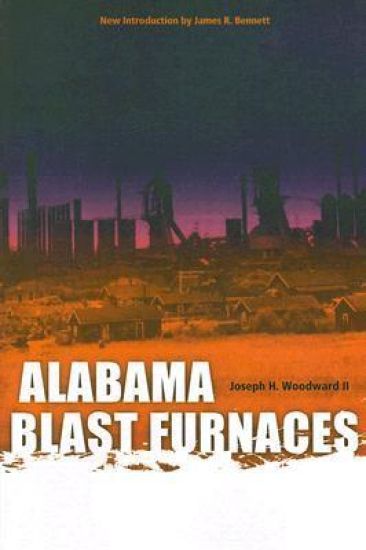
Alabama Blast Furnaces

Alabama Blast Furnaces

Joseph H. Woodward

The University of Alabama Press
2007
nidottu
This work is the first and remains the only source of information on all blast furnaces built and operated in Alabama, from the first known charcoal furnace of 1815 (Cedar Creek Furnace in Franklin County) to the coke-fired giants built before the onset of the Great Depression. Woodward surveys the iron industry from the early, small local market furnaces through the rise of the iron industry in support of the Confederate war effort, to the giant internationally important industry that developed in the 1890s. The bulk of the book consists of individual illustrated histories of all blast furnaces ever constructed and operated in the state - 76 furnaces that went into production and four that were built but never went into blast. Written to provide a record of every blast furnace built in Alabama from 1815 to 1940, this book was widely acclaimed and today remains one of the most quoted references on the iron and steel industry.
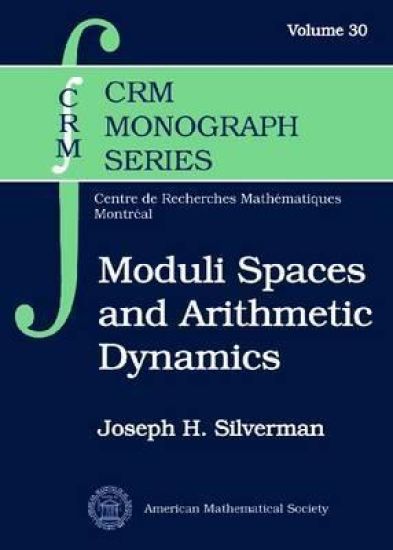
Moduli Spaces and Arithmetic Dynamics

Moduli Spaces and Arithmetic Dynamics

Joseph H. Silverman

American Mathematical Society
2012
sidottu
This monograph studies moduli problems associated to algebraic dynamical systems. It is an expanded version of the notes for a series of lectures delivered at a workshop on Moduli Spaces and the Arithmetic of Dynamical Systems at the Bellairs Research Institute, Barbados, in 2010. The author's goal is to provide an overview, with enough details and pointers to the existing literature, to give the reader an entry into this exciting area of current research. Topics covered include: (1) Construction and properties of dynamical moduli spaces for self-maps of projective space. (2) Dynatomic modular curves for the space of quadratic polynomials. (3) The theory of canonical heights associated to dynamical systems. (4) Special loci in dynamical moduli spaces, in particular the locus of post-critically finite maps. (5) Field of moduli and fields of definition for dynamical systems.
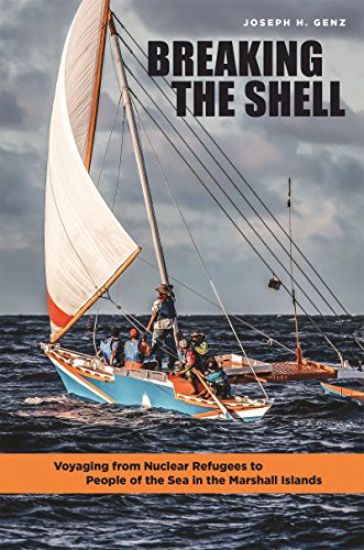
Breaking the Shell

Breaking the Shell

Joseph H. Genz

University of Hawai'i Press
2019
nidottu
On the atoll of Rongelap in the northern seas of the Marshall Islands, apprentice navigators once learned to find their way across the ocean by remotely sensing how islands transform the patterning of swell and currents. Renowned for their instructional stick charts that model and map the interplay of islands and waves, these students of wave piloting techniques embarked on trial voyages to ruprup jo¸kur, a Marshallese expression roughly translated as “breaking the shell” of the turtle, which would confer their status as navigators. These traditional practices, already in decline with imposing colonial occupations, came to an abrupt halt with the Cold War–era nuclear weapons testing program conducted by the United States. The residents and their descendants are still trying to recover from the myriad environmental, biological, social, and psychological impacts of the nuclear tests.Breaking the Shell presents the journey of Captain Korent Joel, who, having been forced into exile from the near-apocalyptic thermonuclear Bravo test of 1954, has reconnected to his ancestral maritime heritage and forged an unprecedented path toward becoming a navigator. Paralleling the Hawaiian renaissance that centered on Nainoa Thompson learning from Satawalese navigator Mau Piailug, the beginnings of the Marshallese voyaging revitalization—a collaborative, community-based project spanning the fields of anthropology, history, and oceanography—involved blending scientific knowledge systems, resolving ambivalence in nearly forgotten navigational techniques, and deftly negotiating cultural protocols of knowledge use and transmission. Through Captain Korent’s own voyaging trial, he and a group of surviving mariners from Rongelap are, against one of the darkest hours in human history, “breaking the shell” of their prime identity as nuclear refugees to begin recovering their most intimate of connections to the sea. Ultimately these efforts would inaugurate the return of the traditional outrigger voyaging canoe for the greater Marshallese nation, an achievement that may work toward easing ethnic tensions abroad and ensure cultural survival in their battle against the looming climate change–induced rising ocean. Drawing attention to cultural rediscovery, revitalization, and resilience in Oceania, the Marshallese are once again celebrating their existence as a people born to the rhythms of the sea.
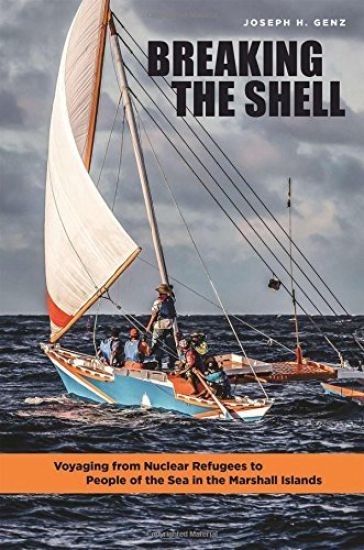
Breaking the Shell

Breaking the Shell

Joseph H. Genz

University of Hawai'i Press
2018
sidottu
On the atoll of Rongelap in the northern seas of the Marshall Islands, apprentice navigators once learned to find their way across the ocean by remotely sensing how islands transform the patterning of swell and currents. Renowned for their instructional stick charts that model and map the interplay of islands and waves, these students of wave piloting techniques embarked on trial voyages to ruprup jo¸kur, a Marshallese expression roughly translated as “breaking the shell” of the turtle, which would confer their status as navigators. These traditional practices, already in decline with imposing colonial occupations, came to an abrupt halt with the Cold War–era nuclear weapons testing program conducted by the United States. The residents and their descendants are still trying to recover from the myriad environmental, biological, social, and psychological impacts of the nuclear tests.Breaking the Shell presents the journey of Captain Korent Joel, who, having been forced into exile from the near-apocalyptic thermonuclear Bravo test of 1954, has reconnected to his ancestral maritime heritage and forged an unprecedented path toward becoming a navigator. Paralleling the Hawaiian renaissance that centered on Nainoa Thompson learning from Satawalese navigator Mau Piailug, the beginnings of the Marshallese voyaging revitalization—a collaborative, community-based project spanning the fields of anthropology, history, and oceanography—involved blending scientific knowledge systems, resolving ambivalence in nearly forgotten navigational techniques, and deftly negotiating cultural protocols of knowledge use and transmission. Through Captain Korent’s own voyaging trial, he and a group of surviving mariners from Rongelap are, against one of the darkest hours in human history, “breaking the shell” of their prime identity as nuclear refugees to begin recovering their most intimate of connections to the sea. Ultimately these efforts would inaugurate the return of the traditional outrigger voyaging canoe for the greater Marshallese nation, an achievement that may work toward easing ethnic tensions abroad and ensure cultural survival in their battle against the looming climate change–induced rising ocean. Drawing attention to cultural rediscovery, revitalization, and resilience in Oceania, the Marshallese are once again celebrating their existence as a people born to the rhythms of the sea.
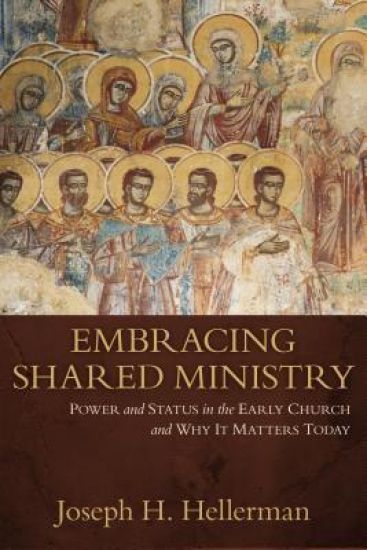
Embracing Shared Ministry

Embracing Shared Ministry

Joseph H. Hellerman

Kregel Publications,U.S.
2013
nidottu
Social historian and pastor Joe Hellerman addresses issues of power and authority in the church - in the New Testament and in the church today - in a fresh, culturally nuanced way. The local church, Hellerman maintains, should be led and taught by a community of leaders who relate to one another first as brothers and sisters in Christ, and who function only secondarily - and only within the parameters of that primary relational context - as vision-casting, decision-making leaders for the broader church family. Unique among contemporary treatments of servant leadership, Hellerman interprets the biblical materials against the background of ancient Roman cultural values, in order to demonstrate a social context for ministry that will provide healthy checks and balances on the use of pastoral power and authority in our congregations.
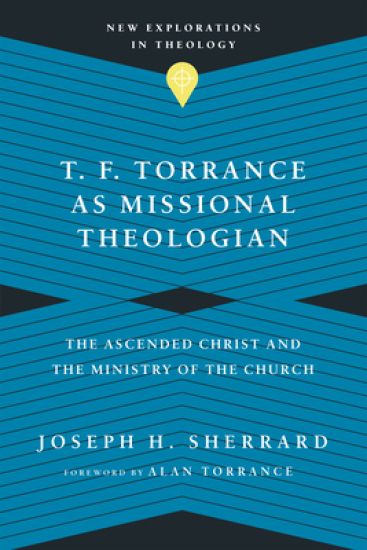
T. F. Torrance as Missional Theologian – The Ascended Christ and the Ministry of the Church
Christ has ascended. Yet his work continues. Much has been made of a "missional" view of the church in recent theological literature, but largely overlooked in this discussion has been the contribution that T. F. Torrance, the late Church of Scotland minister and theologian, can make to this discussion. Addressing this lacuna, theologian and pastor Joseph Sherrard considers how Torrance's theology can inform the church's understanding of its ministry and mission—in particular, his appeal to the church's participation in the ascended Christ's threefold office as king, prophet, and priest. Through the ministry of the church, Christ is still at work. Featuring new monographs with cutting-edge research, New Explorations in Theology provides a platform for constructive, creative work in the areas of systematic, historical, philosophical, biblical, and practical theology.
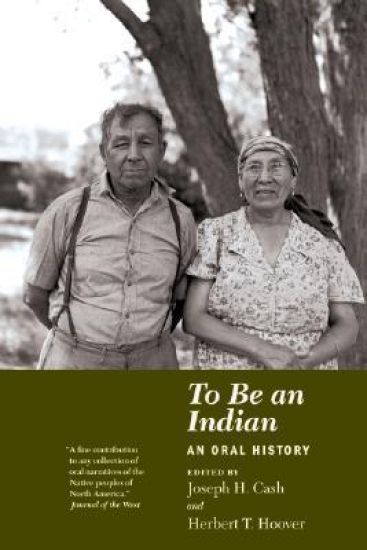
To be an Indian

To be an Indian

Joseph H. Cash; H. Hoover

Minnesota Historical Society Press,U.S.
1995
nidottu
In this remarkable collection of transcribed oral histories, members of Dakota, Lakota, Winnebago, and other communities tell of their personal experiences: reservation life, the Great Depression, self-government, traditions, and life in the 1960s. Together these voices present a rich and complicated view of what it is to be an American Indian.
Experience as Art

Experience as Art

Joseph H. Kupfer

State University of New York Press
1984
pokkari
Joseph Kupfer removes aesthetics from the exclusive province of museums, concert halls, and the periphery of human interests to reveal the impact of aesthetic experience on daily living. He combines philosophical aesthetics and critical analysis to indicate the status of aesthetic values in ordinary life, showing how aesthetic qualities and relations contribute to social, moral, and personal values. In examining the practical implications of aesthetic values for sports, sexual relationships, violence, and education, Kupfer also looks at the effect of aesthetic deprivation.
Interpreting Children's Drawings

Interpreting Children's Drawings

Joseph H. Di Leo

Brunner-Mazel Inc
1983
nidottu
First published in 1983. In this comprehensive volume, Dr. Di Leo once again brings to the reader the fruitful combination of extensive knowledge of children's drawings and an approach to the subject that is intimate and humane, but highly sophisticated. Those familiar with his books have come to expect the lucid style with which Dr. Di Leo leads the clinician toward incisive interpretations of children's drawings, pointing out key features and using, where appropriate, parallels from the world of art and literature. His discussions of over 120 drawings reproduced in this volume cover an astonishing range of topics, including: Interpretation, Formal and Stylistic Features, Mostly Cognition (drawing a man in a boat), Mostly Affect (drawing a house), Projective Significance of Child Art, The Whole and Its Parts, Global Features, Body Parts, Sex Differ­ences and Sex Roles in Western Society as Perceived by Children, Laterality and Its Effects on Drawing, Tree Drawings, and Personality Traits, Emotional Dis­order Reflected in Drawings, Pitfalls, Role of the Arts in Education for Peace, and Reflections. In his analyses, Dr. Di Leo skillfully singles out examples of overinterpreta­tion and other pitfalls, and answers questions such as: What does the thera­pist do when the child refuses to draw the family? Is the drawing a self-image? What are the differences between regres­sive drawings compared with the immature drawings of normal children? Even such fascinating topics as art brut, creativity, madness, and child art are discussed. The reader will find thought-provoking both the author's astute analyses and his keen awareness of the influence of society on children and the pictures they draw. Therapists in the field will find the book remarkably penetrating, while students in the field will delight in its clarity and thoroughness. Every­one who works with the drawings of children will find it absorbing.