Kirjahaku
Etsi kirjoja tekijän nimen, kirjan nimen tai ISBN:n perusteella.
1000 tulosta hakusanalla Jacob Thomasius
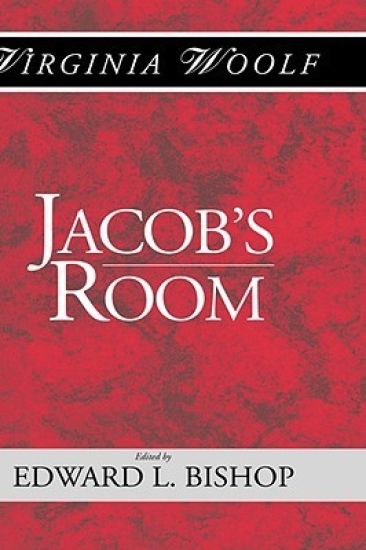
First published in 1922, Jacob’s Room was Virginia Woolf’s third novel and the first in her more experimental mode. Set in the years leading up to the First World War, the work is an elegy, not just for an individual character, but for a generation lost in and affected by the war. This Shakespeare Head Press edition restores the text to its original form, notably recreating the space breaks on the page with which Woolf deliberately fragmented her narrative. The editor provides an extensive introduction, discussing the genesis of the novel, its biographical elements, the process of composition and revision, and the history of its early critical reception. A series of notes helps the reader to identify references and allusions, from sponge-bag trousers and gold beater’s skin to Tonks and Steer, and the Hampstead Garden Suburbs; while an appendix lists variants between the first UK and first US editions of the work.
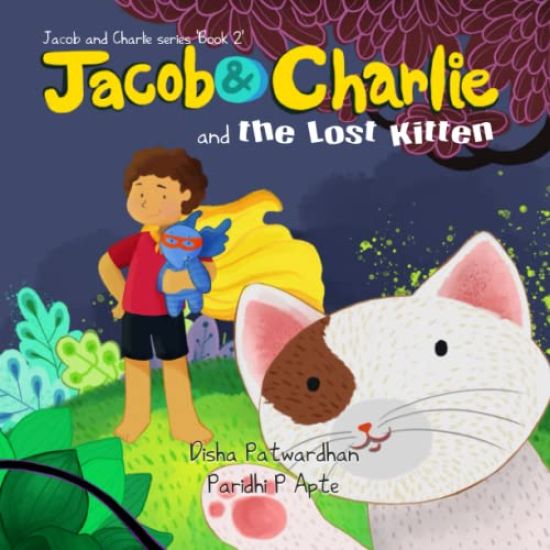
A kitty is lost and lonely, who will help? Here come Jacob & Charlie to the rescue Get ready for an exciting second instalment of the Jacob & Charlie Adventure series This is a heartwarming story about Jacob, a little boy who has found an incredible companion in his soft toy elephant, Charlie. Jacob and Charlie have encountered a problem - they have found a lost and distressed cat in their backyard, what will they do? Help the new furry friend, of course Join us in a new experience as Jacob and Charlie endeavour to find the kitty's owner and get her home. With Charlie by his side, Jacob is ready to tackle any task Read this refreshing tale with your child and learn what it means to be helpful. With lively and vibrant illustrations, this book will captivate your child's interest again and again. Come along with Jacob and Charlie to a world of friendship, imagination and mischief. Book details: Great for kids of all ages, especially for ages 2-6. The perfect way to engage kids with amazing and colorful illustrations. Easy to read language for kindergarteners and first graders.An ideal read for a bedtime story or a school library book reading.Would make an excellent gift for any young child. With the holiday season upon, this book would make a wonderful gift for any young child The book is delightful, creative and will encourage your child to read more. Join the adventure with Jacob and Charlie

It's time to clean up Jacob's room Where will they start? How will they do it?Take part in a fun yet educational third instalment of the Jacob & Charlie series This is a heartwarming story about Jacob, a little boy who has found an incredible companion in his soft toy elephant, Charlie.Jacob's room is messy and it is time to clean up, but how to clean up without harming the environment? Join Jacob as he learns the three basic R's of recycling - Reduce, Reuse and Recycling with his Dad.This book introduces a difficult concept like recycling in an easy to understand language. With practical ideas and examples on every page, let your child learn with Jacob what it really means to recycle - to protect Earth's precious resources and care for our planet Earth.Created with colorful and unique vivid illustrations, this book will surely capture your children's attention while teaching them a valuable lesson. Read aloud to help your child understand that their little contributions can make a big difference Follow along with Jacob and Charlie to become more kind and eco friendly.Book details: Great for kids of all ages, especially for ages 3-6.An excellent way to introduce recycling concepts to young kids.Easy to read language for kindergarteners and first graders.An ideal read for a bedtime story or a school library book reading.Would make an excellent gift for any young child.The book is delightful, educational and will encourage your child to read more. Join the adventure with Jacob and Charlie
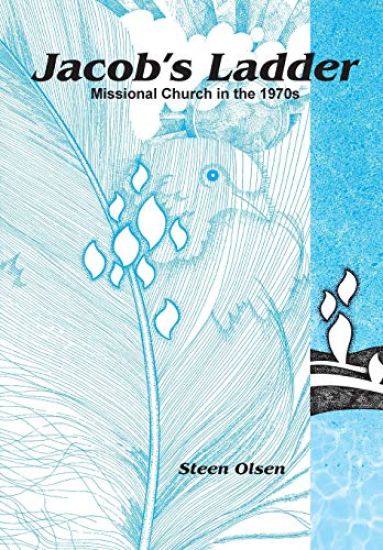
This is the story of Jacob's Ladder in the City of Adelaide, South Australia, in the 1970s. Beginning as a Coffee Lounge, it grew into a missional Church. Many of those who came to faith were previously involved in drugs, outlaw Bike gangs and crime. The Holy Spirit worked through ordinary, flawed young people, doing extraordinary things in their lives, and through them blessing many others. Their focus was not on feeding the poor and hungry, but people were fed and given a place to stay. Their focus was not on justice, but the oppressed were set free. Their focus was not on human rights, but God-given dignity and freedom were proclaimed. They joined Jesus in the Father's mission to his world, and the Spirit brought forgiveness, faith and life to many.
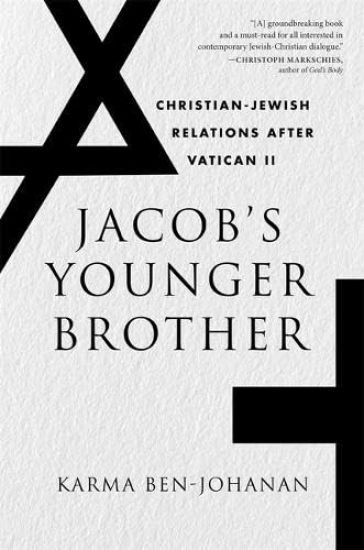
A Seminary Co-op Notable Book“An astute and evenhanded study of how both faiths view themselves and each other.”—Publishers Weekly“An illuminating and important new book…An intellectual, cultural, and political challenge…[F]or anyone for whom the Jewish-Christian story is an important element in defining his or her identity.”—Israel Jacob Yuval, Haaretz“An extraordinarily sophisticated, insightful and provocative examination of how Roman Catholics and Orthodox Jews addressed the prospect of reconciliation in the second half of the twentieth century.”—Glenn C. Altschuler, Jerusalem Post“A volume from which both Jewish and Catholic scholars may learn…This is an excellent book.”—Eugene J. Fisher, Catholic News ServiceA new chapter in Jewish-Christian relations opened in the second half of the twentieth century when the Second Vatican Council exonerated Jews from the accusation of deicide and declared that the Jewish people had never been rejected by God. In a few carefully phrased statements, two millennia of deep hostility were swept into the trash heap of history.But old animosities die hard. While Catholic and Jewish leaders publicly promoted interfaith dialogue, doubts remained behind closed doors. Drawing on extensive research in contemporary rabbinical literature, Karma Ben-Johanan shows that Jewish leaders welcomed the Catholic condemnation of antisemitism but were less enthusiastic about the Church’s sudden urge to claim their friendship. Catholic theologians hoped Vatican II would turn the page on an embarrassing history, while Orthodox rabbis, in contrast, believed they were finally free to say what they thought of Christianity.Jacob’s Younger Brother pulls back the veil of interfaith dialogue to reveal how Orthodox rabbis and Catholic leaders spoke about each other when outsiders were not in the room. There Ben-Johanan finds Jews reluctant to accept the latest whims of a Church that had unilaterally dictated the terms of Jewish-Christian relations for centuries.
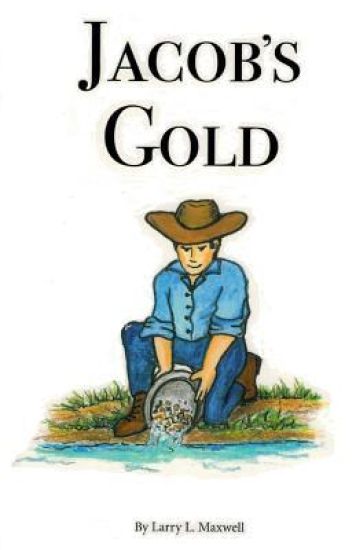
GOLD Nothing stirs the imagination like the word GOLD.1848 news of GOLD in California brought over 300,000 prospectors looking to Strike it Rich. Many did find the precious metal but no matter what they got they wanted MORE...Follow Jacob Waltz as he leaves his home country of Germany to find his way to the American West and discover treasure.



Jacob Wonderbar must have hit a time warp on his way home after losing the election for President of the Universe, because fifty years have passed on Earth. What's worse, during that time the entire Astral society has come under threat of destruction, and it's up to Jacob to make things--including time itself--right. So, with the unlikely help of Mick Cracken, Jacob time-hops through the universe with Sarah Daisy and Dexter, encountering dinosaurs, Napoleon, and bad '80s fashion in their search for the one person who can help them--Jacob's father.Buckle your space-belts, the third book in the Jacob Wonderbar series proves that time travel is all fun and games until someone gets stuck in the wrong century

Jacob Talmon: Combining histories and presents is not the biography of a historian. Rather, it is a discourse on a mind tormented by fear of the masses as well as the mistakes of the leadership. Talmon often applied his views on contemporary events and trends to his own actions as a humanist and historian. The changing role of the university, the decline of the liberal arts in favour of technology and the social sciences and the displacement of humanism by the market economy were of particular concern. His brilliant and paradoxically prophetic interactions with Arnold Toynbee, David Ben-Gurion, and Menahem Begin have been vindicated by the very history he sought to avoid. This new work in the English language makes Talmonic wisdom available for the first time to a much larger audience
Jacob Vernet (1698-1789) was the most important and influential Genevan pastor of his day, successively holding the posts of Professor of Belles-Lettres (1739) and of Theology (1756) at the city’s Académie. A ‘liberal’ theologian, he had personal contacts with several of the leading philosophes, all of which turned sour after a time. This book describes Vernet’s contacts with Montesquieu, d’Alembert, Voltaire and Rousseau. It also investigates a charge made repeatedly by his enemies, namely that he was a hypocrite who disguised his real beliefs. Vernet’s religious and philosophical opinions are thus reviewed as expressed in his major works, Traité de la vérite de la religion chrétienne, Instruction chrétienne and Lettres critiques d’un voyageur anglais. The connection between Vernet’s ideas and the social and political situation in his native Geneva is also studied in depth. The pastor’s relations with Montesquieu have often been seen as a cause for congratulation, for he edited the first edition of De l’Esprit des lois, but a close reading of Montesquieu’s correspondence shows that this episode was far from being an unqualified success. Similarly, Vernet’s contacts with Rousseau give pause for thought: the relevant evidence that he was on occasion somewhat devious in his dealings with the great author is reviewed comprehensively. Particular attention is given to Vernet’s relations with Voltaire. In 1760 the pastor was vilified in the second of the Dialogues chrétiens, accused of greed and dishonesty. But did Voltaire actually write the second Dialogue? If not, who did? These intriguing questions are discussed in detail, special attention being given to Vernet’s own essays of self-justification, the Lettre à Monsieur le Premier Sindic(1760) and Mémoire à Mr. le Premier Sindic (1766, both of which are reproduced in appendices. Jacob Vernet’s long life and many works give a fascinating insight into the problems and inconsistencies of liberal Protestantism during the various stages of the Enlightenment.
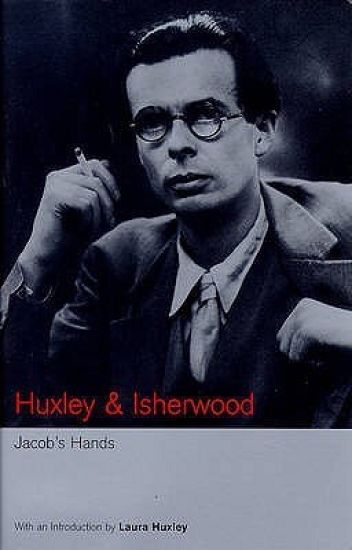
This is a jointly-authored film treatment, found in one of Huxley's old trunks. The story is set in the 1920s and involves a ranch worker who has the power to heal with his hands.

Jacob Frank is the second and last major exponent of apostate messianism, the concept that lead to the Sabbatain heresy. His picaresque life is recounted by Alexandr Kraushar. The editor's 'A Note for the General Reader' and his annotations to Kraushar's text explore the sources, and the reasons for the disappearance, of the Sabbatain heresy. These observations are reflected against aspects of early 20th Century European history. Also explored are affinities to the tenets of Sabbatian theology found in lines of T.S.Eliot's Four Quartets and in the role of the Old Bolsheviks in Stalin's Purge Trials.

When Jacob wakes up in the middle of a field, he realizes that the only thing he remembers is his name, and when he arrives at a nearby town he becomes aware that everyone there is also suffering from amnesia.