Kirjojen hintavertailu. Mukana 11 420 679 kirjaa ja 12 kauppaa.

Kirjahaku

Etsi kirjoja tekijän nimen, kirjan nimen tai ISBN:n perusteella.

1000 tulosta hakusanalla Jacques Simon

Die Begriffe Des Politischen Bei Carl Schmitt Und Jacques Derrida
Hochaktuell zeigen sich in diesem ersten umfassenden Vergleich beider Denker die politischen Theorien von Carl Schmitt und Jacques Derrida: Gegen den "gerechten Krieg" halt Schmitt schon 1932 den "gerechten Feind", Derrida tritt fur "gerechten Frieden" ein. Den modernen internationalen Terroristen und asymmetrischen Krieg nahm Schmitts "Partisan" vorweg. Gemeinsam ist beiden die Kritik an der Moderne, Schmitt konservativ, Derrida postmodern. Aber entgegen neueren Versuchen, beide Theorien aus der Modernekritik heraus zu "verheiraten", weist die Analyse in Auseinandersetzung mit der neuesten Literatur nach, dass der Gegensatz in der Konzeption des Politischen grundlegend ist: Schmitt definiert Politik bekanntlich als Unterscheidung von Freund und Feind, Derrida hingegen will sie zum Anderen und Gast hin oeffnen.
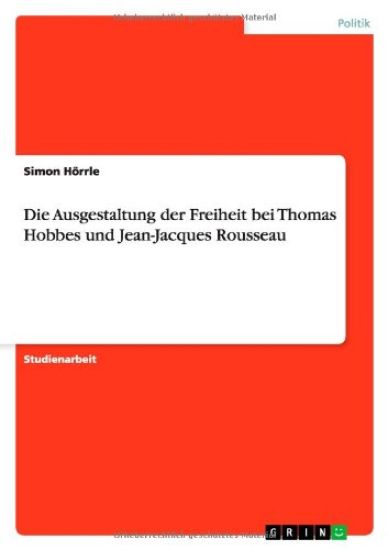
Die Ausgestaltung der Freiheit bei Thomas Hobbes und Jean-Jacques Rousseau
Studienarbeit aus dem Jahr 2009 im Fachbereich Politik - Politische Theorie und Ideengeschichte, Note: 2,7, Johannes Gutenberg-Universit t Mainz, Veranstaltung: Grundseminar - Politische Theorie, Sprache: Deutsch, Abstract: Wohl kaum etwas befl gelt seit Jahrtausenden die menschliche Vorstellungskraft so sehr wie der Begriff der "Freiheit." Sicherlich war es nicht zuletzt ein Verlangen nach Freiheit - hier allerdings eher im physischen Sinne -, das auch Otto Lilienthal zum Bestreiten seines Jungfernfluges bewog. Wie er, wurden bereits vor ihm Menschen in s mtlichen Wissenschaftsgebieten von einem bestimmten Begriff der "Freiheit" inspiriert. So auch zwei der wohl bedeutendsten Staatstheoretiker des Abendlandes: Thomas Hobbes und Jean-Jacques Rousseau. Beide versuchten in ihren Werken, Hobbes in "Leviathan" und Rousseau in seinem "Gesellschaftsvertrag," einen Staat mit einem legitimierten Herrschaftssystem zu entwerfen, in dem der Frieden und die Freiheit der B rger gesichert und gew hrleistet werden. Sowohl bei Hobbes als auch bei Rousseau erfolgt der Akt der Staatsgr ndung aus einer selbst ndigen Handlung des Volkes heraus. In der nun hier vorliegenden Arbeit werde ich, in Bezug auf diese beiden Werke, die Bedeutung des Begriffs der "Freiheit" betrachten. Hierzu werde ich zwischen der Freiheit der Menschen im Naturzustand und der Freiheit der Menschen nach der Staatsgr ndung unterscheiden. In Anlehnung an den argumentativen Aufbau von Hobbes' "Leviathan" und Rousseaus "Gesellschaftsvertrag" soll diese Arbeit, wie bei den Arbeiten der beiden Autoren auch, mit der Betrachtung des Menschen bzw. dessen Freiheit im Naturzustand beginnen, um darauffolgend auf die Freiheit der B rger nach der Staatsgr ndung einzugehen.
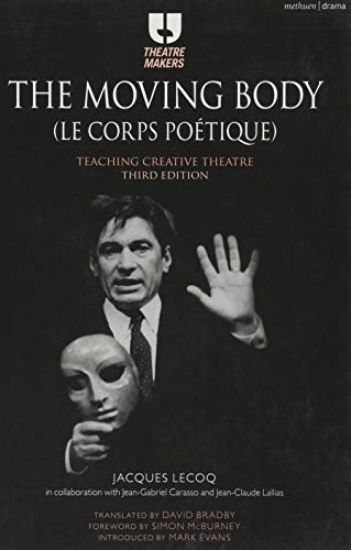
The Moving Body (Le Corps Poétique)

The Moving Body (Le Corps Poétique)

Jacques Lecoq; Simon McBurney

Methuen Drama
2020
nidottu
'In life, I want students to be alive and on stage I want them to be artists' Jacques LecoqJacques Lecoq was one of the most inspirational theatre teachers of our age. In The Moving Body, he shares with us first-hand his unique philosophy of performance, improvisation, masks, movement and gesture, which together form one of the greatest influences on contemporary theatre.Neutral mask, character mask and counter masks, bouffons, acrobatics, commedia, clowns and complicity: all the famous Lecoq techniques are covered in this book - techniques that have made their way into the work of former collaborators and students including Dario Fo, Ariane Mnouchkine, Yasmina Reza and Theatre de Complicite. The book contains a foreword by Simon McBurney, a critical introduction by Mark Evans and an afterword by Fay Lecoq, Director of the International Theatre School in Paris.
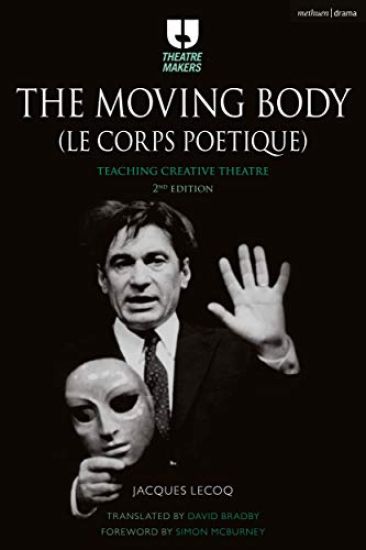
The Moving Body (Le Corps Poétique)

The Moving Body (Le Corps Poétique)

Jacques Lecoq; Simon McBurney

Methuen Drama
2020
sidottu
'In life, I want students to be alive and on stage I want them to be artists' Jacques LecoqJacques Lecoq was one of the most inspirational theatre teachers of our age. In The Moving Body, he shares with us first-hand his unique philosophy of performance, improvisation, masks, movement and gesture, which together form one of the greatest influences on contemporary theatre.Neutral mask, character mask and counter masks, bouffons, acrobatics, commedia, clowns and complicity: all the famous Lecoq techniques are covered in this book - techniques that have made their way into the work of former collaborators and students including Dario Fo, Ariane Mnouchkine, Yasmina Reza and Theatre de Complicite. The book contains a foreword by Simon McBurney, a critical introduction by Mark Evans and an afterword by Fay Lecoq, Director of the International Theatre School in Paris.
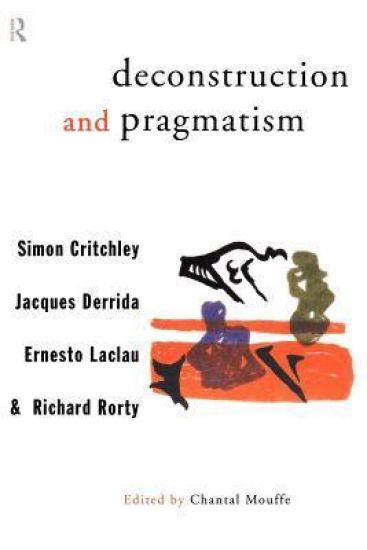
Deconstruction and Pragmatism

Deconstruction and Pragmatism

Simon Critchley; Jacques Derrida; Ernesto Laclau; Richard Rorty

Routledge
1996
sidottu
Deconstruction and pragmatism constitute two of the major intellectual influences on the contemporary theoretical scene; influences personified in the work of Jacques Derrida and Richard Rorty. Both Rortian pragmatism, which draws the consequences of post-war developments in Anglo-American philosophy, and Derridian deconstruction, which extends and troubles the phonomenological and Heideggerian influence on the Continental tradition, have hitherto generally been viewed as mutually exclusive philosophical language games.The purpose of this volume is to bring deconstruction and pragmatism into critical confrontation with one another through staging a debate between Derrida and Rorty, itself based on discussions that took place at the College International de Philosophie in Paris in 1993. The ground for this debate is layed out in introductory papers by Simon Critchley and Ernesto Laclau, and the remainder of the volume records Derrida's and Rorty's responses to each other's work. Chantal Mouffe gives an overview of the stakes of this debate in a helpful preface.
Deconstruction and Pragmatism

Deconstruction and Pragmatism

Simon Critchley; Jacques Derrida; Ernesto Laclau; Richard Rorty

Routledge
1996
nidottu
Deconstruction and pragmatism constitute two of the major intellectual influences on the contemporary theoretical scene; influences personified in the work of Jacques Derrida and Richard Rorty. Both Rortian pragmatism, which draws the consequences of post-war developments in Anglo-American philosophy, and Derridian deconstruction, which extends and troubles the phonomenological and Heideggerian influence on the Continental tradition, have hitherto generally been viewed as mutually exclusive philosophical language games.The purpose of this volume is to bring deconstruction and pragmatism into critical confrontation with one another through staging a debate between Derrida and Rorty, itself based on discussions that took place at the College International de Philosophie in Paris in 1993. The ground for this debate is layed out in introductory papers by Simon Critchley and Ernesto Laclau, and the remainder of the volume records Derrida's and Rorty's responses to each other's work. Chantal Mouffe gives an overview of the stakes of this debate in a helpful preface.
Transitioning Vocational Education and Training in Africa

Transitioning Vocational Education and Training in Africa

Simon McGrath; George Openjuru Ladaah; Heila Lotz-Sisitka; Stephanie Allais; Jacques Zeelen; Volker Wedekind; Presha Ramsarup; David Monk; Luke Metelerkamp; Jo-Anna Russon; Bonaventure Kyaligonja; Glen Robbins; Scovia Adrupio; David Ocan; Kenneth Nyeko; Adoye Primo; Palesa Molebatsi; Themba Tshabalala; Sidney Muhangi; Maxwell Openjuru

Bristol University Press
2023
nidottu
EPDF and EPUB available Open Access under CC-BY-NC-ND licence. The transition to more just and sustainable development requires radical change across a wide range of areas and particularly within the nexus between learning and work. This book takes an expansive view of vocational education and training that goes beyond the narrow focus of much of the current literature and policy debate. Drawing on case studies across rural and urban settings in Uganda and South Africa, the book offers a new way of seeing this issue through an exploration of the multiple ways in which people learn to have better livelihoods. Crucially, it explores learning that takes place informally online, within farmers’ groups, and in public and private educational institutions. Offering new insights and ways of thinking about this field, the book draws out clear implications for theory, policy and practice in Africa and beyond.
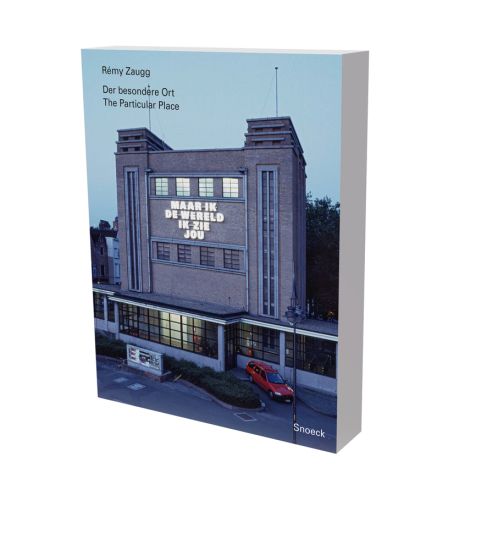
Remy Zaugg: The Particular Place

Remy Zaugg: The Particular Place

Simon Baur; Corinne Diserens; Eva Schmidt; Jacques Herzog; Pierre de Meuron; Christoph Doswald; Mathilde de Croix; Remy Zaugg; Gerhard Mack; Ulrich Loock

SNOECK VERLAGSGESELLSCHAFT MBH
2022
pokkari
R my Zaugg (1943-2005) was an internationally renowned artist who lived and worked in Basel and Mulhouse. He saw himself as a painter, yet he would not limit himself solely to the production of images. Rather, from his painterly practice he generated general assumptions for a processual conception of the work that enabled him to view spatial, architectural, and urban contexts in new, unfamiliar ways. Accordingly, the perceiving human being as a member of society was always at the center of his considerations - all his aesthetic assumptions led to the emancipatory idea of the becoming subject. In addition to his extensive painterly and written oeuvre, it is therefore his activities and projects for and in public space that are essential for understanding Zaugg's particular artistic position. The book is dedicated to this socially relevant complex of topics, documenting all of the artist's respective realized and unrealized projects, with a particular focus on the following key aspects of his work: museum architecture (here in particular his collaboration with Herzog & de Meuron), exhibitions with works by other artists, art in public spaces as well as his preoccupation.
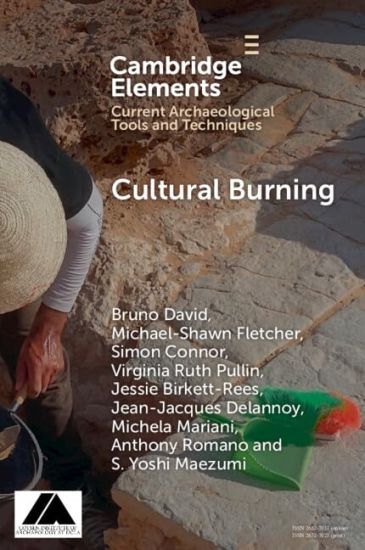
Cultural Burning

Cultural Burning

Bruno David; Michael-Shawn Fletcher; Simon Connor; Virginia Ruth Pullin; Jessie Birkett-Rees; Jean-Jacques Delannoy; Michela Mariani; Anthony Romano; S. Yoshi Maezumi

Cambridge University Press
2024
pokkari
This Element addresses a burning question – how can archaeologists best identify and interpret cultural burning, the controlled use of fire by people to shape and curate their physical and social landscapes? This Element describes what cultural burning is and presents current methods by which it can be identified in historical and archaeological records, applying internationally relevant methods to Australian landscapes. It clarifies how the transdisciplinary study of cultural burning by Quaternary scientists, historians, archaeologists and Indigenous community members is informing interpretations of cultural practices, ecological change, land use and the making of place. This title is also available as Open Access on Cambridge Core.
Cultural Burning

Cultural Burning

Bruno David; Michael-Shawn Fletcher; Simon Connor; Virginia Ruth Pullin; Jessie Birkett-Rees; Jean-Jacques Delannoy; Michela Mariani; Anthony Romano; S. Yoshi Maezumi

Cambridge University Press
2024
sidottu
This Element addresses a burning question – how can archaeologists best identify and interpret cultural burning, the controlled use of fire by people to shape and curate their physical and social landscapes? This Element describes what cultural burning is and presents current methods by which it can be identified in historical and archaeological records, applying internationally relevant methods to Australian landscapes. It clarifies how the transdisciplinary study of cultural burning by Quaternary scientists, historians, archaeologists and Indigenous community members is informing interpretations of cultural practices, ecological change, land use and the making of place. This title is also available as Open Access on Cambridge Core.