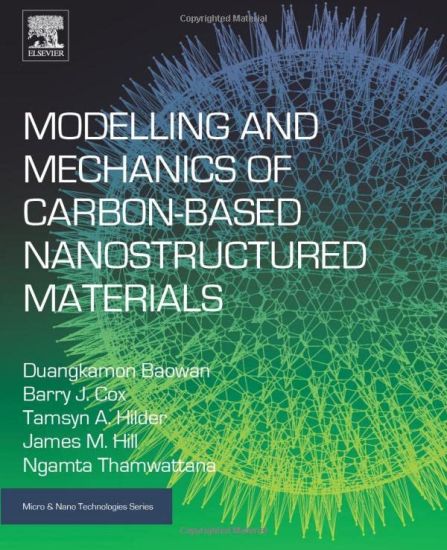
Modelling and Mechanics of Carbon-based Nanostructured Materials sets out the principles of applied mathematical modeling in the topical area of nanotechnology. It is purposely designed to be self-contained, giving readers all the necessary modeling principles required for working with nanostructures. The unique physical properties observed at the nanoscale are often counterintuitive, sometimes astounding researchers and thus driving numerous investigations into their special properties and potential applications. Typically, existing research has been conducted through experimental studies and molecular dynamics simulations. This book goes beyond that to provide new avenues for study and review.
The goal of this book is to establish the foundation, principles, theory, and concepts that are the backbone of real, autonomous Artificial Intelligence. Presented here are some basic human intelligence concepts framed for Artificial Intelligence systems. These include concepts like Metacognition and Metamemory, along with architectural constructs for Artificial Intelligence versions of human brain functions like the prefrontal cortex. Also presented are possible hardware and software architectures that lend themselves to learning, reasoning, and self-evolution
The goal of this book is to establish the foundation, principles, theory, and concepts that are the backbone of real, autonomous Artificial Intelligence. Presented here are some basic human intelligence concepts framed for Artificial Intelligence systems. These include concepts like Metacognition and Metamemory, along with architectural constructs for Artificial Intelligence versions of human brain functions like the prefrontal cortex. Also presented are possible hardware and software architectures that lend themselves to learning, reasoning, and self-evolution
This book explores the subject of artificial psychology and how the field must adapt human neuro-psychological testing techniques to provide adequate cognitive testing of advanced artificial intelligence systems. It shows how classical testing methods will reveal nothing about the cognitive nature of the systems and whether they are learning, reasoning, and evolving correctly; for these systems, the authors outline how testing techniques similar to/adapted from human psychological testing must be adopted, particularly in understanding how the system reacts to failure or relearning something it has learned incorrectly or inferred incorrectly. The authors provide insights into future architectures/capabilities that artificial cognitive systems will possess and how we can evaluate how well they are functioning. It discusses at length the notion of human/AI communication and collaboration and explores such topics as knowledge development, knowledge modeling and ambiguity management, artificial cognition and self-evolution of learning, artificial brain components and cognitive architecture, and artificial psychological modeling.Explores the concepts of Artificial Psychology and Artificial Neuroscience as applied to advanced artificially cognitive systems;Provides insight into the world of cognitive architectures and biologically-based computing designs which will mimic human brain functionality in artificial intelligent systems of the future;Provides description and design of artificial psychological modeling to provide insight into how advanced artificial intelligent systems are learning and evolving;Explores artificial reasoning and inference architectures and the types of modeling and testing that will be required to "trust" an autonomous artificial intelligent systems.
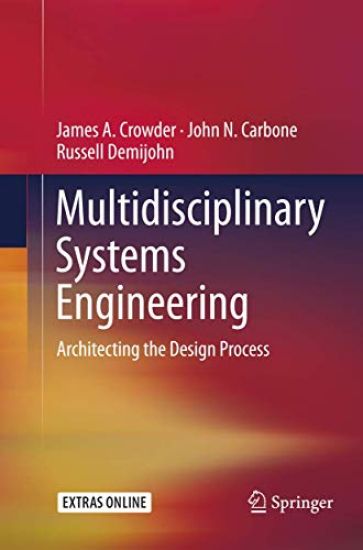
This book presents Systems Engineering from a modern, multidisciplinary engineering approach, providing the understanding that all aspects of systems design, systems, software, test, security, maintenance and the full life-cycle must be factored in to any large-scale system design; up front, not factored in later. It lays out a step-by-step approach to systems-of-systems architectural design, describing in detail the documentation flow throughout the systems engineering design process. It provides a straightforward look and the entire systems engineering process, providing realistic case studies, examples, and design problems that will enable students to gain a firm grasp on the fundamentals of modern systems engineering. Included is a comprehensive design problem that weaves throughout the entire text book, concluding with a complete top-level systems architecture for a real-world design problem.
This book presents Systems Engineering from a modern, multidisciplinary engineering approach, providing the understanding that all aspects of systems design, systems, software, test, security, maintenance and the full life-cycle must be factored in to any large-scale system design; up front, not factored in later. It lays out a step-by-step approach to systems-of-systems architectural design, describing in detail the documentation flow throughout the systems engineering design process. It provides a straightforward look and the entire systems engineering process, providing realistic case studies, examples, and design problems that will enable students to gain a firm grasp on the fundamentals of modern systems engineering. Included is a comprehensive design problem that weaves throughout the entire text book, concluding with a complete top-level systems architecture for a real-world design problem.
Rachel Stenner; Kaley Kramer; Adam James Smith; Georgina E. M. Wilson; Joe Saunders; William Clayton; Jennifer Young; Alan B. Farmer; Benjamin Woodring; Michael Durrant; Verônica Calsoni Lima; Rosalind Johnson
This collection profiles understudied figures in the book and print trades of the seventeenth century. With an equal balance between women and men, it intervenes in the history of the trades, emphasising the broad range of material, cultural, and ideological work these people undertook. It offers a biographical introduction to each figure, placing them in their social, professional, and institutional settings. The collection considers varied print trade roles including that of the printer, publisher, paper-maker, and bookseller, as well as several specific trade networks and numerous textual forms. The biographies draw on extensive new archival research, with details of key sources for further study on each figure. Chronologically organised, this Element offers a primer both on numerous individual figures, and on the tribulations and innovations of the print trade in the century of revolution.
Follow Dr. Jeremiah through the book of James in a chapter-by-chapter study that will help you understand what it meant to the people at the time it was written, and what it means to Christians today. The connection between faith and works lies at the very heart of the letter of James. The author of this short letter is concerned not only with what we as followers of Christ believe but also with how those beliefs shape our actions.James' words contain enduring practical advice for putting faith into action.Each of this study's twelve lessons is clearly organized to include:Getting Started: An opening question to introduce you to the lesson.Setting the Stage: A short reflection to explain the context of the study.Exploring the Text: The Scripture reading for the lesson with related study questions.Reviewing the Story: Questions to help you identify key points in the reading.Applying the Message: Questions to help you apply the key ideas to their lives.Reflecting on the Meaning: A closing reflection on the key teachings in the lesson.—ABOUT THE SERIES—The Jeremiah Bible Study Series captures Dr. David Jeremiah's forty-plus years of commitment in teaching the Word of God. In each study, you'll gain insights into the text, identify key stories and themes, and be challenged to apply the truths you uncover to your life. By the end of each study, you'll come away with a clear and memorable understanding of that Bible book.