This work has been selected by scholars as being culturally important and is part of the knowledge base of civilization as we know it.This work is in the public domain in the United States of America, and possibly other nations. Within the United States, you may freely copy and distribute this work, as no entity (individual or corporate) has a copyright on the body of the work.Scholars believe, and we concur, that this work is important enough to be preserved, reproduced, and made generally available to the public. To ensure a quality reading experience, this work has been proofread and republished using a format that seamlessly blends the original graphical elements with text in an easy-to-read typeface.We appreciate your support of the preservation process, and thank you for being an important part of keeping this knowledge alive and relevant.
This work has been selected by scholars as being culturally important and is part of the knowledge base of civilization as we know it.This work is in the public domain in the United States of America, and possibly other nations. Within the United States, you may freely copy and distribute this work, as no entity (individual or corporate) has a copyright on the body of the work.Scholars believe, and we concur, that this work is important enough to be preserved, reproduced, and made generally available to the public. To ensure a quality reading experience, this work has been proofread and republished using a format that seamlessly blends the original graphical elements with text in an easy-to-read typeface.We appreciate your support of the preservation process, and thank you for being an important part of keeping this knowledge alive and relevant.
This work has been selected by scholars as being culturally important and is part of the knowledge base of civilization as we know it.This work is in the public domain in the United States of America, and possibly other nations. Within the United States, you may freely copy and distribute this work, as no entity (individual or corporate) has a copyright on the body of the work.Scholars believe, and we concur, that this work is important enough to be preserved, reproduced, and made generally available to the public. To ensure a quality reading experience, this work has been proofread and republished using a format that seamlessly blends the original graphical elements with text in an easy-to-read typeface.We appreciate your support of the preservation process, and thank you for being an important part of keeping this knowledge alive and relevant.
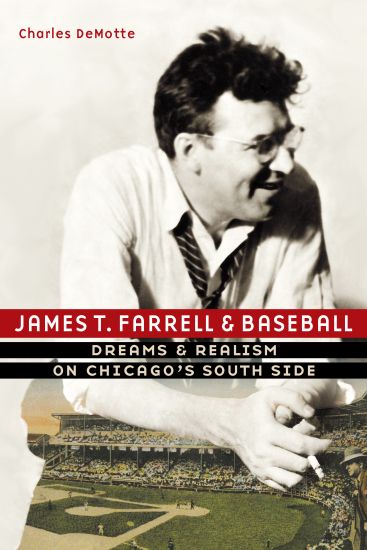
James T. Farrell and Baseball is a social history of baseball on Chicago’s South Side, drawing on the writings of novelist James T. Farrell along with historical sources. Charles DeMotte shows how baseball in the early decades of the twentieth century developed on all levels and in all areas of Chicago, America’s second largest city at the time, and how that growth intertwined with Farrell’s development as a fan and a writer who used baseball as one of the major themes of his work. DeMotte goes beyond Farrell’s literary focus to tell a larger story about baseball on Chicago’s South Side during this time-when Charles Comiskey’s White Sox won two World Series and were part of a rich baseball culture that was widely played at the amateur, semipro, and black ball levels. DeMotte highlights the 1919–20 Black Sox fix and scandal, which traumatized not only Farrell and Chicago but also baseball and the broader culture. By tying Farrell’s fictional and nonfictional works to Chicago’s vibrant baseball history, this book fills an important gap in the history of baseball during the Deadball Era.
James T. Farrell - American Writers 29 was first published in 1963. Minnesota Archive Editions uses digital technology to make long-unavailable books once again accessible, and are published unaltered from the original University of Minnesota Press editions.
"I need an audience--so watch out!" With these James T. Farrell announced his intention of becoming a writer. He was to realize this ambition in manifold ways through his prolificacy, versatility, and his achieved recognition as a formidable figure in American literature. The material contained in this book grew out of initial research for a critical study which disclosed the chaotic state of Farrell's literary affairs and the urgent need for a bibliography. The task was not to be an easy one, for many of Farrell's writings were printed in obscure publications both in the United States and abroad. Edgar M. Branch has ferreted out, producing his compilation with enthusiasm and accuracy. This book is a definitive guide to Farrell's writings published in newspapers, magazines, pamphlets, and books, from the time of his highschool days through 1957. It includes both the fiction (novels, short stories, one poem, and one play) and the nonfiction (essays, articles, statements, manifestoes, newspaper columns, etc.), and in many cases descriptions of these writing are appended when deemed necessary. As a further aid to students and researchers, Branch has listed many reprints and dates of writing for the individual short stories and has provided two appendices giving foreign editions of books and tape recordings of unpublished speeches. This detailed bibliography, the first on Farrell ever printed, is supplemented by a preface by Farrell and a foreword by the author. Edgar Branch has directed his attention to the more inaccessible of Farrell's writings and to the clarification of the voluminous abundance of written material that Farrell has produced. Through this book it is possible to trace Farrell's fluctuating status as a writer, his shifting position among editors, critics, and readers. The data included other clues to the evolution and growth of his ideas and relationships with his contemporaries, providing insight into his changing political affiliations and the motivation and development of his fiction. A Bibliography of ]ames T. Farrell's Writings will be a valuable practical aid to scholars and students of literature and Americana, for it makes available a scholarly compilation of the extensive list of writings by one of America's most distinguished and controversial contemporary writers.
The first volume of James T. Farrell's remarkable Studs Lonigan trilogyAn American classic in the vein of John Steinbeck's The Grapes of Wrath, the first book of James T. Farrell's powerful Studs Lonigan trilogy covers five months of the young hero's life in 1916, when he is sixteen years old. In this relentlessly naturalistic yet richly complex portrait, Studs is carried along by his swaggering and shortsighted companions, his narrow family, and his educational and religious background toward a fate that he resists yet cannot escape.For more than seventy years, Penguin has been the leading publisher of classic literature in the English-speaking world. With more than 1,700 titles, Penguin Classics represents a global bookshelf of the best works throughout history and across genres and disciplines. Readers trust the series to provide authoritative texts enhanced by introductions and notes by distinguished scholars and contemporary authors, as well as up-to-date translations by award-winning translators.
A Prairie State BookThese stories, chosen from ten separately published collections of James T. Farrell's short fiction, offer remarkable insights into the lives of Irish Americans and other Chicagoans from 1910 to 1940. They are gems of the short fiction genre, unique, pioneering, and accomplished. Farrell's stories offer a wonderful diversity of characters and experiences, from self-deluded, impoverished victims to portraits of the artist as a young Irish-American living on Chicago's South Side. Charles Fanning's introduction presents Farrell as one of the best Illinois writers of the first half of the century and his stories as among the best in realistic short fiction anywhere.
The second novel in Farrell's pentalogy picks up where A World I Never Made left off in the ongoing saga of the O'Neill and O'Flaherty families. Continuing on the theme of poverty's effect on children, we return to scenes of Danny O'Neill's life in Chicago, where the schism between his life in public and his private experiences at home begins to create in him a tension and bewilderment suggestive of the problems he will face in his future.
A sprawling tale of two families' struggles with harsh urban realitiesThe first book in Farrell's five-volume series to be republished by the University of Illinois Press, A World I Never Made introduces three generations from two families, the working-class O'Neills and the lower-middle-class O'Flahertys. The lives of the O'Neills in particular reflect the tragic consequences of poverty, as young Danny O'Neill's parents--unable to sustain their large family--send him to live with his grandmother. Seen here at the age of seven, Danny is fraught with feelings of anxiety and dislocation as he learns the ins and outs of life on the street, confronting for the first time a world he never made.
The fourth novel in James T. Farrell’s pentalogy chronicles Danny O’Neill’s coming of age. Recording his reactions to initiation into college life at the University of Chicago and the imminent death of his grandmother, one of his primary caretakers, Danny realizes the value of time and gains confidence in his writing abilities. As he works on his first novel, he prepares to leave his family, his Catholicism, and his neighborhood in Chicago behind for a new life as a writer in New York.
The third book in James T. Farrell’s five-volume series to be republished by the University of Illinois Press, Father and Son follows Danny O’Neill through his struggle into young adulthood among the O’Flaherty and O’Neill families. Full of bewilderment and anxiety, Danny experiences high school, the death of his father, and his first full-time job at the Express Company that employed his father. Fraught with failed attempts to communicate with his father and peers, Danny is burdened by his family’s constant economic and emotional demands.
The final book in James T. Farrell's five-volume series on the O'Neill-O'Flaherty families, The Face of Time chronicles the slow and painful decline of Danny O'Neill's grandfather Tom and aunt Louise--whose deaths haunt A World I Never Made. Featuring the family's experience with emigration from Ireland, The Face of Time brings the series full circle by evoking feelings of bewilderment, shame, and fear as the O'Neills embark on a new life in Chicago in the late nineteenth century.
The Spirit of the Sixties explains how and why the personal became political when Sixties activists confronted the institutions of American postwar culture.The Spirit of the Sixties uses political personalism to explain how and why the personal became political when Sixties activists confronted the institutions of American postwar culture. After establishing its origins in the Catholic Worker movement, the Beat generation, the civil rights movement, and Ban-the-Bomb protests, James Farrell demonstrates the impact of personalism on Sixties radicalism. Students, antiwar activists and counterculturalists all used personalist perspectives in the "here and now revolution" of the decade. These perspectives also persisted in American politics after the Sixties. Exploring the Sixties not just as history but as current affairs, Farrell revisits the perennial questions of human purpose and cultural practice contested in the decade.
The Spirit of the Sixties explains how and why the personal became political when Sixties activists confronted the institutions of American postwar culture.The Spirit of the Sixties uses political personalism to explain how and why the personal became political when Sixties activists confronted the institutions of American postwar culture. After establishing its origins in the Catholic Worker movement, the Beat generation, the civil rights movement, and Ban-the-Bomb protests, James Farrell demonstrates the impact of personalism on Sixties radicalism. Students, antiwar activists and counterculturalists all used personalist perspectives in the "here and now revolution" of the decade. These perspectives also persisted in American politics after the Sixties. Exploring the Sixties not just as history but as current affairs, Farrell revisits the perennial questions of human purpose and cultural practice contested in the decade.
"The world is ending, Forest, and the other side is shining through."The small town of Winsted and the ancient lake above it are overshadowed by a strange and deep mystery, a secret involving the very nature of reality itself. For every hundred years the Road returns to earth, and must be walked, by those whom Arheled has called. Ancient, laden with wisdom and with sorrow, the eternal guardian of the Road watches from the mountain named Temple Fell outside the town and broods over the pettiness of Men. Yet each century he must summon those who are wise, and teach them secrets that destroy the one who hears them, and at last reveal the great mystery of the heavens themselves and their true nature. But this time is not like the other times. Darkness is stirring under the earth. The Lord of Chaos is growing stronger. The Father of Dragons walks in Winsted as man, and seeds Dragon-born among the young people, and despair seeps through the world like a fog. The Powers of the North begin to gather, as the world darkens around them, and ancient foes rise out of the earth and from under the earth; foes that can only be stymied, never stopped. For the world at last is ending. Arheled knows all this, as he gazes out at the Northeast of the New World, and wonders whether he will even find any who are capable of hearing his call, and if he does, what will happen to them. For the Road is spinning out powers into the ones he calls, and the children he speaks to grow strong and fell, and stone and trees and brooks shudder at their command. So he builds, and prepares, and as he constructs on many levels of being the Five Fortresses to hold the North against the final onset of the Darkness from out of the South, he shakes his head in sorrow, for he knows it is all in vain. Strong is the Road, and stronger is its Warden, buit strongest of all is the Rider of the Darkness. In the end, the fortresses will fall, and Arheled will be smashed under the feet of the Dragons, and the Gates of the North that lie buried beneath the swampy meadow two miles north of Winsted, will be taken, and Chaos will use them to open the Gates of Hell. And when he does this, no power less that God Himself will be able to destroy him: and God, He sits in silence, and makes no sign, and it is e'en left to those below to defend as best as they may, that they may save their own souls out of the ruin of the worlds. But he will not go down without a fight. He will rouse the very trees of the earth and the hills of the North against the Rider, and the Powers of the North will be aided by the unforseen abilities of mortal Men. All this lingers in his ancient mind as he whispers in dreams and speaks eerie jesting riddles to the six young people he has selected, as a Fell Winter grips Winsted. The first three volumes comprise the Arheled trilogy, relating the vast secret that Arheled is revealing and the efforts of the Enemies to thwart this revelation being made. They may triumph in the end, but until then they will not succeed, and the Road returns to Temple Fell, and the Children walk it, and learn the secret that will give them power. The next three volumes relate the struggles between the gathering Powers of the North from many mythologies and legends, and the gathering Enemies, the Jotunn or Frost-giants, the Dragons, the Vampires, and the Nine Lords of the Night. Their struggles grow in strength and in destructive effect, causing worldwide plagues and disasters: the Plagues, in short, of the Apocalypse itself. As the world grows increasingly more dystopian and society fractures at the seams, a mysterious President takes office and founds a new religion, outlawing all others. Meanwhile the Grey Place opens, unleashing vampires to bite the living and cause by this bite a plague of despair and pain. The final volumes are yet in preparation; they will relate the Onset of the World against the Powers of the North, as the Last Battle opens.
"The world is ending, Forest, and the other side is shining through."The small town of Winsted and the ancient lake above it are overshadowed by a strange and deep mystery, a secret involving the very nature of reality itself. For every hundred years the Road returns to earth, and must be walked, by those whom Arheled has called. Ancient, laden with wisdom and with sorrow, the eternal guardian of the Road watches from the mountain named Temple Fell outside the town and broods over the pettiness of Men. Yet each century he must summon those who are wise, and teach them secrets that destroy the one who hears them, and at last reveal the great mystery of the heavens themselves and their true nature. But this time is not like the other times. Darkness is stirring under the earth. The Lord of Chaos is growing stronger. The Father of Dragons walks in Winsted as man, and seeds Dragon-born among the young people, and despair seeps through the world like a fog. The Powers of the North begin to gather, as the world darkens around them, and ancient foes rise out of the earth and from under the earth; foes that can only be stymied, never stopped. For the world at last is ending. Arheled knows all this, as he gazes out at the Northeast of the New World, and wonders whether he will even find any who are capable of hearing his call, and if he does, what will happen to them. For the Road is spinning out powers into the ones he calls, and the children he speaks to grow strong and fell, and stone and trees and brooks shudder at their command. So he builds, and prepares, and as he constructs on many levels of being the Five Fortresses to hold the North against the final onset of the Darkness from out of the South, he shakes his head in sorrow, for he knows it is all in vain. Strong is the Road, and stronger is its Warden, buit strongest of all is the Rider of the Darkness. In the end, the fortresses will fall, and Arheled will be smashed under the feet of the Dragons, and the Gates of the North that lie buried beneath the swampy meadow two miles north of Winsted, will be taken, and Chaos will use them to open the Gates of Hell. And when he does this, no power less that God Himself will be able to destroy him: and God, He sits in silence, and makes no sign, and it is e'en left to those below to defend as best as they may, that they may save their own souls out of the ruin of the worlds. But he will not go down without a fight. He will rouse the very trees of the earth and the hills of the North against the Rider, and the Powers of the North will be aided by the unforseen abilities of mortal Men. All this lingers in his ancient mind as he whispers in dreams and speaks eerie jesting riddles to the six young people he has selected, as a Fell Winter grips Winsted. The first three volumes comprise the Arheled trilogy, relating the vast secret that Arheled is revealing and the efforts of the Enemies to thwart this revelation being made. They may triumph in the end, but until then they will not succeed, and the Road returns to Temple Fell, and the Children walk it, and learn the secret that will give them power. The next three volumes relate the struggles between the gathering Powers of the North from many mythologies and legends, and the gathering Enemies, the Jotunn or Frost-giants, the Dragons, the Vampires, and the Nine Lords of the Night. Their struggles grow in strength and in destructive effect, causing worldwide plagues and disasters: the Plagues, in short, of the Apocalypse itself. As the world grows increasingly more dystopian and society fractures at the seams, a mysterious President takes office and founds a new religion, outlawing all others. Meanwhile the Grey Place opens, unleashing vampires to bite the living and cause by this bite a plague of despair and pain. The final volumes are yet in preparation; they will relate the Onset of the World against the Powers of the North, as the Last Battle opens.
Stately oaks, ivy-covered walls, the opposite sex -- these are the things that likely come to mind for most Americans when they think about the "nature" of college. But the real nature of college is hidden in plain sight: it's flowing out of the keg, it's woven into the mascots on our T-shirts. Engaging in a deep and richly entertaining study of "campus ecology," The Nature of College explores one day in the life of the average student, questioning what "natural" is and what "common sense" is really good for and weighing the collective impacts of the everyday. In the end, this fascinating, highly original book rediscovers and repurposes the great and timeless opportunity presented by college: to study the American way of life, and to develop a more sustainable, better way to live.