Traditional performance metrics, such as number of contracts signed per month per Army recruiter, do not adequately measure recruiter effort, skill, and productivity. The authors develop a "preferred performance metric" that takes into account the difficulty of recruiting different types of youth in various markets and propose short-term changes to the system that would more accurately assess recruiter effort and skill.This book evaluates traditional performance metrics for Army recruiters and develops a "preferred" metric that takes into account the difficulty of recruiting different types of youth in various markets.
Systems Engineering Guidebook: A Process for Developing Systems and Products is intended to provide readers with a guide to understanding and becoming familiar with the systems engineering process, its application, and its value to the successful implementation of systems development projects. The book describes the systems engineering process as a multidisciplinary effort. The process is defined in terms of specific tasks to be accomplished, with great emphasis placed on defining the problem that is being addressed prior to designing the solution.
This important book, the first of its kind, is a historical, social, cultural and linguistic study of Indonesian. Indonesia is the fourth most populous nation in the world, and one of the most linguistically complex. Its ethnic groups speak more than 500 languages and of these Malay, renamed Indonesian, was chosen to be the sole national and official language.
This is an introduction and field guide to lichens in the Rocky Mountain region. It features seventy-two colour plates picturing the most common and conspicuous species to be found in the mountains and foothills of the Rockies. Many of these lichens are also common in other geographic areas, giving the book a broader utility for those interested in lichens elsewhere. In addition to the plates, A ROCKY MOUNTAIN LICHEN PRIMER contains a brief description of each species to assist in identification, along with a general introduction to lichens and their structure. The book is tailored to the novice, and includes a section on beginning a lichen collection.
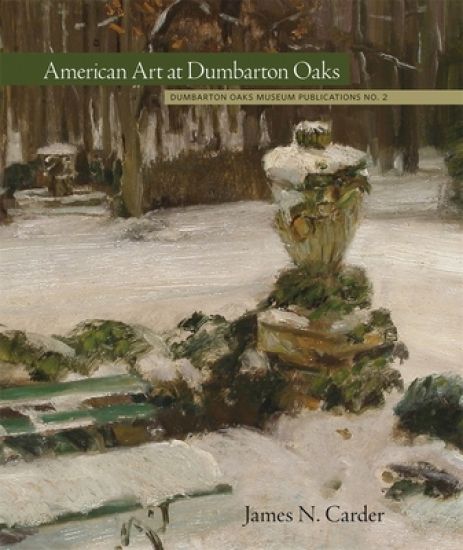
Mildred and Robert Woods Bliss, the founders of Dumbarton Oaks, were not, per se, collectors of American art. Nevertheless, they acquired interesting and, at times, important examples of American paintings, drawings, etchings, and sculptures. Such acquisitions were but a part of an overall collection which comprised ancient Chinese, Greek, Roman, Byzantine, Pre-Columbian, and European old master artworks as well as rare books, literary manuscripts and correspondence, important furnishings, unusual bibelots, and concert-quality instruments. The American artworks that remain at Dumbarton Oaks offer an important insight into the Blisses' remarkable breadth of vision for their collection.This volume catalogues the American art collection at Dumbarton Oaks and is published in conjunction with an exhibition, "American Art at Dumbarton Oaks." An introductory essay describes the formation of this collection by Mildred and Robert Woods Bliss and their parents Anna and William H. Bliss, while the subsequent catalogue entries elaborate on nineteen artworks by James Abbott McNeill Whistler, Elihu Vedder, Walter Gay, Childe Hassam, Albert Edward Sterner, Henry Golden Dearth, and Bernice Cross. Richly illustrated with color plates and comparative illustrations, this catalogue will be an important and enduring reference for scholars, students, and admirers of American art.
Just as couples become more intimate with nature when they become quiet, they will enter into a more intimate relationship through softly luminous lovemaking. In Slow Love: A Polynesian Pillow Book, couples will discover how to prepare the body for lovemaking through massage, and the soul through meditation. Couples will awaken to a unifying level of relationship: a yoga of love. These notes on Polynesian lovemaking have been warmly embraced in Japan, where they sparked the "Polynesian sex" vogue, especially among yoga couples. Inspired by Powell's writings, Hiroyuki Itsuki, Japan's ber author and Buddhist thinker, wrote two volumes on South Seas sensuality. Also, Kunio Kitamura, Head of Japan's Family Planning Association, enthusiastically promotes Powell's thoughts on Polynesian-style passion as a way for men and women to deepen sexual sensitivity, health, and fulfillment. He writes: "Polynesian sex involves taking a long time and allows energy in the form of weak electromagnetic waves, similar to the concept of ki, to flow, building up to create large waves that encompass the entire body and bring enormous pleasure and happiness."
The year 1972 is often hailed as an inflection point in the evolution of women's rights. Congress passed Title IX of the Education Amendments of 1972, a law that outlawed sex-based discrimination in education. Many Americans celebrate Title IX for having ushered in an era of expanded opportunity for women's athletics; yet fifty years after its passage, sex-based inequalities in college athletics remain the reality. Equality Unfulfilled explains why. The book identifies institutional roadblocks – including sex-based segregation, androcentric organizational cultures, and overbearing market incentives – that undermine efforts to achieve systemic change. Drawing on surveys with student-athletes, athletic administrators, college coaches, members of the public, and fans of college sports, it highlights how institutions shape attitudes toward gender equity policy. It offers novel lessons not only for those interested in college sports but for everyone seeking to understand the barriers that any marginalized group faces in their quest for equality.
The year 1972 is often hailed as an inflection point in the evolution of women's rights. Congress passed Title IX of the Education Amendments of 1972, a law that outlawed sex-based discrimination in education. Many Americans celebrate Title IX for having ushered in an era of expanded opportunity for women's athletics; yet fifty years after its passage, sex-based inequalities in college athletics remain the reality. Equality Unfulfilled explains why. The book identifies institutional roadblocks – including sex-based segregation, androcentric organizational cultures, and overbearing market incentives – that undermine efforts to achieve systemic change. Drawing on surveys with student-athletes, athletic administrators, college coaches, members of the public, and fans of college sports, it highlights how institutions shape attitudes toward gender equity policy. It offers novel lessons not only for those interested in college sports but for everyone seeking to understand the barriers that any marginalized group faces in their quest for equality.
This work has been selected by scholars as being culturally important and is part of the knowledge base of civilization as we know it.This work is in the public domain in the United States of America, and possibly other nations. Within the United States, you may freely copy and distribute this work, as no entity (individual or corporate) has a copyright on the body of the work.Scholars believe, and we concur, that this work is important enough to be preserved, reproduced, and made generally available to the public. To ensure a quality reading experience, this work has been proofread and republished using a format that seamlessly blends the original graphical elements with text in an easy-to-read typeface.We appreciate your support of the preservation process, and thank you for being an important part of keeping this knowledge alive and relevant.
This work has been selected by scholars as being culturally important and is part of the knowledge base of civilization as we know it.This work is in the public domain in the United States of America, and possibly other nations. Within the United States, you may freely copy and distribute this work, as no entity (individual or corporate) has a copyright on the body of the work.Scholars believe, and we concur, that this work is important enough to be preserved, reproduced, and made generally available to the public. To ensure a quality reading experience, this work has been proofread and republished using a format that seamlessly blends the original graphical elements with text in an easy-to-read typeface.We appreciate your support of the preservation process, and thank you for being an important part of keeping this knowledge alive and relevant.
"Vital Records of Rhode Island, 1636-1850, Volume 10" is an invaluable resource for genealogists, historians, and anyone interested in the rich history of Rhode Island. Compiled by James N. Arnold, this volume offers a comprehensive collection of birth, marriage, and death records, providing essential data for tracing family lineages and understanding the demographic history of the state. Covering the period from the earliest settlements to the mid-19th century, this meticulously researched work serves as a cornerstone for historical and genealogical research. This volume is an essential addition to any collection focused on New England history and genealogy. This work has been selected by scholars as being culturally important, and is part of the knowledge base of civilization as we know it. This work was reproduced from the original artifact, and remains as true to the original work as possible. Therefore, you will see the original copyright references, library stamps (as most of these works have been housed in our most important libraries around the world), and other notations in the work. This work is in the public domain in the United States of America, and possibly other nations. Within the United States, you may freely copy and distribute this work, as no entity (individual or corporate) has a copyright on the body of the work. As a reproduction of a historical artifact, this work may contain missing or blurred pages, poor pictures, errant marks, etc. Scholars believe, and we concur, that this work is important enough to be preserved, reproduced, and made generally available to the public. We appreciate your support of the preservation process, and thank you for being an important part of keeping this knowledge alive and relevant.
The air is an important but largely unrecognized source of contaminant fate in the environment, including transport of pesticides and contaminants to nontarget areas and exposures for people and wildlife. This book summarizes and places in perspective the potential transport, transformation, and health implications of pesticides and contaminants in air, including the air we breathe. It delves into the hypothesis that the atmosphere is the most significant environmental compartment affecting the overall transport and fate of many classes of environmental contaminants.The authors draw parallels between sampling, analysis, and impact of airborne toxics and particulate matter with the COVID-19 pandemic. Airborne viruses and fine particulate matter, which are of similar size, have remarkable parallels in how they are transmitted and accumulated in the respiratory tract.FEATURES Assesses exposures of people and wildlife to airborne chemicals Includes case study applications, with relevant data summarized for pesticides and contaminants in air Discusses approaches to modeling pesticides’ and contaminants’ dispersion and fate in air Includes an assessment of the physicochemical properties of pesticides and contaminants that influence sampling and atmospheric mobility and fateThe authors are global experts in air contaminant research, and this book is well organized and helpful for people interested in regulatory, health, and other topics related to pesticides and contaminants in air.James N. Seiber is a Professor Emeritus at the University of California, Davis.Thomas M. Cahill is an Associate Professor in the School of Mathematical and Natural Sciences at Arizona State University.
This book of poetic thoughts blended with the simplicity of Haiku Syllables and Heartspur moments of reflection is intended to provide a glimpse of who resides within my soul. Writing poetry has been my sanctuary for many uninterrupted years, a space where words flowed effortlessly, wrapped in lyrical whispers revealing the depths of my inner world. Yet, in that relentless pursuit of creative expression, I had neglected a crucial aspect of my journey: soulful reflection.