Kirjojen hintavertailu. Mukana 11 244 527 kirjaa ja 12 kauppaa.

Kirjahaku

Etsi kirjoja tekijän nimen, kirjan nimen tai ISBN:n perusteella.

1000 tulosta hakusanalla Jane Sebba

Jane Austen's Fiction Manuscripts: Volume V
Kathryn Sutherland presents an edition of the fiction manuscripts of Jane Austen (1775-1817). Scholars have pored over this much-loved novelist for decades, yet there are still more riches to be uncovered by the careful presentation of the texts in this fully annotated new edition. Jane Austen's fiction manuscripts are the first substantial collection of autograph writings to survive for a British novelist. They represent every stage of her writing life, from childhood--aged 11 or 12--to the year of her death. The manuscripts represent a wide variety of physical states: working drafts, fair copies, and handwritten publications for private circulation. Where the juvenile, handwritten notebooks have long appeared to scholars to be finished artefacts, most of the other manuscript writings consist of pre-print or working drafts in various stages of development. There is no evidence to indicate that Austen saw the bulk of these working drafts as anything other than provisional. Hence the stark situation that no manuscripts remain for works which saw publication in her lifetime, the assumption being that these were routinely destroyed once replaced by print forms. There is only one exception: the two cancelled chapters of Persuasion, which represent an alternative ending to the one that made it into print. The manuscript evidence therefore represents a different Jane Austen: different in the range of fiction they contain from the novels we know only from print; and different in what they reveal about the workings of her imagination. Because of the variety of their pre-print states, because of their experimental range, and because of the way they extend the time span of her writing life (far longer than the single decade of the printed novels), these manuscript writings can claim a special place in our understanding of the evolution of the famous fictions. The edition presents full transcriptions of the texts based on a fresh examination of all the extant witnesses in Austen's hand, with facing facsimile images of the manuscript pages, and commentary on revisions, over-writings, erasures, and other features of the manuscripts. Volume V contains the facsimile and facing-page transcription of Sanditon, and the appendices to the edition.
Jane Eyre

Jane Eyre

Charlotte Brontë

Oxford University Press
2019
nidottu
"Gentle reader, may you never feel what I then felt!" Throughout the hardships of her childhood - spent with a severe aunt and abusive cousin, and later at the austere Lowood charity school - Jane Eyre clings to a sense of self-worth, despite of her treatment from those close to her. At the age of eighteen, sick of her narrow existence, she seeks work as a governess. The monotony of Jane's new life at Thornfield Hall is broken up by the arrival of her peculiar and changeful employer, Mr Rochester. Routine at the mansion is further disrupted by mysterious incidents that draw the pair closer together but which, once explained, threaten Jane's happiness and integrity. A flagship of Victorian fiction, Jane Eyre draws the reader in by the vigour of Jane's voice and the novel's forceful depiction of childhood injustice, of the restraints placed upon women, and the complexities of both faith and passion. The emotional charge of Jane's story is as strong today as it was more than 150 years ago, as she seeks dignity and freedom on her own terms. In this new edition, Juliette Atkinson explores the power of narrative voice and looks at the striking physicality of the novel, which is both shocking and romantic.
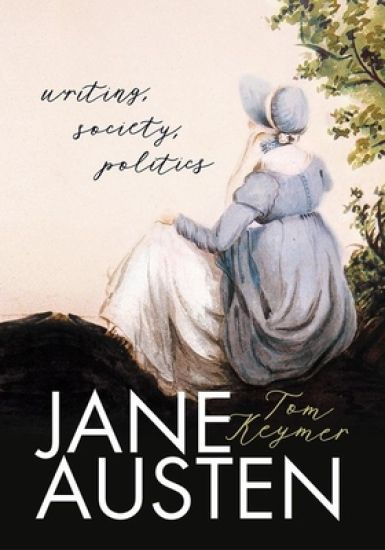
Jane Austen

Jane Austen

Tom Keymer

Oxford University Press
2020
sidottu
It is a truth universally acknowledged, that a single man in possession of a good fortune, must be in want of a wife. So runs one of the most famous opening lines in English literature. Setting the scene in Pride and Prejudice, it deftly introduces the novel's core themes of marriage, money, and social convention, themes that continue to resonate with readers over 200 years later. Jane Austen wrote six of the best-loved novels in the English language, as well as a smaller corpus of unpublished works. Her books pioneered new techniques for representing voices, minds, and hearts in narrative prose, and, despite some accusations of a blinkered domestic and romantic focus, they represent the world of their characters with unsparing clarity. Here, Tom Keymer explores the major themes throughout Austen's novels, setting them in the literary, social, and political backgrounds from which they emerge, and showing how they engage with social tensions in an era dominated by the French Revolution and the Napoleonic Wars. The Jane Austen who emerges is a writer shaped by the literary experiments and socio-political debates of her time, increasingly drawn to a fundamentally conservative vision of social harmony, yet forever complicating this vision through her disruptive ironies and satirical energy.
Jane Austen

Jane Austen

Marilyn Butler

Oxford University Press
2007
nidottu
Definitive, concise, and very interesting... From William Shakespeare to Winston Churchill, the Very Interesting People series provides authoritative bite-sized biographies of Britain's most fascinating historical figures - people whose influence and importance have stood the test of time. Each book in the series is based upon the biographical entry from the world-famous Oxford Dictionary of National Biography. The Very Interesting People series includes the following titles: 1.William Shakespeare by Peter Holland 2. George Eliot by Rosemary Ashton 3. Charles Dickens by Michael Slater 4. Charles Darwin by Adrian Desmond, James Moore, and Janet Browne 5. Isaac Newton by Richard S.Westfall 6. Elizabeth I by Patrick Collinson 7. George III by John Cannon 8. Benjamin Disraeli by Jonathan Parry 9. Christopher Wren by Kerry Downes 10. John Ruskin by Robert Hewison 11. James Joyce by Bruce Stewart 12. John Milton by Gordon Campbell 13. Jane Austen by Marilyn Butler 14. Henry VIII by Eric Ives 15. Queen Victoria by K. D. Reynolds and H. C. G. Matthew 16. Winston Churchill by Paul Addison 17. Oliver Cromwell by John Morrill 18. Thomas Paine by Mark Philp 19. J. M. W. Turner by Luke Herrmann 20. William and Mary by Tony Claydon and W. A. Speck
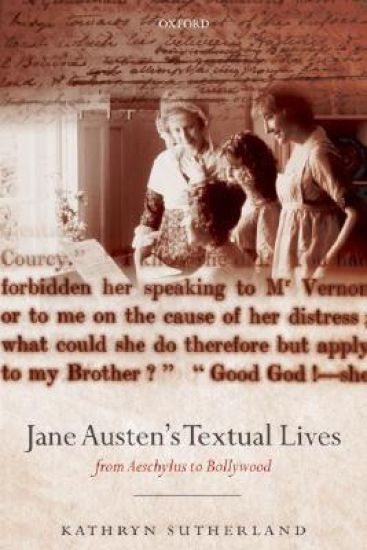
Jane Austen's Textual Lives:

Jane Austen's Textual Lives:

Sutherland

Oxford University Press
2007
nidottu
Through three intertwined histories Jane Austen's Textual Lives. offers a new way of approaching and reading a very familiar author. One is a history of the transmission and transformation of Jane Austen through manuscripts, critical editions, biographies, and adaptations; a second provides a conspectus of the development of English Studies as a discipline in which the original and primary place of textual criticism is recovered; and a third reviews the role of Oxford University Press in shaping a canon of English texts in the twentieth century. Jane Austen can be discovered in all three. Since her rise to celebrity status at the end of the nineteenth century, Jane Austen has occupied a position within English-speaking culture that is both popular and canonical, accessible and complexly inaccessible, fixed and certain yet wonderfully amenable to shifts of sensibility and cultural assumptions. The implied contradiction was represented in the early twentieth century by, on the one hand, the Austen family's continued management, censorship, and sentimental marketing of the sweet lady novelist of the Hampshire countryside; and on the other, by R. W. Chapman's 1923 Clarendon Press edition of the Novels of Jane Austen, which subjected her texts to the kind of scholarly probing reserved till then for classical Greek and Roman authors obscured by centuries of attrition. It was to be almost fifty years before the Clarendon Press considered it necessary to recalibrate the reputation of another popular English novelist in this way. Beginning with specific encounters with three kinds of textual work and the problems, clues, or challenges to interpretation they continue to present, Kathryn Sutherland goes on to consider the absence of a satisfactory critical theory of biography that can help us address the partial life, and ends with a discussion of the screen adaptations through which the texts continue to live on. Throughout, Jane Austen's textual identities provide a means to explore the wider issue of what text is and to argue the importance of understanding textual space as itself a powerful agent established only by recourse to further interpretations and fictions.
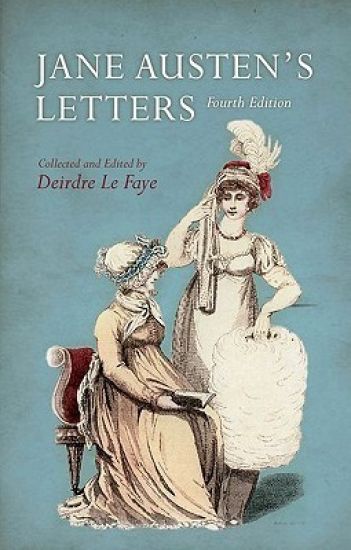
Jane Austen's Letters

Jane Austen's Letters

Oxford University Press
2011
sidottu
Jane Austen's letters afford a unique insight into the daily life of the novelist: intimate and gossipy, observant and informative, they bring alive her family and friends, her surroundings and contemporary events with a freshness unparalleled in biography. Above all we recognize the unmistakable voice of the author of Pride and Prejudice, witty and amusing as she describes the social life of town and country, thoughtful and constructive when writing about the business of literary composition. R. W. Chapman's ground-breaking edition of the collected Letters first appeared in 1932, and a second edition followed twenty years later. A third edition, edited by Deidre Le Faye in 1997, added new material, re-ordered the letters into their correct chronological sequence, and provided discreet and full annotation to each letter, including its provenance, and information on the watermarks, postmarks, and other physical details of the manuscripts. This fourth edition incorporates the findings of new scholarship to enrich our understanding of Austen and give us the fullest and most revealing view yet of her life and family. There is a new preface, the biographical and topographical indexes have been amended and updated, a new subject index has been created, and the contents of the notes added to the general index.
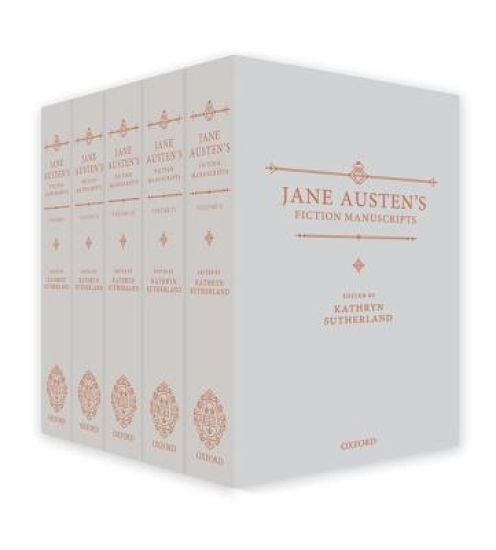
Jane Austen's Fiction Manuscripts
Kathryn Sutherland presents an edition of the fiction manuscripts of Jane Austen (1775-1817) in this five-volume set. Scholars have pored over this much-loved novelist for decades, yet there are still more riches to be uncovered by the careful presentation of the texts in this fully annotated new edition. Jane Austen's fiction manuscripts are the first substantial collection of autograph writings to survive for a British novelist. They represent every stage of her writing life, from childhood--aged 11 or 12--to the year of her death. The manuscripts represent a wide variety of physical states: working drafts, fair copies, and handwritten publications for private circulation. Where the juvenile, handwritten notebooks have long appeared to scholars to be finished artefacts, most of the other manuscript writings consist of pre-print or working drafts in various stages of development. There is no evidence to indicate that Austen saw the bulk of these working drafts as anything other than provisional. Hence the stark situation that no manuscripts remain for works which saw publication in her lifetime, the assumption being that these were routinely destroyed once replaced by print forms. There is only one exception: the two cancelled chapters of Persuasion, which represent an alternative ending to the one that made it into print. The manuscript evidence therefore represents a different Jane Austen: different in the range of fiction they contain from the novels we know only from print; and different in what they reveal about the workings of her imagination. Because of the variety of their pre-print states, because of their experimental range, and because of the way they extend the time span of her writing life (far longer than the single decade of the printed novels), these manuscript writings can claim a special place in our understanding of the evolution of the famous fictions. The edition presents full transcriptions of the texts based on a fresh examination of all the extant witnesses in Austen's hand, with facing facsimile images of the manuscript pages, and commentary on revisions, over-writings, erasures, and other features of the manuscripts.
Jane Austen's Fiction Manuscripts: Volume I
Kathryn Sutherland presents an edition of the fiction manuscripts of Jane Austen (1775-1817). Scholars have pored over this much-loved novelist for decades, yet there are still more riches to be uncovered by the careful presentation of the texts in this fully annotated new edition. Jane Austen's fiction manuscripts are the first substantial collection of autograph writings to survive for a British novelist. They represent every stage of her writing life, from childhood--aged 11 or 12--to the year of her death. The manuscripts represent a wide variety of physical states: working drafts, fair copies, and handwritten publications for private circulation. Where the juvenile, handwritten notebooks have long appeared to scholars to be finished artefacts, most of the other manuscript writings consist of pre-print or working drafts in various stages of development. There is no evidence to indicate that Austen saw the bulk of these working drafts as anything other than provisional. Hence the stark situation that no manuscripts remain for works which saw publication in her lifetime, the assumption being that these were routinely destroyed once replaced by print forms. There is only one exception: the two cancelled chapters of Persuasion, which represent an alternative ending to the one that made it into print. The manuscript evidence therefore represents a different Jane Austen: different in the range of fiction they contain from the novels we know only from print; and different in what they reveal about the workings of her imagination. Because of the variety of their pre-print states, because of their experimental range, and because of the way they extend the time span of her writing life (far longer than the single decade of the printed novels), these manuscript writings can claim a special place in our understanding of the evolution of the famous fictions. The edition presents full transcriptions of the texts based on a fresh examination of all the extant witnesses in Austen's hand, with facing facsimile images of the manuscript pages, and commentary on revisions, over-writings, erasures, and other features of the manuscripts. Volume I contains the Introduction; details about the Editorial Procedure; essays on Evidence from Manuscripts as Objects, Composition and Revision, and Features of the Manuscript Hand; and the facsimile and facing-page transcription of Volume the First.
Jane Austen's Fiction Manuscripts: Volume II
Kathryn Sutherland presents an edition of the fiction manuscripts of Jane Austen (1775-1817). Scholars have pored over this much-loved novelist for decades, yet there are still more riches to be uncovered by the careful presentation of the texts in this fully annotated new edition. Jane Austen's fiction manuscripts are the first substantial collection of autograph writings to survive for a British novelist. They represent every stage of her writing life, from childhood--aged 11 or 12--to the year of her death. The manuscripts represent a wide variety of physical states: working drafts, fair copies, and handwritten publications for private circulation. Where the juvenile, handwritten notebooks have long appeared to scholars to be finished artefacts, most of the other manuscript writings consist of pre-print or working drafts in various stages of development. There is no evidence to indicate that Austen saw the bulk of these working drafts as anything other than provisional. Hence the stark situation that no manuscripts remain for works which saw publication in her lifetime, the assumption being that these were routinely destroyed once replaced by print forms. There is only one exception: the two cancelled chapters of Persuasion, which represent an alternative ending to the one that made it into print. The manuscript evidence therefore represents a different Jane Austen: different in the range of fiction they contain from the novels we know only from print; and different in what they reveal about the workings of her imagination. Because of the variety of their pre-print states, because of their experimental range, and because of the way they extend the time span of her writing life (far longer than the single decade of the printed novels), these manuscript writings can claim a special place in our understanding of the evolution of the famous fictions. The edition presents full transcriptions of the texts based on a fresh examination of all the extant witnesses in Austen's hand, with facing facsimile images of the manuscript pages, and commentary on revisions, over-writings, erasures, and other features of the manuscripts. Volume II contains the facsimile and facing-page transcription of Volume the Second.
Jane Austen's Fiction Manuscripts: Volume III
Kathryn Sutherland presents an edition of the fiction manuscripts of Jane Austen (1775-1817). Scholars have pored over this much-loved novelist for decades, yet there are still more riches to be uncovered by the careful presentation of the texts in this fully annotated new edition. Jane Austen's fiction manuscripts are the first substantial collection of autograph writings to survive for a British novelist. They represent every stage of her writing life, from childhood--aged 11 or 12--to the year of her death. The manuscripts represent a wide variety of physical states: working drafts, fair copies, and handwritten publications for private circulation. Where the juvenile, handwritten notebooks have long appeared to scholars to be finished artefacts, most of the other manuscript writings consist of pre-print or working drafts in various stages of development. There is no evidence to indicate that Austen saw the bulk of these working drafts as anything other than provisional. Hence the stark situation that no manuscripts remain for works which saw publication in her lifetime, the assumption being that these were routinely destroyed once replaced by print forms. There is only one exception: the two cancelled chapters of Persuasion, which represent an alternative ending to the one that made it into print. The manuscript evidence therefore represents a different Jane Austen: different in the range of fiction they contain from the novels we know only from print; and different in what they reveal about the workings of her imagination. Because of the variety of their pre-print states, because of their experimental range, and because of the way they extend the time span of her writing life (far longer than the single decade of the printed novels), these manuscript writings can claim a special place in our understanding of the evolution of the famous fictions. The edition presents full transcriptions of the texts based on a fresh examination of all the extant witnesses in Austen's hand, with facing facsimile images of the manuscript pages, and commentary on revisions, over-writings, erasures, and other features of the manuscripts. Volume III contains the facsimiles and facing-page transcriptions of Volume the Third and Lady Susan.
Jane Austen's Fiction Manuscripts: Volume IV
Kathryn Sutherland presents an edition of the fiction manuscripts of Jane Austen (1775-1817). Scholars have pored over this much-loved novelist for decades, yet there are still more riches to be uncovered by the careful presentation of the texts in this fully annotated new edition. Jane Austen's fiction manuscripts are the first substantial collection of autograph writings to survive for a British novelist. They represent every stage of her writing life, from childhood--aged 11 or 12--to the year of her death. The manuscripts represent a wide variety of physical states: working drafts, fair copies, and handwritten publications for private circulation. Where the juvenile, handwritten notebooks have long appeared to scholars to be finished artefacts, most of the other manuscript writings consist of pre-print or working drafts in various stages of development. There is no evidence to indicate that Austen saw the bulk of these working drafts as anything other than provisional. Hence the stark situation that no manuscripts remain for works which saw publication in her lifetime, the assumption being that these were routinely destroyed once replaced by print forms. There is only one exception: the two cancelled chapters of Persuasion, which represent an alternative ending to the one that made it into print. The manuscript evidence therefore represents a different Jane Austen: different in the range of fiction they contain from the novels we know only from print; and different in what they reveal about the workings of her imagination. Because of the variety of their pre-print states, because of their experimental range, and because of the way they extend the time span of her writing life (far longer than the single decade of the printed novels), these manuscript writings can claim a special place in our understanding of the evolution of the famous fictions. The edition presents full transcriptions of the texts based on a fresh examination of all the extant witnesses in Austen's hand, with facing facsimile images of the manuscript pages, and commentary on revisions, over-writings, erasures, and other features of the manuscripts. Volume IV contains the facsimiles and facing-page transcriptions of The Watsons, Persuasion, Susan, Opinions of Mansfield Park and Opinions of Emma, Plan of a Novel, and Profits of my Novels.
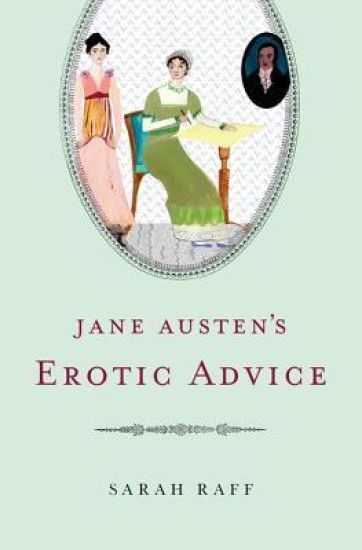
Jane Austen's Erotic Advice

Jane Austen's Erotic Advice

Sarah Raff

Oxford University Press Inc
2014
sidottu
Raff sets her study in the early nineteenth century world, depicting the cultural debates and literary fandom that provided Austen a fertile playing field. She traces Austen's increasingly libidinal narrative presence (from early experiments in the narrator-reader relationship, to the seductive appeal of Mr. Darcy and Elizabeth Bennet in Pride and Prejudice, and on to the outright authorial titillation of Emma, Persuasion, and Northanger Abbey), while simultaneously offering analysis of her biography that connects prose and life. She targets Austen's experience in 1814 as romantic advisor to her niece Fanny Knight as pivotal to her shift to teacher-cum-paramour. The revelation of Austen's thoughts about writing and love-making and of the techniques she employed to seduce readers, display Austen's command over not just her famously effervescent prose, but also her notorious fan base. Raff's original and audacious argument is combined with a lively, conspiratorial style that will delight many readers, especially Jane Austen mavens, the bewitched Janeites, who will be gratified to find out that Austen doesn't just seem to be speaking to them-she was, in fact, consciously courting their affection all along.
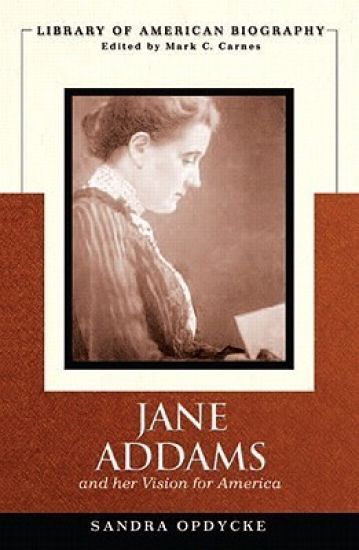
Jane Addams and Her Vision of America
Jane Addams and Her Vision of America brings Addams' life and work alive in a way that no account has before. The book is a presentation of Jane Addams' story in clear, non-technical language, focusing primarily on her philosophy and achievements as well as their significance in her own time and ours. Paperback, brief and inexpensive, each of the titles in the Library of American Biography series focuses on a figure whose actions and ideas significantly influenced the course of American history and national life. In addition, each biography relates the life of its subject to the broader themes and developments of the times.
Jane Austen's Cults and Cultures

Jane Austen's Cults and Cultures

Claudia L. Johnson

University of Chicago Press
2014
nidottu
In Jane Austen's Cults and Cultures, Claudia L. Johnson shows how Jane Austen became "Jane Austen," a figure intensely-sometimes even wildly-venerated, and often for markedly different reasons. Johnson begins by exploring the most important monuments and portraits of Austen, then passes through the four critical phases of Austen's reception - the Victorian era, the First and Second World Wars, and the establishment of the Austen House and Museum in 1949 - and ponders what the adoration of Austen has meant to readers over the past two centuries. By respecting the intelligence of past commentary about Austen, Johnson shows, we are able to revisit her work and unearth fresh insights and new critical possibilities.
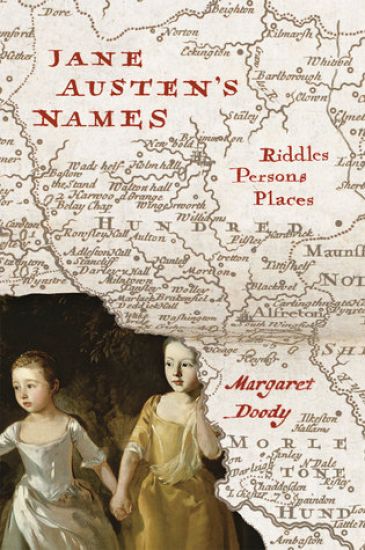
Jane Austen's Names

Jane Austen's Names

Margaret Doody

University of Chicago Press
2015
sidottu
In Jane Austen's works, a name is never just a name. In fact, the names Austen gives her characters and places are as rich in subtle meaning as her prose itself. Wiltshire, for example, the home county of Catherine Morland in Northanger Abbey, is a clue that this heroine is not as stupid as she seems: according to legend, cunning Wiltshire residents caught hiding contraband in a pond capitalized on a reputation for ignorance by claiming they were digging up a "big cheese" - the moon's reflection on the water's surface. It worked. In Jane Austen's Names, Margaret Doody offers a fascinating and comprehensive study of all the names of people and places - real and imaginary - in Austen's fiction. Austen's creative choice of names reveals not only her virtuosic talent for riddles and puns. Her names also pick up deep stories from English history, especially the various civil wars, and the blood-tinged differences that played out in the reign of Henry VIII, a period to which she often returns. Considering the major novels alongside unfinished works and juvenilia, Doody shows how Austen's names signal class tensions as well as regional, ethnic, and religious differences. We gain a new understanding of Austen's technique of creative anachronism, which plays with and against her skillfully deployed realism - in her books, the conflicts of the past swirl into the tensions of the present, transporting readers beyond the Regency. Full of insight and surprises for even the most devoted Janeite, Jane Austen's Names will revolutionize how we read Austen's fiction.