Kirjojen hintavertailu. Mukana 11 717 486 kirjaa ja 12 kauppaa.

Kirjahaku

Etsi kirjoja tekijän nimen, kirjan nimen tai ISBN:n perusteella.

1000 tulosta hakusanalla Jean Kerr

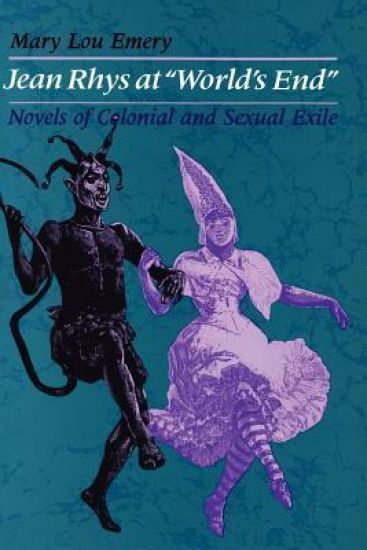
Jean Rhys at "World's End"

Jean Rhys at "World's End"

Mary Lou Emery

University of Texas Press
2011
nidottu
The Caribbean Islands have long been an uneasy meeting place among indigenous peoples, white European colonists, and black slave populations. Tense oppositions in Caribbean culture-colonial vs. native, white vs. black, male conqueror vs. female subject-supply powerful themes and spark complex narrative experiments in the fiction of Dominica-born novelist Jean Rhys. In this pathfinding study, Mary Lou Emery focuses on Rhys's handling of these oppositions, using a Caribbean cultural perspective to replace the mainly European aesthetic, moral, and psychological standards that have served to misread and sometimes devalue Rhys's writing.Emery considers all five Rhys novels, beginning with Wide Sargasso Sea as the most explicitly Caribbean in its setting, in its participation in the culminating decades of a West Indian literary naissance, and most importantly, in its subversive transformation of European concepts of character. From a sociocultural perspective, she argues persuasively that the earlier novels-Voyage in the Dark, Quartet, After Leaving Mr. Mackenzie, and Good Morning, Midnight-should be read as emergent Caribbean fiction, written in tense dialogue with European modernism. Building on this thesis, she reveals how the apparent passivity, masochism, or silence of Rhys's female protagonists results from their doubly marginalized status as women and as subject peoples. Also, she explores how Rhys's women seek out alternative identities in dreamed of, magically realized, or chosen communities.These discoveries offer important insights on literary modernism, Caribbean fiction, and the formation of female identity.
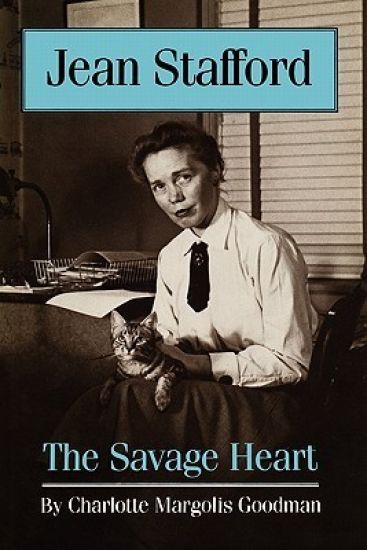
Jean Stafford

Jean Stafford

Charlotte Margolis Goodman

University of Texas Press
1990
nidottu
One of America's best short story writers and author of three fine novels, Boston Adventure (1944), The Mountain Lion (1947), and The Catherine Wheel (1952), Jean Stafford has been rediscovered by another generation of readers and scholars. Although her novels and her Pulitzer Prize–winning short stories were widely read in the 1940s and 1950s, her fiction has received less critical attention than that of other distinguished contemporary American women writers such as Carson McCullers, Flannery O'Connor, and Eudora Welty. In this literary biography, Charlotte M. Goodman traces the life of the brilliant yet troubled Jean Stafford and reassesses her importance. Drawing on a wealth of original material, Goodman describes the vital connections between Stafford's life and her fiction. She discusses Stafford's difficult family relationships, her tempestuous first marriage to the poet Robert Lowell, her unresolved conflicts about gender roles, her alcoholism and bouts with depression-and her amazing ability to transform the chaotic details of her life into elegant works of fiction. These wonderfully crafted works offer insightful portraits of alienated and isolated characters, most of whom exemplify not only human estrangement in the modern world, but also the special difficulties of girls and women who refuse to play traditional roles. Goodman locates Jean Stafford within the literary world of the 1940s and 1950s. In her own right, and through her marriages to Robert Lowell, Life magazine editor Oliver Jensen, and journalist A. J. Liebling, Stafford associated with many of the major literary figures of her day, including the Southern Fugitives, the New York intellectual coterie, and writers for the New Yorker, to which she regularly contributed short stories. Goodman also describes Stafford's sustaining friendships with other women writers, such as Evelyn Scott and Caroline Gordon, and with her New Yorker editor, Katharine S. White. This highly readable biography will appeal to a wide audience interested in twentieth-century literature and the writing of women's lives.
Jean-Claude Grumberg

Jean-Claude Grumberg

Jean-Claude Grumberg

University of Texas Press
2014
nidottu
Winner of seven Molières, the Pulitzer Prize of France, Jean-Claude Grumberg is one of France’s leading dramatists and a distinguished voice of modern European Jewry after the Shoah. His success in portraying contemporary Parisian Jews on the stage represents a new development in European theater and a new aesthetic expression of European Jewish experience and sensibility of the Holocaust and its aftermath, a perspective quite different from either the American or the Israeli one. Grumberg’s Jews are French to their fingertips, yet they have been made more consciously Jewish by the war and the difficulties of reintegrating into a society in which too many neighbors denounced them or ignored their pleas to save their children. Affirming the new status of Jewish culture, Grumberg’s plays insist on the recognition of Jewish identity and uniqueness within the majority societies of Europe.This volume offers the first English translation of three of Grumberg’s prize-winning plays: The Workplace (L’Atelier, 1979), On the Way to the Promised Land (Vers toi Terre promise, 2006) and Mama’s Coming Back, Poor Orphan (Maman revient, pauvre orphelin, 1994). Presented in the order of the history they record and steeped in Grumberg’s personal experience and insights into contemporary Parisian life, these plays serve as documentary witnesses that begin with the immediate postwar reality and continue up to the end of the twentieth century. Seth Wolitz provides notes on the plays’ themes, structures, characters, and settings, along with an introduction that discusses Grumberg’s place within the emergence of French-Jewish drama and a translation of an interview with the playwright himself.
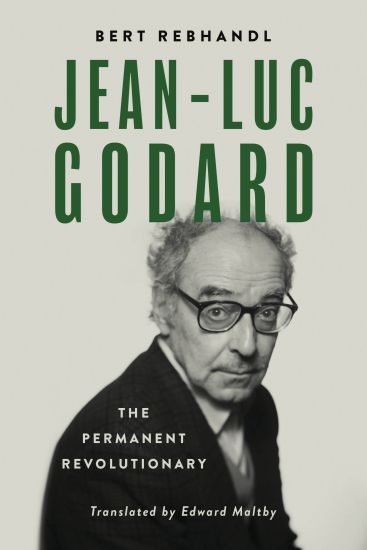
Jean-Luc Godard

Jean-Luc Godard

Bert Rebhandl

UNIVERSITY OF WISCONSIN PRESS
2023
sidottu
In this biography, now translated into English for the first time, Bert Rebhandl provides a balanced evaluation of the work of one of the most original and influential film directors of all time: Jean-Luc Godard (1930–2022). In this sympathetic yet critical overview, he argues that Godard's work captured the revolutionary spirit of Paris in the late 1960s as no other filmmaker has dared, and in fact reinvented the medium. Rebhandl skillfully weaves together biographical details; information about the cultural, intellectual, and cinematic milieu over the decades; and descriptions of Godard’s most significant films to support his assertion that the director was a permanent revolutionary—always seeking new ways to create, understand, and comment on film within a larger context. He views Godard as an artist consistently true to himself while never ceasing to change and evolve, often in unexpected, radical, and controversial ways. Rebhandl is known as a journalist with deep insights and lucid prose. Despite the wealth of material to analyze, he neither gets lost in the details nor offers a superficial gloss, even while directly tackling such topics as the long-standing charges of antisemitism against Godard and his oeuvre. This volume will be welcome to both casual fans and dedicated devotees.