Kirjojen hintavertailu. Mukana 11 699 587 kirjaa ja 12 kauppaa.

Kirjahaku

Etsi kirjoja tekijän nimen, kirjan nimen tai ISBN:n perusteella.

510 tulosta hakusanalla Jed Rowen

The Mobile Marketing Revolution: How Your Brand Can Have a One-to-One Conversation with Everyone
One-to-One is transforming our world—here’ s how you can join the RevolutionWhat would your organization do with a technology that lets you crowdsource instantly and effortlessly and reach people who WANT to hear from you wherever they happen to be? Such a tool already exists and it’s in billions of mobile devices worldwide: SMS, or text messaging.However, there’s more to messaging than simply broadcasting texts. To succeed with mobile messaging in the long term—without disrupting your business or distracting your customers—you need to understand the bigger movement that’s underway.The Mobile Marketing Revolution gives you the framework to listen to, empower, inform, engage, and enlist the very people on which your success depends. From fundraising to polling to selling products and services, this book shows how to use mobile messaging to turn even the briefest initial interaction into a permanent engaged relationship. Better still, you can achieve all this without expanding overhead or building campaigns from scratch, but instead by integrating mobile into your organization’s existing processes and practices.
Bodies

Bodies

Jed Mercurio

Vintage
2003
pokkari
Inside every hospital there exists a world no outsider has been allowed to see, not even those who arrive there to begin careers in medicine. Into this plunges an idealistic young doctor who is about to lose all innocence in a world that long ago lost its sense of right or wrong.
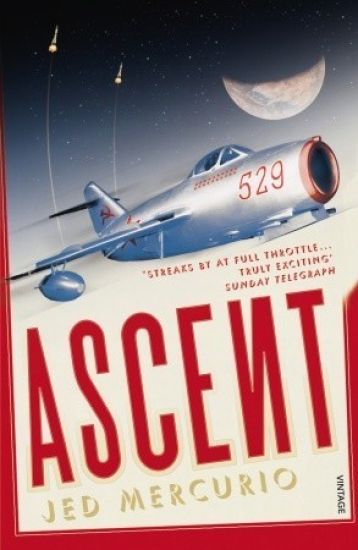
Ascent

Ascent

Jed Mercurio

Vintage
2008
pokkari
Yefgenii Yeremin is a flyer and he is a phantom. In the Korean War, he is the legendary ace dubbed 'Ivan the Terrible', shooting down more American jets than any other pilot in history. But the Soviet Union's involvement in Korea must be kept secret, so Yefgenii is exiled to a remote Arctic base, his name unknown, his victories uncelebrated.
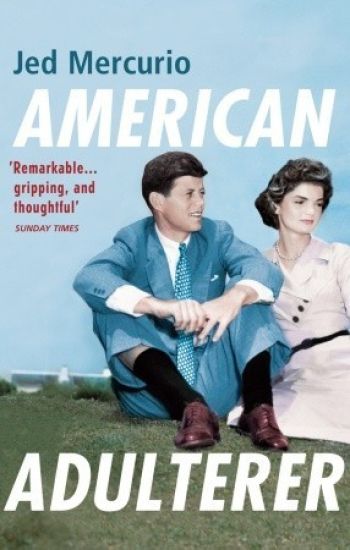
American Adulterer

American Adulterer

Jed Mercurio

Vintage
2010
pokkari
John Fitzgerald Kennedy, the 35th President of the United States was a virtuous man ensnared by an uncontrollable vice. This book takes inspiration from the tantalising details surrounding President Kennedy's sex life and medical secrets to weave a provocatively intricate portrait of the man's affairs, illness, courage and idealism.
Genre and Extravagance in the Novel

Genre and Extravagance in the Novel

Jed Rasula

Oxford University Press
2021
sidottu
This book addresses an anomaly in the novel as genre: the generic promise to readers--that "reading a novel" is a familiar and repeatable experience--is challenged by the extravagant exceptions to this rule. Furthermore, these exceptions (such as Moby-Dick, Ulysses, or To the Lighthouse) are sui generis, hybrid concoctions that cannot be said to be typical novels. The novel, then, as literary form, succeeds by extravagantly disregarding or even disavowing the protocols of its own genre. Examining a number of famous examples from Don Quixote to Nostromo, this book offers an anatomy of exceptions that illustrate the structural role of their exceptionality for the prestige of the novel as literary form.
Acrobatic Modernism from the Avant-Garde to Prehistory
This is a book about artistic modernism contending with the historical transfigurations of modernity. As a conscientious engagement with modernity's restructuring of the lifeworld, the modernist avant-garde raised the stakes of this engagement to programmatic explicitness. But even beyond the vanguard, the global phenomenon of jazz combined somatic assault with sensory tutelage. Jazz, like the new technologies of modernity, re-calibrated sensory ratios. The criterion of the new as self-making also extended to names: pseudonyms and heteronyms. The protocols of modernism solicited a pragmatic arousal of bodily sensation as artistic resource, validating an acrobatic sensibility ranging from slapstick and laughter to the pathos of bereavement. Expressivity trumped representation. The artwork was a diagram of perception, not a mimetic rendering. For artists, the historical pressures of altered perception provoked new models, and Ezra Pound's slogan 'Make It New' became the generic rallying cry of renovation. The paradigmatic stance of the avant-garde was established by Futurism, but the discovery of prehistoric art added another provocation to artists. Paleolithic caves validated the spirit of all-over composition, unframed and dynamic. Geometric abstraction, Constructivism and Purism, and Surrealism were all in quest of a new mythology. Making it new yielded a new pathos in the sensation of radical discrepancy between futurist striving and remotest antiquity. The Paleolithic cave and the USSR emitted comparable siren calls on behalf of the remote past and the desired future. As such, the present was suffused with the pathos of being neither, but subject to both.
The Christian Origins of Tolerance

The Christian Origins of Tolerance

Jed W. Atkins

Oxford University Press
2024
sidottu
Tolerance is usually regarded as a quintessential liberal value. This position is supported by a standard liberal history that views religious toleration as emerging from the post-Reformation wars of religion as the solution to the problem of religious violence. Requiring the separation of church from state, tolerance was secured by giving the state the sole authority to punish religious violence and to protect the individual freedoms of conscience and religion. Commitment to tolerance is independent of judgements about justice and the common good. This standard liberal history exerts a powerful hold on the modern imagination: it undergirds several important recent accounts of liberal tolerance and virtually every major study of tolerance in the ancient world. Nevertheless, this familiar narrative distorts our understanding of tolerance's premodern origins and impoverishes present-day debates when many members of Christianity and Islam, the two largest global religions, have reservations about liberal tolerance. Setting aside the standard liberal history, The Christian Origins of Tolerance recovers tolerance's beginnings in a forgotten tradition forged by North African Christian thinkers of the first five centuries CE in critical conversation with one another, St. Paul, the rival tradition of Stoicism, and the political and legal thought of the wider Roman world. This North African Christian tradition conceives of tolerance as patience within plurality. This tradition does not require the separation of religion and the secular state as a prerequisite for tolerance and embeds individual rights and the freedoms of conscience and religion within a wider theoretical framework that derives accounts of political judgement and patience from theological reflection on God's roles as a patient father and just judge. By recovering this forgotten tradition, we can better understand and assess the choices made by leading theorists of liberal tolerance, and as a result, think better about how to achieve peaceful coexistence within and beyond liberal democracies in a world in which many Christians and Muslims are sceptical of liberalism.
Unseasonable Youth

Unseasonable Youth

Jed Esty

Oxford University Press Inc
2013
nidottu
Unseasonable Youth examines a range of modernist-era fictions that cast doubt on the ideology of progress through the figure of stunted or endless adolescence. Novels of youth by Oscar Wilde, Olive Schreiner, Rudyard Kipling, Joseph Conrad, H.G. Wells, James Joyce, Virginia Woolf, Jean Rhys, and Elizabeth Bowen disrupt the inherited conventions of the bildungsroman in order to criticize bourgeois values and to reinvent the biographical plot, but also to explore the contradictions inherent in mainstream developmental discourses of self, nation, and empire. The intertwined tropes of frozen youth and uneven development, as motifs of failed progress, play a crucial role in the emergence of dilatory modernist style and in the reimagination of colonial space at the fin-de-siècle. The genre-bending logic of uneven development - never wholly absent from the coming-of-age novel -- takes on a new and more intense form in modernism as it fixes its broken allegory to the problem of colonial development. In novels of unseasonable youth, the nineteenth-century idea of world progress comes up against stubborn signs of underdevelopment and uneven development, just at the same moment that post-Darwinian racial sciences and quasi-Freudian sexological discourses lend greater influence to the idea that certain forms of human difference cannot be mitigated by civilizing or developmental forces. In this historical context, the temporal meaning and social vocation of the bildungsroman undergo a comprehensive shift, as the history of the novel indexes the gradual displacement of historical-progressive thinking by anthropological-structural thinking in the Age of Empire.
Unseasonable Youth

Unseasonable Youth

Jed Esty

Oxford University Press Inc
2011
sidottu
Unseasonable Youth examines a range of modernist-era fictions that cast doubt on the ideology of progress through the figure of stunted or endless adolescence. Novels of youth by Oscar Wilde, Olive Schreiner, Rudyard Kipling, Joseph Conrad, H.G. Wells, James Joyce, Virginia Woolf, Jean Rhys, and Elizabeth Bowen disrupt the inherited conventions of the bildungsroman in order to criticize bourgeois values and to reinvent the biographical plot, but also to explore the contradictions inherent in mainstream developmental discourses of self, nation, and empire. The intertwined tropes of frozen youth and uneven development, as motifs of failed progress, play a crucial role in the emergence of dilatory modernist style and in the reimagination of colonial space at the fin-de-siècle. The genre-bending logic of uneven development - never wholly absent from the coming-of-age novel -- takes on a new and more intense form in modernism as it fixes its broken allegory to the problem of colonial development. In novels of unseasonable youth, the nineteenth-century idea of world progress comes up against stubborn signs of underdevelopment and uneven development, just at the same moment that post-Darwinian racial sciences and quasi-Freudian sexological discourses lend greater influence to the idea that certain forms of human difference cannot be mitigated by civilizing or developmental forces. In this historical context, the temporal meaning and social vocation of the bildungsroman undergo a comprehensive shift, as the history of the novel indexes the gradual displacement of historical-progressive thinking by anthropological-structural thinking in the Age of Empire.
The Rise of the Wave Theory of Light

The Rise of the Wave Theory of Light

Jed Z. Buchwald

University of Chicago Press
1989
sidottu
"No one interested in the history of optics, the history of eighteenth- and nineteenth-century physics, or the general phenomenon of theory change in science can afford to ignore Jed Buchwald's well-structured, highly detailed, and scrupulously researched book. . . . Buchwald's analysis will surely constitute the essential starting point for further work on this important and hitherto relatively neglected episode of theory change."—John Worrall, Isis
The Rise of the Wave Theory of Light

The Rise of the Wave Theory of Light

Jed Z. Buchwald

University of Chicago Press
1989
nidottu
"No one interested in the history of optics, the history of eighteenth- and nineteenth-century physics, or the general phenomenon of theory change in science can afford to ignore Jed Buchwald's well-structured, highly detailed, and scrupulously researched book. . . . Buchwald's analysis will surely constitute the essential starting point for further work on this important and hitherto relatively neglected episode of theory change."—John Worrall, Isis
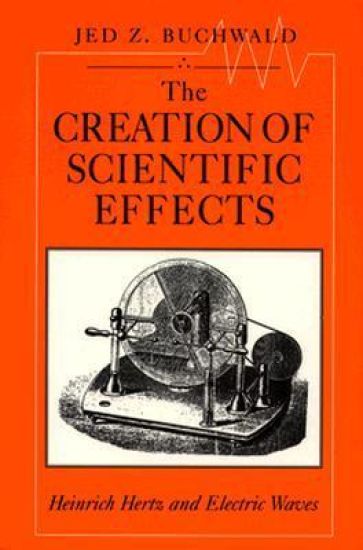
The Creation of Scientific Effects

The Creation of Scientific Effects

Jed Z. Buchwald

University of Chicago Press
1994
sidottu
This volume is an attempt to reconstitute the tacit knowledge - the shared, unwritten assumptions, values, and understandings - that shapes the work of science. Jed Z. Buchwald uses as his focus the social and intellectual world of 19th-century German physics. Drawing on the lab notes, published papers and unpublished manuscripts of Heinrich Hertz, Buchwald recreates Hertz's 1887 invention of a device that produced electromagnetic waves in wires. The invention itself was serendipitous and the device was quickly transformed, but Hertz's early experiments led to major innovations in electrodynamics. Buchwald explores the difficulty Hertz had in reconciling the theories of other physicists, including Hermann von Helmholtz and James Clerk Maxwell, and he considers the complex and often problematic connections between theory and experiment. In this first detailed scientific biography of Hertz and his scientific community, Buchwald demonstrates that tacit knowledge can be recovered so that we can begin to identify the unspoken rules that govern scientific practice.
The Creation of Scientific Effects

The Creation of Scientific Effects

Jed Z. Buchwald

University of Chicago Press
1994
nidottu
This volume is an attempt to reconstitute the tacit knowledge - the shared, unwritten assumptions, values and understandings - that shapes the work of science. Jed Z. Buchwald uses as his focus the social and intellectual world of 19th-century German physics. Drawing on the lab notes, published papers and unpublished manuscripts of Heinrich Hertz, Buchwald recreates Hertz's 1887 invention of a device that produced electromagnetic waves in wires. The invention itself was serendipitous and the device was quickly transformed, but Hertz's early experiments led to major innovations in electrodynamics. Buchwald explores the difficulty Hertz had in reconciling the theories of other physicists, including Hermann von Helmholtz and James Clerk Maxwell, and he considers the complex and often problematic connections between theory and experiment. In this first detailed scientific biography of Hertz and his scientific community, Buchwald demonstrates that tacit knowledge can be recovered so that we can begin to identify the unspoken rules that govern scientific practice.
Look at me

Look at me

Jed Fielding

University of Chicago Press
2009
sidottu
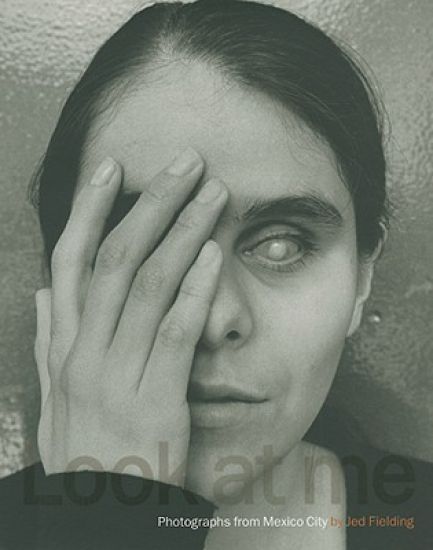
Sight is central to the medium of photography. But what happens when the subjects of photographic portraits cannot look back at the photographer or even see their own image? An in-depth pictorial study of blind schoolchildren in Mexico, "Look At Me" draws attention to (and distinctions between) the activity of sight and the consciousness of form. Combining aspects of his earlier, acclaimed street work with an innovative approach to portraiture, Chicago-based photographer Jed Fielding has concentrated closely on these children's features and gestures, probing the enigmatic boundaries between surface and interior, innocence and knowing, beauty and grotesque. Design, composition, and the play of light and shadow are central elements in these photographs, but the images are much more than formal experiments; they confront disability in a way that affirms life. Fielding's sightless subjects project a vitality that seems to extend beyond the limits of self-consciousness. In collaborative, joyful participation with the children, he has made pictures that reveal essential gestures of absorption and the basic expressions of our creatureliness. Fielding's work achieves what only great art, and particularly great portraiture can: it launches and then complicates a process of identification across the barriers that separate us from each other. "Look At Me" contains more than sixty arresting images from which we often want to look away, but into which we are nevertheless drawn by their deep humanity and palpable tenderness. This is a monograph of uncommon significance by an important American photographer.
Out of Sight, Into Mind

Out of Sight, Into Mind

Jed Forman

Columbia University Press
2024
sidottu
Most Indian and Tibetan religious traditions have some theory of yogic perception—a profound type of sentience afforded by meditative practice. And most consider it the bedrock of their religious authority, the primary means by which one gains spiritual insight. Disagreements about what yogis perceive abound, however, spanning many philosophical topics, including epistemology, ontology, phenomenology, and language.Out of Sight, Into Mind is a groundbreaking exploration of debates over yogic perception, revealing their contemporary relevance as a catalyst for comparative philosophy. Jed Forman examines intellectual and philosophical developments over a millennium in India and Tibet, offering rich analyses of many previously untranslated texts. He traces divergences and confluences between thinkers within and across traditions, demonstrating that accounts of yogic perception shifted from theories based on vision to ones based on the mind. Drawing on this investigation, Forman calls for broadening philosophical discourse, arguing that subjects like yogic perception have often been deemed “religious” and thus neglected. He contends that these Indian and Tibetan debates hold important lessons for present-day topics such as hermeneutics and exegesis, the relationship between conception and perception, representationalism versus phenomenalism, and the limits of language. Shedding new light on the intellectual history of yogic perception, this book models how a comparative approach can yield novel philosophical insights.
Out of Sight, Into Mind

Out of Sight, Into Mind

Jed Forman

Columbia University Press
2024
pokkari
Most Indian and Tibetan religious traditions have some theory of yogic perception—a profound type of sentience afforded by meditative practice. And most consider it the bedrock of their religious authority, the primary means by which one gains spiritual insight. Disagreements about what yogis perceive abound, however, spanning many philosophical topics, including epistemology, ontology, phenomenology, and language.Out of Sight, Into Mind is a groundbreaking exploration of debates over yogic perception, revealing their contemporary relevance as a catalyst for comparative philosophy. Jed Forman examines intellectual and philosophical developments over a millennium in India and Tibet, offering rich analyses of many previously untranslated texts. He traces divergences and confluences between thinkers within and across traditions, demonstrating that accounts of yogic perception shifted from theories based on vision to ones based on the mind. Drawing on this investigation, Forman calls for broadening philosophical discourse, arguing that subjects like yogic perception have often been deemed “religious” and thus neglected. He contends that these Indian and Tibetan debates hold important lessons for present-day topics such as hermeneutics and exegesis, the relationship between conception and perception, representationalism versus phenomenalism, and the limits of language. Shedding new light on the intellectual history of yogic perception, this book models how a comparative approach can yield novel philosophical insights.
Quantum Entanglement

Quantum Entanglement

Jed Brody

MIT Press
2020
pokkari
An exploration of quantum entanglement and the ways in which it contradicts our everyday assumptions about the ultimate nature of reality.Quantum physics is notable for its brazen defiance of common sense. (Think of Schrödinger's Cat, famously both dead and alive.) An especially rigorous form of quantum contradiction occurs in experiments with entangled particles. Our common assumption is that objects have properties whether or not anyone is observing them, and the measurement of one can't affect the other. Quantum entanglement—called by Einstein “spooky action at a distance”—rejects this assumption, offering impeccable reasoning and irrefutable evidence of the opposite. Is quantum entanglement mystical, or just mystifying? In this volume in the MIT Press Essential Knowledge series, Jed Brody equips readers to decide for themselves. He explains how our commonsense assumptions impose constraints—from which entangled particles break free.Brody explores such concepts as local realism, Bell's inequality, polarization, time dilation, and special relativity. He introduces readers to imaginary physicists Alice and Bob and their photon analyses; points out that it's easier to reject falsehood than establish the truth; and reports that some physicists explain entanglement by arguing that we live in a cross-section of a higher-dimensional reality. He examines a variety of viewpoints held by physicists, including quantum decoherence, Niels Bohr's Copenhagen interpretation, genuine fortuitousness, and QBism. This relatively recent interpretation, an abbreviation of “quantum Bayesianism,” holds that there's no such thing as an absolutely accurate, objective probability “out there,” that quantum mechanical probabilities are subjective judgments, and there's no “action at a distance,” spooky or otherwise.
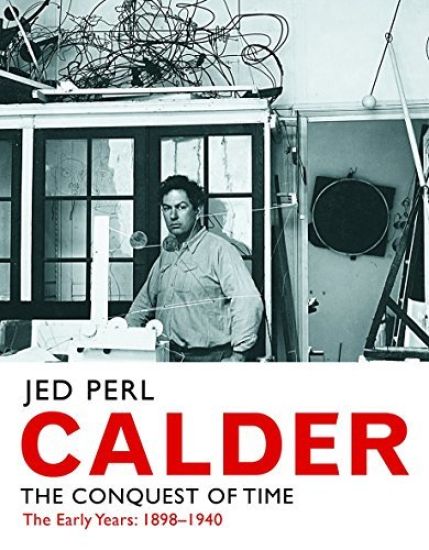
Calder

Calder

Jed Perl

Yale University Press
2017
sidottu
The first biography of America's greatest twentieth-century sculptor. In this beautifully written, deeply researched book Jed Perl shows how Alexander Calder became an avant-garde artist with enduring appeal. One of our most beloved modern artists, Calder is celebrated above all as the inventor of the mobile. Only now is the full story of his life being told in a gloriously illustrated biography, which features unseen photographs and is based on scores of interviews and unprecedented access to Calder's papers. Born into a family of artists, Calder forged important friendships with a who's who of twentieth-century creators, including Georges Braque, Marcel Duchamp, Martha Graham, Joan Miró, Piet Mondrian and Virgil Thomson. His early years studying engineering were followed by artistic triumphs in Paris in the late 1920s, and his emergence as a leader in the international abstract avant-garde. His marriage in 1931 to Louisa James—a great-niece of Henry James—is a richly romantic story. This transatlantic life carries readers from New York's Greenwich Village, to the Left Bank of Paris during the Depression, and then to a refugee-filled London just before the War, where Calder's circle of friends included Barbara Hepworth, Ben Nicholson and Kenneth Clark.
The Interpretation of Murder

The Interpretation of Murder

Jed Rubenfeld

Picador USA
2007
nidottu
In 1909, as a sadistic killer stalks Manhattan's wealthiest heiresses, Sigmund Freud is called in by American analyst Dr. Stratham Younger to assist him in interviewing Nora Acton, a hysterical survivor of the killer who can recall nothing about the attack. A first novel. Reader's Guide included. Reprint. 100,000 first printing.