Kirjojen hintavertailu. Mukana 12 083 983 kirjaa ja 12 kauppaa.

Kirjahaku

Etsi kirjoja tekijän nimen, kirjan nimen tai ISBN:n perusteella.

1000 tulosta hakusanalla Jennifer C. Edwards

One Step at a Time: A memoir

One Step at a Time: A memoir

Jennifer C. Steele

Independently Published
2019
nidottu
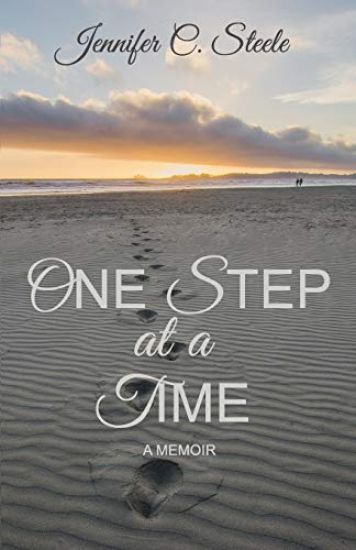
Have you ever lost all hope?That is where Jennifer found herself after the sudden death of her first husband-void of all hope. During what was supposed to be the best years in her life, she instantly became a widow with no warning signs to lessen the blow. She had two small children, barely anything to her name, and a complicated emotional history. She couldn't see an end to her grief and despair. Hope had become a thing of the past, replaced with fear and deep sadness. This memoir is Jennifer's journey through grief, depression, and unimaginable heartache. When at the verge of questioning life itself, she faced her demons and found a path to propel forward. Jennifer takes you behind the public smiling face through the ups and downs of trying to care for her two young children while drowning in her own sorrow. Despite the tragedy that occurred, she gathered the strength to discover her true self and the courage to find happiness again. Jennifer shares her wisdom and insights that helped her overcome one of the most difficult tragedies anyone can face. You will cry, laugh, and hopefully, learn to live life to the fullest because, in an instant, everything can change.
Palaeolithic Europe

Palaeolithic Europe

Jennifer C. French

Cambridge University Press
2021
sidottu
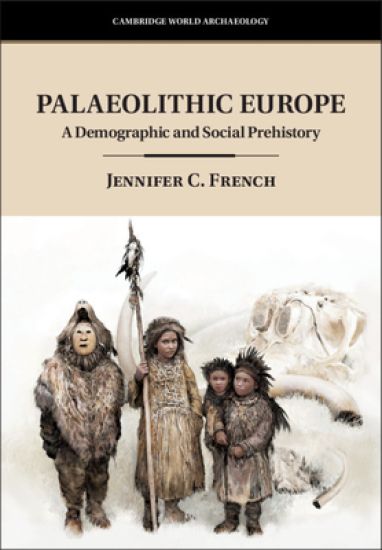
In this book, Jennifer French presents a new synthesis of the archaeological, palaeoanthropological, and palaeogenetic records of the European Palaeolithic, adopting a unique demographic perspective on these first two-million years of European prehistory. Unlike prevailing narratives of demographic stasis, she emphasises the dynamism of Palaeolithic populations of both our evolutionary ancestors and members of our own species across four demographic stages, within a context of substantial Pleistocene climatic changes. Integrating evolutionary theory with a socially oriented approach to the Palaeolithic, French bridges biological and cultural factors, with a focus on women and children as the drivers of population change. She shows how, within the physiological constraints on fertility and mortality, social relationships provide the key to enduring demographic success. Through its demographic focus, French combines a 'big picture' perspective on human evolution with careful analysis of the day-to-day realities of European Palaeolithic hunter-gatherer communities—their families, their children, and their lives.
Palaeolithic Europe

Palaeolithic Europe

Jennifer C. French

Cambridge University Press
2023
pokkari
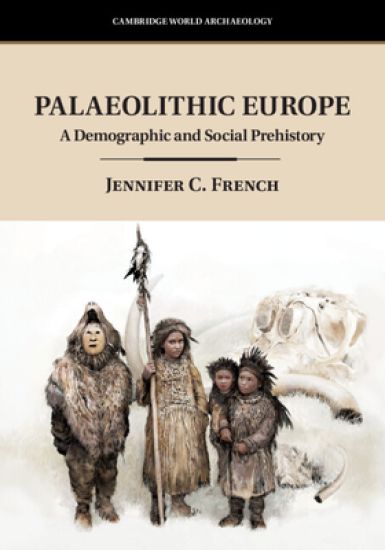
In this book, Jennifer French presents a new synthesis of the archaeological, palaeoanthropological, and palaeogenetic records of the European Palaeolithic, adopting a unique demographic perspective on these first two-million years of European prehistory. Unlike prevailing narratives of demographic stasis, she emphasises the dynamism of Palaeolithic populations of both our evolutionary ancestors and members of our own species across four demographic stages, within a context of substantial Pleistocene climatic changes. Integrating evolutionary theory with a socially oriented approach to the Palaeolithic, French bridges biological and cultural factors, with a focus on women and children as the drivers of population change. She shows how, within the physiological constraints on fertility and mortality, social relationships provide the key to enduring demographic success. Through its demographic focus, French combines a 'big picture' perspective on human evolution with careful analysis of the day-to-day realities of European Palaeolithic hunter-gatherer communities—their families, their children, and their lives.
Domain Names Rewired

Domain Names Rewired

Jennifer C. Wolfe; Anne H. Chasser

John Wiley Sons Inc
2012
sidottu
An essential guide to navigating the shifting Internet landscape The Internet is about to profoundly change when it explodes from a 21 top level domain world to a 500 to a 1,000 .anything top level domain universe. How will you evolve your .com strategy? How will you keep your brands safe in the changing global Internet landscape? In an economic time where global brand protection is more important than ever and budgets are leaner, project leaders inside corporations will welcome the strategies revealed in Domain Names Rewired. Written for executives and branding professionals, this timely book equips you with the tools to address important issues your company will face when creating new brands or derivative brands, as well as protecting your existing brands and .com in a global changing Internet landscape. With this book, authors Jennifer C. Wolfe and Anne H. Chasser skillfully show branding executives and intellectual property lawyers how to increase the value and success of their initiatives within the next generation of the Internet. Features interviews with executives from the world's leading companies, including Procter & Gamble, Microsoft, Time Warner, Yahoo!, Neustar, AUS Registry, ICANN, Remax, the International Trademark Association, Verizon, and many othersLooks at relevant situations your corporation may deal with in creating new brandsProvides expert guidance for protecting your existing .com and brand in an exponentially changing Internet worldOffers ideas to consider disruptive innovation in expanding .com into .anything The rapidly changing new regime of the Internet is impacting the hundreds of millions of Internet users around the globe, not to mention every business that already has a .com. Maximize your opportunities in the changing digital world and stay ahead of the competitors with the visionary strategies found in Domain Names Rewired.
Masculinity and Emotion in Early Modern English Literature
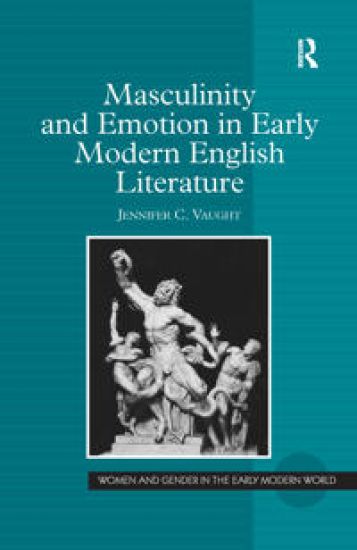
The first full length treatment of how men of different professions, social ranks and ages are empowered by their emotional expressiveness in early modern English literary works, this study examines the profound impact of the cultural shift in the English aristocracy from feudal warriors to emotionally expressive courtiers or gentlemen on all kinds of men in early modern English literature. Jennifer Vaught bases her analysis on the epic, lyric, and romance as well as on drama, pastoral writings and biography, by Shakespeare, Spenser, Sidney, Marlowe, Jonson and Garrick among other writers. Offering new readings of these works, she traces the gradual emergence of men of feeling during the sixteenth and seventeenth centuries, to the blossoming of this literary version of manhood during the eighteenth century.
Carnival and Literature in Early Modern England
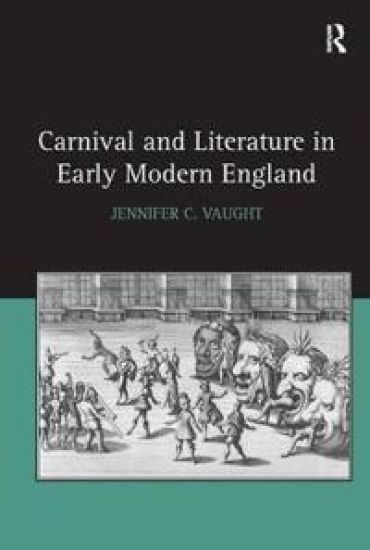
Carnival and Literature in Early Modern England explores the elite and popular festive materials appropriated by authors during the English Renaissance in a wide range of dramatic and non-dramatic texts. Although historical records of rural, urban, and courtly seasonal customs in early modern England exist only in fragmentary form, Jennifer Vaught traces the sustained impact of festivals and rituals on the plays and poetry of sixteenth- and seventeenth-century English writers. She focuses on the diverse ways in which Shakespeare, Spenser, Marlowe, Dekker, Jonson, Milton and Herrick incorporated the carnivalesque in their works. Further, she demonstrates how these early modern texts were used-and misused-by later writers, performers, and inventors of spectacles, notably Mardi Gras krewes organizing parades in the American Deep South. The works featured here often highlight violent conflicts between individuals of different ranks, ethnicities, and religions, which the author argues reflect the social realities of the time. These Renaissance writers responded to republican, egalitarian notions of liberty for the populace with radical support, ambivalence, or conservative opposition. Ultimately, the vital, folkloric dimension of these plays and poems challenges the notion that canonical works by Shakespeare and his contemporaries belong only to 'high' and not to 'low' culture.
Sugar Shack

Sugar Shack

Jennifer C Daniels

Lulu.com
2012
pokkari
A story of a young boy's journey making maple syrup...The smell of warm maple syrup fills my senses as I breathe in the warm aroma heating on the stove for breakfast. The taste of the warm caramelized liquid, drizzled over my pancakes, wakes me up from my slumber sleep. I can taste the woodsy sweet smell before I even reach the kitchen. I know it will be so warm and buttery. Images of the huge maple trees flash through my mind as I sit down to devour my pancakes. Soaring maple trees, horse rides, smoke from the sugar shack as it heats up the maple sap, magically changing it into maple syrup. I stop and let all the memories flow through me as I know this weekend is the start of maple tapping at the farm.
Carnival and Literature in Early Modern England

Carnival and Literature in Early Modern England

Jennifer C. Vaught

Ashgate Publishing Limited
2012
sidottu
Carnival and Literature in Early Modern England explores the elite and popular festive materials appropriated by authors during the English Renaissance in a wide range of dramatic and non-dramatic texts. Although historical records of rural, urban, and courtly seasonal customs in early modern England exist only in fragmentary form, Jennifer Vaught traces the sustained impact of festivals and rituals on the plays and poetry of sixteenth- and seventeenth-century English writers. She focuses on the diverse ways in which Shakespeare, Spenser, Marlowe, Dekker, Jonson, Milton and Herrick incorporated the carnivalesque in their works. Further, she demonstrates how these early modern texts were used-and misused-by later writers, performers, and inventors of spectacles, notably Mardi Gras krewes organizing parades in the American Deep South. The works featured here often highlight violent conflicts between individuals of different ranks, ethnicities, and religions, which the author argues reflect the social realities of the time. These Renaissance writers responded to republican, egalitarian notions of liberty for the populace with radical support, ambivalence, or conservative opposition. Ultimately, the vital, folkloric dimension of these plays and poems challenges the notion that canonical works by Shakespeare and his contemporaries belong only to 'high' and not to 'low' culture.
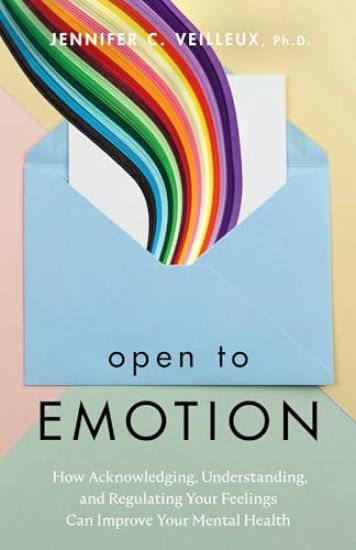
Open to Emotion

Open to Emotion

Jennifer C. Veilleux

AMERICAN PSYCHOLOGICAL ASSOCIATION
2025
pokkari
A practical, engaging resource that offers a clearer understanding of the science of emotion and a helpful path forward in regulating your emotions. Rates of anxiety and depression are high and continue to rise. Substance use and associated overdose deaths constitute a public health emergency, and many people suffer consequences from exposure to traumatic events. All these are, at their root, problems with emotions. People can get help navigating their emotions via therapy, but stigma toward mental illness and reticence to seek therapy continues to make it difficult for people to get the help they need. An understanding of how emotions work and empirically supported strategies for flexibly regulating emotions is relevant to virtually all of the problems that bring people to psychotherapy, including relationship problems discussed in couples and family therapy. A broad understanding of emotional functioning also has the benefit of helping people cultivate more compassion for those who might experience emotions differently than they do. This reader-friendly book illustrates that emotions are messages they provide information, like an email, a physical postcard, a letter from a pen-pal, or even a medical bill. Information isn amp rsquo t inherently good or bad, and narrowly aiming to minimize unpleasant emotions and maximize pleasant ones ignores the research-based fact that the unpleasant emotions can have value too. This book teaches you about the science of emotion and the best research-based practices for coping and regulating emotion. It shows you how this understanding can then be applied toward solving a variety of problems, including self-realization and self-compassion, as well loving others in a deeper way. This is an essential guide for anyone seeking to improve their overall emotional health.
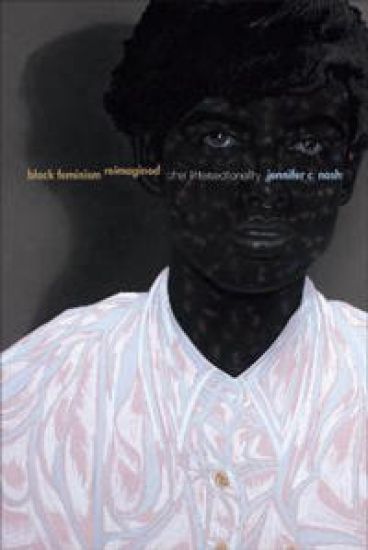
Black Feminism Reimagined

Black Feminism Reimagined

Jennifer C. Nash

Duke University Press
2019
sidottu
In Black Feminism Reimagined Jennifer C. Nash reframes black feminism's engagement with intersectionality, often celebrated as its primary intellectual and political contribution to feminist theory. Charting the institutional history and contemporary uses of intersectionality in the academy, Nash outlines how women's studies has both elevated intersectionality to the discipline's primary program-building initiative and cast intersectionality as a threat to feminism's coherence. As intersectionality has become a central feminist preoccupation, Nash argues that black feminism has been marked by a single affect-defensiveness-manifested by efforts to police intersectionality's usages and circulations. Nash contends that only by letting go of this deeply alluring protectionist stance, the desire to make property of knowledge, can black feminists reimagine intellectual production in ways that unleash black feminist theory's visionary world-making possibilities.
Black Feminism Reimagined

Black Feminism Reimagined

Jennifer C. Nash

Duke University Press
2019
pokkari
In Black Feminism Reimagined Jennifer C. Nash reframes black feminism's engagement with intersectionality, often celebrated as its primary intellectual and political contribution to feminist theory. Charting the institutional history and contemporary uses of intersectionality in the academy, Nash outlines how women's studies has both elevated intersectionality to the discipline's primary program-building initiative and cast intersectionality as a threat to feminism's coherence. As intersectionality has become a central feminist preoccupation, Nash argues that black feminism has been marked by a single affect-defensiveness-manifested by efforts to police intersectionality's usages and circulations. Nash contends that only by letting go of this deeply alluring protectionist stance, the desire to make property of knowledge, can black feminists reimagine intellectual production in ways that unleash black feminist theory's visionary world-making possibilities.
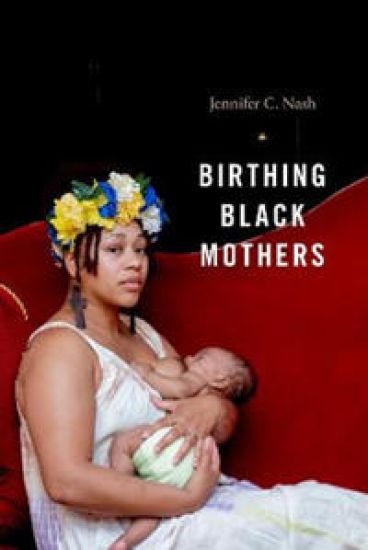
Birthing Black Mothers

Birthing Black Mothers

Jennifer C. Nash

Duke University Press
2021
sidottu
In Birthing Black Mothers Black feminist theorist Jennifer C. Nash examines how the figure of the “Black mother” has become a powerful political category. “Mothering while Black” has become synonymous with crisis as well as a site of cultural interest, empathy, fascination, and support. Cast as suffering and traumatized by their proximity to Black death-especially through medical racism and state-sanctioned police violence-Black mothers are often rendered as one-dimensional symbols of tragic heroism. In contrast, Nash examines Black mothers’ self-representations and public performances of motherhood-including Black doulas and breastfeeding advocates alongside celebrities such as BeyoncÉ, Serena Williams, and Michelle Obama-that are not rooted in loss. Through cultural critique and in-depth interviews, Nash acknowledges the complexities of Black motherhood outside its use as political currency. Throughout, Nash imagines a Black feminist project that refuses the lure of locating the precarity of Black life in women and instead invites readers to theorize, organize, and dream into being new modes of Black motherhood.
Birthing Black Mothers

Birthing Black Mothers

Jennifer C. Nash

Duke University Press
2021
pokkari
In Birthing Black Mothers Black feminist theorist Jennifer C. Nash examines how the figure of the “Black mother” has become a powerful political category. “Mothering while Black” has become synonymous with crisis as well as a site of cultural interest, empathy, fascination, and support. Cast as suffering and traumatized by their proximity to Black death-especially through medical racism and state-sanctioned police violence-Black mothers are often rendered as one-dimensional symbols of tragic heroism. In contrast, Nash examines Black mothers’ self-representations and public performances of motherhood-including Black doulas and breastfeeding advocates alongside celebrities such as BeyoncÉ, Serena Williams, and Michelle Obama-that are not rooted in loss. Through cultural critique and in-depth interviews, Nash acknowledges the complexities of Black motherhood outside its use as political currency. Throughout, Nash imagines a Black feminist project that refuses the lure of locating the precarity of Black life in women and instead invites readers to theorize, organize, and dream into being new modes of Black motherhood.
How We Write Now

How We Write Now

Jennifer C. Nash

DUKE UNIVERSITY PRESS
2024
sidottu
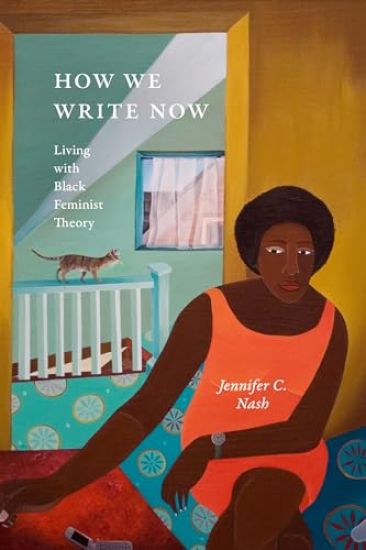
In How We Write Now Jennifer C. Nash examines how Black feminists use beautiful writing to allow writers and readers to stay close to the field’s central object and preoccupation: loss. She demonstrates how contemporary Black feminist writers and theorists such as Jesmyn Ward, Elizabeth Alexander, Christina Sharpe, and Natasha Trethewey mobilize their prose to ask readers to feel, undo, and reassemble themselves. These intimate invitations are more than a set of tools for decoding the social world; Black feminist prose becomes a mode of living and feeling, dreaming and being, and a distinctly affective project that treats loss as not only paradigmatic of Black life but also an aesthetic question. Through her own beautiful writing, Nash shows how Black feminism offers itself as a companion to readers to chart their own lives with and in loss, from devastating personal losses to organizing around the movement for Black lives. Charting her own losses, Nash reminds us that even as Black feminist writers get as close to loss as possible, it remains a slippery object that troubles memory and eludes capture.
How We Write Now

How We Write Now

Jennifer C. Nash

DUKE UNIVERSITY PRESS
2024
pokkari
In How We Write Now Jennifer C. Nash examines how Black feminists use beautiful writing to allow writers and readers to stay close to the field’s central object and preoccupation: loss. She demonstrates how contemporary Black feminist writers and theorists such as Jesmyn Ward, Elizabeth Alexander, Christina Sharpe, and Natasha Trethewey mobilize their prose to ask readers to feel, undo, and reassemble themselves. These intimate invitations are more than a set of tools for decoding the social world; Black feminist prose becomes a mode of living and feeling, dreaming and being, and a distinctly affective project that treats loss as not only paradigmatic of Black life but also an aesthetic question. Through her own beautiful writing, Nash shows how Black feminism offers itself as a companion to readers to chart their own lives with and in loss, from devastating personal losses to organizing around the movement for Black lives. Charting her own losses, Nash reminds us that even as Black feminist writers get as close to loss as possible, it remains a slippery object that troubles memory and eludes capture.