Kirjojen hintavertailu. Mukana 11 342 296 kirjaa ja 12 kauppaa.

Kirjahaku

Etsi kirjoja tekijän nimen, kirjan nimen tai ISBN:n perusteella.

1000 tulosta hakusanalla Jim Carson

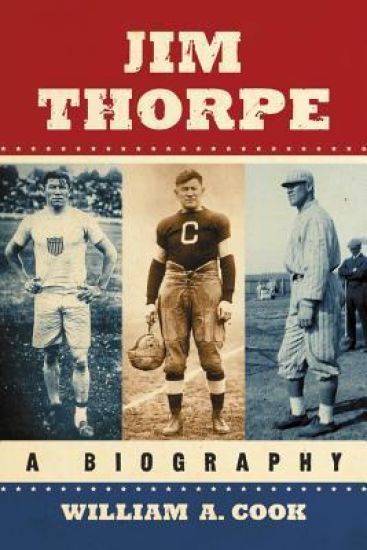
Jim Thorpe

Jim Thorpe

William A. Cook

McFarland Co Inc
2011
pokkari
Most biographies of Jim Thorpe (1888-1953) emphasize his Olympic glory and his remarkable abilities in track and football. Thorpe's 1912 gold medals in the decathalon and pentathalon and his talent on the gridiron rank him high among outstanding athletes of the twentieth century. That Thorpe also played brilliantly on the baseball diamond is an often overlooked facet of his career. This narrative of Thorpe's rise and fall in American sports pays particular attention to his time in the major and minor leagues, including his stormy relationship with New York Giants manager John McGraw and baseball's role in stripping Thorpe of his Olympic medals. By chronicling Thorpe's involvement in baseball, football and track concurrently, this profile offers a complete portrait of one of the most versatile athletes in sports history.
Jim Henson’s Labyrinth 2026 Wall Calendar (Includes Full-Color Poster)
The official Jim Henson’s Labyrinth™ 2026 Wall Calendar features images from the iconic Jim Henson movie. Forty years later we're still fascinated and in love with the iconic film. Labyrinth is a seminal film for an entire generation of fans, who are now passing their love for this movie on to their own children. The movie stars a young Jennifer Connelly as a babysitter who gets more than she bargained for when the idle wish she makes for her annoying baby brother to be taken away is granted by an evil goblin king . . . played by David Bowie. Sarah (Connelly) is given 13 hours to solve the titular Labyrinth, or else risk losing her brother forever. Directed by Jim Henson, and featuring creatures created by the world-famous Henson Creature Shop, Labyrinth™ is a spectacle unlike any other. Moon phases Bonus spread for September–December 2025 Generous grids for adding appointments and reminders Includes major official world holidays Nostalgic art that’s great for home and safe for work Opens to 12 inches x 24 inches Includes poster originally produced by Mondo
Jim Harrison

Jim Harrison

Gregg Orr; Beef Torrey

University of Nebraska Press
2009
sidottu
Jim Harrison, a literary maverick, is widely considered one of the great and iconic writers in contemporary American literature. This pioneering volume, an extensive and up-to-date illustrated guide to Harrison’s published works, is the first full-length catalog of a distinguished literary career spanning more than forty years. Longtime Harrison readers and collectors Gregg Orr and Beef Torrey have amassed a thorough list of the author’s wide-ranging work, annotated and arranged by genre to provide a full view of the breadth of Harrison’s accomplishment. This work contains more than sixteen hundred citations of writings by and about Harrison, including his fiction, poetry, essays, interviews, screenplays, criticism, and reviews; it also features photographs of his books, dust jackets, and broadsides. With a foreword by Harrison, penned especially for this seminal volume, and an introduction by writer and scholar Robert DeMott, this is the definitive bibliographical study of a major figure in late twentieth- and early twenty-first-century American letters.
Jim Bridger

Jim Bridger

Stanley Vestal

Bison Books
1970
pokkari
Even among the mighty mountain men, Jim Bridger was a towering figure. He was one of the greatest explorers and pathfinders in American history. He couldn't write his name, but at eighteen he had braved the fury of the Missouri, ascending it in a keelboat flotilla commanded by that stalwart Mike Fink. By 1824, when he was only twenty, he had discovered the Great Salt Lake. Later he was to open the Overland Route, which was the path of the Overland Stage, the Pony Express, and the Union Pacific. One of the foremost trappers in the Rocky Mountain Fur Company, he was a legend in his own time as well as ours. He remains one of the most important scouts and guides in the history of the West.The Christian Science Monitor has called this biography "probably the fairest portrait of Jim Bridger in existence." The New York Times has praise for a "painstaking job of research among the usual Bridger sources and among some others which have been neglected. . . . [The author] has adequately set the scene for his hero's adventures and has honestly appraised the great guide's historical stature."Other Bison Books by Stanley Vestal: Dodge City: Queen of Cowtowns, Joe Meek: The Merry MOuntain Man; The Missouri, The Old Santa Fe Trail, and Warpath: The True Story of the Fighting Sioux Told in a Biography of Chief White Bull
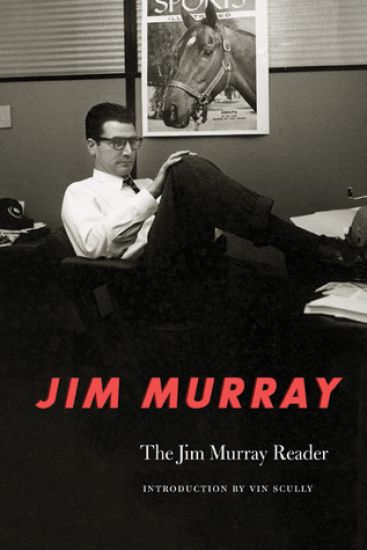
The Jim Murray Reader

The Jim Murray Reader

Jim Murray

Bison Books
2011
pokkari
His striking images, evocative prose, and hyperbolic one-liners have made Murray one of the most quotable and most celebrated sports columnists of the twentieth century.Jim Murray, the dean of American sportswriters, entertained readers with writing that is so good and so funny that even people who don’t like sports read him. The Jim Murray Reader gathers some of Murray’s best columns from the height of his career and showcases the wit and the style that won him a Pulitzer Prize in 1990.His inexhaustible talent and limitless range are on full display here: from the perplexities of tennis scoring (“a game in which love counts for nothing, deuces are wild, and the scoring system was invented by Lewis Carroll”) and baseball rules (“The infield fly rule is about as simple as calligraphy. It might as well be a Japanese naval code”) to Murray’s Laws (“The way to make a line move faster is to join the other one”) and many of his colorful profiles (“Richard Petty has climbed in more windows than 50 car thieves. . . . He wasn’t born, he was assembled and modified”).
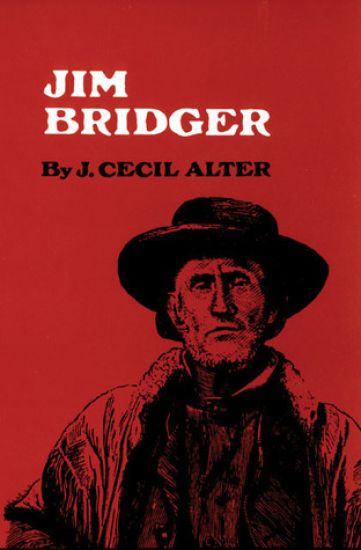
Jim Bridger

Jim Bridger

J. Cecil Alter

University of Oklahoma Press
1979
nidottu
On March 20, 1822, the Missouri Republican published a notice addressed ""to enterprising young men"" in the St. Louise area. ""The subscriber,"" it said ""wishes to engage one hundred young men to ascend the Missouri River to its source, there to be employed for one, two, or three years. For particulars enquire of Major Andrew Henry… or of the subscriber near St. Louise."" The ""subscriber"" was General William H. Ashley, and among the ""enterprising young men"" who embarked with Major Henry less than a month later was eighteen-year-old James Bridger, former blacksmith's apprentice. So began the Ashley-Henry fur empire and the long, colorful career of Jim Bridger.In the years that followed, Jim Bridger became a master mountain man, an expert trapper, and a guide without equal. He came to know the Rocky Mountain region and its inhabitants as a farmer knows his fields and flocks. Indeed, J. Cecil Alter tells us, ""he was among the first white men to use the Indian trail over South Pass; he was first to taste the waters of the Great Salt lake, first to report a two-ocean stream, foremost in describing the Yellowstone Park phenomena, and the only man to run the Big Horn River rapid on a raft; and he originally selected the Crow Creek-Sherman-Dale Creek route the Laramie Mountains and Bridger's Pass over the Continental Divide, which were adopted by the Union pacific Railroad.""Such knowledge, together with extraordinary skill and uncanny luck, preserved Jim Bridger in a country where nearly half of his mountain companions met violent death. It also gave rise to a brood of impossible tales about Old Gabe and his adventures-tales which he himself may unwittingly have helped along with his droll humor.Based on Mr. Alter's original biography of 1925 (a facsimile edition of which, with addenda, appeared in 1950) and a wealth of new facts gleaned from many years of careful research, Jim Bridger is the authentic story of the Old Scout's life. Only those events in which Bridger took part are included; improbable and uncorroborated stories, however interesting, have been omitted.
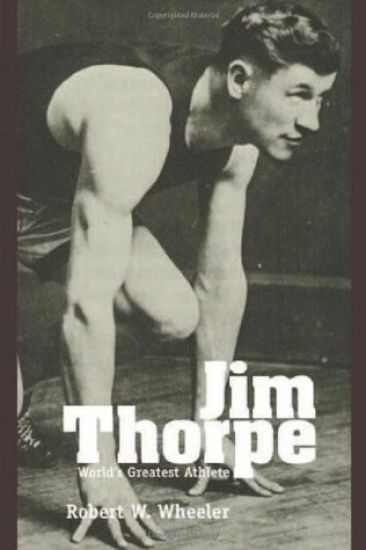
Jim Thorpe

Jim Thorpe

Robert W. Wheeler

University of Oklahoma Press
1981
nidottu
Born in 1888 in Oklahoma Territory, Jim Thorpe was a Sac and Fox Indian. After attending the Sac and Fox agency school and Haskell Indian Junior College in Lawrence, Kansas, he transferred to Carlisle Indian School in Pennsylvania. At Carlisle he led the football team to victories over some of the nation's best college teams-Army, Navy, Pittsburgh, Syracuse, Pennsylvania, and Nebraska. In 1912 he participated in the Olympic Games in Stockholm, winning both the decathlon and pentathlon. It was then that King Gustav V of Sweden dubbed him ""the world's greatest athlete.""Between 1913 and 1919, Thorpe played professional baseball for the New York Giants, the Cincinnati Reds, and the Boston Braves. In 1915 he began playing professional football with the Canton (Ohio) Bulldogs. When the top teams were organized into the American Professional Football Association in 1920, Thorpe was named the first president of the league, which was renamed the National Football League in 1922. Throughout his career he excelled in every sport he played, earning King Gustav's accolade many times over.
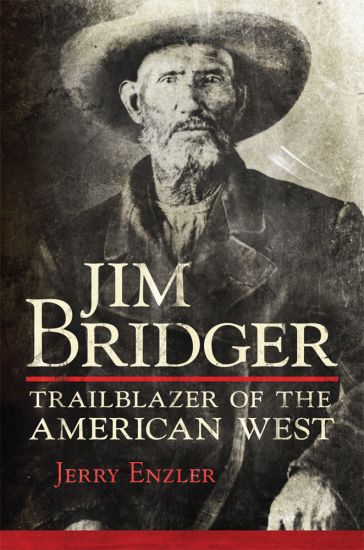
Jim Bridger

Jim Bridger

Jerry Enzler

University of Oklahoma Press
2021
sidottu
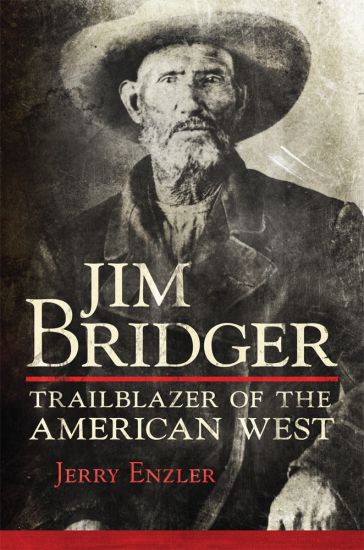
Even among iconic frontiersmen like John C. FrÉmont, Kit Carson, and Jedediah Smith, Jim Bridger stands out. A mountain man of the American West, straddling the fur trade era and the age of exploration, he lived the life legends are made of. His adventures are fit for remaking into the tall tales Bridger himself liked to tell. Here, in a biography that finally gives this outsize character his due, Jerry Enzler takes this frontiersman's full measure for the first time - and tells a story that would do Jim Bridger proud. Born in 1804 and orphaned at thirteen, Bridger made his first western foray in 1822, traveling up the Missouri River with Mike Fink and a hundred enterprising young men to trap beaver. At twenty he 'discovered' the Great Salt Lake. At twenty-one he was the first to paddle the Bighorn River's Bad Pass. At twenty-two he explored the wonders of Yellowstone. In the following years, he led trapping brigades into Blackfeet territory; guided expeditions of Smithsonian scientists, topographical engineers, and army leaders; and, though he could neither read nor write, mapped the tribal boundaries for the Great Indian Treaty of 1851. Enzler charts Bridger's path from the fort he built on the Oregon Trail to the route he blazed for Montana gold miners to avert war with Red Cloud and his Lakota coalition. Along the way he married into the Flathead, Ute, and Shoshone tribes and produced seven children. Tapping sources uncovered in the six decades since the last documented Bridger biography, Enzler's book fully conveys the drama and details of the larger-than-life history of the 'King of the Mountain Men.' This is the definitive story of an extraordinary life.
Jim Bridger

Jim Bridger

Jerry Enzler

UNIVERSITY OF OKLAHOMA PRESS
2023
nidottu
Even among iconic frontiersmen like John C. FrÉmont, Kit Carson, and Jedediah Smith, Jim Bridger stands out. A mountain man of the American West, straddling the fur trade era and the age of exploration, he lived the life legends are made of. His adventures are fit for remaking into the tall tales Bridger himself liked to tell. Here, in a biography that finally gives this outsize character his due, Jerry Enzler takes this frontiersman’s full measure for the first time—and tells a story that would do Jim Bridger proud. Born in 1804 and orphaned at thirteen, Bridger made his first western foray in 1822, traveling up the Missouri River with Mike Fink and a hundred enterprising young men to trap beaver. At twenty he “discovered” the Great Salt Lake. At twenty-one he was the first to paddle the Bighorn River’s Bad Pass. At twenty-two he explored the wonders of Yellowstone. In the following years, he led trapping brigades into Blackfeet territory; guided expeditions of Smithsonian scientists, topographical engineers, and army leaders; and, though he could neither read nor write, mapped the tribal boundaries for the Great Indian Treaty of 1851. Enzler charts Bridger’s path from the fort he built on the Oregon Trail to the route he blazed for Montana gold miners to avert war with Red Cloud and his Lakota coalition. Along the way he married into the Flathead, Ute, and Shoshone tribes and produced seven children. Tapping sources uncovered in the six decades since the last documented Bridger biography, Enzler’s book fully conveys the drama and details of the larger-than-life history of the “King of the Mountain Men.” This is the definitive story of an extraordinary life.
Jim Thorpe

Jim Thorpe

Robert W. Wheeler

UNIVERSITY OF OKLAHOMA PRESS
2024
nidottu
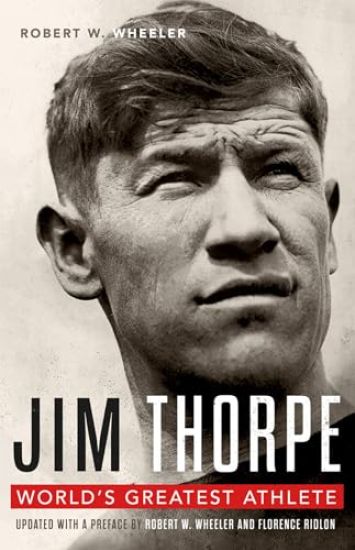
Born in 1888 in what would soon be Oklahoma Territory, Jim Thorpe was a member of the Sac and Fox Nation. After attending the Sac and Fox agency school and Haskell Indian Junior College in Lawrence, Kansas, he transferred to Carlisle Indian Industrial School in Pennsylvania. At Carlisle he led the football team to victories over some of the nation’s best college teams—Army, Navy, Pittsburgh, Syracuse, Pennsylvania, and Nebraska. In 1912 he participated in the Olympic Games in Stockholm, winning both the decathlon and pentathlon. It was then that King Gustav V of Sweden dubbed him “the world’s greatest athlete.” Between 1913 and 1919, Thorpe played professional baseball for the New York Giants, the Cincinnati Reds, and the Boston Braves. In 1915 he began playing professional football with the Canton (Ohio) Bulldogs. When the top teams were organized into the American Professional Football Association in 1920, Thorpe was named the first president of the organization, renamed the National Football League in 1922. Throughout his career he excelled in every sport he played, earning King Gustav’s accolade many times over. In a new preface, Wheeler and Florence Ridlon update Thorpe’s story, drawing on research they have conducted in spearheading the effort to restore the athlete’s Olympic medals and his first-place wins in the pentathlon and decathlon, taken from him when it was discovered he had played professional baseball during the summer before the games in Stockholm. The explanation for Thorpe’s imprudence, as Wheeler and Ridlon show, has everything to do with poor advice from the coach he trusted, Glenn “Pop” Warner, and a corrupt Indian boarding school system. The preface also discusses Thorpe’s work on the lecture circuit and in the motion picture business, as an actor and recruiter of other Native actors.
Jim Crow's Counterculture

Jim Crow's Counterculture

R. A. Lawson

Louisiana State University Press
2013
nidottu
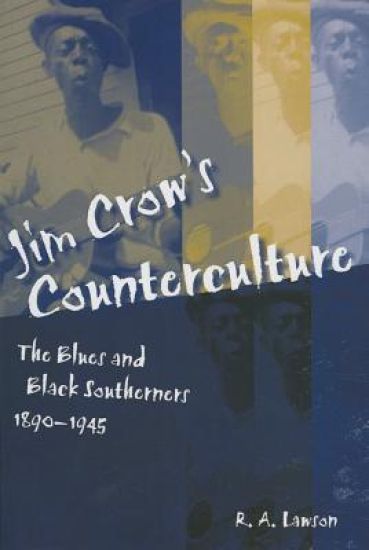
In the late nineteenth century, black musicians in the lower Mississippi Valley, chafing under the social, legal, and economic restrictions of Jim Crow, responded with a new musical form, the blues. In Jim Crow's Counterculture, R. A. Lawson offers a cultural history of blues musicians in the segregation era, explaining how by both accommodating and resisting Jim Crow life, blues musicians created a counterculture to incubate and nurture ideas of black individuality and citizenship. These individuals, Lawson shows, collectively demonstrate the African American struggle during the early twentieth century.By uncovering the stories of artists who expressed much in their music but left little record in traditional historical sources, Jim Crow's Counterculture offers a fresh perspective on the historical experiences of black Americans and provides a new understanding of the blues: a shared music that offered a message of personal freedom to repressed citizens.
Jim Crow's Last Stand

Jim Crow's Last Stand

Thomas Aiello

Louisiana State University Press
2015
sidottu
The last remnant of the racist Redeemer agenda in the Louisiana's legal system, the nonunanimous jury-verdict law permits juries to convict criminal defendants with only ten out of twelve votes. A legal oddity among southern states, the ordinance has survived multiple challenges since its ratification in 1880. Despite the law's long history, few are aware of its existence, its original purpose, or its modern consequences. At a time when Louisiana's penal system has fallen under national scrutiny, Jim Crow's Last Stand presents a timely, penetrating, and concise look at the history of this law's origins and its troubling legacy. The nonunanimous jury-verdict law originally allowed a guilty verdict with only nine juror votes, funneling many of those convicted into the state's burgeoning convict lease system. Yet the law remained on the books well after convict leasing ended. Historian Thomas Aiello describes the origins of the statute in Bourbon Louisiana-a period when white Democrats sought to redeem their state after Reconstruction-its survival through the civil rights era of the 1950s and 1960s, and the Supreme Court's decision in Johnson v. Louisiana (1972), which narrowly validated the state's criminal conviction policy. Spanning over a hundred years of Louisiana law and history, Jim Crow's Last Stand investigates the ways in which legal policies and patterns of incarceration contribute to a new form of racial inequality.
Jim Crow's Last Stand

Jim Crow's Last Stand

Thomas Aiello

Louisiana State University Press
2019
nidottu
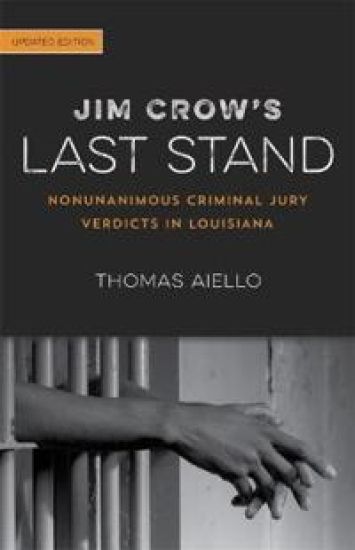
A remnant of the racist post-Reconstruction Redeemer sociopolitical agenda, Louisiana's nonunanimous jury-verdict law permitted juries to convict criminal defendants with only nine, and later ten, out of twelve votes: a legal oddity. On the surface, it was meant to speed convictions. In practice, the law funneled many convicts- especially African Americans- into Louisiana's burgeoning convict lease system. Although it faced multiple legal challenges through the years, the law endured well after convict leasing had ended. Few were aware of its existence, let alone its original purpose. In fact, the original publication of Jim Crow's Last Stand was one of the first attempts to call attention to the historical injustice caused by this law. This updated edition of Jim Crow's Last Stand unpacks the origins of the statute in Bourbon Louisiana, traces its survival through the civil rights era, and ends with the successful effort to overturn the nonunanimous jury practice, a policy that officially went into effect on January 1, 2019.
Jim Crow Campus

Jim Crow Campus

Joy Ann Williamson-Lott

Teachers' College Press
2018
nidottu
This well-researched volume explores how the Black freedom struggle and the anti–Vietnam War movement dovetailed with faculty and student activism in the South to undermine the traditional role of higher education and bring about social change. It offers a deep understanding of the vital importance of independent institutions during times of national crisis.*2018 Foreword Reviews Indies Finalist in the Education category.
Jim Crow Campus

Jim Crow Campus

Joy Ann Williamson-Lott

Teachers' College Press
2018
sidottu
2020 Frederic W. Ness Book Award Winner (AACU)2018 Foreword INDIES Book of the Year Awards Finalist in EducationThis well-researched volume explores how the Black freedom struggle and the anti–Vietnam War movement dovetailed with faculty and student activism in the South to undermine the traditional role of higher education and bring about social change. It uses the battles between students, faculty, presidents, trustees, elected officials, and funding agencies to explain how Black and White southern campuses transformed themselves into reputable academic centers. No matter the type of institution, these battles represented cracks in the edifice of the Old South and precipitated wide-ranging changes in southern higher education and society as well. This thought-provoking history offers scholars and others interested in institutional autonomy and the value of civil society a deep understanding of the central role that institutions of higher education can play in social and political change and the vital importance of independent institutions during times of national crisis.Book Features:Helps institutional leaders to understand the benefits and challenges of dissolving the walls around the ivory or ebony tower.Offers a complex analysis of the evolution of higher education in the South. Demonstrates how changes in higher education precipitated wide-ranging changes in southern society.Examines contemporary arguments about the breadth and limits of first amendment rights and academic freedom on college and university campuses.
Jim Bakker

Jim Bakker

James Albert

Open Court Publishing Co ,U.S.
1999
pokkari
Anyone who has followed the roller coaster-like saga of PTL will want to read this absorbing inside story. Albert, a law professor and trial attorney, has investigated the Bakker/PTL story extensively and crafts a balanced story, guiding his readers through Bakker's rise from obscurity to his heyday hosting "The PTL Club". Albert contends that although Bakker's stewardship of PTL was surely careless, serious doubt remains whether or not he ever intended to defraud contributors. 15 photos.
Jim Crow New York

Jim Crow New York

New York University Press
2003
sidottu
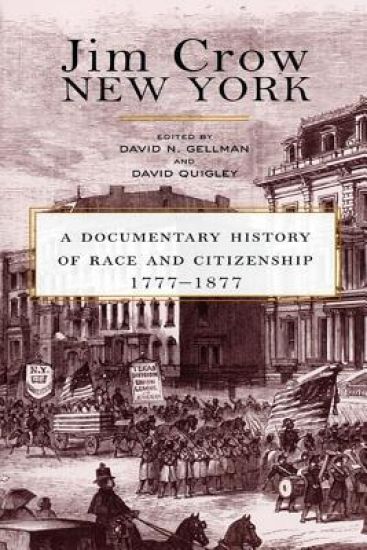
A Choice Outstanding Academic Title (2004) In 1821, New York’s political leaders met for over two months to rewrite the state’s constitution. The new document secured the right to vote for the great mass of white men while denying all but the wealthiest African-American men access to the polls. Jim Crow New York introduces students and scholars alike to this watershed event in American political life. This action crystallized the paradoxes of free black citizenship, not only in the North but throughout the nation: African Americans living in New York would no longer be slaves. But would they be citizens? Jim Crow New York provides readers with both scholarly analysis and access to a series of extraordinary documents, including extensive excerpts from the resonant speeches made at New York’s 1821 constitutional convention and additional documents which recover a diversity of voices, from lawmakers to African-American community leaders, from newspaper editors to activists. The text is further enhanced by extensive introductory essays and headnotes, maps, illustrations, and a detailed bibliographic essay.
Jim Crow New York

Jim Crow New York

New York University Press
2003
pokkari
A Choice Outstanding Academic Title (2004) In 1821, New York's political leaders met for over two months to rewrite the state's constitution. The new document secured the right to vote for the great mass of white men while denying all but the wealthiest African-American men access to the polls. Jim Crow New York introduces students and scholars alike to this watershed event in American political life. This action crystallized the paradoxes of free black citizenship, not only in the North but throughout the nation: African Americans living in New York would no longer be slaves. But would they be citizens? Jim Crow New York provides readers with both scholarly analysis and access to a series of extraordinary documents, including extensive excerpts from the resonant speeches made at New York's 1821 constitutional convention and additional documents which recover a diversity of voices, from lawmakers to African-American community leaders, from newspaper editors to activists. The text is further enhanced by extensive introductory essays and headnotes, maps, illustrations, and a detailed bibliographic essay.