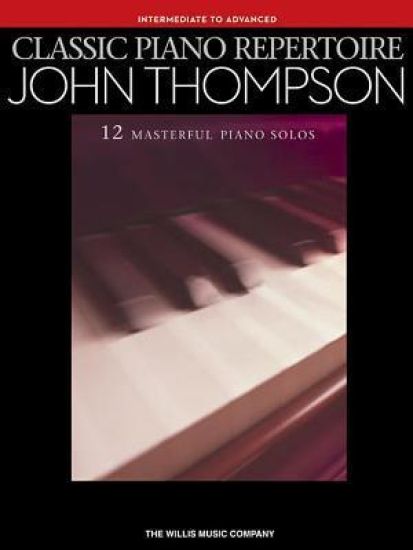
12 brilliant, evocative and masterful solo pieces by the legendary pianist and composer John Thompson, newly engraved and edited for the modern pianist: Andantino (from Concerto in D Minor)Songs include: - The Coquette - The Faun - The Juggler - Lagoon - Lofty Peaks - Nocturne - and more!
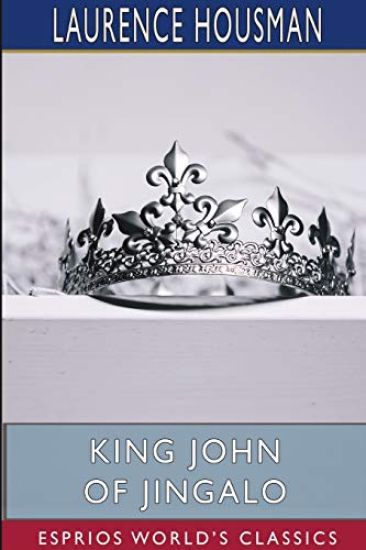
Laurence Housman (1865-1959) was an English playwright. He was born in Worcestershire. After education at local schools, he went to study art at the Lambert School of Art and the Royal College of Art in London. He first worked as a book illustrator with London publishers, illustrating such works as Christina Rossetti's Goblin Market (1893) and Jane Barlow's The End of Elfintown (1894) in an intricate Art Nouveau style. But he also wrote and published several volumes of poetry in the 1890s, and when his eyesight began to fail, he turned more and more to writing. Housman's first success came with the novel An Englishwoman's Love-letters (1900), published anonymously. He then turned to drama with Bethlehem (1902) and was to become best known and remembered as a playwright.
John Law was one of those extraordinary personalities in which the 18th century seemed to abound. He held a demand-and-supply theory of value and treated the value of money or the determination of the average level of prices as only a special case of a general theory of value. Law eventually became Minister of Finance in France and was responsible for the greatest speculative frenzy in her history known as the Mississippi Bubble. When the boom collapsed in the closing months of 1720, Law was forced to flee France, permanently discredited, and spent his declining years as a professional gambler in Venice.In The Fable of the Bees: Private Vices, Public Benefits Bernard Mandeville argued that self-interest was a moral vice. Mandeville's satire was deliberately designed to give offence as if to encourage the re-examination of traditional beliefs : conspicuous consumption of luxury goods, the fashionable display of foreign imports, crime, and even natural disasters like the Fire of London all promote the 'division of labour' (Mandeville's term) and contribute to a brisk trade and fall in unemployment, whereas such supposed virtues as thrift and charity contribute to poverty and stagnation. The Fable of the Bees was widely read in the 18th century and criticized by all the leading thinkers of the day.
The actors profiled in this graphic novel share one thing in common: They're unforgettable. Born Marion Mitchell Morrison, his distinct vocal cadence, intimidating physical presence, and signature look made him a box office draw for 30 years. Few actors achieve the level of fame afforded silver screen icon, John Wayne. What makes a man a true hero? Is it the role he plays or the life he leads? Explore the life of legendary actor and philanthropist Christopher Reeve in this tribute to the man behind Superman's cape. The most influential martial artist of all time, Bruce Lee was an actor, teacher, and now, an icon. Follow Bruce's life from child actor to his tragic death and posthumous superstardom. The name Vincent Price is synonymous with all things horror. Explore the life of an actor who transcended a genre and became the voice of the darker side of life. TidalWave's popular TRIBUTE line tells the stories of famous people who left an indelible impression on our popular culture.
John Burnet, FBA was a Scottish classicist. He was born in Edinburgh and died in St Andrews. Burnet is best known for his work on Plato. His interest in philosophy and in Plato in particular seems to have begun during his service as assistant to Lewis Campbell at St. Andrews. Burnet was known for defending novel interpretations of Plato and Socrates, particularly the view that the depiction of Socrates in all of Plato's dialogues is historically accurate, and that the philosophical views peculiar to Plato himself are to be found only in the so-called late dialogues. Burnet also maintained that Socrates was closely connected to the early Greek philosophical tradition, now generally known as Pre-Socratic philosophy; Burnet believed that Socrates had been in his youth the disciple of Archelaus, a member of the Anaxagorean tradition (Burnet 1924, vi). This book contains his works of: Fragments of Anaxagoras Fragments of Empedocles Fragments of Heraclitus Fragments of Xenophanes Fragments of Parmenides Fragments of Melissus
John Galsworthy OM (14 August 1867 - 31 January 1933) was an English novelist and playwright. Notable works include The Forsyte Saga (1906-1921) and its sequels, A Modern Comedy and End of the Chapter. He won the Nobel Prize in Literature in 1932. Life Galsworthy was born at what is now known as Galsworthy House (then called Parkhurst) on Kingston Hill in Surrey, England, the son of John and Blanche Bailey (n e Bartleet) Galsworthy. His family was prosperous and well established, with a large property in Kingston upon Thames that is now the site of three schools: Marymount International School, Rokeby Preparatory School, and Holy Cross Preparatory School. He attended Harrow and New College, Oxford, after which he trained as a barrister and was called to the bar in 1890. However, he was not keen to begin practising law and instead travelled abroad to look after the family's shipping business. During these travels he met Joseph Conrad, then the first mate of a sailing-ship moored in the harbour of Adelaide, Australia, and the two future novelists became close friends. In 1895 Galsworthy began an affair with Ada Nemesis Pearson Cooper (1864-1956), the wife of his cousin Major Arthur Galsworthy. After her divorce ten years later, they were married on 23 September 1905 and stayed together until his death in 1933. Before their marriage, they often stayed clandestinely in a farmhouse called Wingstone in the village of Manaton on Dartmoor, Devon. In 1908 Galsworthy took a long lease on part of the building and it was their regular second home until 1923. From the Four Winds, a collection of short stories, was Galsworthy's first published work in 1897. These and several subsequent works were published under the pen name of John Sinjohn, and it was not until The Island Pharisees (1904) that he began publishing under his own name, probably owing to the recent death of his father. His first full-length novel, Jocelyn, was published in an edition of 750 under the name of John Sinjohn - he later refused to have it republished. His first play, The Silver Box (1906), - in which the theft of a prostitute's purse by a rich 'young man of good family' is placed beside the theft of a silver cigarette case from the rich man's father's house by 'a poor devil', with very different repercussions - became a success, and he followed it up with The Man of Property (1906), the first book of a Forsyte trilogy. Although he continued writing both plays and novels, it was as a playwright that he was mainly appreciated at the time. Along with those of other writers of the period, such as George Bernard Shaw, his plays addressed the class system and other social issues, two of the best known being Strife (1909) and The Skin Game (1920). He is now far better known for his novels, particularly The Forsyte Saga, his trilogy about the eponymous family and connected lives. These books, as with many of his other works, deal with social class, and upper-middle class lives in particular. Although sympathetic to his characters, he highlights their insular, snobbish, and acquisitive attitudes and their suffocating moral codes. He is viewed as one of the first writers of the Edwardian era who challenged some of the ideals of society depicted in the preceding literature of Victorian England. The depiction of a woman in an unhappy marriage furnishes another recurring theme in his work. The character of Irene in The Forsyte Saga is drawn from Ada Pearson, though her previous marriage was not as miserable as that of the character....
Margaret Deland (n e Margaretta Wade Campbell) (1857-1945) was an American novelist, short story writer, and poet. She also wrote an autobiography in two volumes. She is generally considered part of the literary realism movement. Deland is known principally for the novel John Ward, Preacher (1888), an indictment of Calvinism, which became a best-seller. Her 'Old Chester' books, based on her early memories of the Pittsburgh communities where she grew up - including Maple Grove and Manchester - were also popular. She was recognized as an important and popular author of literary realism in the United States, though some of her plots and themes were shocking to proper Bostonians. In her lifetime she was called the American Thomas Humphry Ward and was compared to Elizabeth Gaskell.
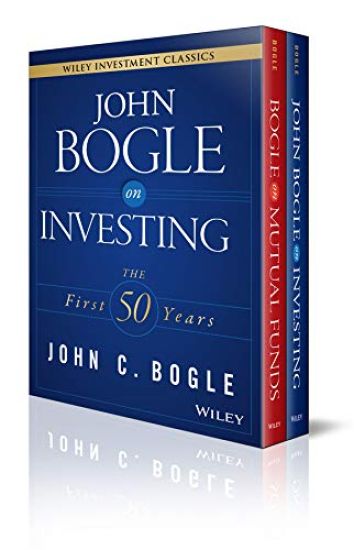
Two Bogle Investment Classics in One Elegant Boxed Set John C. Bogle founded Vanguard in 1974, then in the space of a few years, introduced the index mutual fund, pioneered the no-load mutual fund, and redefined bond fund management. This boxed set includes John Bogle on Investing and Bogle on Mutual Funds, now regarded as timeless investment classics, like Bogle himself. Warren Buffett has called him an “American hero” for his contributions to the investment success of ordinary investors. John Bogle on Investing wraps up the essence of his half-century of knowledge to deepen your understanding and enhance your investment success. Bogle’s investing philosophy has remained more or less constant throughout his illustrious career, and this book lays it out so you can learn from the very best. You'll learn what makes a successful investment strategy, consider the productive economics of long-term investing, and how emotional investment in financial markets is often counterproductive enough to forfeit success. Bogle discusses the "fiscal drag" of investing, and shows you how to cut down on sales charges, management fees, turnover costs, and opportunity costs, as he unravels a lifetime's worth of expertise to give you deep insight into the mind of a master at work. Certain books have redefined the way we view the world of finance and investing—books that should be on every investor’s shelf. Bogle On Mutual Funds is just such a work. Updated with a new introduction, this comprehensive book provides investors with the wisdom of the pioneer of mutual funds to help you identify and execute the ideal mutual fund investment choices for your portfolio. You'll learn the differences between common stock, bond, money market, and balanced funds, and why a passively managed "index" fund is a smarter investment than a fund managed by someone making weighted bets on individual securities, sectors, and the economy.
L'attivita traduttiva svolta dal giovane Studley e da me analizzata in questo lavoro di ricerca, autore che oltre alla fonte senecana contamina la sua versione con l'inserzione di motivi presenti in altre fonti della classicita greca e latina. La traduzione della Medea di Studley assurge a speculum, 'specchio' (funzione, questa, che caratterizza la maggior parte dei drammi e delle riscritture rinascimentali inglesi), affinche i Potenti possano scorgere cio che altrimenti resterebbe occulto ai loro occhi, ovvero l'impossibilita di sottrarsi ai decreti del Destino. Tuttavia, il Nostro non si limita alla contaminatio di piu fonti, ma da prova della sua originalita modificando del tutto il primo Coro della tragedia senecana e apportando innovazioni in vari luoghi del dramma in risposta alle esigenze della sua epoca. Studley, infatti, mostra un volto nuovo dell'irata e folle figura di menade latina nel tentativo di marginare l'autonomia e il potere risultati cosi inquietanti nella fonte classica.