Kirjojen hintavertailu. Mukana 11 699 587 kirjaa ja 12 kauppaa.

Kirjahaku

Etsi kirjoja tekijän nimen, kirjan nimen tai ISBN:n perusteella.

1000 tulosta hakusanalla John Henry Perry

John Henry MacKay

John Henry MacKay

John Henry MacKay

Xlibris Corporation
2000
sidottu
John Henry Mackay (1864-1933) wrote in a variety of styles. This volume of his shorter fiction contains twenty-five stories, ranging in length from one page to the longer novella. In this range, it is essentially complete. The themes also vary considerably, for Mackay did not like to repeat himself. Nevertheless, as might be expected from the biographer of the egoist philosopher Max Stirner, they often illustrate strong individuals. Such are, for example, the protagonists of "The Sybarite" and "Herculean Triflings." Other stories probe the foibles of human nature; in this category are "Then He Suddenly Remembered" and "The Voice." A surprising number of stories detail the carrying out of criminal schemes-surprising because Mackay was the most honest of individuals. This is seen in "The Stronger" and "The Great Coup."The longest of these stories, "The Innocent," begins with a murder that is later solved. But it is not a murder mystery; rather, it is "the story of a transformation" (the subtitle), the transformation of an extraordinary, if recognizable, personality into an even more extraordinary and unexpected personality. First published in 1931, the setting gives a fascinating picture of life in Berlin at that time. It is also pioneering in including homosexual characters, whose homosexuality does not form the "problem" of the story, but who are simply there as part of the plot. This would not become usual for several decades. But that is not the most memorable part of this unusual story, which is perhaps Mackay's delicious sarcasm in his portrait of the Great Poet of Germany.Though John Henry Mackay is best known as an anarchist propagandist, this volume is, all together, an excellent introduction to his work. Here, in miniature, are themes expressed at greater length in his novels and lyrically in his poetry. Critics often read his anarchist propaganda-particularly the poems-as literature and unjustly judged him by them. He saw the stories in this volume as a part of his literary legacy, on which he wanted to be judged. They appear here for the first time in English.
John Henry MacKay

John Henry MacKay

John Henry MacKay

Xlibris Corporation
2000
pokkari
John Henry Mackay (1864-1933) wrote in a variety of styles. This volume of his shorter fiction contains twenty-five stories, ranging in length from one page to the longer novella. In this range, it is essentially complete. The themes also vary considerably, for Mackay did not like to repeat himself. Nevertheless, as might be expected from the biographer of the egoist philosopher Max Stirner, they often illustrate strong individuals. Such are, for example, the protagonists of "The Sybarite" and "Herculean Triflings." Other stories probe the foibles of human nature; in this category are "Then He Suddenly Remembered" and "The Voice." A surprising number of stories detail the carrying out of criminal schemes-surprising because Mackay was the most honest of individuals. This is seen in "The Stronger" and "The Great Coup."The longest of these stories, "The Innocent," begins with a murder that is later solved. But it is not a murder mystery; rather, it is "the story of a transformation" (the subtitle), the transformation of an extraordinary, if recognizable, personality into an even more extraordinary and unexpected personality. First published in 1931, the setting gives a fascinating picture of life in Berlin at that time. It is also pioneering in including homosexual characters, whose homosexuality does not form the "problem" of the story, but who are simply there as part of the plot. This would not become usual for several decades. But that is not the most memorable part of this unusual story, which is perhaps Mackay's delicious sarcasm in his portrait of the Great Poet of Germany.Though John Henry Mackay is best known as an anarchist propagandist, this volume is, all together, an excellent introduction to his work. Here, in miniature, are themes expressed at greater length in his novels and lyrically in his poetry. Critics often read his anarchist propaganda-particularly the poems-as literature and unjustly judged him by them. He saw the stories in this volume as a part of his literary legacy, on which he wanted to be judged. They appear here for the first time in English.
John Henry Newman on the Nature of the Mind
From his vantage point in the nineteenth century, John Henry Newman offers much needed clarity to the twenty-first century, an age characterized by significant tension between science and religion and by a marginalization of the humanities. As a philosopher, theologian, priest, and man of Letters, he sheds light on our modern age by distinguishing between the different ways reason functions in science, religion, and literature. During his time, in response to a looming crisis in both religion and education, Newman challenged the usurpation of reason by science and empirical philosophy. He affirmed the need for the opening of the modern mind to other equally legitimate ways of knowing and defended the kinds of reason cultivated in the liberal arts. Jane Rupert delves into John Henry Newman's perception of the magisterial function of the imagination in both poetry and our knowledge of God, contributing unique insight into the study of his thought and showing how well it serves us to study this important nineteenth-century Catholic thinker. She presents a deep reflection of Newman's thought on several fronts, including intellectual history, theories of knowing, the controversy between science and religion, the defense of the liberal arts, and the aims of Catholic education.
John Henry Newman

John Henry Newman

John R. Connolly

Sheed Ward,U.S.
2005
nidottu
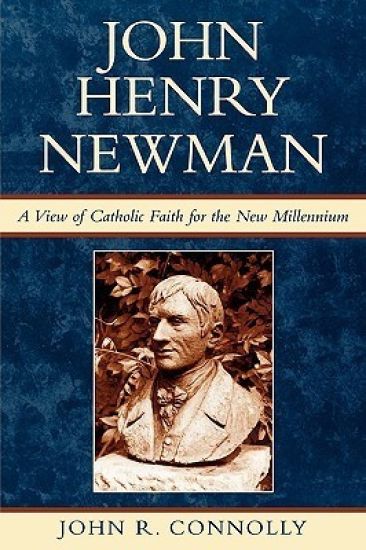
As one of the most outstanding Christian thinkers in history, John Henry Newman continues to influence theology, especially Catholic theology, long after his death in 1890. Yet, his writings on faith, particularly The Grammar of Assent, are difficult to read without guidance and direction. John Henry Newman: A View of Catholic Faith for the New Millennium provides both a comprehensive introduction to Newman's theology and a thorough analysis of its relevance for the Church today. The first systematic analysis of Newman's thought, this book skillfully weaves together the Cardinal's diverse writings on faith with seminal secondary sources and presents an integrated view of his mature notion of Catholic faith. Enhanced by a detailed introduction, biographical sketch, and bibliography, this book explores John Henry Newman's teaching on the relationship between faith and doubt, the role of the will in certitude, the relationship between faith and reason, the personal nature of faith, the function of the magisterium, the importance of dialogue, and the role of the conscience in decision-making. The concluding chapter examines the significance of Newman's thought for Catholic theology today.
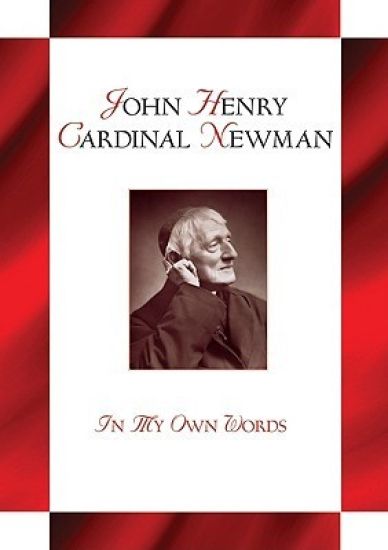
John Henry Cardianl Newman: In My Own Words

John Henry Cardianl Newman: In My Own Words

Lewis Berry

Liguori Publications
2010
sidottu
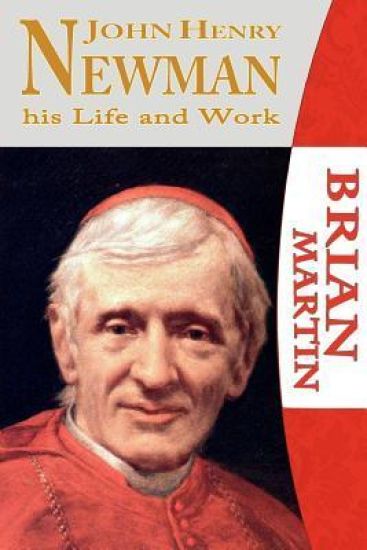
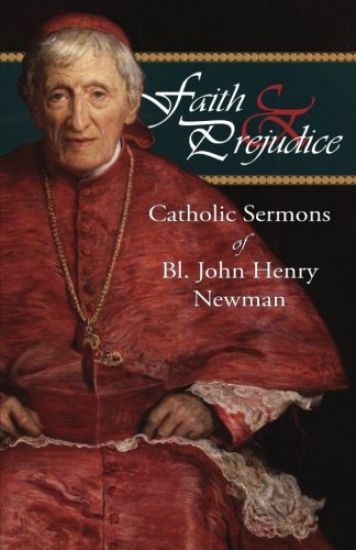
This timely compilation of John Henry Cardinal Newman's own words on a wide variety of subjects will inspire readers to live an authentic Christian life. Brother Berry's careful selections convey the heart of Newman's teachings, story, and spirit, deepening your familiarity with this saintly and influential man of God. As an Anglican priest, Newman led the Oxford Movement that sought to return the Church of England to its Catholic roots. His conversion to Catholicism in 1845 rocked Victorian England. After becoming an Oratorian priest, he was involved in the establishment of the Birmingham Oratory. In 2008, the Vatican approved the beatification of Cardinal John Henry Newman, the nineteenth century convert and theologian who has had an immense impact upon English-speaking Catholicism. Canonization would make Cardinal Newman the first English person since the seventeenth century to be officially recognized as a saint by the Church. View sample pages.Hardcover
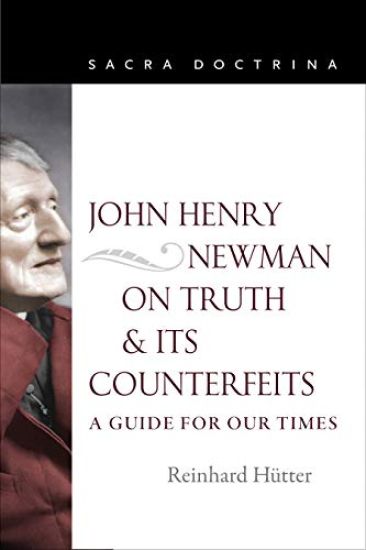
John Henry Newman on Truth and Its Counterfeits

John Henry Newman on Truth and Its Counterfeits

Reinhard Hütter

The Catholic University of America Press
2020
nidottu
Reinhard Hütter’s main thesis in this third volume of the Sacra Doctrina series is that John Henry Newman, in his own context of the nineteenth century, a century far from being a foreign one to our own, faced the same challenges as we do today; the problems then and now differ in degree, not in kind. Hence, Newman’s engagement with these problems offers us a prescient and indeed prophetic diagnosis of what these problems or errors, if not corrected, will lead to—consequences which have more or less come to pass—and, furthermore, an alternative way which is at once thoroughly Catholic and holds contemporary relevance.The introduction offers a survey of Newman’s life and works and each of the subsequent four chapters addresses one significant aspect of Christianity that is not only contested or rejected by secular unbelief, but also has a counterfeit for which not only Christians, but even Catholics have fallen. The counterfeit of conscience is the “conscience” of the sovereign subject (Ch. 1); the counterfeit of faith is the “faith” of one who does not submit to the living authority through which God communicates but rather adheres to the principle of private judgment in matters of revealed religion(Ch.2); the counterfeit of doctrinal development is twofold: (i) paying lip service to development while only selectively accepting its consequences on the grounds of a specious antiquarianism and (ii) invoking development theory to justify all sorts of contemporary changes according to the present Zeitgeist (Ch. 3). Finally, the counterfeit of the university are all those “universities” whose end is not to educate and thereby to perfect the intellect, but rather to feed more efficiently the empire of desire that is informed by the techno-consumerism of today (Ch. 4). John Henry Newman on Truth and its Counterfeits concludes with an epilogue on Hütter’s journey to Catholicism.
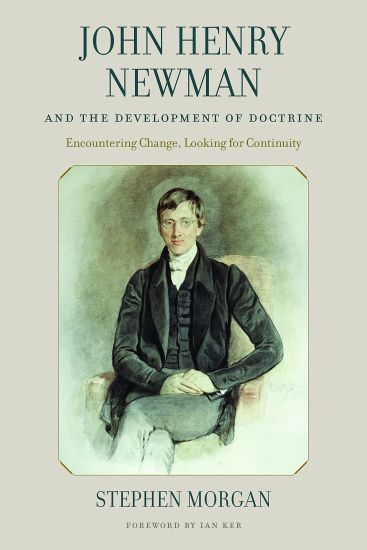
John Henry Newman and the Development of Doctrine

John Henry Newman and the Development of Doctrine

Stephen Morgan

THE CATHOLIC UNIVERSITY OF AMERICA PRESS
2021
sidottu
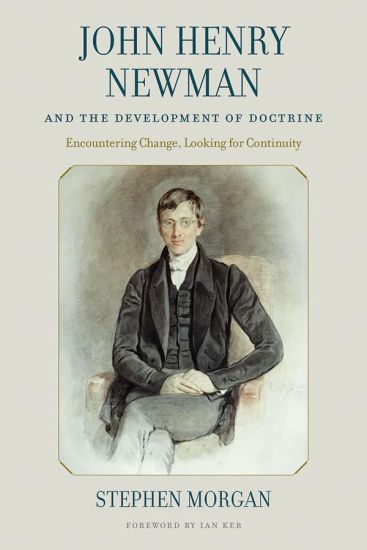
John Henry Newman and the Development of Doctrine provides an analysis of the attempts by John Henry Newman to account for the historical reality of doctrinal change within Christianity in the light of his lasting conviction that the idea of Christianity is fixed by reference to the dogmatic content of the deposit of faith. It argues that Newman proposed a series of hypotheses to account for the apparent contradiction between change and continuity, that this series begins much earlier than is generally recognized and that the final hypothesis he was to propose, contained in An Essay on the Development of Christian Doctrine, provides a methodology of lasting theological value and contemporary relevance.Stephen Morgan establishes the centrality of the problem of change and continuity in theology, to Newman's theological work as an Anglican, its part in his conversion to Catholicism and its contemporary relevance to Catholic theology. It also surveys the major secondary literature relating to the question, with particular reference to those works published within the last fifty years. Additionally, Morgan considers the legacy of the Essay as a tool in Newman's theology and in the work of later theologians, finally suggesting that it may offer a useful methodological contribution to the contemporary Catholic debate about hermeneutical approaches to the Second Vatican Council and post-conciliar developments in doctrine.
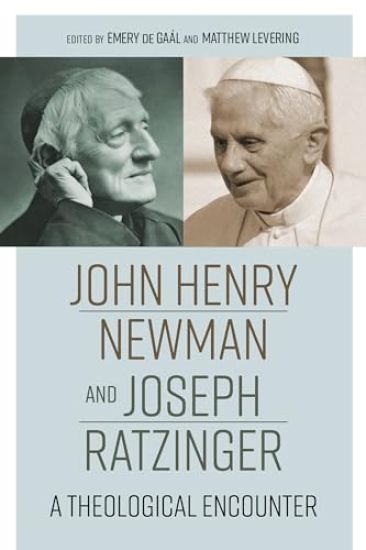
John Henry Newman and Joseph Ratzinger

John Henry Newman and Joseph Ratzinger

THE CATHOLIC UNIVERSITY OF AMERICA PRESS
2025
sidottu
This book brings the thought of John Henry Newman into conversation with that of Joseph Ratzinger/Benedict XVI on a number of crucial theological themes. The book begins with a programmatic essay by Tracey Rowland connecting Newman's approach with that of Ratzinger's doktorvater Gottlieb Söhngen, along seven instructive paths. The book then delves into central themes of both Newman's and Ratzinger's thought, with essays that treat dogmatic development, the relationship of faith and reason, biblical inspiration, mystery, conscience, attentiveness to the "signs of the times," interculturality and revelation, the Church as the Mystical Body, ecclesial authority, the relationship of faith and natural science, and deification. The essays in the volume come from many of the world's leading Newman and Ratzinger scholars, with Ratzinger being represented by such experts as Rowland, Emery de Gaál, Aaron Pidel, SJ, Jacob Phillips, Matthew Ramage, and Jeremy Pilch; and Newman by such experts as Frederick D. Aquino, Andrew Meszaros, Marial Corona, Ryan Marr, and Elizabeth A. Huddleston. The Introduction briefly sets the scene for the encounter by describing the German reception of Newman during Ratzinger's youth in comparison with the much less robust situation in German Newman scholarship today. It is the hope of the editors that this theological encounter will serve to promote and advance both Newman studies and Ratzinger studies in English- and German-speaking lands today.
John Henry Newman and the Development of Doctrine

John Henry Newman and the Development of Doctrine

Stephen Morgan

THE CATHOLIC UNIVERSITY OF AMERICA PRESS
2024
nidottu
John Henry Newman and the Development of Doctrine provides an analysis of the attempts by John Henry Newman to account for the historical reality of doctrinal change within Christianity in the light of his lasting conviction that the idea of Christianity is fixed by reference to the dogmatic content of the deposit of faith. It argues that Newman proposed a series of hypotheses to account for the apparent contradiction between change and continuity, that this series begins much earlier than is generally recognized and that the final hypothesis he was to propose, contained in An Essay on the Development of Christian Doctrine, provides a methodology of lasting theological value and contemporary relevance. Stephen Morgan establishes the centrality of the problem of change and continuity in theology, to Newman's theological work as an Anglican, its part in his conversion to Catholicism and its contemporary relevance to Catholic theology. It also surveys the major secondary literature relating to the question, with particular reference to those works published within the last fifty years. Additionally, Morgan considers the legacy of the Essay as a tool in Newman's theology and in the work of later theologians, finally suggesting that it may offer a useful methodological contribution to the contemporary Catholic debate about hermeneutical approaches to the Second Vatican Council and post-conciliar developments in doctrine.
John Henry Newman

John Henry Newman

Pauline Books Media
2019
nidottu
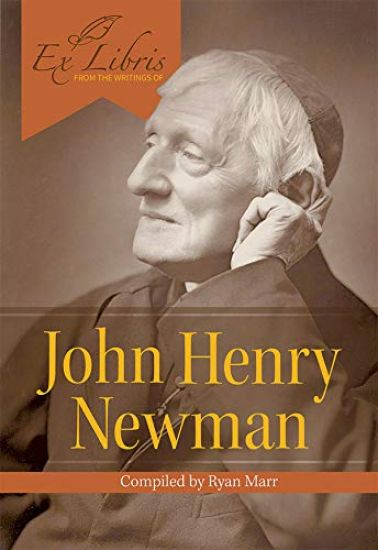
This small volume, part of the Ex libris series, offers an affordable and accessible introduction to Newman's theology. It hones in on some of the most important quotations from Newman's writings and organizes them to facilitate regular devotional reflection. Compiled by Ryan Marr, director of the National Institute for Newman Studies and associate editor of the Newman Studies Journal, it will awaken an interest in this influential thinker and possible future saint.
John Henry Wigmore and the Rules Of Evidence

John Henry Wigmore and the Rules Of Evidence

Andrew Porwancher

University of Missouri Press
2016
sidottu
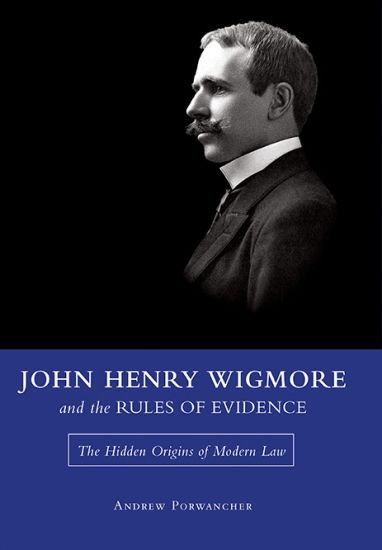
At the dawn of the twentieth century, the United States was reeling from the effects of rapid urbanization and industrialization. Time-honored verities proved obsolete, and intellectuals in all fields sought ways to make sense of an increasingly unfamiliar reality. The legal system began to buckle under the weight of its anachronism. In the midst of this crisis, John Henry Wigmore, dean of the Northwestern University School of Law, single-handedly modernized the jury trial with his 1904–5 Treatise on the Anglo-American System of Evidence in Trials at Common Law. He inspired generations of progressive jurists—among them Oliver Wendell Holmes, Jr., Benjamin Cardozo, and Felix Frankfurter—to reshape American law to meet the demands of a new era. Yet Wigmore’s role as a prophet of modernity has slipped into obscurity. This book provides a radical reappraisal of his place in the birth of modern legal thought.
John Henry Wigmore and the Rules of Evidence Volume 1

John Henry Wigmore and the Rules of Evidence Volume 1

Andrew Porwancher

UNIVERSITY OF MISSOURI PRESS
2024
nidottu
Honorable Mention, 2017 Scribes Book Award, The American Society of Legal Writers At the dawn of the twentieth century, the United States was reeling from the effects of rapid urbanization and industrialization. Time-honored verities proved obsolete, and intellectuals in all fields sought ways to make sense of an increasingly unfamiliar reality. The legal system in particular began to buckle under the weight of its anachronism. In the midst of this crisis, John Henry Wigmore, dean of the Northwestern University School of Law, single-handedly modernized the jury trial with his 1904-5 Treatise onevidence, an encyclopedic work that dominated the conduct of trials. In so doing, he inspired generations of progressive jurists—among them Oliver Wendell Holmes, Jr., Benjamin Cardozo, and Felix Frankfurter—to reshape American law to meet the demands of a new era. Yet Wigmore’s role as a prophet of modernity has slipped into obscurity. This book provides a radical reappraisal of his place in the birth of modern legal thought.
John Henry Newman

John Henry Newman

James Arthur; Guy Nicholls

Continuum International Publishing Group Ltd.
2007
sidottu
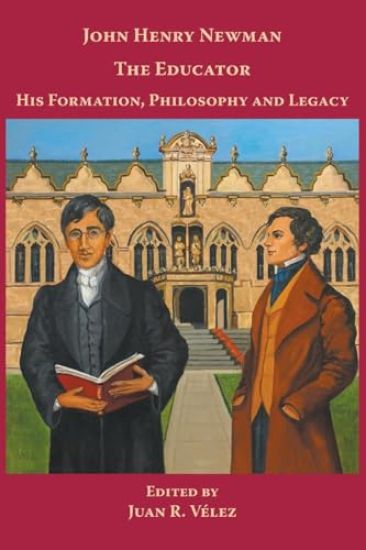
John Henry Newman is indisputably a major thinker in education. James Arthur and Guy Nicholls' volume offers the most coherent account of Newman's educational thought. This work is divided into: Intellectual biography; Critical exposition of Newman's work; and, The reception, influence and relevance of Newman's work today.This is a major international reference series providing comprehensive accounts of the work of seminal educational thinkers from a variety of periods, disciplines and traditions. It is the most ambitious and prestigious such project ever published - a definitive resource for at least a generation. The thinkers include: Aquinas, Aristotle, Bourdieu, Bruner, Dewey, Foucault, Freire, Holt, Kant, Locke, Montessori, Neill, Newman, Owen, Peters, Piaget, Plato, Rousseau, Steiner, Vygotsky, West, and Wollstonecraft.
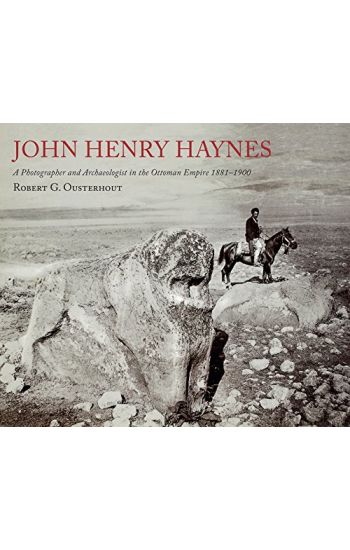
John Henry Haynes: A Photographer and Archaeologist in the Ottoman Empire 1881–1900
Virtually unknown today, John Henry Haynes (1849-1910) may be regarded as the father of American archaeological photography. His travels took him from Athens to Istanbul and on to Mesopotamia. In this landmark study, now revised with additional unpublished photographs published for the first time, Robert G. Ousterhout assesses his unique blend of artistry and documentation. Although he had scant academic credentials and just a short training in 'aesthetic' photography, John Henry Haynes broke new ground. In 1900 he uncovered an astounding cache of 23,000 cuneiform tablets that told us much of what we know about the Sumerian literary tradition. And with his discerning eye and artistic sensibility, he captured astonishing sights, many never photographed before, and many no longer in existence. Ultimately he was the victim of rivalry, snobbery and outright skulduggery and died 'broken in body and spirit'.