Kirjojen hintavertailu. Mukana 12 397 124 kirjaa ja 12 kauppaa.

Kirjahaku

Etsi kirjoja tekijän nimen, kirjan nimen tai ISBN:n perusteella.

1000 tulosta hakusanalla John T Cunningham

Methodism and Education 1849-1902

Methodism and Education 1849-1902

John T. Smith

Clarendon Press
1998
sidottu
This book has three interlocking themes. It is concerned first with the advance and subsequent decline of the Wesleyan Methodist efforts in education during the nineteenth century. Secondly, it is about Dr James Harrison Rigg, an irascible and self-opinionated Victorian minister who became Principal of Westminster Methodist Training College and President of the Methodist Conference. He had a dominant influence over his church for many years and dictated its education policy. He also gained the ear of many in government who were formulating educational legislation, and the book assesses his influence on government ideas. The final and overriding theme of the book is the anti-Catholicism within the Methodist church throughout the nineteenth century, which influenced Wesleyan attitudes towards government education policy in general and towards Anglican `Tractarian' schools in particular. The book is invaluable for students of nineteenth century religious history and is worthwhile for others interested in ecclesiastical history.
Cell Signalling

Cell Signalling

John T. Hancock

Oxford University Press
2021
nidottu
Written primarily for students embarking on an undergraduate bioscience degree, this primer provides a clear introduction to the main aspects of cell signalling in biological systems, demystifying the subject for those new to the field. The primer provides an overview of cell signalling and highlights its importance in all organisms, before going on to describe the main components of cell signalling and examples of signal transduction pathways. The discussion then progresses on to key physiological conditions in which cell signalling has an instrumental role: cancer, apoptosis and diabetes. After getting to grips with the fundamentals of the subject, Cell Signalling opens a discussion on the future of the discipline, including how manipulation of cell signalling pathways is seen as the biggest target for the pharmaceutical industry, and how crop diseases, plant survival during stress, and post-harvest storage are all influenced by cell signalling pathways. Cell Signalling is supported by online resources and is available for students and institutions to purchase in a variety of formats. The e-book offers a mobile experience and convenient access along with functionality tools, navigation features and links that offer extra learning support: www.oxfordtextbooks.co.uk/ebooks The online resources include: For students: - Self-test questions For registered adopters of the book: · Figures from the book, available to download
Robert Holcot

Robert Holcot

John T. Slotemaker; Jeffrey C. Witt

Oxford University Press Inc
2016
sidottu
This is an introduction the thought of Robert Holcot, a great and influential but often underappreciated medieval thinker. Holcot was a Dominican friar who flourished in the 1330's and produced a diverse body of work including scholastic treatises, biblical commentaries, and sermons. By viewing the whole of Holcot's corpus, this book provides a comprehensive account of his thought. Challenging established characterizations of him as a skeptic or radical, this book shows Holcot to be primarily concerned with affirming and supporting the faith of the pious believer. At times, this manifests itself as a cautious attitude toward absolutists' claims about the power of natural reason. At other times, Holcot reaffirms, in Anselmian fashion, the importance of rational effort in the attempt to understand and live out one's faith. Over the course of this introduction the authors unpack Holcot's views on faith and heresy, the divine nature and divine foreknowledge, the sacraments, Christ, and political philosophy. Likewise, they examine Holcot's approach to several important medieval literary genres, including the development of his unique "picture method," biblical commentaries, and sermons. In so doing, John Slotemaker and Jeffrey Witt restore Holcot to his rightful place as one of the most important thinkers of his time.
Robert Holcot

Robert Holcot

John T. Slotemaker; Jeffrey C. Witt

Oxford University Press Inc
2016
nidottu
This is an introduction the thought of Robert Holcot, a great and influential but often underappreciated medieval thinker. Holcot was a Dominican friar who flourished in the 1330s and produced a diverse body of work including scholastic treatises, biblical commentaries, and sermons. By viewing the whole of Holcot's corpus, this book provides a comprehensive account of his thought. Challenging established characterizations of him as a skeptic or radical, this book shows Holcot to be primarily concerned with affirming and supporting the faith of the pious believer. At times, this manifests itself as a cautious attitude toward absolutists' claims about the power of natural reason. At other times, Holcot reaffirms, in Anselmian fashion, the importance of rational effort in the attempt to understand and live out one's faith. Over the course of this introduction the authors unpack Holcot's views on faith and heresy, the divine nature and divine foreknowledge, the sacraments, Christ, and political philosophy. Likewise, they examine Holcot's approach to several important medieval literary genres, including the development of his unique "picture method," biblical commentaries, and sermons. In so doing, John Slotemaker and Jeffrey Witt restore Holcot to his rightful place as one of the most important thinkers of his time.
The Law-Governed Universe

The Law-Governed Universe

John T. Roberts

Oxford University Press
2008
sidottu
John T. Roberts presents and defends a radically new theory of laws of nature, the Measurability Account. Though consistent with a Humean ontology, Roberts's theory differs sharply from the most influential Humean theory of laws, David Lewis's Best-System Analysis. Unlike other Humean theories, the Measurability Account affirms that there is an important sense in which the laws govern the universe, rather than simply describing it economically. Yet unlike non-Humean theories, it requires only minimal metaphysical commitments. In this way, it combines the advantages of Humean and non-Humean approaches to laws, while avoiding the pitfalls of each. At the heart of the Measurability Account are two new ideas: that lawhood is not a property of facts but rather a role that a proposition can play within a scientific theory, and that what is essential to laws is that they guarantee the reliability of methods of measuring natural quantities. On the basis of these ideas, Roberts argues that we can offer an informative and compelling explanation of why laws have the peculiar counterfactual resilience that sets them apart from accidental uniformities.
The Law-Governed Universe

The Law-Governed Universe

John T. Roberts

Oxford University Press
2012
nidottu
John T. Roberts presents and defends a radically new theory of laws of nature, the Measurability Account. Though consistent with a Humean ontology, Roberts's theory differs sharply from the most influential Humean theory of laws, David Lewis's Best-System Analysis. Unlike other Humean theories, the Measurability Account affirms that there is an important sense in which the laws govern the universe, rather than simply describing it economically. Yet unlike non-Humean theories, it requires only minimal metaphysical commitments. In this way, it combines the advantages of Humean and non-Humean approaches to laws, while avoiding the pitfalls of each. At the heart of the Measurability Account are two new ideas: that lawhood is not a property of facts but rather a role that a proposition can play within a scientific theory, and that what is essential to laws is that they guarantee the reliability of methods of measuring natural quantities. On the basis of these ideas, Roberts argues that we can offer an informative and compelling explanation of why laws have the peculiar counterfactual resilience that sets them apart from accidental uniformities.
Cell Signalling

Cell Signalling

John T. Hancock

Oxford University Press
2016
nidottu
Signalling within and between cells is one of the most important aspects of modern biochemistry and cell biology. An understanding of signalling pathways is vital to a wide range of biologists, from those who are investigating the causes of cancer, to those who are concerned about the impact of environmental pollutants on the ecosystem. The way cells adapt to changing environments, and the way cell dysfunction causes disease, is underpinned by cell signalling events. Cell Signalling presents a carefully structured and highly accessible introduction to this intricate and rapidly growing field. Starting with an overview of cell signalling and highlighting its importance in many biological systems, the book goes on to explore the key components of extracellular and intracellular signalling mechanisms, before examining how these components come together to create signalling pathways. A focus on common components and concepts, rather than mechanistic detail, allows the reader to gain a thorough understanding of the principles that underpin cell signalling. Online Resource Centre The Online Resource Centre to accompany Cell Signalling features: For students: - Links to useful websites For registered adopters of the text: - Journal Clubs: suggested research papers and discussion questions linked to topics featured in the book - Figures from the book in electronic format for use in lectures
Secret of the Muses Retold

Secret of the Muses Retold

John T. Kirby

University of Chicago Press
2001
sidottu
Precious repositories of ancient wisdom? Musty relics of outmoded culture? Timeless paragons of artistic achievement? Hegemonic tools of intellectual repression? Just what are the classics, anyway, and why do (or should) we still pay so much attention to them? What is the literary canon? What is myth, and how do we use it? These are some of the questions that gave rise to John Kirby's "Secret of the Muses Retold". This new study of works by five 20th-century Italian writers investigates the abiding influence of the Greek and Roman classics, and their rich legacy in our own day. The result is not only a splendid introduction to contemporary Italian literature, but also a lucid and stimulating meditation on the insights that writers such as Umberto Eco and Italo Calvino have tapped from the wellspring of ancient tradition. Kirby's book offers an impassioned plea for the recuperations of the humanities in general, and of classical studies in particular. No expertise in Greek, Latin, Italian or literary theory is presumed, and both traditional and postmodern perspectives are accommodated.
Secret of the Muses Retold

Secret of the Muses Retold

John T. Kirby

University of Chicago Press
2001
nidottu
Precious repositories of ancient wisdom? Musty relics of outmoded culture? Timeless paragons of artistic achievement? Hegemonic tools of intellectual repression? Just what are the classics, anyway, and why do (or should) we still pay so much attention to them? What is the literary canon? What is myth, and how do we use it? These are some of the questions that gave rise to John Kirby's "Secret of the Muses Retold". This new study of works by five 20th-century Italian writers investigates the abiding influence of the Greek and Roman classics, and their rich legacy in our own day. The result is not only a splendid introduction to contemporary Italian literature, but also a lucid and stimulating meditation on the insights that writers such as Umberto Eco and Italo Calvino have tapped from the wellspring of ancient tradition. Kirby's book offers an impassioned plea for the recuperations of the humanities in general, and of classical studies in particular. No expertise in Greek, Latin, Italian or literary theory is presumed, and both traditional and postmodern perspectives are accommodated.
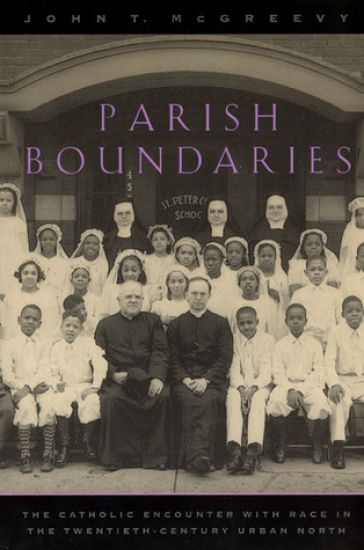
Parish Boundaries

Parish Boundaries

John T. McGreevy

University of Chicago Press
1998
nidottu
This volume chronicles the history of Catholic parishes in such major cities as Boston, Chicago, Detriot, New York and Philadelphia, linking their unique place in the urban landscape to the course of 20th-century American race relations. In portraits of parish life, the book examines the contacts and conflicts between Euro-American Catholics and their African-American neighbours. By tracing the transformation of a church, its people and the nation, the book illuminates the enormous impact of religious culture on modern American society.
Philology of the Flesh

Philology of the Flesh

John T Hamilton

University of Chicago Press
2018
sidottu
As the Christian doctrine of Incarnation asserts, “the Word became Flesh.” Yet, while this metaphor is grounded in Christian tradition, its varied functions far exceed any purely theological import. It speaks to the nature of God just as much as to the nature of language. In Philology of the Flesh, John T. Hamilton explores writing and reading practices that engage this notion in a range of poetic enterprises and theoretical reflections. By pressing the notion of philology as “love” (philia) for the “word” (logos), Hamilton’s readings investigate the breadth, depth, and limits of verbal styles that are irreducible to mere information. While a philologist of the body might understand words as corporeal vessels of core meaning, the philologist of the flesh, by focusing on the carnal qualities of language, resists taking words as mere containers. By examining a series of intellectual episodes—from the fifteenth-century Humanism of Lorenzo Valla to the poetry of Emily Dickinson, from Immanuel Kant and Johann Georg Hamann to Friedrich Nietzsche, Franz Kafka, and Paul Celan—Philology of the Flesh considers the far-reaching ramifications of the incarnational metaphor, insisting on the inseparability of form and content, an insistence that allows us to rethink our relation to the concrete languages in which we think and live.
Rousseau's Reader

Rousseau's Reader

John T. Scott

University of Chicago Press
2020
sidottu
On his famous walk to Vincennes to visit the imprisoned Diderot, Rousseau had what he called an “illumination”—the realization that man was naturally good but becomes corrupted by the influence of society—a fundamental change in Rousseau’s perspective that would animate all of his subsequent works. At that moment, Rousseau “saw” something he had hitherto not seen, and he made it his mission to help his readers share that vision through an array of rhetorical and literary techniques. In Rousseau’s Reader, John T. Scott looks at the different strategies Rousseau used to engage and persuade the readers of his major philosophical works, including the Social Contract, Discourse on Inequality, and Emile. Considering choice of genre; textual structure; frontispieces and illustrations; shifting authorial and narrative voice; addresses to readers that alternately invite and challenge; apostrophe, metaphor, and other literary devices; and, of course, paradox, Scott explores how the form of Rousseau’s writing relates to the content of his thought and vice versa. Through this skillful interplay of form and content, Rousseau engages in a profoundly transformative dialogue with his readers. While most political philosophers have focused, understandably, on Rousseau’s ideas, Scott shows convincingly that the way he conveyed them is also of vital importance, especially given Rousseau’s enduring interest in education. Giving readers the key to Rousseau’s style, Scott offers fresh and original insights into the relationship between the substance of his thought and his literary and rhetorical techniques, which enhance our understanding of Rousseau’s project and the audiences he intended to reach.
Philosophy, Writing, and the Character of Thought

Philosophy, Writing, and the Character of Thought

John T Lysaker

University of Chicago Press
2021
pokkari
Philosophy’s relation to the act of writing is John T. Lysaker’s main concern in Philosophy, Writing, and the Character of Thought. Whether in Plato, Montaigne, Nietzsche, Wittgenstein, or Derrida, philosophy has come in many forms, and those forms—the concrete shape philosophizing takes in writing—matter. Much more than mere adornment, the style in which a given philosopher writes is often of crucial importance to the point he or she is making, part and parcel of the philosophy itself. ?Considering each of the ways in which writing influences philosophy, Lysaker explores genres like the aphorism, dialogue, and essay, as well as logical-rhetorical operations like the example, irony, and quotation. At the same time, he shows us the effects of these rhetorical devices through his own literary experimentation. In dialogue with such authors as Benjamin, Cavell, Emerson, and Lukács, he aims to revitalize philosophical writing, arguing that philosophy cannot fulfill its intellectual and cultural promise if it keeps to professional articles and academic prose. Instead, philosophy must embrace writing as an essential, creative activity, and deliberately reform how it approaches its subject matter, readership, and the evolving social practices of reading and reflection.
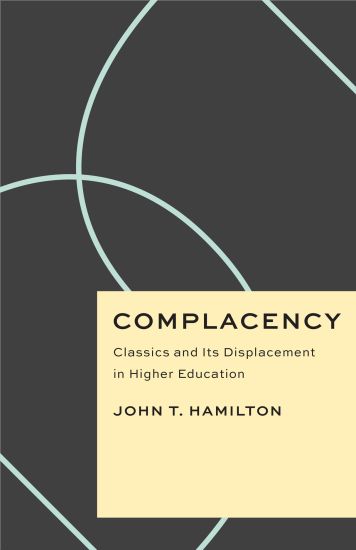
Complacency

Complacency

John T. Hamilton

THE UNIVERSITY OF CHICAGO PRESS
2022
nidottu
A critical reflection on complacency and its role in the decline of classics in the academy. In response to philosopher Simon Blackburn’s portrayal of complacency as a vice that impairs university study at its core, John T. Hamilton examines the history of complacency in classics and its implications for our contemporary moment. The subjects, philosophies, and literatures of ancient Greece and Rome were once treated as the foundation of learning, with everything else devolving from them. Hamilton investigates what this model of superiority, derived from the golden age of the classical tradition, shares with the current hegemony of mathematics and the natural sciences. He considers how the qualitative methods of classics relate to the quantitative positivism of big data, statistical reasoning, and presumably neutral abstraction, which often dismiss humanist subjectivity, legitimize self-sufficiency, and promote a fresh brand of academic complacency. In acknowledging the reduced status of classics in higher education today, he questions how scholarly striation and stagnation continue to bolster personal, ethical, and political complacency in our present era.
Complacency

Complacency

John T. Hamilton

THE UNIVERSITY OF CHICAGO PRESS
2022
sidottu
A critical reflection on complacency and its role in the decline of classics in the academy. In response to philosopher Simon Blackburn’s portrayal of complacency as a vice that impairs university study at its core, John T. Hamilton examines the history of complacency in classics and its implications for our contemporary moment. The subjects, philosophies, and literatures of ancient Greece and Rome were once treated as the foundation of learning, with everything else devolving from them. Hamilton investigates what this model of superiority, derived from the golden age of the classical tradition, shares with the current hegemony of mathematics and the natural sciences. He considers how the qualitative methods of classics relate to the quantitative positivism of big data, statistical reasoning, and presumably neutral abstraction, which often dismiss humanist subjectivity, legitimize self-sufficiency, and promote a fresh brand of academic complacency. In acknowledging the reduced status of classics in higher education today, he questions how scholarly striation and stagnation continue to bolster personal, ethical, and political complacency in our present era.
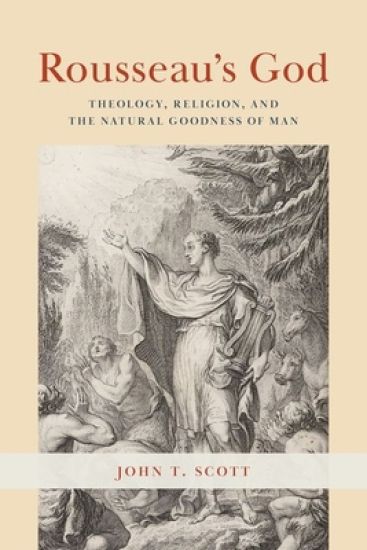
Rousseau's God

Rousseau's God

John T. Scott

THE UNIVERSITY OF CHICAGO PRESS
2023
sidottu
A landmark study of Rousseau’s theological and religious thought. John T. Scott offers a comprehensive interpretation of Rousseau’s theological and religious thought, both in its own right and in relation to Rousseau’s broader oeuvre. In chapters focused on different key writings, Scott reveals recurrent themes in Rousseau’s views on the subject and traces their evolution over time. He shows that two concepts—truth and utility—are integral to Rousseau’s writings on religion. Doing so helps to explain some of Rousseau’s disagreements with his contemporaries: their different views on religion and theology stem from different understandings of human nature and the proper role of science in human life. Rousseau emphasizes not just what is true, but also what is useful—psychologically, morally, and politically—for human beings. Comprehensive and nuanced, Rousseau’s God is vital to understanding key categories of Rousseau’s thought.
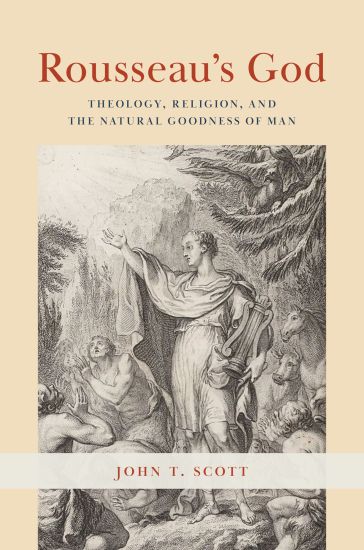
Rousseau's God

Rousseau's God

John T. Scott

THE UNIVERSITY OF CHICAGO PRESS
2023
nidottu
A landmark study of Rousseau’s theological and religious thought. John T. Scott offers a comprehensive interpretation of Rousseau’s theological and religious thought, both in its own right and in relation to Rousseau’s broader oeuvre. In chapters focused on different key writings, Scott reveals recurrent themes in Rousseau’s views on the subject and traces their evolution over time. He shows that two concepts—truth and utility—are integral to Rousseau’s writings on religion. Doing so helps to explain some of Rousseau’s disagreements with his contemporaries: their different views on religion and theology stem from different understandings of human nature and the proper role of science in human life. Rousseau emphasizes not just what is true, but also what is useful—psychologically, morally, and politically—for human beings. Comprehensive and nuanced, Rousseau’s God is vital to understanding key categories of Rousseau’s thought.
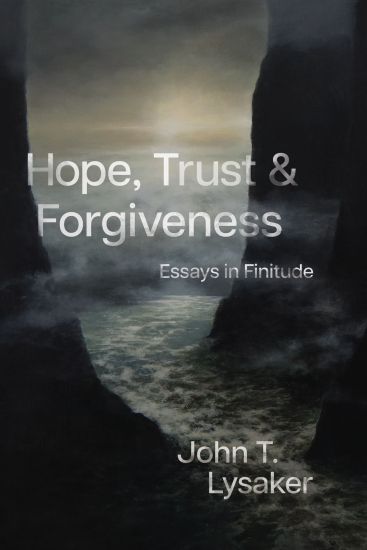
Hope, Trust, and Forgiveness

Hope, Trust, and Forgiveness

John T. Lysaker

THE UNIVERSITY OF CHICAGO PRESS
2023
sidottu
A new ethics of human finitude developed through three experimental essays. As ethical beings, we strive for lives that are meaningful and praiseworthy. But we are finite. We do not know, so we hope. We need, so we trust. We err, so we forgive. In this book, philosopher John T. Lysaker draws our attention to the ways in which these three capacities—hope, trust, and forgiveness—contend with human limits. Each experience is vital to human flourishing, yet each also poses significant personal and institutional challenges as well as opportunities for growth. Hope, Trust, and Forgiveness explores these challenges and opportunities and proposes ways to best meet them. In so doing, Lysaker experiments with the essay as a form and advances an improvisational perfectionism to deepen and expand our ethical horizons.
Hope, Trust, and Forgiveness

Hope, Trust, and Forgiveness

John T. Lysaker

THE UNIVERSITY OF CHICAGO PRESS
2023
nidottu
A new ethics of human finitude developed through three experimental essays. As ethical beings, we strive for lives that are meaningful and praiseworthy. But we are finite. We do not know, so we hope. We need, so we trust. We err, so we forgive. In this book, philosopher John T. Lysaker draws our attention to the ways in which these three capacities—hope, trust, and forgiveness—contend with human limits. Each experience is vital to human flourishing, yet each also poses significant personal and institutional challenges as well as opportunities for growth. Hope, Trust, and Forgiveness explores these challenges and opportunities and proposes ways to best meet them. In so doing, Lysaker experiments with the essay as a form and advances an improvisational perfectionism to deepen and expand our ethical horizons.
Academic Science, Higher Education, and the Federal Government, 1950-1983
Since World War II, the federal government and institutions of higher education have shared an unprecedented association. John T. Wilson is among the relatively few people who have played roles on both sides of this relationship. In this essay, he examines the substance of the relationship with an eye to the future, reviewing the policies and programs that have governed federal support of academic science and higher education during the past thirty years.