Kirjojen hintavertailu. Mukana 11 911 545 kirjaa ja 12 kauppaa.

Kirjahaku

Etsi kirjoja tekijän nimen, kirjan nimen tai ISBN:n perusteella.

1000 tulosta hakusanalla Jonathan Edwards

Jonathan Edwards and the American Experience
Universally recognized as a seminal figure in American intellectual history, Jonathan Edwards has been the focus of considerable scholarly attention in a variety of academic disciplines, including religion, history, literature, and philosophy. Because these disciplines discuss him in relation to different intellectual traditions, Edwards scholarship remains segmented. This volume represents the first attempt to provide a synthetic vision of Edwards and his contributions to American culture. Its fifteen previously unpublished essays present the best contemporary literary, historical, theological, and philosophical thinking on Edwards, locating him in his full historical context and demonstrating the continuity of his influence. Together, they provide the fullest account to date of his role in the development of the American consciousness. This volume is the first attempt to provide a synthetic vision of Edwards and his contribution to the development of the American consciousness. Fifteen previously unpublished essays present the best contemporary literary, historical, theological, and philosophical thinking on Edwards, locating him in his full historical context and demonstrating the continuity of his influence.
Jonathan Edwards and the Limits of Enlightenment Philosophy
Jonathan Edwards has most often been considered in the context of the Puritanism of New England. In many ways, however, he was closer to the thinkers of the European Enlightenment. In this book. Leon Chai explores that connection, analysing Edwards's thought in light of a number of the issues that preoccupied such Enlightenment figures as Locke, Descartes, Malebranche, and Leibniz. The book comprises three parts, each of which begins with a detailed analysis of a crucial passage from a classic Enlightenment text, and then turns to a major theological work of Jonathan Edwards in which the same issue is explored.
Jonathan Edwards Confronts the Gods

Jonathan Edwards Confronts the Gods

Gerald R. McDermott

Oxford University Press Inc
2000
sidottu
It has long been thought that Edwards's polemical arguments were aimed against Arminianism -- a doctrine that denied the Calvinist idea of predestination. In this book, Gerald McDermott shows that Edwards's real target was a larger and more influential one, namely deism -- the belief in a creator God who does not intervene in His Creation. To Edwards's mind, deism was the logical conclusion of most, if not all, schemes of divinity that appropriated Enlightenment tenets. McDermott argues that Edwards was an inclusivist who came to realize that salvation was open to peoples beyond the hearing of the Christian gospel.
Jonathan Edwards and the Psalms

Jonathan Edwards and the Psalms

David P. Barshinger

Oxford University Press Inc
2014
sidottu
Throughout church history, the book of Psalms has enjoyed wider use and acclaim than almost any other book of the Bible. Early Christians extolled it for its fullness of Christian doctrine, monks memorized and recited it daily, lay people have prayed its words as their own, and churches have sung from it as their premier hymn book. While the past half century has seen an extraordinary resurgence of interest in the thought of American theologian Jonathan Edwards, including his writings on the Bible, no scholar has yet explored his meditations on the Psalms. David P. Barshinger addresses this gap by providing a close study of his engagement with one of the Bibles most revered books. From his youth to the final days of his presidency at the College of New Jersey, Edwards was a devout student of Scriptureas more than 1,200 extant sermons, theological treatises, and thousands of personal manuscript pages devoted to biblical reflection bear witness. Using some of his writings that have previously received little to no attention, Jonathan Edwards and the Psalms offers insights on his theological engagement with the Psalms in the context of interpretation, worship, and preaching. Barshinger shows that he appropriated the history of redemption as an organizing theological framework within which to engage the Psalms specifically, and the Bible as a whole. This original study greatly advances Edwards scholarship, shedding new and welcome light on the theologians relationship to Scripture.
Jonathan Edwards on God and Creation

Jonathan Edwards on God and Creation

Oliver D. Crisp

Oxford University Press Inc
2012
sidottu
In Jonathan Edwards on God and Creation, Oliver Crisp considers two central themes in Edwards's thought, namely, his doctrine of God and his understanding of the created order, and how God and creation interrelate. Crisp argues that Edwards offers some truly original insights on these twin loci that have important implications for current theological discussion. What emerges is a picture of Edwards's understanding of God's relationship to the created order that differs in important respects from those offered by several influential recent interpreters. Crisp does not flinch from showing where Edwards made mistakes as well as where he offers fresh insights. Edwards is shown to be at once relevant to current discussion of issues like perfect being theology, panentheism, divine freedom or union with Christ, while remaining something of an idiosyncratic figure whose idealism and commitment to an uncompromising theological determinism can seem out of step with certain modern sensibilities. But, argues Crisp, even if we disagree with the conclusions Edwards reaches, which sometimes jar with our own intuitions about the divine nature or the created order, the clarity, rigor and sheer originality of his thinking offer an important set of themes and ideas with which contemporary theologians can fruitfully engage as they set about the task of constructive theology.
Jonathan Edwards and the Church

Jonathan Edwards and the Church

Rhys S. Bezzant

Oxford University Press Inc
2014
sidottu
This book seeks to shed new light on the development of the ecclesiology of Jonathan Edwards from the writings of his youth until his Stockbridge treatises, setting this within the context of Reformation and Puritan debates, and his experience of the revivals during his Northampton ministry. Bezzant contends that Edwards repristinated an ossified New England ecclesiology by acknowledging the church's dynamic relationship with the created order, history and the nations, and by advocating renewal in ecclesial life through revivals, itinerancy, Concerts of Prayer, missionary initiatives outside of the local congregation, and doctrinal clarification. Bezzant shows that Edwards accommodated the Christendom model of ecclesiology to the new philosophical, political and social realities of the mid-eighteenth-century British Atlantic world. His ecclesiology can be aptly summarized as prophetic, in as far as the church makes identification with its social context, while yet providing an alternative millennial vision for human flourishing. Edwards's Gospel is preached within a larger vision of transformed society and the glory of God, for whom the church is an orderly but not ordinary instrument to promote visible union between believers and Christ.
Jonathan Edwards's Writings

Jonathan Edwards's Writings

Indiana University Press
1996
sidottu
"This book will take its place in libraries next to the finest works abou;this creative thinker." —Religious Studies Review ". . . gives a fine sense of the present state and the future direction of Edwards studies . . . Recommended for upper-division undergraduate and graduate students." —Choice " . . . this volume opens up new windows, not only on previously neglected texts of Jonathan Edwards, but on the larger cultural functions and effects of those texts." —Journal of the History of the Behavioral Sciences Here is a compact survey of current Edwards scholarship. These essays present groundbreaking contemporary scholarship focusing on the writings of the 18th-century American philosopher and theologian Jonathan Edwards. They range widely across the Edwardsian canon, including his most prominent and important published texts—Religious Affections and The Nature of True Virtue—as well as unfamiliar treatises and sermons.
Jonathan Edwards and the Catholic Vision of Salvation

Jonathan Edwards and the Catholic Vision of Salvation

Morimoto Anri

Pennsylvania State University Press
1995
sidottu
Jonathan Edwards (1703–1758) has been acclaimed as the quintessential puritan of eighteenth-century America who defined not only what Puritanism was, but also what American Christianity would become. Anri Morimoto finds that Edwards's theology, once regarded as disarrayed, precarious, and dangerously unorthodox, is in fact consistent and integral to his general ontology and natural philosophy. By presenting Edwards's vision of salvation as a dynamic process of sharing God's excellence and holiness, Morimoto presents a new paradigm that is radically inclusive, yet theologically responsible.By discussing Edwards in relation to Roman Catholic traditions, Morimoto places him in the context of a broader Christian tradition rather than that of New England Puritanism. Morimoto argues that this view of salvation was not new to the Protestant tradition—in fact, this view was present in Luther, Calvin, and much of the Reformed tradition—but Edwards accented it more clearly and emphatically than anyone else. Morimoto concludes that one does not have to surrender or compromise one's theology to promote ecumenical harmony. This study will be of interest to scholars, teachers and students of theology and religion, church leaders and lay persons of all denominations, evangelical or liberal, and especially those interested in Edwards, Puritanism, and early American intellectual history.
Jonathan Edwards and the Catholic Vision of Salvation

Jonathan Edwards and the Catholic Vision of Salvation

Anri Morimoto

Pennsylvania State University Press
1995
pokkari
Jonathan Edwards (1703–1758) has been acclaimed as the quintessential puritan of eighteenth-century America who defined not only what Puritanism was, but also what American Christianity would become. Anri Morimoto finds that Edwards's theology, once regarded as disarrayed, precarious, and dangerously unorthodox, is in fact consistent and integral to his general ontology and natural philosophy. By presenting Edwards's vision of salvation as a dynamic process of sharing God's excellence and holiness, Morimoto presents a new paradigm that is radically inclusive, yet theologically responsible.By discussing Edwards in relation to Roman Catholic traditions, Morimoto places him in the context of a broader Christian tradition rather than that of New England Puritanism. Morimoto argues that this view of salvation was not new to the Protestant tradition—in fact, this view was present in Luther, Calvin, and much of the Reformed tradition—but Edwards accented it more clearly and emphatically than anyone else. Morimoto concludes that one does not have to surrender or compromise one's theology to promote ecumenical harmony. This study will be of interest to scholars, teachers and students of theology and religion, church leaders and lay persons of all denominations, evangelical or liberal, and especially those interested in Edwards, Puritanism, and early American intellectual history.
The Works of Jonathan Edwards, Vol. 8

The Works of Jonathan Edwards, Vol. 8

Jonathan Edwards; Paul Ramsey

Yale University Press
1989
sidottu
This volume contains two major works of Jonathan Edwards: an unpublished text of a series of sermons he preached in 1738, known as Charity and Its Fruits, and his Two Dissertations: I. Concerning the End for Which God Created the World and II. On the Nature of True Virtue, published posthumously in 1765. Together these writings set out the principles of Edwards’ ethical reflections. The text of the sermon series is drawn from three sources. The primary text is an early nineteenth-century transcription of Edwards’ sermon booklets now in the Andover-Newton Theological School’s collection. Passages published in Tyron Edwards’ 1852 edition, and partial transcriptions by Joseph Bellamy found in three fragments among his papers, have been used where the Andover copy is incomplete. The Bellamy fragments are reproduced in their entirety in a critical appendix, along with examples showing the editor’s use of the three sources in construing this definitive text for the Yale edition. End of Creation and True Virtue, intended by Edwards to be read together, are shown here to be closely related to Edwards’ other writings. Paul Ramsey’s introduction points out that Edwards returned again and again to these topics in his Miscellanies, where he identifies penultimate versions of both treatises and traces the development of Edwards’ ideas. Thus the reader is able to follow Edwards’ most profound reflections about God and the moral dimensions of his creations. This is one of the most wide-ranging theological and philosophical volumes projected in the Yale edition. The Editor’s Introduction gives a systematic analysis of the theological ethics to be found in these writings and of Edwards’ esteem for the splendor of common morality. Appendices exploring the “moral sense” school, “infused” virtue in Edwards and Calvin, and Edwards’ belief in the never ending increase of holiness and happiness in heaven complete the volume.
The Works of Jonathan Edwards, Vol. 1

The Works of Jonathan Edwards, Vol. 1

Jonathan Edwards; Paul Ramsey

Yale University Press
2009
pokkari
This inaugural volume in The Works of Jonathan Edwards is his major contribution to theology and stands as a leading document on Calvinist thought. Mr. Ramsey’s introduction provides a fresh analysis of Edwards’ theological position, includes a study of his life and the intellectual issues in the America of his time, and examines the problem of free will in the philosophical context of today and in connection with Leibniz, Locke, and Hume.
Jonathan Edwards's Theology: A Reinterpretation
This volume provides an interpretative key to Jonathan Edwards's theology developed from within his own doctrinal constructs. Strobel offers a dogmatic exposition of Edwards's theology by unveiling the trinitarian architecture of his thought. Building upon this analysis, Strobel applies his construct to reinterpret three key areas of redemption debated widely in the secondary literature: spiritual knowledge, regeneration, and religious affection. In order to achieve this purpose, Strobel's approach is theological rather than philosophical, employing Edwards's self-confession as a Reformed theologian to guide his analysis. In advancing a theological reading of Edwards, Strobel focuses on the systematic nature of Edward's theology, ordering it according to his doctrinal affirmations. This necessitates, as many Edwards scholars now affirm, a primary focus on Edwards's trinitarian theology, where the Trinity serves as the key ontological principle which orders the whole of his doctrinal construction. By grounding the interpretive key in Edwards's understanding of the Trinity, Strobel's idiosyncratic exposition of his doctrine of the Trinity serves to recast Edwards's theology in a new light.
Jonathan Edwards's Philosophy of Nature
Jonathan Edwards's Philosophy of Nature: The Re-Enchantment of the World in the Age of Scientific Reasoning analyses the works of Jonathan Edwards (1703-1758) on natural philosophy in a series of contexts within which they may best be explored and understood. Its aim is to place Edwards's writings on natural philosophy in the broad historical, theological and scientific context of a wide variety of religious responses to the rise of modern science in the early modern period - John Donne's reaction to the new astronomical philosophy of Copernicus, Kepler and Galileo, as well as to Francis Bacon's new natural philosophy; Blaise Pascal's response to Descartes' mechanical philosophy; the reactions to Newtonian science and finally Jonathan Edwards's response to the scientific culture and imagination of his time.
Jonathan Edwards's Theology: A Reinterpretation
This volume provides an interpretative key to Jonathan Edwards's theology developed from within his own doctrinal constructs. Strobel offers a dogmatic exposition of Edwards's theology by unveiling the trinitarian architecture of his thought. Building upon this analysis, Strobel applies his construct to reinterpret three key areas of redemption debated widely in the secondary literature: spiritual knowledge, regeneration, and religious affection.In order to achieve this purpose, Strobel's approach is theological rather than philosophical, employing Edwards's self-confession as a Reformed theologian to guide his analysis. In advancing a theological reading of Edwards, Strobel focuses on the systematic nature of Edward's theology, ordering it according to his doctrinal affirmations. This necessitates, as many Edwards scholars now affirm, a primary focus on Edwards's trinitarian theology, where the Trinity serves as the key ontological principle which orders the whole of his doctrinal construction. By grounding the interpretive key in Edwards's understanding of the Trinity, Strobel's idiosyncratic exposition of his doctrine of the Trinity serves to recast Edwards's theology in a new light.
Jonathan Edwards for Armchair Theologians

Jonathan Edwards for Armchair Theologians

James P. Byrd

Westminster/John Knox Press,U.S.
2008
nidottu
This witty and illuminating volume introduces the life and writings of the great American theologian and preacher Jonathan Edwards (1703-1758). The most widely studied figure in American religious history and an iconic figure of the American colonial period, Edwards is well known and highly regarded as a stalwart defender of Calvinist theology and his Puritan heritage. As James P. Byrd deftly reveals, however, Edwards was also a brilliant thinker and passionate pastor who wrestled continuously with the most important issue of his time: the relationship between faith and reason.Written by experts but designed for the novice, the Armchair series provides accurate, concise, and witty overviews of some of the most profound moments and theologians in Christian history. These books are essential supplements for first-time encounters with primary texts, lucid refreshers for scholars and clergy, and enjoyable reads for the theologically curious.
Jonathan Edwards's Philosophy of History

Jonathan Edwards's Philosophy of History

Avihu Zakai

Princeton University Press
2009
pokkari
Avihu Zakai analyzes Jonathan Edwards's redemptive mode of historical thought in the context of the Enlightenment. As theologian and philosopher, Edwards has long been a towering figure in American intellectual history. Nevertheless, and despite Edwards's intense engagement with the nature of time and the meaning of history, there has been no serious attempt to explore his philosophy of history. Offering the first such exploration, Zakai considers Edwards's historical thought as a reaction, in part, to the varieties of Enlightenment historical narratives and their growing disregard for theistic considerations. Zakai analyzes the ideological origins of Edwards's insistence that the process of history depends solely on God's redemptive activity in time as manifested in a series of revivals throughout history, reading this doctrine as an answer to the threat posed to the Christian theological teleology of history by the early modern emergence of a secular conception of history and the modern legitimation of historical time. In response to the Enlightenment refashioning of secular, historical time and its growing emphasis on human agency, Edwards strove to re-establish God's preeminence within the order of time. Against the de-Christianization of history and removal of divine power from the historical process, he sought to re-enthrone God as the author and lord of history--and thus to re-enchant the historical world. Placing Edwards's historical thought in its broadest context, this book will be welcomed by those who study early modern history, American history, or religious culture and experience in America.
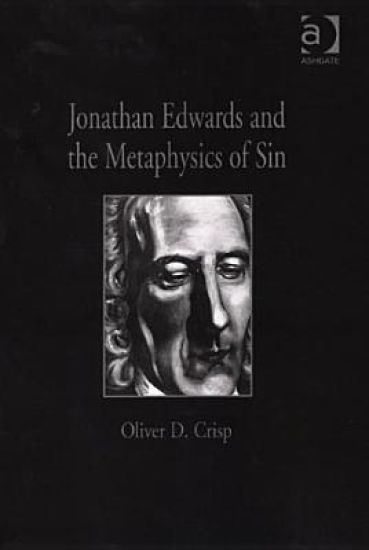
Jonathan Edwards and the Metaphysics of Sin

Jonathan Edwards and the Metaphysics of Sin

Oliver D. Crisp

Ashgate Publishing Limited
2005
sidottu
Jonathan Edwards (1703-1758) is widely regarded as America's greatest philosopher-theologian. In the last half century there has been a resurgence of interest in Edwards' work from historians, theologians and philosophers, aided by the publication of the Yale edition of Edwards' Works. Edwards' thinking on sin has long been a mystery to scholars trying to fit his thought into the traditional categories of Reformed theology. What this study shows is that Edwards' theory of sin was an original contribution to philosophical theology, which can only be understood when read on its own terms as a philosophical theory about the nature of sin, its origin and transmission. This constitutes a substantial contribution to the literature on Edwards and, more broadly, to philosophical theology in general.