

Kirjahaku
Etsi kirjoja tekijän nimen, kirjan nimen tai ISBN:n perusteella.
1000 tulosta hakusanalla Jonathan P. Brazee

Government has lost all trust within itself due to political corruption. Foreign influence has permeated multiple levels in Washington DC. That leaves FBI Agent Sabrina Morgan working with no oversight or support in Baltimore. She does have ample resources though. She begins to weave a web of deceit. One that connects two brothers who are on opposite sides of the law. Until now they've avoided one another for decades. Now greed and opportunity has them on a collision course. As their worlds get more intertwined, they learn that everybody has secrets. There is no one you can take at face value. Sabrina just wants to blend in with her new lover. Having her wildest fantasies while her wildest dream is in reach. Is she fooling everyone by hiding her true colors? Or does everyone else have a coloring book too?
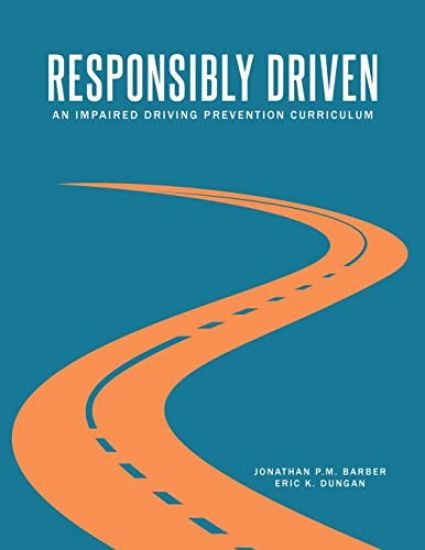
Responsibly Driven: An Impaired Driving Prevention Curriculum
Jonathan P. M. Barber; Eric K. Dungan
Fiesta Publishing
2022
nidottu
For the past ten years, more than 10,000 people have died annually in drunk-driving auto collisions.1 During this time various impaired driving educational programs have tried unsuccessfully to lower these numbers. Responsibly Driven is an innovative impaired driving program that seeks to succeed where others have failed. Responsibly Driven has seen remarkable success by challenging participants' past assumptions about their substance use and decision-making while empowering them to act against their self-destructive behaviors like impaired driving. Responsibly Driven's An Impaired Driving Prevention Curriculum assists participants in: - Understanding their relationship with drugs and alcohol; - Sharpening personal awareness and intentionality; - Developing insight into more effective decision-making; - Uncovering and treating underlying issues with substance abuse and impaired driving; - Developing and implementing an individualized sobriety plan that is clean, sober, safe, and sustainable. Developed by former offenders and tested in some of the nation's toughest prisons, Responsibly Driven has proven to be a highly effective impaired driving preventive model. 1 United States Department of Transportation. National Highway Traffic Safety Administration (NHTSA). Overview. 2020. Web. 9 Sept. 2020. .
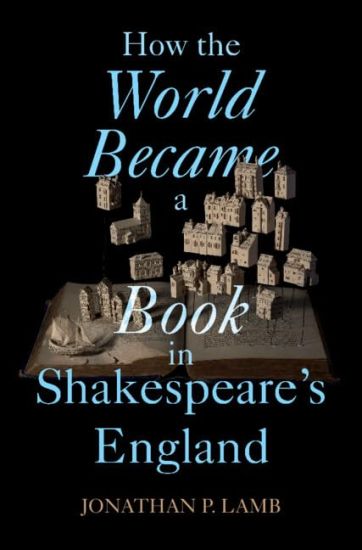
How the World Became a Book in Shakespeare's England
Jonathan P. Lamb
Cambridge University Press
2025
sidottu
Human beings build their worlds using metaphors. Just as computer technology has inaugurated a massive metaphorical transformation in the present era, in which we can 'reboot' social causes or 'program' human behaviour, books spawned new metaphorical worlds in the newly print-savvy early modern England. Pamphleteers appealed to books to stage political attacks, preachers formulated theological claims using metaphors of page and binding, and scientists claimed to leaf through the 'Book of Nature'. Jonathan P. Lamb shows how, far from offering a mere a linguistic tool, this astonishingly broad lexicon did no less than teach entire cultures how to imagine, giving early modern writers – from Shakespeare to Cavendish, and from the famous to the anonymous – the language to describe and reshape the worlds around them. He reveals how, at a scale beyond anything scholars have imagined, bookish language shaped religious, political, racial, scientific, and literary questions that remain alive today.



Winner of the AEDEAN "Enrique García Díez" Literature Research Award 2023Winner of the European Society for the Study of English Book Award 2024Shakespeare’s Sublime Pathos: Person, Audience, Language breaks new ground in providing a sustained, demystifying treatment of its subject and looking for answers to basic questions regarding the creation, experience, aesthetics and philosophy of Shakespearean sublimity. More specifically, it explores how Shakespeare generates experiences of sublime pathos, for which audiences have been prepared by the sublime ethos described in the companion volume, Shakespeare’s Sublime Ethos. To do so, it examines Shakespeare’s model of mutualistic character, in which "entangled" language brokers a psychic communion between fictive persons and real-life audiences and readers. In the process, Sublime Critical platitudes regarding Shakespeare’s liberating ambiguity and invention of the human are challenged, while the sympathetic imagination is reinstated as the linchpin of the playwright’s sublime effects. As the argument develops, the Shakespearean sublime emerges as an emotional state of vulnerable exhilaration leading to an ethically uplifting openness towards others and an epistemologically bracing awareness of human unknowability. Taken together, Shakespeare’s Sublime Pathos and Shakespeare’s Sublime Ethos show how Shakespearean drama integrates matter and spirit on hierarchical planes of cognition and argue that, ultimately, his is an immanent sublimity of the here-and-now enfolding a transcendence which may be imagined, simulated or evoked, but never achieved.

Winner of the AEDEAN "Enrique García Díez" Literature Research Award 2023Winner of the European Society for the Study of English Book Award 2024Shakespeare’s Sublime Pathos: Person, Audience, Language breaks new ground in providing a sustained, demystifying treatment of its subject and looking for answers to basic questions regarding the creation, experience, aesthetics and philosophy of Shakespearean sublimity. More specifically, it explores how Shakespeare generates experiences of sublime pathos, for which audiences have been prepared by the sublime ethos described in the companion volume, Shakespeare’s Sublime Ethos. To do so, it examines Shakespeare’s model of mutualistic character, in which "entangled" language brokers a psychic communion between fictive persons and real-life audiences and readers. In the process, Sublime Critical platitudes regarding Shakespeare’s liberating ambiguity and invention of the human are challenged, while the sympathetic imagination is reinstated as the linchpin of the playwright’s sublime effects. As the argument develops, the Shakespearean sublime emerges as an emotional state of vulnerable exhilaration leading to an ethically uplifting openness towards others and an epistemologically bracing awareness of human unknowability. Taken together, Shakespeare’s Sublime Pathos and Shakespeare’s Sublime Ethos show how Shakespearean drama integrates matter and spirit on hierarchical planes of cognition and argue that, ultimately, his is an immanent sublimity of the here-and-now enfolding a transcendence which may be imagined, simulated or evoked, but never achieved.
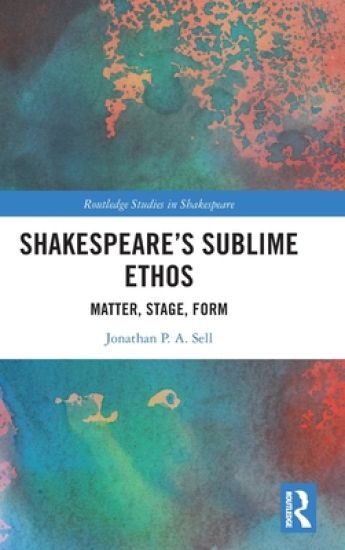
Winner of the AEDEAN "Enrique García Díez" Literature Research Award 2023Winner of the European Society for the Study of English Book Award 2024Shakespeare’s Sublime Ethos: Matter, Stage, Form breaks new ground in providing a sustained, demystifying treatment of its subject and looking for answers to basic questions regarding the creation, experience, aesthetics and philosophy of Shakespearean sublimity. More specifically, it explores how Shakespeare generates a sublime mood or ethos which predisposes audiences intellectually and emotionally for the full experience of sublime pathos, explored in the companion volume, Shakespeare’s Sublime Pathos. To do so, it examines Shakespeare’s invention of sublime matter, his exploitation of the special characteristics of the Elizabethan stage, and his dramaturgical and formal simulacra of absolute space and time. In the process, it considers Shakespeare’s conception of the universe and man’s place in it and uncovers the epistemological and existential implications of key aspects of his art. As the argument unfolds, a case is made for a transhistorically baroque Shakespeare whose "bastard art" enables the dramatic restoration of an original innocence where ignorance really is bliss. Taken together, Shakespeare’s Sublime Ethos and Shakespeare’s Sublime Pathos show how Shakespearean drama integrates matter and spirit on hierarchical planes of cognition and argue that, ultimately, his is an immanent sublimity of the here-and-now enfolding a transcendence which may be imagined, simulated or evoked, but never achieved.

Winner of the AEDEAN "Enrique García Díez" Literature Research Award 2023Winner of the European Society for the Study of English Book Award 2024Shakespeare’s Sublime Ethos: Matter, Stage, Form breaks new ground in providing a sustained, demystifying treatment of its subject and looking for answers to basic questions regarding the creation, experience, aesthetics and philosophy of Shakespearean sublimity. More specifically, it explores how Shakespeare generates a sublime mood or ethos which predisposes audiences intellectually and emotionally for the full experience of sublime pathos, explored in the companion volume, Shakespeare’s Sublime Pathos. To do so, it examines Shakespeare’s invention of sublime matter, his exploitation of the special characteristics of the Elizabethan stage, and his dramaturgical and formal simulacra of absolute space and time. In the process, it considers Shakespeare’s conception of the universe and man’s place in it and uncovers the epistemological and existential implications of key aspects of his art. As the argument unfolds, a case is made for a transhistorically baroque Shakespeare whose "bastard art" enables the dramatic restoration of an original innocence where ignorance really is bliss. Taken together, Shakespeare’s Sublime Ethos and Shakespeare’s Sublime Pathos show how Shakespearean drama integrates matter and spirit on hierarchical planes of cognition and argue that, ultimately, his is an immanent sublimity of the here-and-now enfolding a transcendence which may be imagined, simulated or evoked, but never achieved.

Loss in French Romantic Art, Literature, and Politics
Jonathan P. Ribner
Taylor Francis Ltd
2021
sidottu
An interdisciplinary examination of nineteenth-century French art pertaining to religion, exile, and the nation’s demise as a world power, this study concerns the consequences for visual culture of a series of national crises—from the assault on Catholicism and the flight of émigrés during the Revolution of 1789, to the collapse of the Empire and the dashing of hope raised by the Revolution of 1830.The central claim is that imaginative response to these politically charged experiences of loss constitutes a major shaping force in French Romantic art, and that pursuit of this theme in light of parallel developments in literature and political debate reveals a pattern of disenchantment transmuted into cultural capital. Focusing on imagery that spoke to loss through visual and verbal idioms particular to France in the aftermath of the Revolution and Empire, the book illuminates canonical works by major figures such as Eugène Delacroix, Théodore Chassériau, and Camille Corot, as well as long-forgotten images freighted with significance for nineteenth-century viewers. A study in national bereavement—an urgent theme in the present moment—the book provides a new lens through which to view the coincidence of imagination and strife at the heart of French Romanticism.The book will be of interest to scholars working in art history, French literature, French history, French politics, and religious studies.The Open Access version of this book, available at http://www.taylorfrancis.com, has been made available under a Creative Commons Attribution-Non Commercial-No Derivatives 4.0 license.
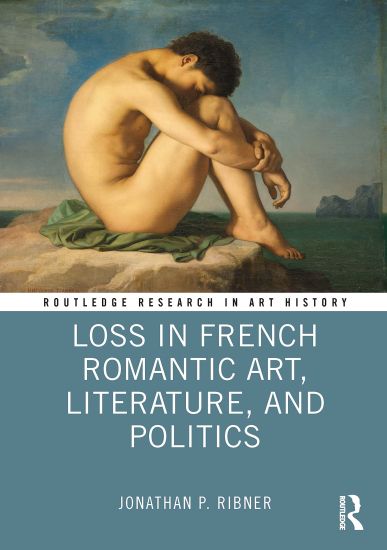
Loss in French Romantic Art, Literature, and Politics
Jonathan P. Ribner
TAYLOR FRANCIS LTD
2023
nidottu
An interdisciplinary examination of nineteenth-century French art pertaining to religion, exile, and the nation’s demise as a world power, this study concerns the consequences for visual culture of a series of national crises—from the assault on Catholicism and the flight of émigrés during the Revolution of 1789, to the collapse of the Empire and the dashing of hope raised by the Revolution of 1830.The central claim is that imaginative response to these politically charged experiences of loss constitutes a major shaping force in French Romantic art, and that pursuit of this theme in light of parallel developments in literature and political debate reveals a pattern of disenchantment transmuted into cultural capital. Focusing on imagery that spoke to loss through visual and verbal idioms particular to France in the aftermath of the Revolution and Empire, the book illuminates canonical works by major figures such as Eugène Delacroix, Théodore Chassériau, and Camille Corot, as well as long-forgotten images freighted with significance for nineteenth-century viewers. A study in national bereavement—an urgent theme in the present moment—the book provides a new lens through which to view the coincidence of imagination and strife at the heart of French Romanticism.The book will be of interest to scholars working in art history, French literature, French history, French politics, and religious studies.The Open Access version of this book, available at http://www.taylorfrancis.com, has been made available under a Creative Commons Attribution-Non Commercial-No Derivatives 4.0 license.
This textbook offers a practical approach for designing and implementing assessment for learning in the drama classroom.Assessment in the Drama Classroom begins with a theoretical overview that covers the purpose of assessment with student-centered, culturally responsive methods. The following chapters present an in-depth analysis of how to organize drama curriculum, develop measurable learning objectives, and implement a backward planning approach to summative assessment. Models and tools for generating diagnostic, formative, and summative assessments for various grade levels invite the reader to adapt these approaches to their classrooms.Ideal for drama education and pedagogy courses, this book is an accessible tool for drama educators to engage in critical reflection on assessment. Drama educators will find methods and suggestions for reimagining their assessment practices and be empowered to meet the learning needs of their students.
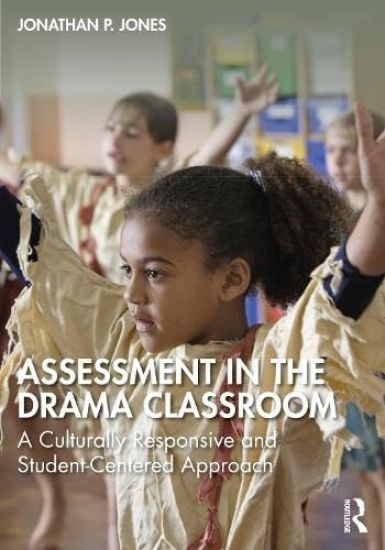
This textbook offers a practical approach for designing and implementing assessment for learning in the drama classroom.Assessment in the Drama Classroom begins with a theoretical overview that covers the purpose of assessment with student-centered, culturally responsive methods. The following chapters present an in-depth analysis of how to organize drama curriculum, develop measurable learning objectives, and implement a backward planning approach to summative assessment. Models and tools for generating diagnostic, formative, and summative assessments for various grade levels invite the reader to adapt these approaches to their classrooms.Ideal for drama education and pedagogy courses, this book is an accessible tool for drama educators to engage in critical reflection on assessment. Drama educators will find methods and suggestions for reimagining their assessment practices and be empowered to meet the learning needs of their students.
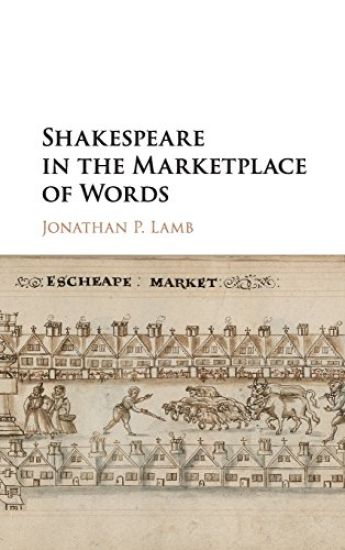
Making innovative use of digital and library archives, this book explores how Shakespeare used language to interact with the verbal marketplace of early modern England. By also combining word history with book history, Jonathan P. Lamb demonstrates Shakespeare's response to the world of words around him, in and through the formal features of his works. In chapters that focus on particular rhetorical features in Richard II, The Merchant of Venice, As You Like It, Hamlet, and Troilus and Cressida, Lamb argues that we can best understand Shakespeare's writing practice by scrutinizing how the formal features of his works circulated in an economy of imaginative writing. Shakespeare's interactions with this verbal market preceded and made possible his reputation as a playwright and dramatist. He was, in his time, a great buyer and seller of words.

Introduction to the Interstellar Medium
Jonathan P. Williams
Cambridge University Press
2021
sidottu
The gas and dust between the stars emit across the electromagnetic spectrum and are found in a range of physical conditions from diffuse plasmas to cold, dense molecules. Through their study we see how quantum processes shape the structure of our Galaxy and fluid mechanics sets the stellar mass scale. The Interstellar Medium is a very broad subject with layers of complexity, a long history and a steady flow of new results. This comprehensive yet accessible textbook provides a self-contained one-semester course for advanced undergraduate or beginning graduate students. It is written in a style that students can follow by themselves and allows instructors to use class time to go deeper into the details or show applications to current research. It makes extensive use of publicly accessible data to illustrate specific points and to encourage students to learn by performing their own analyses.
Rhetoric and Wonder in English Travel Writing, 1560-1613
Jonathan P.A. Sell
TAYLOR FRANCIS LTD
2019
nidottu
Rhetoric and Wonder in English Travel Writing, 1560-1613, shows how rhetorical invention, elocution and ethos combined to create plausible representations by generating intellectual and emotional significances which, meaningful in consensual terms, were 'consensually' true. However, some traveller-writers betrayed an unease with such representation, rooted as it was in a metaphorical epistemology out of kilter with an increasingly empiricist age. This book throws new light onto the episteme shift that ushered in modernity with its distrust of metaphor in particular and rhetoric's 'wordish descriptions' in general. In response to the empirical desiderata of scientific rationalism, traveller-writers textually or physically made their own bodies available as evidence of their encounters with wonder, thus transforming themselves into wonderful objects. The irony is that, far from dispensing with rhetoric, they merely put the accent on its more dramatic arts of gesture and action. The body's evidence could still be doctored, but its illusory truths were better able to satisfy the empirical demand for 'ocular proof'. The author's main purposes here are to complement, and sometimes counter, recent work on early modern travel literature by concentrating on its use of rhetoric to communicate meaning; and to suggest how familiarity with the workings of rhetoric and its communicative and epistemological premises may enhance readings of early modern English literature generally.
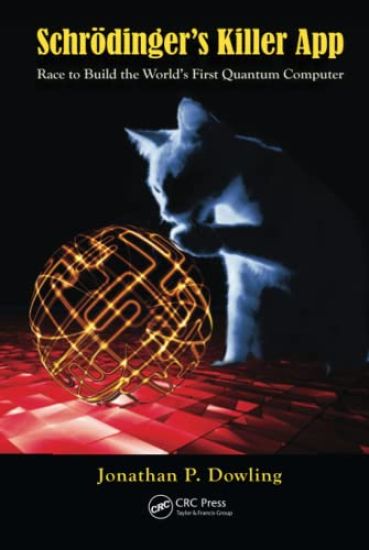
The race is on to construct the first quantum code breaker, as the winner will hold the key to the entire Internet. From international, multibillion-dollar financial transactions to top-secret government communications, all would be vulnerable to the secret-code-breaking ability of the quantum computer. Written by a renowned quantum physicist closely involved in the U.S. government‘s development of quantum information science, Schr dinger‘s Killer App: Race to Build the Worlds First Quantum Computer presents an inside look at the government‘s quest to build a quantum computer capable of solving complex mathematical problems and hacking the public-key encryption codes used to secure the Internet. The "killer application" refers to Shor‘s quantum factoring algorithm, which would unveil the encrypted communications of the entire Internet if a quantum computer could be built to run the algorithm. Schr dinger‘s notion of quantum entanglement and his infamous cat is at the heart of it all. The book develops the concept of entanglement in the historical context of Einstein‘s 30-year battle with the physics community over the true meaning of quantum theory. It discusses the remedy to the threat posed by the quantum code breaker: quantum cryptography, which is unbreakable even by the quantum computer. The author also covers applications to other important areas, such as quantum physics simulators, synchronized clocks, quantum search engines, quantum sensors, and imaging devices. In addition, he takes readers on a philosophical journey that considers the future ramifications of quantum technologies. Interspersed with amusing and personal anecdotes, this book presents quantum computing and the closely connected foundations of quantum mechanics in an engaging manner accessible to non-specialists. Requiring no formal training in physics or advanced mathematics, it explains difficult topics, including quantu

Substantial literature has emerged on the subject of career planning, development, and management. Academic research by economists, educators, political scientists, psychologists, and sociologists has made the study of careers in organizations an important interdisciplinary focus in the social sciences. This proliferation of materials has resulted from a growing concern with such career issues as quality of life, job opportunities for minorities and women, economic downturns, career mobility, and the changing success ethic. This annotated bibliography, first published in 1983, seeks to bring together in a single volume significant academic research from various disciplines.

Substantial literature has emerged on the subject of career planning, development, and management. Academic research by economists, educators, political scientists, psychologists, and sociologists has made the study of careers in organizations an important interdisciplinary focus in the social sciences. This proliferation of materials has resulted from a growing concern with such career issues as quality of life, job opportunities for minorities and women, economic downturns, career mobility, and the changing success ethic. This annotated bibliography, first published in 1983, seeks to bring together in a single volume significant academic research from various disciplines.