
Kirjahaku
Etsi kirjoja tekijän nimen, kirjan nimen tai ISBN:n perusteella.
1000 tulosta hakusanalla Jorge Laborda
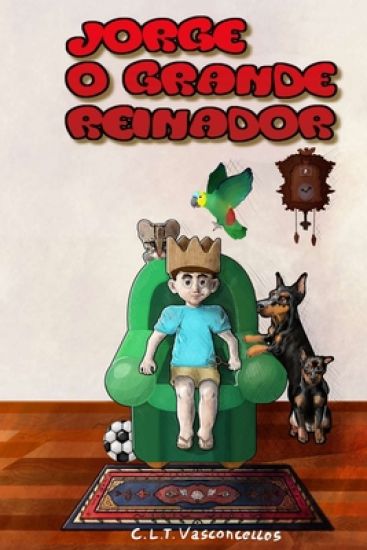
Jorge, o grande reinador.
Cícero Luiz Tadeu Vasconcellos Junior
Independently Published
2018
nidottu
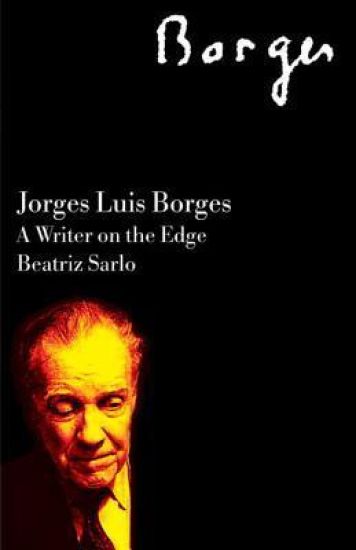
Jorge Luis Borges is generally acknowledged to be one of the twentieth century's most significant writers. Yet in all the critical debates on his work, the fact that he is Argentinian is rarely discussed, as if his international reputation had somehow cleansed him of nationality. In this brilliant introduction to his work, Sarlo challenges these "universalist" readings, arguing that they leave aside vital aspects of Borges' writing, including his powerful vision of Argentina's past and its traditions, which placed both the writer and his country at the intersection of European and Latin American culture.
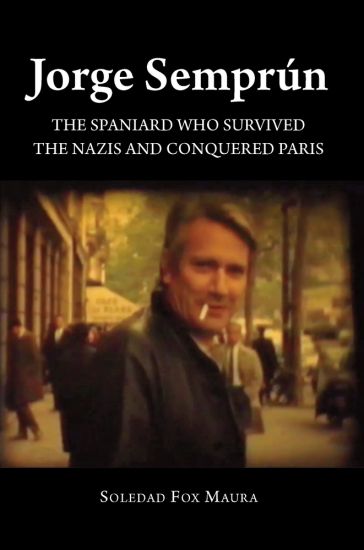
Spanish by birth, Parisian by adoption, Semprún (1923-2011) was a legendary figure on the front lines of twentieth-century European history. During the first half of his life he was an exile of the Spanish Civil War, a member of the French Resistance, a Nazi camp survivor, and clandestine agent for the Spanish Communist Party. After repeatedly risking his life from the 1930s to the 1960s, he reinvented himself as a prolific writer who turned the extraordinary material from his own life into a series of autobiographical novels, beginning with The Long Voyage, his 1963 masterpiece about his deportation to Buchenwald. Semprún was equally at home amongst the madrileños of his childhood, fellow prisoners of the Buchenwald concentration camp, politicians, and artists and writers, such as his close friend Yves Montand or Gabriel García Márquez. He is best known internationally as a prize-winning novelist and memoirist, and an Oscar-nominated screenwriter. In collaboration with Alain Resnais and Costa-Gavras he wrote the screenplays for, respectively, La guerre est finie and Z. In Spain, his extraordinary achievements were recognised when in 1988 he was named Minister of Culture. The research for this biography draws on archival materials from Spain, France, Germany, the United States and Russia; it includes many interviews with family members, close friends, politicians, and artists including former Spanish Prime Minister Felipe González, and film director Costa Gavras. Published in association with the Canada Blanch Centre for Contemporary Spanish Studies.
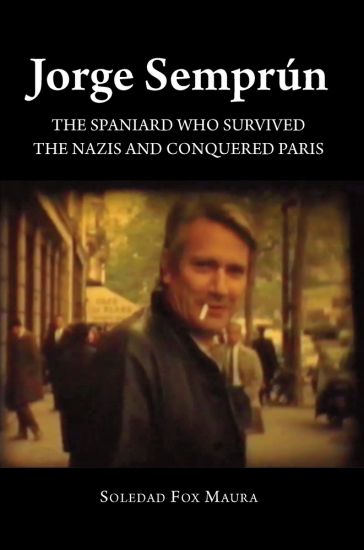
Spanish by birth, Parisian by adoption, Semprún (1923-2011) was a legendary figure on the front lines of twentieth-century European history. During the first half of his life he was an exile of the Spanish Civil War, a member of the French Resistance, a Nazi camp survivor, and clandestine agent for the Spanish Communist Party. After repeatedly risking his life from the 1930s to the 1960s, he reinvented himself as a prolific writer who turned the extraordinary material from his own life into a series of autobiographical novels, beginning with The Long Voyage, his 1963 masterpiece about his deportation to Buchenwald. Semprún was equally at home amongst the madrileños of his childhood, fellow prisoners of the Buchenwald concentration camp, politicians, and artists and writers, such as his close friend Yves Montand or Gabriel García Márquez. He is best known internationally as a prize-winning novelist and memoirist, and an Oscar-nominated screenwriter. In collaboration with Alain Resnais and Costa-Gavras he wrote the screenplays for, respectively, La guerre est finie and Z. In Spain, his extraordinary achievements were recognised when in 1988 he was named Minister of Culture. The research for this biography draws on archival materials from Spain, France, Germany, the United States and Russia; it includes many interviews with family members, close friends, politicians, and artists including former Spanish Prime Minister Felipe González, and film director Costa Gavras. Published in association with the Canada Blanch Centre for Contemporary Spanish Studies.
A thorough examination of the making of, transmission, and scholarly engagement with one of the most famous poems in the Spanish language. Completed shortly before Jorge Manrique's death in 1479, the Coplas por la muerte de su padre is arguably the most famous poem in the Spanish language. Since its first circulation in the same era, the text has occupied a prominent place in the Spanish literary tradition, becoming, along with its author, a cultural icon. This book explores the ways in which successive generations of readers and scholars have engaged with the poem. It also contextualizes the Coplas, Manrique's life, and his enduring reputation. The book is divided into four chapters. The first provides information about the historical setting of the Coplas and its earliest transmission. A chronological survey of the poem's reception comprises chapter 2 (the Renaissance and Baroque eras) and chapter 3 (literary reception in the eighteenth to twenty-first centuries). Chapter 4, "Shifting Literary Perspectives", examines how different perceptions of the meaning and form of the text have changed over the centuries, and the way in which translations have also revealed a variety of interpretations and transformations. Nancy Marino is Professor of Spanish, Adjunct Professor of History, and Consultant to the Vice President for Research at Michigan State University.

'Through the years, a man peoples a space with images of provinces, kingdoms, mountains, bays, ships, islands, fishes, rooms, tools, stars, horses and people. Shortly before his death, he discovers that the patient labyrinth of lines traces the image of his own face'. These words, inseparably marrying life and work, encapsulate how Jorge Luis Borges interwove the two throughout his legendary literary career. But the Borges of popular imagination is the celebrated, blind librarian and man of letters; few biographers have explored his tumultuous early life in the streets and cafes of Buenos Aires, a young man searching for his path in the world. In "Jorge Luis Borges", Jason Wilson uncovers the young poet who wrote, loved, and lost with adventurous passion, and considers the later work, life and travels of the writer who claimed to have never created a character: 'It's always me, subtly disguised'. Born in Buenos Aires in 1899, Jorge Luis Borges was a voracious reader from childhood, perhaps in part because he knew he lived under a sentence of adult-onset blindness inherited from his father. Wilson chronicles Borges' life as he raced against time and his fated blindness, charting the literary friendships, love affairs and polemical writings that formed the foundation of his youth. Illuminating the connections running between the biography and fictions of Borges, Wilson traces the outline of this self-effacing literary figure. Though in his later writings Borges would subjugate emotion to the wild play of ideas, "Jorge Luis Borges" reminds us that he was always a poet whose life was recreated subtly in his work but never in confessional ways and restores his Argentine roots. It will be an invaluable resource for all those who treasure this modern master.
Jorge Pimentel, Hora Zero y el cambio de época en la poesía peruana
Marcela Valencia Tsuchiya
Latino Press, the Latin American Writers Insti
2017
pokkari
En 1970, Jorge Pimentel (Lima, 1944) fund Hora Zero, un movimiento de vanguardia cuyo objetivo era transformar la poes a en el Per . Seg n Pimentel, no se hab a producido ninguna poes a que capturara la realidad y el lenguaje peruanos desde la gesta de C sar Vallejo. Este estudio examina tres aspectos de la obra publicada de Pimentel: Hora Zero como expresi n de la revuelta generacional en los a os setenta, la validez de las proposiciones de Pimentel para transformar la poes a peruana y la evoluci n de sus escritos desde la perspectiva de la textualidad, la metatextualidad y la existencia.
This book examines four key areas of Jorge Semprun's writing: his relationship to language, exile and identity; the range of narrative strategies deployed in representing his experience of Buchenwald; the ethical aspects of his reworking of autobiography; and his political thinking on Europe.
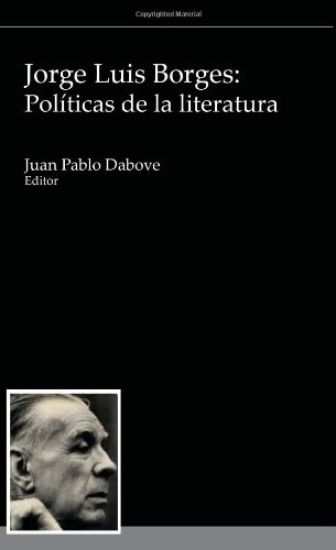
Jorge Luis Borges: Políticas de la literatura
Juan Pablo Dabove
Instituto Internacional de Literatura Iberoamericana
2008
nidottu
Colaboran: Daniel Balderston | Leila Gómez | Silvia Dapia | Sandra Contreras | Gustavo Faveron-Patriau | José Eduardo González | Edna Aizenberg | Antonio Gómez López-Quiñones | Amelia Barili | Sergio Waisman | Richard Rosa | Fernando J. Rosenberg | Bruno Bosteels | Raúl Antelo | Peter Elmore | Annick Louis | Reinaldo Laddaga ~ Contributors: Daniel Balderston | Leila Gómez | Silvia Dapia | Sandra Contreras | Gustavo Faveron-Patriau | José Eduardo González | Edna Aizenberg | Antonio Gómez López-Quiñones | Amelia Barili | Sergio Waisman | Richard Rosa | Fernando J. Rosenberg | Bruno Bosteels | Raúl Antelo | Peter Elmore | Annick Louis | Reinaldo Laddaga


Jorge Pardo & Jan Tumlir: Conversations
Inventory Press LLC
2021
pokkari
Celebrating an artistic and intellectual friendship This book encompasses a broad range of conversations between Jan Tumlir and Jorge Pardo, which span a period of 20 years, beginning in 1999. Cuban-born, Mexico-based artist Jorge Pardo (born 1963) explores the intersection of contemporary painting, design, sculpture and architecture. Employing a broad palette of vibrant colors, eclectic patterns, and natural and industrial materials, Pardo’s works range from murals to home furnishings to collages to larger-than-life fabrications. Here in conversation with art writer, teacher and curator Jan Tumlir (born 1962), he discusses contemporary art, design, publishing and music. The conversations also connect to the varied contexts of Los Angeles and Merida, Mexico, where they took place. The result is a story of a unique intellectual friendship that has helped define both of their thinking and practice.

Jorge Amaya Doesn't Live Here Anymore
New Texture
2018
pokkari
Jorge Amaya Doesn't Live Here Anymore collects photographs by Wyatt Doyle, author of Stop Requested, I Need Real Tuxedo and a Top Hat , Buty-Wave Is Now Closed Forever, and The Last Coloring Book. Jorge Amaya is available in softcover and as a deluxe expanded hardcover with additional content.

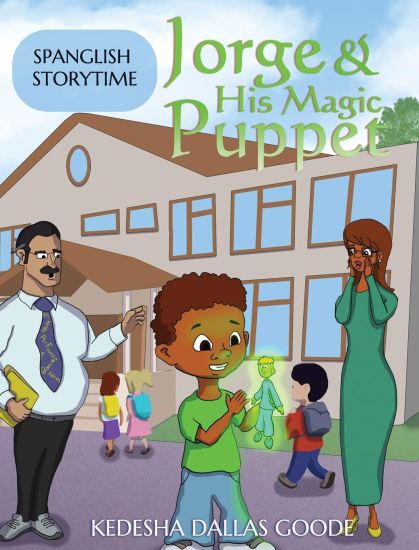

This children's educational coloring book complements the story book Jorge & His Magic Puppet. Children can indulge and enjoy coloring, while learning to pronounce spanish words in order to strike up a basic yet practical conversation in Spanish.This coloring book makes a nice gift and is suitable for children ages 4 - 8 years. Teachers can get creative and use this book in their pedagogy to spark excitement and interest in learning the language. Parents can also use this book along with their children to do team learning and practice of the language. Be innovative and use this book to create a variety of activities for children to engage in.
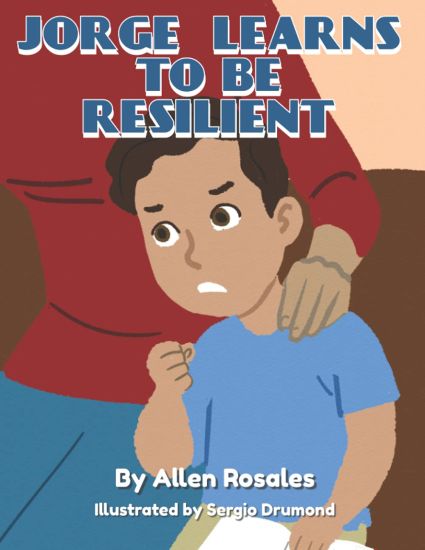
Jorge, Arturo, y El Hombre Estrella.: Cuentos..
Armando Blanco Blanco
Independently Published
2018
nidottu
Como un an lisis, y no una cr tica.En lo que podr amos llamar pr logo o presentaci n, el autor se preocup m s por la magia y la fant stica intervenci n del Hombre Estrella, por considerar que tal vez podr a ser, por novedoso, la ra z de una nueva corriente literaria donde la musa, ngel, o el ser incorp reo, toma un papel real al reclamar su obra destinada a dos receptores, en esta caso, Jorge y Arturo.Es all donde el ngel deja de "pensar" como tal, se confunde, y termina perdido como el autor al descuidar, o no darle importancia a la sabia interpretaci n en lo que podr a terminar el planeta Tierra si lo escrito se toma como una premonici n, o sencillamente como un chispazo visionario dado a la fecha en que se escribi este libro. O simplemente se realiz como una actitud l gica que cualquiera sabe, que si las cabezas de gobierno no llegan entender que con el proceder da ino con que ejercen el poder llevar n al caos al planeta. A la miseria a la poblaci n mundial, que llegado el momento, a n con dinero, no habr comida que comprar. Y para colmo de males, muchos de nosotros contribuimos en este deterioro al olvidar que no s lo el cuerpo necesita alimento, sino que tambi n el esp ritu. No s lo para balancear nuestro quehacer como seres, sino tambi n para estaren mejor armon a con el Universo, porque aunque no queramos somos parte de una sola Mente... (a saber)Esta obra pudo haber sido un mensaje "subliminal" que el autor pas de largo y la que debi haber publicado a os atr s como obligaci n, ya que as , tal vez, nos hubiese ahorrado los tragos amargos por los que estamos pasando en la actualidad.Pero, esperemos estar a tiempo ... Julio S nchez.