An Outcast of the Islands is the second novel by Joseph Conrad, published in 1896, inspired by Conrad's experience as mate of a steamer, the Vidar. The novel details the undoing of Peter Willems, a disreputable, immoral man who, on the run from a scandal in Makassar, finds refuge in a hidden native village, only to betray his benefactors over lust for the tribal chief's daughter. The story features Conrad's recurring character Tom Lingard, who also appears in Almayer's Folly (1895) and The Rescue (1920), in addition to sharing other characters with those novels. It is considered to be underrated as a work of literature for many. Conrad romanticizes the jungle environment and its inhabitants in a similar style to his "Heart of Darkness". This novel was adapted into the film Outcast of the Islands in 1951 by director Carol Reed, featuring Trevor Howard as Willems, Ralph Richardson as Lingard, Robert Morley, and Wendy Hiller.
Almayer's Folly, published in 1895, is Joseph Conrad's first novel. Set in the late 19th century, it centers on the life of the Dutch trader Kaspar Almayer in the Borneo jungle and his relationship to his mixed heritage daughter Nina. Plot: Almayer's Folly is about a poor businessman who dreams of finding a hidden gold mine and becoming very wealthy. He is a white European, married to a native Malayan; they have one daughter named Nina. He fails to find the goldmine, and comes home saddened. Previously, he had heard that the British were to conquer the Pantai River, and he had built a large, lavish house near where he resided at the time, in order to welcome the invading country to the native land. However, the conquest never took place, and the house remained unfinished. Some passing Dutch seamen had called the house "Almayer's Folly". Now, Almayer continually goes out for long trips, but eventually he stops doing so and stays home with his hopeless daydreams of riches and splendor. His native wife loathes him for this. One day, a Malayan prince, Dain Maroola, came to see Almayer about trading, and while there he falls in love with Nina. Mrs. Almayer kept arranging meetings for Nina and Dain. She wanted them to marry so her daughter could stay native, because she was highly distrustful of the white men and their ways. Dain left but vowed to return to help Almayer find the gold mine. When he does return, he goes straight to Lakamba, a Malayan rajah, and told him that he found the gold mine and that some Dutchmen had captured his ship. The rajah tells him to kill Almayer before the Dutch arrive because he is not needed to find the gold now. The following morning, an unidentifiable native corpse is found floating in the river, wearing an ankle bracelet very similar to Dain's. Almayer was distraught because Dain was his only chance at finding the secret mine. (The corpse was actually of his slave, who had died when a canoe overturned. Mrs. Almayer suggested that Dain put his anklet and ring on the body.) Mrs. Almayer planned to smuggle Dain away from the Dutch, so he would not be arrested. She snuck Nina away from her father, who was drinking with the Dutch. When he awoke from his drunken stupor, a native slave girl told him where Nina had run away to, and Almayer tracked her to Dain's hiding place. Nina refused to go back to avoid the slurs of all the white society. During all this arguing, the slave girl had informed the Dutch of Dain's whereabouts. Almayer said that he could never forgive Nina but would help them escape by taking them to the mouth of the river, where a canoe would rescue them from the Dutch. After they had escaped, Almayer erased the lover's footprints, and went back to his house. Mrs. Almayer ran away to the rajah for protection, taking all Dain's dowry with her. All alone, Almayer broke all his furniture in his home office, piled it in the center of the room, and burned it, along with his entire house, to the ground. He spent the rest of his days in " His] Folly", where he began smoking opium to forget his daughter. He eventually died there..... Joseph Conrad (Polish pronunciation: born J zef Teodor Konrad Korzeniowski; 3 December 1857 - 3 August 1924) was a Polish-British writer regarded as one of the greatest novelists to write in the English language.
Heart of Darkness (1899) is a novella by Polish-British novelist Joseph Conrad, about a voyage up the Congo River into the Congo Free State, in the heart of Africa, by the story's narrator Marlow.Marlow tells his story to friends aboard a boat anchored on the River Thames, London, England. This setting provides the frame for Marlow's story of his obsession with the ivory trader Kurtz, which enables Conrad to create a parallel between London and Africa as places of darkness. Central to Conrad's work is the idea that there is little difference between so-called civilised people and those described as savages; Heart of Darkness raises questions about imperialism and racism.Originally published as a three-part serial story in Blackwood's Magazine, Heart of Darkness has been variously published and translated into many languages. In 1998, the Modern Library ranked Heart of Darkness as the sixty-seventh of the hundred best novels in English of the twentieth century. Plot: Aboard the Nellie, anchored in the River Thames near Gravesend, England, Charles Marlow tells his fellow sailors about the events that led to his appointment as captain of a river steamboat for an ivory trading company. As a child, Marlow had been fascinated by "the blank spaces" on maps, particularly by the biggest, which by the time he had grown up was no longer blank but turned into "a place of darkness" (Conrad 10). Yet there remained a big river, "resembling an immense snake uncoiled, with its head in the sea, its body at rest curving afar over a vast country and its tail lost in the depths of the land" (Conrad 10). The image of this river on the map fascinated Marlow "as a snake would a bird" (Conrad 10). Feeling as though "instead of going to the centre of a continent I were about to set off for the centre of the earth", Marlow takes passage on a French steamer bound for the African coast and then into the interior (Conrad 18). After more than thirty days the ship anchors off the seat of the government near the mouth of the big river. Marlow, still some two hundred miles to go, now takes passage on a little sea-going steamer captained by a Swede. He departs some thirty miles up the river where his Company's station is. Work on the railway is going on, involving removal of rocks with explosives. Marlow enters a narrow ravine to stroll in the shade under the trees, and finds himself in "the gloomy circle of some Inferno" the place is full of diseased Africans who worked on the railroad and now await their deaths, their sickened bodies already as thin as air (Conrad 24-25). Marlow witnesses the scene "horror-struck" (Conrad 26). Marlow has to wait for ten days in the Company's Outer Station, where he sleeps in a hut. At this station, which strikes Marlow as a scene of devastation, he meets the Company's impeccably dressed chief accountant who tells him of a Mr. Kurtz, who is in charge of a very important trading-post, and a widely respected, first-class agent, a "'very remarkable person'" who "'Sends in as much ivory as all the others put together'" (Conrad 28). The agent predicts that Kurtz will go very far: "'He will be a somebody in the Administration before long. They, above-the Council in Europe, you know-mean him to be'" (Conrad 29)....... Joseph Conrad (Polish pronunciation: born J zef Teodor Konrad Korzeniowski; 3 December 1857 - 3 August 1924) was a Polish-British writer regarded as one of the greatest novelists to write in the English language. He joined the British merchant marine in 1878, and was granted British nationality in 1886. Though he did not speak English fluently until his twenties, he was a master prose stylist who brought a non-English sensibility into English literature.He wrote stories and novels, many with a nautical setting, that depict trials of the human spirit in the midst of an impassive, inscrutable universe....
Lord Jim is a novel by Joseph Conrad originally published as a serial in Blackwood's Magazine from October 1899 to November 1900. Plot: Recovered from an injury, Jim seeks a position on the Patna, a steamer whose journey is to carry 800 "pilgrims of an exacting faith" to a Red Sea port. He is hired as first mate. After some days of smooth sailing, the ship hits something in the night and begins taking on water. The captain thinks the ship will sink, and Jim agrees, but wants to put the passengers on the few boats before that can happen. The captain and two other crewmen think only to save themselves, freeing a boat. The helmsmen remain, as no order has been given to do otherwise. In a crucial moment, Jim jumps into the boat with the captain. A few days later, they are picked up by an outbound steamer. When they reach port, it is well known that the Patna and its passengers were brought in safely by a crew from a French gun ship. The action of the captain is against the code of seamen, abandoning both ship and passengers. The others on the small boat leave before the magistrate's court is convened; Jim is left to testify. All lose their certificates to sail. Brierly is on the panel of the court, a captain of perfect reputation, who commits suicide days after this trial. Captain Marlow attends the trial and meets Jim, whose behavior he condemns, but the young man intrigues him. Marlow listens to Jim, then finds him a place to live, in the home of a friend. Jim is accepted there, but leaves abruptly when an engineer who also abandoned ship appears to work at the house. Jim works as a ship chandler's clerk in ports of the East, always succeeding in the job, then leaving abruptly when the Patna is mentioned. In Bangkok, he gets in a fight. Marlow realises that Jim needs a new situation. Marlow consults his friend Stein. Stein sees that Jim is a romantic and considers his situation. Stein offers Jim to be his trade representative or factor in Patusan, shut off from most commerce, which Jim finds to be exactly what he needs. After his initial challenge of entering the remote settlement of Malay and Bugis, Jim finds success. He overcomes Sherif Ali, befriends the downtrodden fishing village, and builds a solid link with Doramin, the Bugis friend of Stein, and his son Dain Waris. For his leadership, they call him tuan Jim, or Lord Jim. Jim wins this respect by relieving them of the depredations of the bandit Sherif Ali and protecting them from the corrupt local Malay chief, Rajah Tunku Allang. Jim wins the love of Jewel, a young woman of mixed race, and is "satisfied... nearly". Marlow visits Patusan once, two years after Jim arrived there. He sees the success. Jewel will not believe that Jim will stay, as her father left her mother, men always leave, and she is not reassured that Marlow or any other will not arrive to take him from her. Her mother married Cornelius, previously given the role of factor by Stein for her benefit. Cornelius is displaced by Jim and resents it, though he treats his stepdaughter cruelly and stole the supplies Stein sent for sale. He is a lazy, jealous, brutal man. When the marauder arrives, Cornelius sees his chance to get rid of Jim. The marauder Captain "Gentleman" Brown, short on food and evil in his ways arrives in Patusan. The local defence led by Dain Waris holds Brown in place while Jim is off on a trip inland..... Joseph Conrad (Polish pronunciation: born J zef Teodor Konrad Korzeniowski; 3 December 1857 - 3 August 1924) was a Polish-British writer regarded as one of the greatest novelists to write in the English language.
Under Western Eyes (1911) is a novel by Joseph Conrad. The novel takes place in St. Petersburg, Russia, and Geneva, Switzerland, and is viewed as Conrad's response to the themes explored in Crime and Punishment; Conrad was reputed to have detested Dostoevsky. It is also, some say, Conrad's response to his own early life; his father was a famous revolutionary imprisoned by the Russians, but, instead of following in his father's footsteps, at the age of sixteen Conrad left his native land forever.Indeed, while writing Under Western Eyes, Conrad suffered a weeks-long breakdown during which he conversed with the novel's characters in Polish. This novel is considered to be one of Conrad's major works and is close in subject matter to The Secret Agent. It is full of cynicism and conflict about the historical failures of revolutionary movements and ideals. Conrad remarks in this book, as well as others, on the irrationality of life, the opacity of character, 3] the unfairness with which suffering is inflicted upon the innocent and poor, and the careless disregard for the lives of those with whom we share existence. The book's first audience read it after the failed Russian Revolution of 1905. A second audience read it after the Russian Revolutions of 1917, which changed the reader's perception of the author's insight.Writing to Edward Garnett in 1911, Conrad said ...in this book I am concerned with nothing but ideas, to the exclusion of everything else . PART FIRST: The narrator, an English teacher of languages living in Geneva, is narrating the personal record of Kyrilo Sidorovitch Razumov. Razumov is a student in the University of St. Petersburg in the early 1910s. Razumov never knew his parents and has no family ties. He is trusted by his fellow students, many of whom hold revolutionary views, but Razumov takes no clear position on any of the great questions of his time because he considers all of Russia his family. (A better view, perhaps, would be to say that Razumov has no family to fall back on, feels isolated from his contemporaries, takes no interest in the "great issues" of the day, and merely seeks a middle-class secure position within the Czarist system - thus, very ironically, he sees "all Russia" as his "family.") Mr. de P-, the brutal Minister of State, is assassinated by a team of two, but the bombs used also claim the lives of his footman, the first assassin and a number of bystanders. Razumov enters his rooms to find Victor Haldin, a fellow student. Haldin tells Razumov that he was the one who murdered Mr. de P-, but that he and his accomplice did not make a proper escape plan. He requests Razumov's help because he trusts him, even though he realises that they do not quite belong in the same camp. Razumov agrees to help, if only to get Haldin out of his flat. Haldin tasks him with finding Ziemianitch, who was supposed to help Haldin escape..... Joseph Conrad (Polish pronunciation: born J zef Teodor Konrad Korzeniowski; 3 December 1857 - 3 August 1924) was a Polish-British writer regarded as one of the greatest novelists to write in the English language. He joined the British merchant marine in 1878, and was granted British nationality in 1886. Though he did not speak English fluently until his twenties, he was a master prose stylist who brought a non-English sensibility into English literature.He wrote stories and novels, many with a nautical setting, that depict trials of the human spirit in the midst of an impassive, inscrutable universe.
Chance is a novel by Joseph Conrad, published in 1913 following serial publication the previous year. Although the novel was not one upon which Conrad's later critical reputation was to depend, it was his greatest commercial success upon initial publication.Chance is narrated by Conrad's regular narrator, Charles Marlow, but is characterised by a complex, nested narrative in which different narrators take up the story at different points. The novel is also unusual among its author's works for its focus on a female character: the heroine, Flora de Barral. The narrators describe and attempt to interpret various episodes in the life of Miss de Barral, the daughter of a convicted swindler named Smith de Barral (though this character is famous in the world of the novel as a criminal, he may, at least at first, have been merely an incompetent banker). Miss de Barral leads a sheltered life while her father is prosperous, then must rely on the generosity of others, who resent her or have agendas for her, before she escapes by marrying one Captain Anthony. Much of the book involves the musing of the various narrators over what she and the Captain expected from this union, and what they actually got from it. When her father is released from prison, he joins them on ship, and the book heads towards its denouement.Chance opened a path to commercial success for Conrad after years of slow progress and obscurity. This success could be measured by the record sale of the book in 1914, which outsold all his previous publications and shot him to fame. Breaking away from the tradition, Chance dealt with social issues surrounding feminism and financial speculation enacted by Mrs. Fyne and Flora de Barral, as presented by the narrators. The storyline of the novel oscillates between human-will and activity juxtaposed with an apathetic force that can nullify the importance of human action. The complex style of Conrad's narrative in this novel invited widespread criticisms from peers and readers alike..... Joseph Conrad (Polish pronunciation: born J zef Teodor Konrad Korzeniowski; 3 December 1857 - 3 August 1924) was a Polish-British writer regarded as one of the greatest novelists to write in the English language. He joined the British merchant marine in 1878, and was granted British nationality in 1886. Though he did not speak English fluently until his twenties, he was a master prose stylist who brought a non-English sensibility into English literature.He wrote stories and novels, many with a nautical setting, that depict trials of the human spirit in the midst of an impassive, inscrutable universe. Conrad is considered an early modernist, though his works still contain elements of 19th-century realism. His narrative style and anti-heroic characters have influenced many authors, including F. Scott Fitzgerald, William Faulkner, Ernest Hemingway, Andr Malraux, George Orwell, Graham Greene, Gabriel Garc a M rquez, John le Carr , V. S. Naipaul, Philip Roth, J. M. Coetzee, and Salman Rushdie. Many films have been adapted from, or inspired by, Conrad's works. Writing in the heyday of the British Empire, Conrad drew on, among other things, his native Poland's national experiences note 3] and his own experiences in the French and British merchant navies, to create short stories and novels that reflect aspects of a European-dominated world-including imperialism and colonialism-and that profoundly explore the human psyche.
The Shadow-Line is a short novel based at sea by Joseph Conrad; it is one of his later works, being written from February to December 1915. It was first published in 1916 as a serial in New York's Metropolitan Magazine (September-October) in the English Review (September 1916-March 1917) and published in book form in 1917 in the UK (March) and America (April). The novella depicts the development of a young man upon taking a captaincy in the Orient, with the shadow line of the title representing the threshold of this development. The novella is notable for its dual narrative structure. The full, subtitled title of the novel is The Shadow-Line, A Confession, which immediately alerts the reader to the retrospective nature of the novella. The ironic constructions following from the conflict between the 'young' protagonist (who is never named) and the 'old' drive much of the underlying points of the novella, namely the nature of wisdom, experience and maturity. Conrad also extensively uses irony by comparison in the work, with characters such as Captain Giles and the ship's 'factotum' Ransome used to emphasise strengths and weaknesses of the protagonist. The novella has often been cited as a metaphor of the First World War, given its timing and references to a long struggle, the importance of camaraderie, etc. This viewpoint may also be reinforced by the knowledge that Conrad's elder son, Borys, was wounded in the First World War. Others however see the novel as having a strong supernatural influence, referring to various plot-lines in the novella such as the 'ghost' of the previous captain potentially cursing the ship, and the madness of first mate Mr Burns. Conrad himself, however, denied this link in his 'Author's Note' (1920), claiming that although critics had attempted to show this link, "The world of the living contains enough marvels and mysteries as it is." Andrzej Wajda has made a 1976 film adaptation of the novel under its Polish title - Smuga cienia.... Joseph Conrad (Polish pronunciation: born J zef Teodor Konrad Korzeniowski; 3 December 1857 - 3 August 1924) was a Polish-British writer regarded as one of the greatest novelists to write in the English language. He joined the British merchant marine in 1878, and was granted British nationality in 1886. Though he did not speak English fluently until his twenties, he was a master prose stylist who brought a non-English sensibility into English literature.He wrote stories and novels, many with a nautical setting, that depict trials of the human spirit in the midst of an impassive, inscrutable universe. Conrad is considered an early modernist, though his works still contain elements of 19th-century realism. His narrative style and anti-heroic characters have influenced many authors, including F. Scott Fitzgerald, William Faulkner, Ernest Hemingway, Andr Malraux, George Orwell, Graham Greene, Gabriel Garc a M rquez, John le Carr , V. S. Naipaul, Philip Roth, J. M. Coetzee, and Salman Rushdie. Many films have been adapted from, or inspired by, Conrad's works. Writing in the heyday of the British Empire, Conrad drew on, among other things, his native Poland's national experiences note 3] and his own experiences in the French and British merchant navies, to create short stories and novels that reflect aspects of a European-dominated world-including imperialism and colonialism-and that profoundly explore the human psyche.
First published in 1906, The Mirror of the Sea was the first of Joseph Conrad's two autobiographical memoirs. Discussing it, he called the book "a very intimate revelation. . . . I have attempted here to lay bare with the unreserve of a last hour's confession the terms of my relation with the sea, which beginning mysteriously, like any great passion the inscrutable Gods send to mortals, went on unreasoning and invincible, surviving the test of disillusion, defying the disenchantment that lurks in every day of a strenuous life; went on full of love's delight and love's anguish, facing them in open-eyed exultation without bitterness and without repining, from the first hour to the last." Joseph Conrad (Polish pronunciation: born J zef Teodor Konrad Korzeniowski; 3 December 1857 - 3 August 1924) was a Polish-British writer regarded as one of the greatest novelists to write in the English language. He joined the British merchant marine in 1878, and was granted British nationality in 1886. Though he did not speak English fluently until his twenties, he was a master prose stylist who brought a non-English sensibility into English literature.He wrote stories and novels, many with a nautical setting, that depict trials of the human spirit in the midst of an impassive, inscrutable universe. Conrad is considered an early modernist, though his works still contain elements of 19th-century realism. His narrative style and anti-heroic characters have influenced many authors, including F. Scott Fitzgerald, William Faulkner, Ernest Hemingway, Andr Malraux, George Orwell, Graham Greene, Gabriel Garc a M rquez, John le Carr , V. S. Naipaul, Philip Roth, J. M. Coetzee, and Salman Rushdie. Many films have been adapted from, or inspired by, Conrad's works. Writing in the heyday of the British Empire, Conrad drew on, among other things, his native Poland's national experiences note 3] and his own experiences in the French and British merchant navies, to create short stories and novels that reflect aspects of a European-dominated world-including imperialism and colonialism-and that profoundly explore the human psyche.
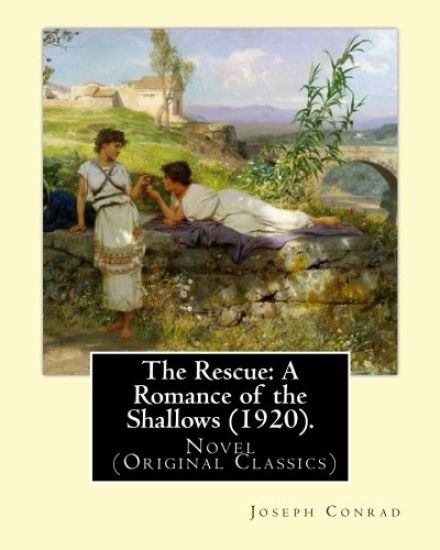
The Rescue, A Romance of the Shallows (1920) is one of Joseph Conrad's works contained in what is now sometimes called the 'Lingard Trilogy', a group of novels based on Conrad's experience as mate on the steamer Vidar. Although it was the last of the three novels to be published, after Almayer's Folly (1895) and An Outcast of the Islands (1896), the events related in the novel precede those. The story follows Captain Tom Lingard, the recurring protagonist of The Lingard Trilogy, who was on his way to help a native friend regain his land when he falls in love with a married woman whose yacht he saves from foundering. Plot: Part I. The Man and the Brig Young Tom Lingard is the owner and captain of a sailing ship, the Lightning which lies becalmed at night, somewhere in the Malayan archipelago. With his chief mate Shaw he discusses the problems that women can cause. Suddenly they are approached by a search party in a boat seeking help for a yacht which has become stranded on mudflats on a nearby island. Carter, the commander of the boat is interrogated in rather a hostile and suspicious manner which leaves him puzzled, but his boat is put in tow. When they reach the island Lingard handles his brig skillfully, but it transpires that he was heading for the island himself. He fires a warning shot into the interior, then joins the stricken yacht. Part II. The Shore of Refuge The story backtracks to explain how Lingard first came into contact with the Wajo leader Hassim, and their instant bond of friendship. Lingard goes to visit Hassim, but is warned off by Jaffir, who reports that Hassim is now a fugitive in a civil war. But Lingard takes a long boat on shore to rescue him, and the sortie is a success. Lingard begins trading in arms and saving money to help Hassim in the re-conquest of Wajo. He is followed around by Jorgenson, an old sea-captain whose life has been ruined. When Lingard explains his plans to Jorgenson, the older man warns him against taking action, and offers his own life as an example of failure. But in the end, with no future prospects, he agrees to join in the venture, along with his prematurely aged native wife. Lingard has previously visited local chief Belarab to ask for help, and offers him guns in exchange for manpower. Lingard feels that since he has saved Hassim's life, he is tied to him in some mysterious way. He buys the old schooner Emma and runs it aground close to Belarab to use as a weapons store, placing Jorgenson in charge. Part III. The Capture When Lingard arrives on the stricken yacht he is met with hostility from its owner Mr Travers, who thinks he is a vulgar adventurer, intent on profiting from salvaging the yacht. Lingard sees the yacht and its passengers as merely annoying obstacles who have come between him and his plans. The passenger d'Alcacer is in flight from Europe following the early death of his wife and is friendly with the owner's enigmatic wife Edith Travers. Whilst Lingard and Travers trade insults with each other, d'Alcacer takes an instant liking to Lingard and tries to mediate. But the dispute is interrupted by the sudden arrival of Hassim and his sister Immada. Mrs Travers is fascinated by Immada's attractiveness, but the girl and her brother reproach Lingard for recently neglecting them, and leave with him when the interview comes to a fruitless conclusion. On her own after dinner on the yacht, Mrs Travers reflects upon the failure of her romantic dreams. Suddenly, Lingard rows up alongside to talk to her, telling her he feels completely detached from his British roots and more at home with the Malaysians.... Joseph Conrad (Polish pronunciation: born J zef Teodor Konrad Korzeniowski; 3 December 1857 - 3 August 1924) was a Polish-British writer regarded as one of the greatest novelists to write in the English language.
Written at various times, under various influences, the four stories contained in Within the Tides are linked by Conrad's treatment of loyalty and betrayal. Joseph Conrad (Polish pronunciation: born J zef Teodor Konrad Korzeniowski; 3 December 1857 - 3 August 1924) was a Polish-British writer regarded as one of the greatest novelists to write in the English language. He joined the British merchant marine in 1878, and was granted British nationality in 1886. Though he did not speak English fluently until his twenties, he was a master prose stylist who brought a non-English sensibility into English literature. He wrote stories and novels, many with a nautical setting, that depict trials of the human spirit in the midst of an impassive, inscrutable universe. Conrad is considered an early modernist, though his works still contain elements of 19th-century realism. His narrative style and anti-heroic characters have influenced many authors, including F. Scott Fitzgerald, William Faulkner, Ernest Hemingway, Andr Malraux, George Orwell, Graham Greene, Gabriel Garc a M rquez, John le Carr , V. S. Naipaul, Philip Roth, J. M. Coetzee, and Salman Rushdie. Many films have been adapted from, or inspired by, Conrad's works. Writing in the heyday of the British Empire, Conrad drew on, among other things, his native Poland's national experiences and his own experiences in the French and British merchant navies, to create short stories and novels that reflect aspects of a European-dominated world-including imperialism and colonialism-and that profoundly explore the human psyche.
A Set of Six. (collection of story): Gaspar Ruiz, The Informer, The Brute, An Anarchist, The Duel, Il Conde . Joseph Conrad (Polish pronunciation: born J zef Teodor Konrad Korzeniowski; 3 December 1857 - 3 August 1924) was a Polish-British writer regarded as one of the greatest novelists to write in the English language. He joined the British merchant marine in 1878, and was granted British nationality in 1886. Though he did not speak English fluently until his twenties, he was a master prose stylist who brought a non-English sensibility into English literature. He wrote stories and novels, many with a nautical setting, that depict trials of the human spirit in the midst of an impassive, inscrutable universe. Conrad is considered an early modernist, though his works still contain elements of 19th-century realism. His narrative style and anti-heroic characters have influenced many authors, including F. Scott Fitzgerald, William Faulkner, Ernest Hemingway, Andr Malraux, George Orwell, Graham Greene, Gabriel Garc a M rquez, John le Carr , V. S. Naipaul, Philip Roth, J. M. Coetzee, and Salman Rushdie. Many films have been adapted from, or inspired by, Conrad's works. Writing in the heyday of the British Empire, Conrad drew on, among other things, his native Poland's national experiences and his own experiences in the French and British merchant navies, to create short stories and novels that reflect aspects of a European-dominated world-including imperialism and colonialism-and that profoundly explore the human psyche. Joseph Conrad was born on 3 December 1857 in Berdychiv, in what is now Ukraine and at the time of his birth the Russian Empire, a region that was once part of the Kingdom of Poland. He was the only child of Apollo Korzeniowski and his wife Ewa Bobrowska. His father was a writer, translator, political activist, and would-be revolutionary. Conrad was christened J zef Teodor Konrad after his maternal grandfather Jozef, his paternal grandfather Teodor, and the heroes (both named "Konrad") of two poems by Adam Mickiewicz, Dziady and Konrad Wallenrod. He was subsequently known to his family as "Konrad", rather than "Jozef". Though the vast majority of the surrounding area's inhabitants were Ukrainians, and the great majority of Berdychiv's residents were Jewish, almost all the countryside was owned by the Polish szlachta (nobility), to which Conrad's family belonged as bearers of the coat-of-arms. Polish literature, particularly patriotic literature, was held in high esteem by the area's Polish population. The Korzeniowski family played a significant role in Polish attempts to regain independence. Conrad's paternal grandfather served under Prince Jozef Poniatowski during Napoleon's Russian campaign and formed his own cavalry squadron during the November 1830 Uprising.
Lord Jim tells the story of a young, idealistic Englishman--"as unflinching as a hero in a book"--who is disgraced by a single act of cowardice while serving as an officer on the Patna, a merchant-ship sailing from an eastern port. His life is ruined: an isolated scandal has assumed horrifying proportions. But, then he is befriended by an older man named Marlow who helps to establish him in exotic Patusan, a remote Malay settlement where his courage is put to the test once more. Lord Jim is a book about courage and cowardice, self-knowledge and personal growth. It is one of the most profound and rewarding psychological novels in English. Set in the context of social change and colonial expansion in late Victorian England, it embodies in Jim the values and turmoil of a fading empire. This new edition uses the first English edition text and includes a new introduction and notes by leading Conrad scholar Jacques Berthoud, glossaries, and an appendix on Conrad's sources and reading.
Napoleon I., whose career had the quality of a duel against the whole of Europe, disliked duelling between the officers of his army. The great military emperor was not a swashbuckler, and had little respect for tradition. Nevertheless, a story of duelling, which became a legend in the army, runs through the epic of imperial wars. To the surprise and admiration of their fellows, two officers, like insane artists trying to gild refined gold or paint the lily, pursued a private contest through the years of universal carnage. They were officers of cavalry, and their connection with the high-spirited but fanciful animal which carries men into battle seems particularly appropriate...
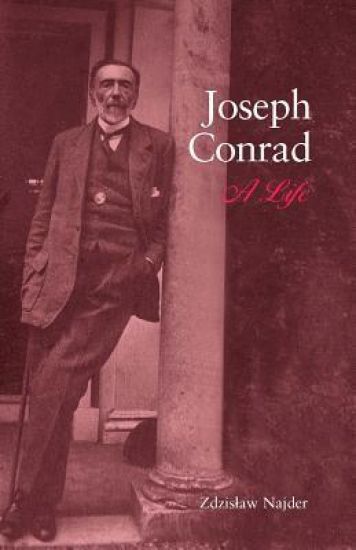
Up-to-date and extensive revision of Najder's much-acclaimed scholarly biography of Conrad, employing newly accessible sources. Joseph Conrad is not only one of the world's great writers of English -- and world -- literature, but was a writer who lived a particularly full and interesting life. For the biographer this is a double-edged sword, however: thereare many periods for which documentation is uncommonly difficult. Zdzislaw Najder's meticulously documented biography first appeared in English in 1983, garnering high praise as the best, most complete biography of Conrad. Najder's command of English, French, Polish, and Russian allowed him access to a greater variety of sources than any other biographer, and his Polish background and his own experience as an exile have afforded him a unique affinity forConrad and his milieu. All this has come into play once again in the present, extensively revised edition: much of its extensive new material was unearthed in newly-opened former east-bloc archives. There is new material on Conrad's father's genealogy and his role in Polish politics; Conrad's service in the French and British merchant marines; his early English reading and correspondence; his experiences in the Congo; the circumstances of writing his memoirs, and much more. In addition, several aspects of Conrad's life and works are more thoroughly analyzed: his problems with the English language; his borrowings from French writers; his attitude toward socialism, his reaction to the reception of his books. Zdzislaw Najder teaches at the European Academy, Cracow.