
Kirjahaku
Etsi kirjoja tekijän nimen, kirjan nimen tai ISBN:n perusteella.
1000 tulosta hakusanalla Joseph F Tuttle
Positive School Leadership
Joseph F. Murphy; Karen Seashore Louis
Teachers' College Press
2018
nidottu
This landmark book translates positive and asset-based understandings of organizations to develop a powerful model of school leadership that is grounded in both existing research and the complexities of life in schools. The authors—both senior scholars in educational leadership—apply insights from positive psychology to the role and function of educational leaders. The Positive School Leadership (PSL) model draws on the strengths of relationships among staff and the broader school community to communicate and instill shared values and a common mission. This book builds a compelling case for creating a more inclusive, less “mechanistic” approach to leadership. Designed to engage both the hearts and minds of readers, the text is organized around reflective questioning of educational practice and current assumptions about the purposes and goals of leadership in schools.
Bottling Fog is the culmination of 50 years of work to capture the core ingredients of leadership. Joseph Murphy, a preeminent scholar of leadership, has compiled this book of short and thoughtful lessons designed for today's busy professional. The lessons come from reading, seeing, and hearing about leadership in various sectors of practice. Murphy unpacks the nucleus of leadership and presents it in a way that we rarely find—seeing the fog and shaping it into meaningful forms, not textbooks or lectures, but lessons. Each lesson represents a profound slice of understanding for leaders, crafted so that they will not forget these insights as soon as they walk to their cars at the end of the day. Book Features:Concise and powerful lessons on leadership.Immediately useful to the everyday practice of leaders.Drawn from a professional lifetime of examining the complexities of practice.A user-friendly style with no academic language.
Bottling Fog is the culmination of 50 years of work to capture the core ingredients of leadership. Joseph Murphy, a preeminent scholar of leadership, has compiled this book of short and thoughtful lessons designed for today's busy professional. The lessons come from reading, seeing, and hearing about leadership in various sectors of practice. Murphy unpacks the nucleus of leadership and presents it in a way that we rarely find—seeing the fog and shaping it into meaningful forms, not textbooks or lectures, but lessons. Each lesson represents a profound slice of understanding for leaders, crafted so that they will not forget these insights as soon as they walk to their cars at the end of the day. Book Features:Concise and powerful lessons on leadership.Immediately useful to the everyday practice of leaders.Drawn from a professional lifetime of examining the complexities of practice.A user-friendly style with no academic language.
The Supreme Court and Legal Change
Joseph F. Kobylka
The University of North Carolina Press
1992
nidottu
The authors analyze abortion and death penalty decisions by the Supreme Court and argue that they provide prime examples of abrupt legal change. After proposing that the strength of legal arguments has at least as much impact on Court decisions as do public opinion and justices' political beliefs, they focus on the way litigators propel certain issues onto the Court's agenda and seek to persuade the justices to affect legal change.
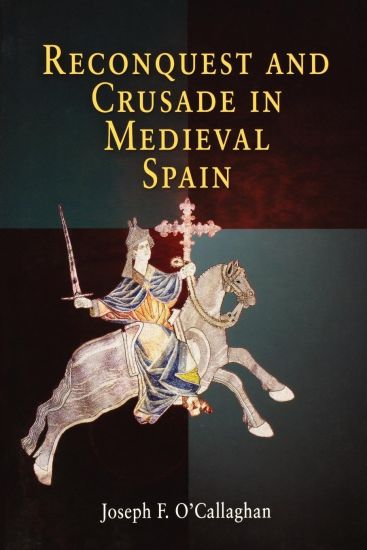
Reconquest and Crusade in Medieval Spain
Joseph F. O'Callaghan
University of Pennsylvania Press
2004
pokkari
Drawing from both Christian and Islamic sources, Reconquest and Crusade in Medieval Spain demonstrates that the clash of arms between Christians and Muslims in the Iberian peninsula that began in the early eighth century was transformed into a crusade by the papacy during the twelfth and thirteenth centuries. Successive popes accorded to Christian warriors willing to participate in the peninsular wars against Islam the same crusading benefits offered to those going to the Holy Land. Joseph F. O'Callaghan clearly demonstrates that any study of the history of the crusades must take a broader view of the Mediterranean to include medieval Spain. Following a chronological overview of crusading in the Iberian peninsula from the late eleventh to the middle of the thirteenth century, O'Callaghan proceeds to the study of warfare, military finance, and the liturgy of reconquest and crusading. He concludes his book with a consideration of the later stages of reconquest and crusade up to and including the fall of Granada in 1492, while noting that the spiritual benefits of crusading bulls were still offered to the Spanish until the Second Vatican Council of 1963. Although the conflict described in this book occurred more than eight hundred years ago, recent events remind the world that the intensity of belief, rhetoric, and action that gave birth to crusade, holy war, and jihad remains a powerful force in the twenty-first century.
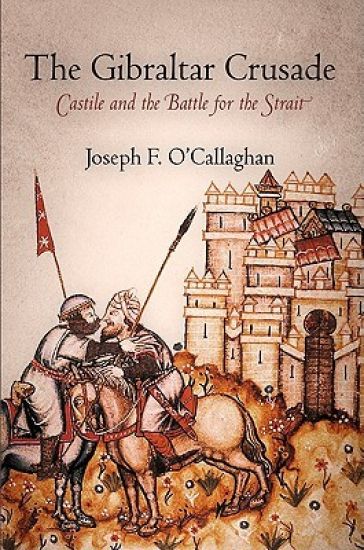
The epic battle for control of the Strait of Gibraltar waged by Castile, Morocco, and Granada in the late thirteenth and early fourteenth centuries is a major, but often overlooked, chapter in the history of the Christian reconquest of Spain. After the Castilian conquest of Seville in 1248 and the submission of the Muslim kingdom of Granada as a vassal state, the Moors no longer loomed as a threat and the reconquest seemed to be over. Still, in the following century, the Castilian kings, prompted by ideology and strategy, attempted to dominate the Strait. As self-proclaimed heirs of the Visigoths, they aspired not only to reconstitute the Visigothic kingdom by expelling the Muslims from Spain but also to conquer Morocco as part of the Visigothic legacy. As successive bands of Muslims over the centuries had crossed the Strait from Morocco into Spain, the kings of Castile recognized the strategic importance of securing Algeciras, Gibraltar, and Tarifa, the ports long used by the invaders. At a time when European enthusiasm for the crusade to the Holy Land was on the wane, the Christian struggle for the Strait received the character of a crusade as papal bulls conferred the crusading indulgence as well as ancillary benefits. The Gibraltar Crusade had mixed results. Although the Castilians seized Gibraltar in 1309 and Algeciras in 1344, the Moors eventually repossessed them. Only Tarifa, captured in 1292, remained in Castilian hands. Nevertheless, the power of the Marinid dynasty of Morocco was broken at the battle of Salado in 1340, and for the remainder of the Middle Ages Spain was relieved of the threat of Moroccan invasion. While the reconquest remained dormant during the late fourteenth and early fifteenth centuries, Ferdinand and Isabella conquered Granada, the last Muslim outpost in Spain, in 1492. In subsequent years Castile fulfilled its earlier aspirations by establishing a foothold in Morocco.
This book is a volume in the Penn Press Anniversary Collection. To mark its 125th anniversary in 2015, the University of Pennsylvania Press rereleased more than 1,100 titles from Penn Press's distinguished backlist from 1899-1999 that had fallen out of print. Spanning an entire century, the Anniversary Collection offers peer-reviewed scholarship in a wide range of subject areas.
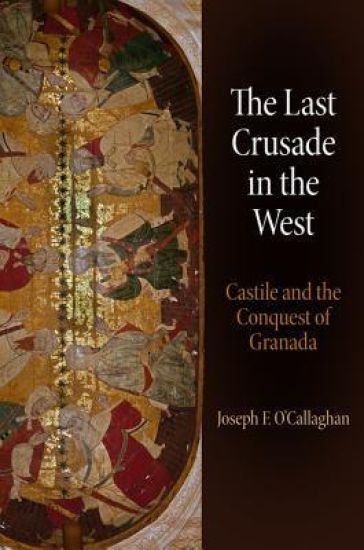
By the middle of the fourteenth century, Christian control of the Iberian Peninsula extended to the borders of the emirate of Granada, whose Muslim rulers acknowledged Castilian suzerainty. No longer threatened by Moroccan incursions, the kings of Castile were diverted from completing the Reconquest by civil war and conflicts with neighboring Christian kings. Mindful, however, of their traditional goal of recovering lands formerly ruled by the Visigoths, whose heirs they claimed to be, the Castilian monarchs continued intermittently to assault Granada until the late fifteenth century. Matters changed thereafter, when Fernando and Isabel launched a decade-long effort to subjugate Granada. Utilizing artillery and expending vast sums of money, they methodically conquered each Na?rid stronghold until the capitulation of the city of Granada itself in 1492. Effective military and naval organization and access to a diversity of financial resources, joined with papal crusading benefits, facilitated the final conquest. Throughout, the Na?rids had emphasized the urgency of a jihad waged against the Christian infidels, while the Castilians affirmed that the expulsion of the "enemies of our Catholic faith" was a necessary, just, and holy cause. The fundamentally religious character of this last stage of conflict cannot be doubted, Joseph F. O'Callaghan argues.
In Responding to Evil Joseph Kelly treats evil as a force in our personal lives. He talks about the impact of September 11 on the American consciousness and how that brought the question of evil front and center. Professor Kelly then looks at what evil does to us and how previous generations have dealt with it. By focusing on the sins people commit rather than the questions psychologists tend to focus on, such as murder or theft, or on tragedies that occurred in Rwanda or during the Holocaust, Kelly makes the discussion of evil relevant to readers like us who are not really evil" but who face the problem of our own sinfulness every day. In taking up the intellectual question of how God and evil can coexist Kelly relates the ideas in the book to real-life situations, especially of good and caring people. Finally, he shares how we can respond to evil and looks at how some modern Christians, often ordinary people, have done so. Chapters are *What Evil Does to Us, - *How Can God and Evil Co-Exist? - *Responses to Evil, - and *Some Final Thoughts. Joseph F. Kelly, PhD, chair of the department of religious studies at John Carroll University, is also active in religious education for the Diocese of Cleveland. Of his eight previous books, with Liturgical Press he has published The Problem of Evil in the Western Tradition and The World of the Early Christians. "
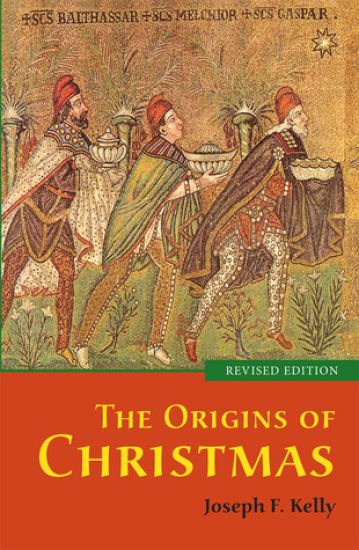
When was Christmas first celebrated? How did December 25 become the date for the feast? How did the Bible’s “magi from the East” become three kings named Melchior, Caspar, and Balthasar who rode camels from three different continents to worship the newborn Christ? How did the Feast of the Nativity generate an entire liturgical season from Advent to Candlemas? Why did medieval and Renaissance artists portray Joseph as an old man? When did the first Christmas music appear? And who was the real Saint Nicholas? These and many other questions are answered in this revised and expanded edition of The Origins of Christmas. The story of the origins of Christmas is not well known, but it is a fascinating tale. It begins when the first Christians had little interest in Christ’s Nativity, and it finishes when Christmas had become an integral part of Christian life and Western culture. The Origins of Christmas covers a variety of topics in a concise and accessible style, and is suitable for group discussions.
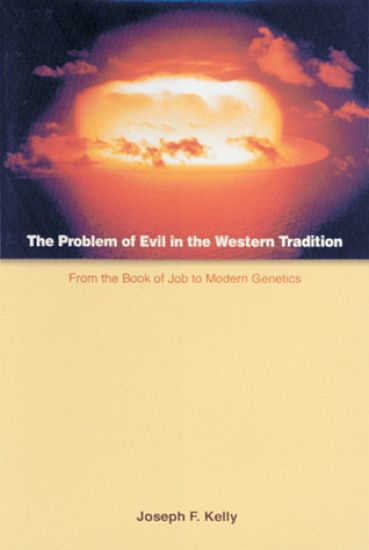
The question of evil presents a profound challenge to humanity—why do we do what we know to be wrong? This is especially a challenge to religious believers. Why doesn't an all-good and omnipotent God step in and put an end to evil? The Problem of Evil in the Western Tradition examines how Western thinkers have dealt with the problem of evil, starting in ancient Israel and tracing the question through post-biblical Judaism, Early Christianity (especially in Africa), the Middle Ages, the Renaissance, the Reformation, the Enlightenment, and to the twenty-first century when science has raised new and important issues.Joseph Kelly covers the book of Job, the book of Revelation, Augustine of Hippo, Aquinas, Luther, Marlow, Milton, Voltaire, Hume, Mary Shelley, Darwin, Jung, Flannery O'Connor, Karl Rahner, Teilhard de Chardin, and modern geneticists.Chapters are "Some Perspectives on Evil," "Israel and Evil," "The New Adam," "Out of Africa," "The Broken Cosmos," "The Middle Ages," "Decline and Reform of Humanism," "The Devil's Last Stand," "Rationalizing Evil," "The Attack on Christianity," "Dissident Voices," "Human Evil in the Nineteenth Century," "Science, Evil, and Original Sin," "Modern Literary Approaches to Evil," "Some Scientific Theories of Evil," and "Modern Religious Approaches to Evil."Joseph F. Kelly, Ph.D., is professor of religious studies at John Carroll University in Cleveland, Ohio. He is the author of The World of the Early Christians, published by The Liturgical Press.
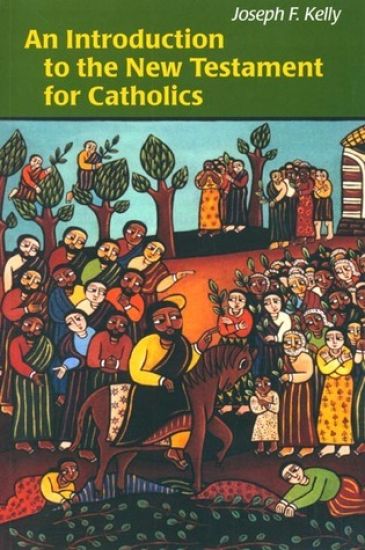
The title of this book may be a bit puzzling 'a Catholic introduction to the New Testament? The New Testament belongs to all Christians, and the modern study of the New Testament has benefited from the contributions by scholars of all Christian denominations. But there are questions and issues in the New Testament that are specific to Catholics, such as the portrayal of Jesus' mother Mary, the commissioning of Peter, and the Trinity. In this volume, Joseph Kelly provides an introduction to the New Testament for students and deals with the concerns of modern Catholics reading the Bible. It's a book that Catholic teachers can use rather than a book that presents them with problems they have to explain.Kelly helps readers to understand what modern scholars, especially Catholic biblical exegetes, say about the individual books because we cannot understand what role Jesus can play in modern life if we don 't understand what he meant to the earliest Christians.The New Testament tells the story of Jesus, the most remarkable person who ever lived, and of his disciples. It includes some of the most famous narratives in the world and the most memorable words ever spoken. It introduces us to great people who moved history and of those who took the difficult step of leaving the religions of their ancestors and families to become Christians. Kelly shows that in looking at the New Testament we see real people communicating with us 'sharing their beliefs, their fears, and their hopes. Distant yet familiar, challenging yet comprehensible, the New Testament is a precious heritage, and one that Kelly recommends we must make our own.Joseph F. Kelly, PhD, is professor of religious studies at John Carroll University in Cleveland, Ohio. He is the author of The World of the Early Christians, The Problem of Evil in the Western Tradition, Responding to Evil, The Origins of Christmas and The Collegeville Church History Time-Line published by Liturgical Press.
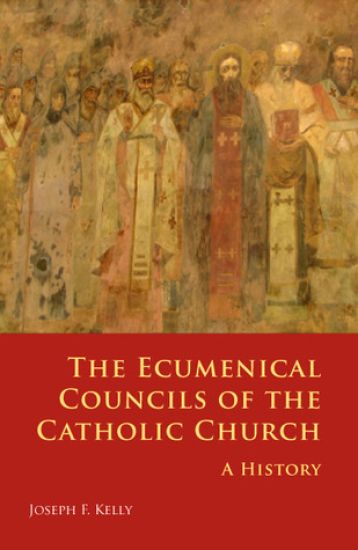
There have been twenty-one universal gatherings 'ecumenical councils' of the Catholic Church. The first opened in 325, the last closed in 1965, and the names of many ring out in the history of the church: Nicea, Chalcedon, Trent, Vatican II. Though centuries separate the councils, each occurred when the church faced serious crises, sometimes with doctrinal matters, sometimes with moral or even political matters, and sometimes with discerning the church's relation to the world. The councils determined much of what the Catholic Church is and believes. Additionally, many councils impacted believers in other Christian traditions and even in other faiths. In this accessible, readable, and yet substantial account of the councils Joseph Kelly provides both the historical context for each council as well as an account of its proceedings. Readers will discover how the councils shaped the debate for the following decades and even centuries, and will appreciate the occasional portraits of important conciliar figures from Emperor Constantine to Pope John XXIII.

Handbook of Aqueous Electrolyte Thermodynamics
Joseph F. Zemaitis; Diane M. Clark; Marshall Rafal; Noel C. Scrivner
American Institute of Chemical Engineers
1986
sidottu
Expertise in electrolyte systems has become increasingly important in traditional CPI operations, as well as in oil/gas exploration and production. This book is the source for predicting electrolyte systems behavior, an indispensable "do-it-yourself" guide, with a blueprint for formulating predictive mathematical electrolyte models, recommended tabular values to use in these models, and annotated bibliographies. The final chapter is a general recipe for formulating complete predictive models for electrolytes, along with a series of worked illustrative examples. It can serve as a useful research and application tool for the practicing process engineer, and as a textbook for the chemical engineering student.
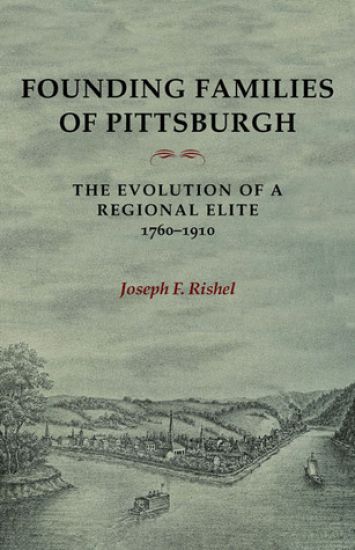
As Pittsburgh and its surrounding area grew into an important commercial and industrial center, a group of families emerged who were distinguished by their wealth and social position. Joseph Rishel studies twenty of these families to determine the degree to which they formed a coherent upper class and the extent to which they were able to maintain their status over time. His analysis shows that Pittsburgh's elite upper class succeeded in creating the institutions needed to sustain a local aristocracy and possessed the ability to adapt its accumulated advantages to social and economic changes.
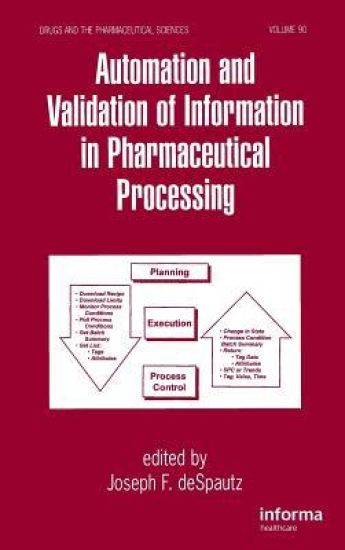
Automation and Validation of Information in Pharmaceutical Processing
Joseph F. deSpautz
CRC Press Inc
1998
sidottu
This thoroughly authoritative work furnishes organizational, technological, validation, project management, and business perspectives on pharmaceutical information automation from industry and system automation professionals-demonstrating how to fulfill computer system validation requirements for hardware, applications, networks, data center operations, and complex software management practices in pharmaceutical manufacturing. Explains how the Food and Drug Administration's latest Good Manufacturing Process guidelines supporting electronic identification and electronic signatures for batch record registration together with computer system technologies will influence pharmaceutical production automation! Designed to provide quick and easy access to a whole range of system development topics, Automation and Validation of Information in Pharmaceutical Processingdefines a complete life-cycle methodology that integrates equipment, people, and information presents concepts, guidelines, test plans, example forms, and application details for previously unavailable computer system validation of complex automated information systems introduces, for the first time in depth, PQ testing of integrated manufacturing execution (MES) and manufacturing resource planning (MRP) applications describes how human resource programs maximize productivity gains for automation initiatives discusses approaches to automating batch operations with process control systems using industry examples and applicable computer technology concepts provides an outline for IQ, OQ, and PQ test plans for process control systems, including forms for use in testing instrumentation and distributed control system installation and operations employs a business analysis standpoint on life-cycle planning to justify new automation projects, including multiyear drug manufacturing plans documents the successful application of life-cycle methodologies to supply chain functions and much more! Together with references, tables, and drawings, Automation and Validation of Information in Pharmaceutical Processing is an essential, hands-on resource for pharmaceutical scientists, manufacturers, and engineers; drug quality assurance and regulatory personnel; project and program manufacturers; information system professionals and software developers and analysts; information technology practitioners; and graduate-level and continuing-education students in these disciplines.
In the current climate of terrorism, the facility manager is in a more critical position than ever before. Protecting the organization's building and its occupants from chemical, biological, and radiological (CBR) attacks that are designed to disrupt and/or destroy business operation is becoming an increasingly important priority for facility managers using practice management. Bioterrorism: A Guide for Facility Managers provides a rationale for systematically identifying and evaluating the key areas of practice management. The book is unique in scope, focusing upon the awareness of terrorist threat. It addresses CBR attacks, as well as other forms of terrorism concerns, such as mailroom security, bomb threats, etc., along with the necessary steps for prevention, how to assess vulnerability, how to improve emergency preparedness, and how to assure optimum response and recovery in the event of an attack. It also presents examples of "lessons learned" and mistakes to avoid. By focusing on practice management, the text turns the challenges of facility management into opportunities for the facility manager. These opportunities are manifested in an enhanced productivity that aligns itself with ensuring the safety of building employees, occupants and tenants, as well as with business operations.
Cyber Terrorism: A Guide for Facility Managers addresses cyberterrorism and other forms of terrorist activity including mailroom security, bomb threats, and the constant attacks from viruses, hackers, and other invasive programs. Known terrorist groups are identified, discussed, and their disruptive techniques are described. The text covers the necessary steps needed for prevention; the corporation's assessment of vulnerability; and its emergency preparedness, prevention, incident response, and recovery. Containing practical, comprehensive, and effective guidance, this book is written in a straight-forward, reader-friendly format for quick and easy reference.