Kirjojen hintavertailu. Mukana 11 244 527 kirjaa ja 12 kauppaa.

Kirjahaku

Etsi kirjoja tekijän nimen, kirjan nimen tai ISBN:n perusteella.

1000 tulosta hakusanalla Joseph Traugott

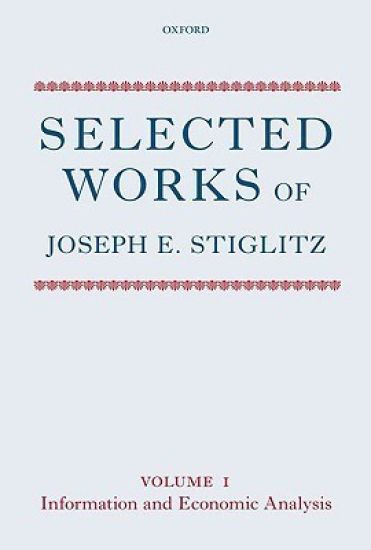
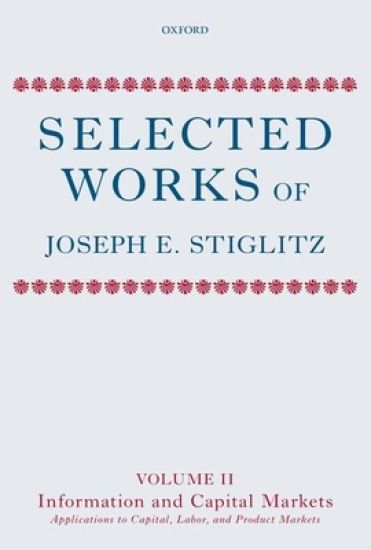
Selected Works of Joseph E. Stiglitz

Selected Works of Joseph E. Stiglitz

Joseph E. Stiglitz

Oxford University Press
2013
sidottu
This is the second of six volumes in a series of selected scientific papers by one of the world's most distinguished economists. Volume I presented the basic concepts in the Economics of Information, showing that markets in which information was imperfect or asymmetric (where some individuals know things that others don't) behave markedly different from how they would if information were perfect. Volume II, with papers written between 1969 and 2009, explores the implications of the New Information Paradigm for labor, capital, and product markets. This New Paradigm, for which Stiglitz was awarded the Nobel Memorial Prize in Economics in 2001, has fundamentally changed the way we think about every aspect of economics, raising new questions on corporate governance, and leading us to reconsider old questions on corporate finance, the relationship between finance and the economy, and the theory of economic incentives. While this volume focuses on the application of basic principles, it also extends the theory in important ways, showing the fruitfulness of Stiglitz's research strategy. In doing so, the papers set the ground for questioning some prevailing doctrines: key market phenomena cannot be explained by markets with rational expectations, even when information is imperfect. It demonstrates that how societies organize the obtainment, processing, and transmitting of information is as important as how they organize the production and distribution of goods. Indeed, the two issues are inseparable. The papers thus lay the foundations of a New Institutional Economics, not only describing how institutions (like sharecropping or banks) work and affect resource allocations, but why they arise and take on particular forms.
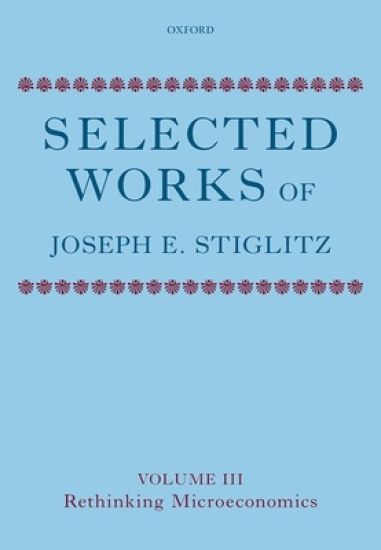
Selected Works of Joseph E. Stiglitz

Selected Works of Joseph E. Stiglitz

Joseph E. Stiglitz

Oxford University Press
2019
sidottu
This is the third volume in a new, definitive, six-volume edition of the works of Joseph Stiglitz, one of today's most distinguished and controversial economists. Stiglitz was awarded the Nobel Prize in Economics in 2001 for his work on asymmetric information and is widely acknowledged as one of the pioneers in the field of modern information economics and more generally for his contributions to microeconomics. Volume III contains a selection of Joseph E. Stiglitz's work on microeconomics. It questions well-established tenets, including many that are so fundamental they are almost taken for granted, covering basic concepts of risk and markets; the management of risk; the theory of the firm; the economics of organization; and theory of human behaviour. Stiglitz reflects on his work and the field more generally throughout the volume by including substantial original introductions to the Selected Works, the volume as a whole, and each part within the volume.
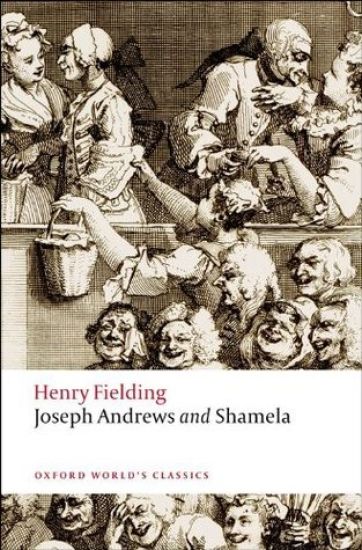
Joseph Andrews and Shamela

Joseph Andrews and Shamela

Henry Fielding

Oxford University Press
2008
nidottu
'I beg as soon as you get Fielding's Joseph Andrews, I fear in Ridicule of your Pamela and of Virtue in the Notion of Don Quixote's Manner, you would send it to me by the very first Coach.' (George Cheyne in a letter to Samuel Richardson, February 1742) Both Joseph Andrews (1742) and Shamela (1741) were prompted by the success of Richardson's Pamela (1740), of which Shamela is a splendidly bawdy parody. But in Shamela Fielding also demonstrates his concern for the corruption of contemporary society, politics, religion, morality, and taste. The same themes - together with a presentation of love as charity, as friendship, and in its sexual taste - are present in Joseph Andrews, Fielding's first novel. It is a work of considerable literary sophistication and satirical verve, but its appeal lies also in its spirit of comic affirmation, epitomized in the celebrated character of Parson Adams. This revised and expanded edition follows the text of Joseph Andrews established by Martin C. Battestin for the definitive Wesleyan Edition of Fielding's works. The text of Shamela is based on the first edition, and two substantial appendices reprint the preliminary matter from Conyers Middleton's Life of Cicero and the second edition of Richardson's Pamela (both closely parodied in Shamela). A new introduction by Thomas Keymer situates Fielding's works in their critical and historical contexts. ABOUT THE SERIES: For over 100 years Oxford World's Classics has made available the widest range of literature from around the globe. Each affordable volume reflects Oxford's commitment to scholarship, providing the most accurate text plus a wealth of other valuable features, including expert introductions by leading authorities, helpful notes to clarify the text, up-to-date bibliographies for further study, and much more.
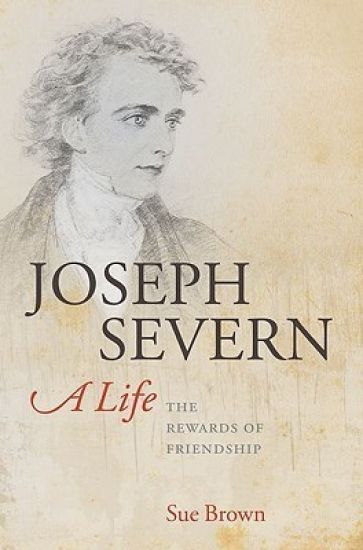
Joseph Severn, A Life

Joseph Severn, A Life

Sue Brown

Oxford University Press
2009
sidottu
This biography of Joseph Severn (1793-1879), the best known but most controversial of Keats's friends, is based on a mass of newly discovered information, much of it still in private hands. Severn accompanied the dying Keats to Italy, nursed him in Rome and reported on his last weeks there in a famous series of moving letters. After Keats's death in relative obscurity, Severn pressed hard for an early biography and a more fitting memorial in the Protestant Cemetery in Rome. In the nineteenth century Severn's friendship with Keats was seen as a model of devoted masculine companionship and he was reburied by popular acclaim next to Keats in 1882. In the twentieth century, by contrast, he was denigrated as an unreliable, self-promoting witness. Sue Brown's book fills a major gap in studies of Keats and his circle. It reassesses Severn's character, friendship with Keats, and influence on the posthumous development of the poet's fame and provides new information on Keats's death. The significance of Severn's artistic career has previously been downplayed. This book offers the first full assessment of his work and of his turbulent spell as British Consul in Rome from 1860 to 1871. Keats was not Severn's only famous friend. For most of his adult life Severn was at the heart of the large, lively British community in Rome welcoming amongst others Gladstone, who became his most important patron, Ruskin, Walter Scott, Wordsworth, Turner, Samuel Palmer, David Wilkie, and many more. He maintained long friendships with Leigh Hunt, Mary Shelley, Charles Eastlake, Richard Monckton Milnes, amongst others, and enjoyed a rich family life.
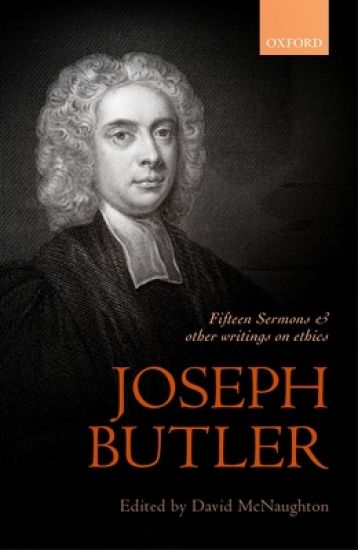
Joseph Butler: Fifteen Sermons and other writings on ethics
Joseph Butler's Fifteen Sermons (1729) is a classic work of moral philosophy, which remains widely influential. The topics Butler discusses include the role of conscience in human nature, self-love and egoism, compassion, resentment and forgiveness, and love of our neighbour and of God. The text of the enlarged and corrected second edition is here presented together with a selection of Butler's other ethical writings: A Dissertation of the Nature of Virtue, A Sermon Preached Before the House of Lords, and relevant extracts from his correspondence with Samuel Clarke. While this is a readers' edition that avoids cluttering Butler's text with textual variants and intrusive footnotes, it comes complete with scholarly apparatus intended to aid the reader in studying Butlers work in depth. David McNaughton contributes a substantial historical and philosophical introduction that highlights the continuing importance of these works. In addition, there are extensive notes at the end of the volume, including significant textual variants, and full details of Butler's sources and references, as well as short summaries of Butler's predecessors, and a selective bibliography. This will be the definitive resource for anyone interested in Butler's moral philosophy.
Joseph Butler: Fifteen Sermons and other writings on ethics
Joseph Butler's Fifteen Sermons (1726) is a classic work of moral philosophy, widely influential ever since. The topics Butler discusses include the role of conscience in human nature, self-love and egoism, compassion, resentment and forgiveness, love of our neighbour and of God. The text of the second edition of the Sermons is here presented together with a selection of Butler's other ethical writings: the Dissertation of the Nature of Virtue, a sermon on hypocrisy and liberty preached before the House of Lords, and relevant extracts from his correspondence with Samuel Clarke. David McNaughton contributes a substantial historical and philosophical introduction to help readers understand these works and see their continuing importance. While it is a readers' edition which avoids the clutter of textual variants and intrusive footnotes, it comes complete with scholarly apparatus intended to aid the reader in studying Butler's work in depth. McNaughton also includes short summaries of Butler's predecessors, and a selective bibliography. This will be the definitive resource for anyone interested in Butler's moral philosophy.
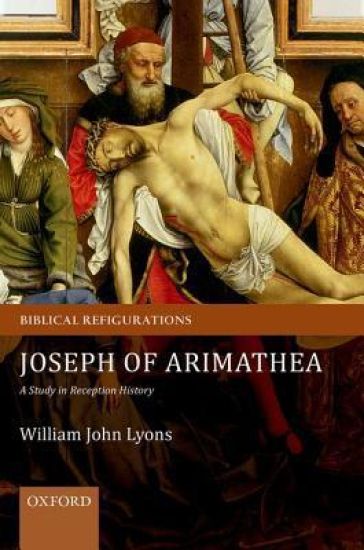
Joseph of Arimathea

Joseph of Arimathea

William John Lyons

Oxford University Press
2014
sidottu
Joseph of Arimathea: A Study in Reception History examines the extensive and convoluted afterlives of a minor biblical character who nevertheless plays a major role in three pivotal scenes in the passion of Jesus Christ as presented by the four canonical Gospels: the request to Pilate for the body, the descent from the cross, and the burial of Jesus' corpse. Characterised in subtly different ways by each Evangelist, these sparse biblical Josephs were expanded, expounded, translated, harmonised, and extended by early literary sources and developed thematically by the artistic traditions of the Renaissance. In the Medieval Period, Joseph arrived, by 'fortuitous' accident, in the British Isles, becoming an iconic figure for English nationalists (through the Glastonbury tradition) and for British Imperialists (through Parry's musical setting of Blake's Jerusalem). Twentieth-century developments in church life, film, literature, spiritualism, and studies of the historical Joseph round out what such a minor character can accomplish, given a sufficient richness in original texts and the right opportunities afforded by later cultural developments. In Joseph of Arimathea's case, certain aspects proved highly adaptable, especially the sharp contrast provided by his portrayal as a bold active figure in the Gospel of Mark and as a fearful passive character in the Gospel of John, the attractiveness of his wealth and nobility to those who considered themselves of similar (or much higher) status, and the opportunities provided by his swift appearance and departure from the most important event in Christianity's foundational documents.
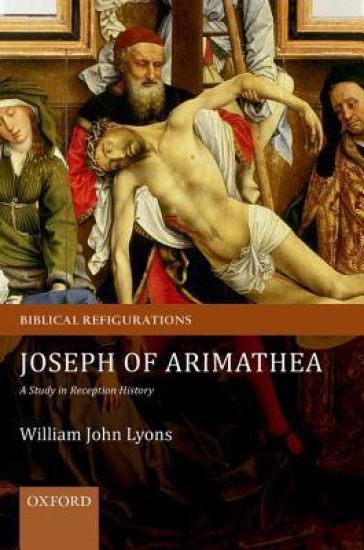
Joseph of Arimathea

Joseph of Arimathea

William John Lyons

Oxford University Press
2014
nidottu
Joseph of Arimathea: A Study in Reception History examines the extensive and convoluted afterlives of a minor biblical character who nevertheless plays a major role in three pivotal scenes in the passion of Jesus Christ as presented by the four canonical Gospels: the request to Pilate for the body, the descent from the cross, and the burial of Jesus' corpse. Characterised in subtly different ways by each Evangelist, these sparse biblical Josephs were expanded, expounded, translated, harmonised, and extended by early literary sources and developed thematically by the artistic traditions of the Renaissance. In the Medieval Period, Joseph arrived, by 'fortuitous' accident, in the British Isles, becoming an iconic figure for English nationalists (through the Glastonbury tradition) and for British Imperialists (through Parry's musical setting of Blake's Jerusalem). Twentieth-century developments in church life, film, literature, spiritualism, and studies of the historical Joseph round out what such a minor character can accomplish, given a sufficient richness in original texts and the right opportunities afforded by later cultural developments. In Joseph of Arimathea's case, certain aspects proved highly adaptable, especially the sharp contrast provided by his portrayal as a bold active figure in the Gospel of Mark and as a fearful passive character in the Gospel of John, the attractiveness of his wealth and nobility to those who considered themselves of similar (or much higher) status, and the opportunities provided by his swift appearance and departure from the most important event in Christianity's foundational documents.
Joseph Banks: A Life

Joseph Banks: A Life

Patrick O'Brian

University of Chicago Press
1997
nidottu
One of our greatest writers about the sea has written an engrossing story of one of history's most legendary maritime explorers. Patrick O'Brian's biography of naturalist, explorer and co-founder of Australia, Joseph Banks, is narrative history at its finest. Published to rave reviews, it reveals Banks to be a man of enduring importance, and establishes itself as a classic of exploration. "It is in his description of that arduous three-year voyage on the ship Endeavor] that Mr. O'Brian is at his most brilliant. . . . He makes us understand what life within this wooden world was like, with its 94 male souls, two dogs, a cat and a goat."-Linda Colley, New York Times "An absorbing, finely written overview, meant for the general reader, of a major figure in the history of natural science."-Frank Stewart, Los Angeles Times " This book is] the definitive biography of an extraordinary subject."-Robert Taylor, Boston Globe "His skill at narrative and his extensive knowledge of the maritime history . . . give him a definite leg up in telling this . . . story."-Tom Clark, San Francisco Chronicle
Joseph's Dilemma

Joseph's Dilemma

Matthew J. Marohl

James Clarke Co Ltd
2010
nidottu
'When Mary had been engaged to Joseph, but before they lived together, she was found to be with child from the Holy Spirit' (1:18). We are made to assume that Joseph discovers that Mary is pregnant, but that he does not know that she is with child from the Holy Spirit. Joseph must decide what he will do with Mary. The discussion of this verse generally focuses on two questions. First, did Joseph suspect Mary of adultery? Second, if he did suspect Mary of adultery, what were his options? If Joseph reveals that Mary is pregnant she will be killed. If Joseph conceals Mary's pregnancy, he will be opposing the law of the Lord. What is a 'righteous' man to do? Marohl's study of honor killings, be they modern or ancient, opens up new avenues of interpretation for "The Gospel of Matthew's" infancy narrative. It is a pattern that is to be replicated in the lives of the Jesus followers.
Joseph Roberts Smallwood

Joseph Roberts Smallwood

Melvin Baker; Peter Neary

McGill-Queen's University Press
2021
sidottu
No other figure, historical or political, features more prominently in recent Newfoundland history than Joey Smallwood. During his long career in Newfoundland politics, Smallwood used the literary, rhetorical, and theatrical skills honed in the first five decades of his life to create a distinct and celebrated persona. He told his own story in his lively autobiography, I Chose Canada, published in 1973 only a year after he left office.Talented, venturesome, and above all resilient, he was no ordinary Joe. Smallwood was born in Gambo, Bonavista Bay, but grew up in St John's. Leaving school at fifteen, he quickly established himself as a journalist and as a publicist for Sir William Coaker's Fishermen's Protective Union. In the early 1920s Smallwood sojourned twice in New York, where he planned a Newfoundland labour party. Ambition, however, led him to support the Liberal Party of Sir Richard Squires. Defeated as a candidate in the general election of June 1932, he next promoted producer and consumer cooperatives, but with mixed results. In 1937 he edited The Book of Newfoundland and thereafter enjoyed great success on the radio as "The Barrelman." The book culminates with Smallwood's adoption of the cause of Confederation and his swearing in on 1 April 1949 as premier of the new Province of Newfoundland.There are multiple J.R. Smallwoods, but the aspiring and ambitious figure presented in this biography stands apart. Melvin Baker and Peter Neary use the largely untapped sources of Smallwood's own papers and his extensive journalistic writing to add a documentary basis to what is known or conjectured about the first five decades of Smallwood's remarkable life, both public and private.
Joseph Conrad and the Reader

Joseph Conrad and the Reader

A. Acheraïou

Palgrave Macmillan
2009
sidottu
Joseph Conrad and the Reader is the first book fully devoted to Conrad's relation to the reader, visual theory and authorship. This challenging study proposes new approaches to modern literary criticism and deftly examines the limits of deconstructionist theories, introducing groundbreaking new theoretical concepts of reading and reception.
Joseph Goebbels

Joseph Goebbels

T. Thacker

Palgrave Macmillan
2009
sidottu
An insightful new biography of Joseph Goebbels, Propaganda Minister of the 'Third Reich' and one of the most important and troubling figures of the twentieth century. The first account to use all of Goebbels' surviving diaries, it sheds new light on his personality, private life and political convictions, as well as his relationship with Hitler.
Joseph Goebbels

Joseph Goebbels

T. Thacker

Palgrave Macmillan
2009
nidottu
An insightful new biography of Joseph Goebbels, Propaganda Minister of the 'Third Reich' and one of the most important and troubling figures of the twentieth century. The first account to use all of Goebbels' surviving diaries, it sheds new light on his personality, private life and political convictions, as well as his relationship with Hitler.
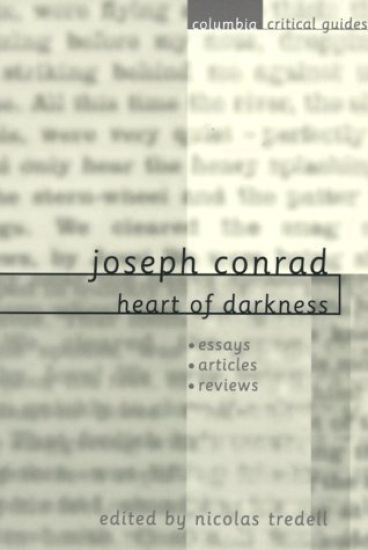
Joseph Conrad: Heart of Darkness

Joseph Conrad: Heart of Darkness

Columbia University Press
1999
pokkari
Spanning an impressive range of interpretations, the critical works in this collection analyze the complex narrative technique of Heart Of Darkness while exploring its evocation of myth, philosophy, and politics, its attitudes to empire, its images of Africa, and its representations of women. Examining secondary sources from the 1900s to the 1990s, this Guide is an indispensable resource for the study of one of Conrad's most potent works.
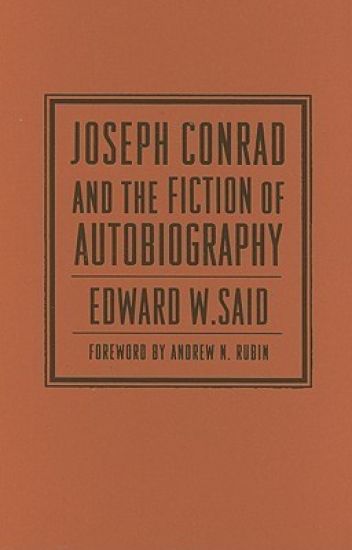
Joseph Conrad and the Fiction of Autobiography

Joseph Conrad and the Fiction of Autobiography

Edward Said; Andrew Rubin

Columbia University Press
2008
sidottu
Edward W. Said locates Joseph Conrad's fear of personal disintegration in his constant re-narration of the past. Using the author's personal letters as a guide to understanding his fiction, Said draws an important parallel between Conrad's view of his own life and the manner and form of his stories. The critic also argues that the author, who set his fiction in exotic locations like East Asia and Africa, projects political dimensions in his work that mirror a colonialist preoccupation with "civilizing" native peoples. Said then suggests that this dimension should be considered when reading all of Western literature. First published in 1966, Said's critique of the Western self's struggle with modernity signaled the beginnings of his groundbreaking work, Orientalism, and remains a cornerstone of postcolonial studies today.
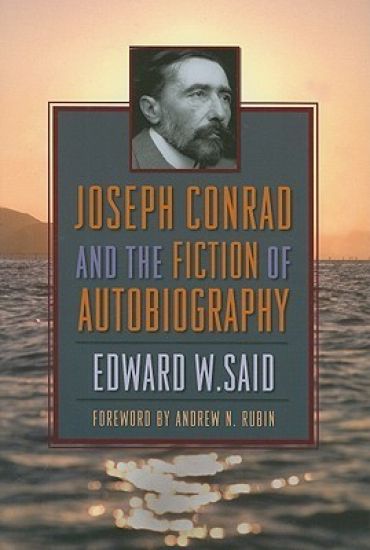
Joseph Conrad and the Fiction of Autobiography

Joseph Conrad and the Fiction of Autobiography

Edward Said; Andrew Rubin

Columbia University Press
2008
pokkari
Edward W. Said locates Joseph Conrad's fear of personal disintegration in his constant re-narration of the past. Using the author's personal letters as a guide to understanding his fiction, Said draws an important parallel between Conrad's view of his own life and the manner and form of his stories. The critic also argues that the author, who set his fiction in exotic locations like East Asia and Africa, projects political dimensions in his work that mirror a colonialist preoccupation with "civilizing" native peoples. Said then suggests that this dimension should be considered when reading all of Western literature. First published in 1966, Said's critique of the Western self's struggle with modernity signaled the beginnings of his groundbreaking work, Orientalism, and remains a cornerstone of postcolonial studies today.