Kirjojen hintavertailu. Mukana 11 244 527 kirjaa ja 12 kauppaa.

Kirjahaku

Etsi kirjoja tekijän nimen, kirjan nimen tai ISBN:n perusteella.

1000 tulosta hakusanalla Julia Addison

Julia de Burgos

Julia de Burgos

Vanessa Perez-Rosario

University of Illinois Press
2022
nidottu
Durante más de cincuenta años, Julia de Burgos ha evocado sentimientos de identidad y unión entre puertorriqueños y latinxs en Estados Unidos. Vanessa Pérez-Rosario va más allá del enfoque trágico de otras biografías de Burgos para examinar la vida de la artista considerando el trasfondo de la cultura puertorriqueña y la compleja historia de la isla y la diáspora. Enfocándose en Burgos como escritora y activista, Pérez-Rosario profundiza en su desarrollo artístico, su experiencia como migrante, sus luchas contra el colonialismo y la injusticia social y sus contribuciones a la cultura literaria y visual latinoamericanas. Al mismo tiempo, desentraña las dinámicas culturales y políticas que operan en las revisiones y reinvenciones de Burgos que escritores y artistas latinxs contemporáneos en Nueva York llevan a cabo para imaginar nuevas posibilidades para sí mismos y sus comunidades. Disponible por primera vez en español, Julia de Burgos cuenta la destacada historia de la poeta y activista puertorriqueña.
Julia Kristeva

Julia Kristeva

A. Smith

Palgrave Macmillan
1996
nidottu
Literature can have a disturbing effect on its readers. It unsettles our hold on everyday experience and makes us strangers and exiles. Anna Smith argues that this is the side of literature which attracts critic and psychoanalyst Julia Kristeva. Kristeva is drawn to states of extremity where language and the psyche are under duress, and in this book Smith examines the way the alchemical properties of words may transform these extremities into what Kristeva calls 'a fire of tongues, an exit from representation'.
Julia Alvarez

Julia Alvarez

Silvio Sirias

Greenwood Press
2001
sidottu
Julia Alvarez made her mark on the American literary horizon with the 1991 publication of her debut novel How the Garc^D'ia Girls Lost Their Accents, a story based on her own family's bicultural experiences. Readers and critics alike quickly discovered the writer's penchant for extracting humor from hardship, and weaving personal history into vivid prose. Within a decade, Alvarez had published three more highly acclaimed novels, including !Yo! (1997), a delightful sequel to her first novel. This Critical Companion introduces readers to the life and works of Dominican American writer Alvarez and examines the thematic and cultural concerns that run through her novels. Full literary analysis is provided for each, including historical context for the factually based works, In the Time of the Butterflies (1994) and In the Name of Salomé (2000). A brief biography and a chapter on the Latino novel help students to understand the personal and literary influences in Alvarez's writing.This first full-length treatment of Julia Alvarez discusses her entire canon of writings including her poetry, short stories, children's fiction and nonfiction. The four novels are analyzed fully, each discussed in its own chapter with sections on plot, character development, literary device, thematic issues and narrative structure. Cultural and historical contexts of the work are also considered, and alternate critical perspectives are given for each novel. A select bibliography makes this volume a valuable research tool for students, educators and anyone interested in Latino literature.
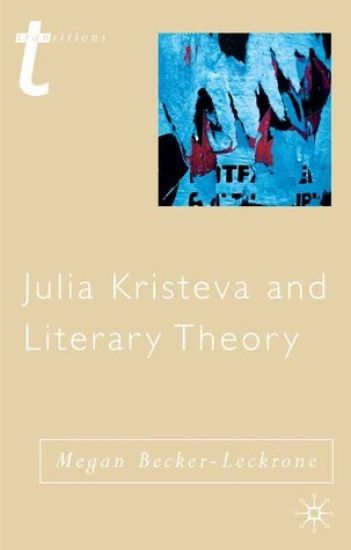
Julia Kristeva and Literary Theory

Julia Kristeva and Literary Theory

Megan Becker-Leckrone

Red Globe Press
2005
sidottu
Engaged debate among feminist, political, and psychoanalytic thinkers has secured Julia Kristeva's status as one of the most formidable figures in twentieth-century critical theory. Nevertheless, her precise relevance to the study of literature - the extent to which her theory is specifically a literary theory - can be hard for new readers to fathom. This approachable volume explores Kristeva's definition of literature, her methods for analyzing it, and the theoretical ground on which those endeavors are based. Megan Becker-Leckrone argues that Kristeva's signature concepts, such as abjection and intertextuality, lose much of their force when readers extract them from the specific, complex theoretical context in which Kristeva produces them. Early chapters situate her theory in a broader conversation with Roland Barthes, Sigmund Freud, Jacques Lacan and others around the issues of reading, textuality, and subjectivity. Subsequent chapters look at Kristeva's actual engagements with literary texts, specifically her challenging, highly performative reading of French novelist Louis-Ferdinand Céline in Powers of Horror: An Essay on Abjection and her career-long preoccupation with James Joyce. A final chapter of the book looks at the way contemporary literary critics have marshaled her ideas in re-reading the poetry of William Wordsworth, while a helpful glossary identifies Kristeva's most pertinently "literary" theoretical concepts, by way of synopses of the texts in which she presents them.
Julia Kristeva and Literary Theory

Julia Kristeva and Literary Theory

Megan Becker-Leckrone

Red Globe Press
2005
nidottu
Engaged debate among feminist, political, and psychoanalytic thinkers has secured Julia Kristeva's status as one of the most formidable figures in twentieth-century critical theory. Nevertheless, her precise relevance to the study of literature - the extent to which her theory is specifically a literary theory - can be hard for new readers to fathom. This approachable volume explores Kristeva's definition of literature, her methods for analyzing it, and the theoretical ground on which those endeavors are based. Megan Becker-Leckrone argues that Kristeva's signature concepts, such as abjection and intertextuality, lose much of their force when readers extract them from the specific, complex theoretical context in which Kristeva produces them. Early chapters situate her theory in a broader conversation with Roland Barthes, Sigmund Freud, Jacques Lacan and others around the issues of reading, textuality, and subjectivity. Subsequent chapters look at Kristeva's actual engagements with literary texts, specifically her challenging, highly performative reading of French novelist Louis-Ferdinand Céline in Powers of Horror: An Essay on Abjection and her career-long preoccupation with James Joyce. A final chapter of the book looks at the way contemporary literary critics have marshaled her ideas in re-reading the poetry of William Wordsworth, while a helpful glossary identifies Kristeva's most pertinently "literary" theoretical concepts, by way of synopses of the texts in which she presents them.
Livewire Real Lives Julia Roberts

Livewire Real Lives Julia Roberts

Julia Holt

Cambridge University Press
2001
nidottu
The texts in this series are aimed at teenagers and adults with reading ages below ten, or adult students learning English as a foreign language. Written by special needs teachers, the "Real Lives" books are biographies of stars from sport, film, music, politics and history.
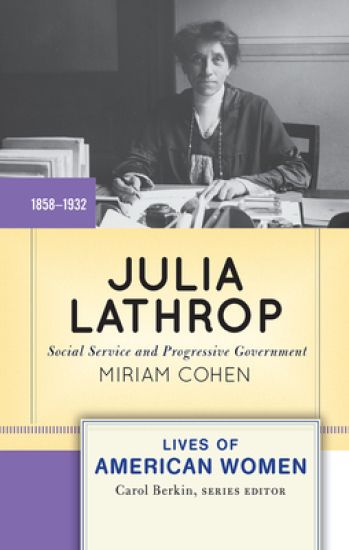
Julia Lathrop

Julia Lathrop

Miriam Cohen

Routledge
2019
sidottu
Julia Lathrop was a social servant, government activist, and social scientist who expanded notions of women's proper roles in public life during the early 1900s. Appointed as chief of the U.S. Children's Bureau, created in 1912 to promote child welfare, she was the first woman to head a United States federal agency. Throughout her life, Lathrop challenged the social norms of the time and became instrumental in shaping Progressive reform. She began her career at Hull House in Chicago, the nation's most famous social settlement, where she worked to improve public and private welfare for poor people, helped establish America's first juvenile court, and pushed for immigrant rights. Lathrop was also co-founder of one of America's first schools of social work. Later in life she became a leader in the League of Women Voters and an advisor on child welfare to the League of Nations. Following Lathrop's life from her childhood and college education through her social service and government work, this book gives an overview of her enduring contribution to progressive politics, women's employment, and women's education. It also offers a look at how one influential woman worked within the bounds of traditional conventions about gender, race, and class, and also pushed against them.
Julia's Kitchen Wisdom

Julia's Kitchen Wisdom

Julia Child

Random House USA Inc
2009
pokkari
How many minutes should you cook green beans? Is it better to steam them or to boil them? What are the right proportions for a vinaigrette? How do you skim off fat? What is the perfect way to roast a chicken? Julia Child gave us extensive answers to all these questions–and so many more–in the masterly books she published over the course of her career. But which one do you turn to for which solutions? Over the years Julia also developed some new approaches to old problems, using time-saving equipment and more readily available products. So where do you locate the latest findings? All the answers are close to hand in this indispensable little volume: the delicious, comforting, essential compendium of Julia’s kitchen wisdom–a book you can’t do without.
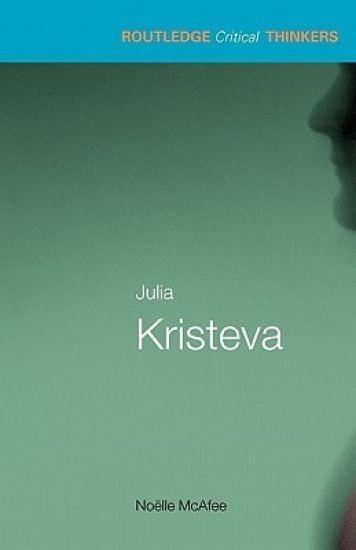
Julia Kristeva

Julia Kristeva

Noelle McAfee

Routledge
2003
sidottu
One of the most original thinkers of the twentieth century, Julia Kristeva has been driving forward the fields of literary and cultural studies since the 1960s. This volume is an accessible, introductory guide to the main themes of Kristeva's work, including her ideas on:*semiotics and symbolism*abjection*melancholia*feminism*revolt.McAfee provides clear explanations of the more difficult aspects of Kristeva's theories, helpfully placing her ideas in the relevant theoretical context, be it literary theory, psychoanalysis, linguistics, gender studies or philosophy, and demonstrates the impact of her critical interventions in these areas.Julia Kristeva is the essential guide for readers who are approaching the work of this challenging thinker for the first time, and provides the ideal opportunity for those with more knowledge to re-familiarise themselves with Kristeva's key terms.
Julia Kristeva

Julia Kristeva

Noelle McAfee

Routledge
2003
nidottu
One of the most original thinkers of the twentieth century, Julia Kristeva has been driving forward the fields of literary and cultural studies since the 1960s. This volume is an accessible, introductory guide to the main themes of Kristeva's work, including her ideas on:*semiotics and symbolism*abjection*melancholia*feminism*revolt.McAfee provides clear explanations of the more difficult aspects of Kristeva's theories, helpfully placing her ideas in the relevant theoretical context, be it literary theory, psychoanalysis, linguistics, gender studies or philosophy, and demonstrates the impact of her critical interventions in these areas.Julia Kristeva is the essential guide for readers who are approaching the work of this challenging thinker for the first time, and provides the ideal opportunity for those with more knowledge to re-familiarise themselves with Kristeva's key terms.
Julia Domna

Julia Domna

Barbara Levick

Routledge
2007
sidottu
This book covers Julia’s life, and charts her travels throughout the Empire from Aswan to York during a period of profound upheaval, and seeks the truth about this woman who inspired such extreme and contrasting views, exposing the instability of our sources about her, and characterizing a sympathetic, courageous, intelligent, and important woman.This book contains a fresh re-assessment of the one of the most significant figures of her time and questions:• Was Julia more powerful than earlier empresses? • Did she really promote despotism? • How seriously is her literary circle to be taken? As part of a dynasty which used force and violence to preserve its rule, she was distrusted by its subjects; as a Syrian, she was the object of prejudice; as a woman with power, she was resented. On the other hand, Domna was the centre of a literary circle considered highly significant by nineteenth-century admirers.
Julia Domna

Julia Domna

Barbara Levick

Routledge
2007
nidottu
This book covers Julia’s life, and charts her travels throughout the Empire from Aswan to York during a period of profound upheaval, and seeks the truth about this woman who inspired such extreme and contrasting views, exposing the instability of our sources about her, and characterizing a sympathetic, courageous, intelligent, and important woman.This book contains a fresh re-assessment of the one of the most significant figures of her time and questions:• Was Julia more powerful than earlier empresses? • Did she really promote despotism? • How seriously is her literary circle to be taken? As part of a dynasty which used force and violence to preserve its rule, she was distrusted by its subjects; as a Syrian, she was the object of prejudice; as a woman with power, she was resented. On the other hand, Domna was the centre of a literary circle considered highly significant by nineteenth-century admirers.
Julia Augusti

Julia Augusti

Elaine Fantham

Routledge
2006
sidottu
This scholarly biography details the life of an extraordinary woman in an extraordinary society.Julia Augusti studies the life of the only daughter of Augustus, the first Roman emperor, and the father who sacrificed his daughter and her children in order to establish a dynasty.Studying the abundant historical evidence available, this biography studies each stage of Julia’s life in remarkable detail: her childhood - taken from her divorced mother to become part of a complex and unstable family structureher youth - set against the brilliant social and cultural life of the new Augustan Romeher marriages - as tools for Augustus’ plans for successionJulia’s violation of her father’s moral regime, and the betrayal of her absent husband.Reflecting new attitudes, and casting fresh light on their social reality, this outstanding biography will delight, entertain and inform anyone interested in this engaging Classical figure.
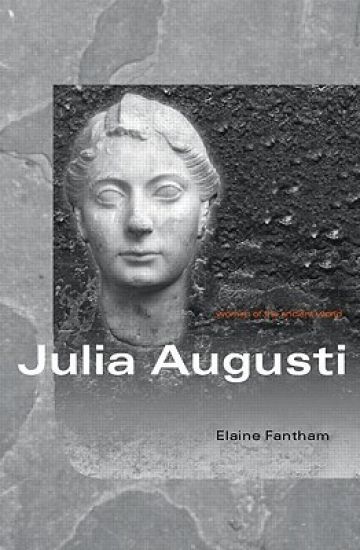
Julia Augusti

Julia Augusti

Elaine Fantham

Routledge
2006
nidottu
This scholarly biography details the life of an extraordinary woman in an extraordinary society.Julia Augusti studies the life of the only daughter of Augustus, the first Roman emperor, and the father who sacrificed his daughter and her children in order to establish a dynasty.Studying the abundant historical evidence available, this biography studies each stage of Julia’s life in remarkable detail: her childhood - taken from her divorced mother to become part of a complex and unstable family structureher youth - set against the brilliant social and cultural life of the new Augustan Romeher marriages - as tools for Augustus’ plans for successionJulia’s violation of her father’s moral regime, and the betrayal of her absent husband.Reflecting new attitudes, and casting fresh light on their social reality, this outstanding biography will delight, entertain and inform anyone interested in this engaging Classical figure.
Julia Kristeva (RLE Feminist Theory)
A leading literary critic and psychoanalyst, Julia Kristeva is one of the most significant French thinkers writing today. In this up-to-date survey of her work, John Lechte outlines fully and systematically her intellectual development. He traces it from her work on Bakhtin and the logic of poetic language in the 1960s, through her influential theories of the ‘symbolic’ and the ‘semiotic’ in the 1970s, to her analyses of horror, love, melancholy and cosmopolitanism in the 1980s. He provides an insight into the intellectual and historical context which gave rise to Kristeva’s thought, showing how thinkers such as Roland Barthes, Emile Benviste and Georges Bataille have been important in stimulating her own reflections. He concludes with an overall assessment of Kristeva’s work, looking in particular at her importance for feminism and postmodern thought in general.Essential reading for all those who wish to extend their understanding of this important thinker, this first full-length study of Kristeva’s work will be of interest to students of literature, sociology, critical theory, feminist theory, French studies and psychoanalysis.
Julia Kristeva (RLE Feminist Theory)
A leading literary critic and psychoanalyst, Julia Kristeva is one of the most significant French thinkers writing today. In this up-to-date survey of her work, John Lechte outlines fully and systematically her intellectual development. He traces it from her work on Bakhtin and the logic of poetic language in the 1960s, through her influential theories of the ‘symbolic’ and the ‘semiotic’ in the 1970s, to her analyses of horror, love, melancholy and cosmopolitanism in the 1980s. He provides an insight into the intellectual and historical context which gave rise to Kristeva’s thought, showing how thinkers such as Roland Barthes, Emile Benviste and Georges Bataille have been important in stimulating her own reflections. He concludes with an overall assessment of Kristeva’s work, looking in particular at her importance for feminism and postmodern thought in general.Essential reading for all those who wish to extend their understanding of this important thinker, this first full-length study of Kristeva’s work will be of interest to students of literature, sociology, critical theory, feminist theory, French studies and psychoanalysis.