

Kirjahaku
Etsi kirjoja tekijän nimen, kirjan nimen tai ISBN:n perusteella.
1000 tulosta hakusanalla Julius Caesar
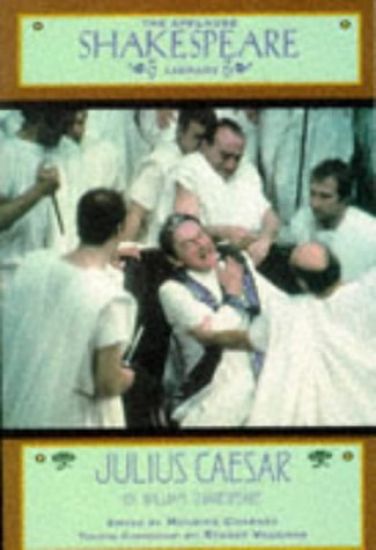
These popular editions allow the reader and student to look beyond the scholarly ÊreadingÊ text to the more sensuous more collaborative more malleable ÊperformanceÊ text which emerges in conjunction with the commentary and notes. Each note each gloss each commentary reflects the stage life of the play with constant reference to the challenge of the text in performance. Readers will not only discover an enlivened Shakespeare they will be empowered to rehearse and direct their own productions of the imagination in the process.ÞShakespeare's shortest play tells the story of Julius Caesar and Marcus Brutus who fearing the possibility of a dictator-led empire betrays Caesar to protect Rome. Little does he know that Cassius has been holding the strings manipulating Brutus into exploiting Caesar's weakness and removing him from power with the help of fellow conspirers. Contemplating motives for murder national allegiance and divine right Shakespeare's Julius Caesar is a unique look at the true events surrounding Caesar's assassination in 44 B.C.
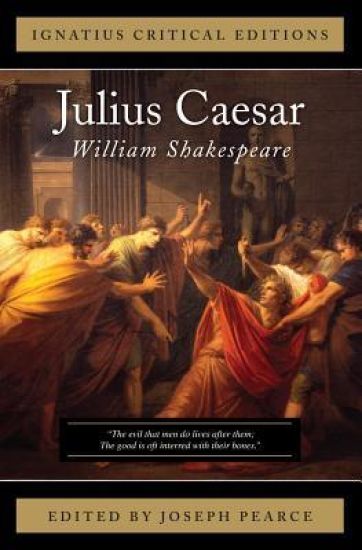
Though a staple in high school English classes, Julius Caesar is not a simple play. Seemingly irreconcilable forces are at work: fate and free will, the changeableness and stubbornness of ambitious men, the demands of public service and the desire for private gain. Drawn from history as recorded by Plutarch, the major characters-Caesar, Brutus, Cassius, and Mark Antony-are complex, as are the twists and turns of their fortunes. What kind of man rises to power? What price does he pay when he becomes a politician? These questions raised by Shakespeare are relevant in every age, whether ancient Rome, Elizabethan England, or even in our own day.
Presents the original text of Shakespeare's play side by side with a modern version, with marginal notes and explanations and full descriptions of each character.

From Bloom's now-canonical book "Shakespeare: The Invention of the Human" come individual meditations on two of Shakespeare's most famous plays, each with the play's original text.
Julius Caesar was one of the most influential figures in ancient Roman history. Born into an aristocratic family in 100 BCE, Caesar embarked on a political career that would profoundly impact the Roman Republic.As a young man, Caesar rose through the ranks of the military and government, gaining popularity with the Roman people. After forming political alliances through his marriage to Cornelia, Caesar was elected Pontifex Maximus and later praetor and consul.However, Caesar earned the suspicion of his fellow senators and was ordered to disband his army. Caesar refused, crossing the Rubicon river into Italy in 49 BCE and igniting a civil war against forces led by Pompey the Great. After seizing control of the Roman Republic, Caesar was appointed dictator.As dictator, Caesar enacted a series of reforms including centralizing power, reducing debt, expanding Roman citizenship, and reforming the calendar. His military conquests expanded Roman territories across Europe and Africa.But Caesar's immense power threatened republican traditions, angering senators who feared Caesar desired to become king. A conspiracy led by Brutus and Cassius assassinated Caesar in 44 BCE on the Ides of March.Caesar's rise and dramatic demise made him an iconic figure. His military genius, political savvy, and ruthless ambition changed the course of Roman civilization. Caesar's life demonstrated the capabilities and follies of ambitious individuals in a republic plagued by corruption. His legacy as a brilliant tactician and transformational dictator looms large in history. Julius Caesar remains one of the most compelling figures of the ancient world.
Julius Caesar has been the inspiration to countless military commanders over the last two millennia. Born into an aristocratic family, his early military campaigns, part of his progression along the cursus honorum, included campaigning in the east, Spain and in the early Roman civil wars. His participation in the Gallic Wars is known mainly through the commentary on the wars that he wrote and published, along with his incursions into Britain. This concise history details his military life, and how it impacted with his political career, from his youth through the civil wars that resulted in his becoming the dictator of Rome, and his legacy.
This richly documented Norton Critical Edition of Julius Caesar is based on the 1623 First Folio text. It is accompanied by a note on the text, an introduction that sets the biographical and historical stage necessary to appreciate this richly allusive play, explanatory annotations, a map, and five illustrations. Sources and Contexts presents possible sources as well as analogues to Julius Caesar, an account of Shakespeare s understanding of and approach to Roman history, and Ernest Schanzer s study of the narrative challenges posed by the play. Criticism includes early commentary by, among others, Samuel Johnson, William Hazlitt, and Harley Granville-Barker on Julius Caesar as well as modern interpretations. Among these are John W. Velz on role-playing in Julius Caesar; Jan H. Blits on Caesar s ambiguous end; Paul A. Cantor on rhetoric, poetry and the Roman republic; and R. A. Foakes on the themes of assassination and mob violence. Performance History reprints accounts of various aspects of staging Julius Caesar by Sidney Homan, John Nettles, andRobert F. Willson, Jr.A Film Bibliography and Selected Bibliography are also included.
Shakespeare's famous historical play tells of the events leading up to the assassination of Roman leader and dictator, Julius Caesar, and its immediate aftermath, with Rome plunged into civil war.Classics Illustrated tells this wonderful tale in colourful comic strip form, offering an excellent introduction for younger readers. This edition also includes a biography of Julius Caesar, theme discussions and study questions, which can be used both in the classroom and at home to further engage the reader in the story.The Classics Illustrated comic book series began in 1941 with its first issue, Alexandre Dumas s "The Three Musketeers," and has since included over 200 classic tales released around the world. This new CCS Books edition is specifically tailored to engage and educate young readers with some of the greatest works ever written, while still thrilling older readers who have loving memories of this series of old."
If you've ever been curious about ancient Rome and the time of Caesar but felt overwhelmed by the information available, this handy biography of Julius Caesar's life might just be what you've been looking for.By taking a broad and narrow focus, this volume is able to simultaneously give the reader a nice overview of the 1st century BCE while also honing in on the specifics of the famous leader as he makes his way up from the downtrodden neighborhood of his youth to eventually being named a god by the Roman people.This book is told in a straightforward, chronological fashion, so the reader is able to look at Caesar's life in bite-sized chunks that inform without creating confusion. Caesar's life happened in the midst of turbulent military and political intrigues. But he was also surrounded by numerous well-known figures from history. The interweaving of their tales not only makes for page-turning reading; it also gives the reader much to question, critique, and ponder.This book will satisfy your curiosity and hopefully inspire you to go out and learn even more. With handy comparisons to the modern world, the life of Rome and the ancient world will become more tangible and easier to imagine than ever before.It's time Caesar walked off the dusty shelves, out of the history books, and into our minds as the living, breathing, brilliant, sneaky, brave, and intriguing man that he was. Take a trip like no other through the streets of ancient Rome, from the butcher shop to the throne, with the famous ruler himself as your guide.If you've ever wondered about the following, then this book is for you Were Caesar and Cleopatra married?Did Caesar ever have children?How big was the Roman Republic?Was politics always so confusing?Why do we care about Julius Caesar? Wasn't he just one of many?Was Caesar really kidnapped by pirates?What was life like at home and at war in ancient Rome?
The most famous of Shakespeare's Roman tragedies, Julius Caesar was written and first performed in 1599 and was apparently one the plays Shakespeare's contemporaries enjoyed the most. Recounting the death of Caesar on the steps of the Senate house, the play offers some of Shakespeare's finest scenes: Antony's skillful speech at Caesar's funeral and the quarrel and reconciliation between Brutus and Cassius with the news of Portia's death.
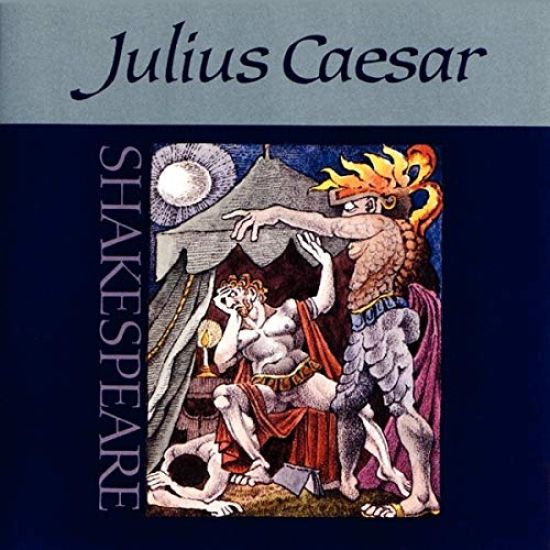
The most famous of Shakespeare's Roman tragedies, Julius Caesar was written and first performed in 1599 and was apparently one the plays Shakespeare's contemporaries enjoyed the most. Recounting the death of Caesar on the steps of the Senate house, the play offers some of Shakespeare's finest scenes: Antony's skillful speech at Caesar's funeral and the quarrel and reconciliation between Brutus and Cassius with the news of Portia's death.
Julius Caesar by William Shakespeare. The Tragedy of Julius Caesar is a history play and tragedy by William Shakespeare, believed to have been written in 1599. It is one of several plays written by Shakespeare based on true events from Roman history, which also include Coriolanus and Antony and Cleopatra. Although the play is named Julius Caesar, Brutus speaks more than four times as many lines as the title character; and the central psychological drama of the play focuses on Brutus' struggle between the conflicting demands of honour, patriotism, and friendship. Julius Caesar was originally published in the First Folio of 1623, but a performance was mentioned by Thomas Platter the Younger in his diary in September 1599. The play is not mentioned in the list of Shakespeare's plays published by Francis Meres in 1598. Based on these two points, as well as a number of contemporary allusions, and the belief that the play is similar to Hamlet in vocabulary, and to Henry V and As You Like It in metre, scholars have suggested 1599 as a probable date.
Widely regarded as the greatest playwright in the English language, William Shakespeare wrote the tragedy, Julius Caesar in 1599. It is one of several plays written by Shakespeare based on true events from Roman history. It portrays the conspiracy against Caesar, a Roman dictator, his assassination and its aftermath. Although the play is named after him, Julius Caesar is not the main character in the play's action. In fact, he appears in only three scenes, and is killed at the beginning of the third act. The play's protagonist is Marcus Brutus, and the central psychological drama is his struggle between the conflicting demands of honor, patriotism, and friendship. The play depicts the moral dilemma of Brutus as he joins a conspiracy led by Cassius to murder Julius Caesar to prevent him from becoming dictator of Rome. Shakespeare tells this story of the murder of the emperor and the gruesome aftermath as ancient Rome is thrust into a period of civil war, and the republic which the conspirators sought to preserve is lost forever. Throughout, Shakespeare explores the effect of power and trust across many characters, those who have it and those who are hungry for it. His richness of detail and the complexity of his characters along with the many memorable lines offering guidance on how to go about building a network of friends and an army of enemies help make this one of the most analyzed and performed of Shakespeare's plays.
A tragedy by William Shakespeare, one of several plays written by Shakespeare based on true events from Roman history. The play opens with the commoners of Rome celebrating Caesar's triumphant return from defeating Pompey's sons at the battle of Munda. Two tribunes, Flavius and Marrullus, discover the commoners celebrating, insult them for their change in loyalty from Pompey to Caesar, and break up the crowd.
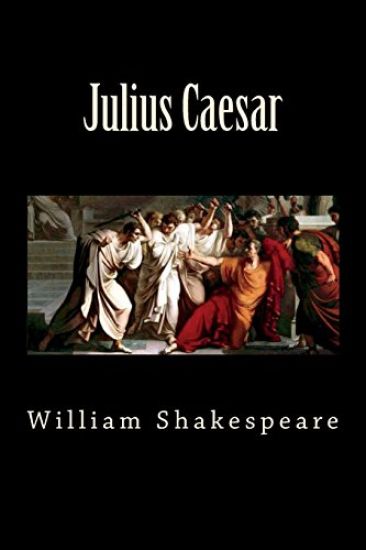
The Tragedy of Julius Caesar is a history play and tragedy by William Shakespeare, believed to have been written in 1599. It is one of several plays written by Shakespeare based on true events from Roman history, which also include Coriolanus and Antony and Cleopatra. Although the play is named Julius Caesar, Brutus speaks more than four times as many lines as the title character; and the central psychological drama of the play focuses on Brutus' struggle between the conflicting demands of honour, patriotism, and friendship.
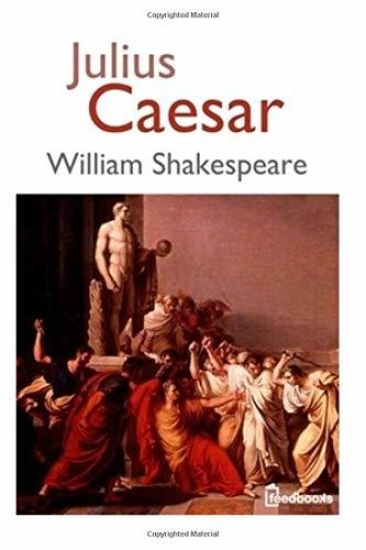
Julius Caesar is a tragedy by William Shakespeare, believed to have been written in 1599. It portrays the conspiracy against the Roman dictator of the same name, his assassination and its aftermath. It is one of several Roman plays that he wrote, based on true events from Roman history, which also include Coriolanus and Antony and Cleopatra. Although the title of the play is Julius Caesar, Caesar is not the central character in its action; he appears in only three scenes, and is killed at the beginning of the third act. The protagonist of the play is Marcus Brutus, and the central psychological drama is his struggle between the conflicting demands of honour, patriotism, and friendship.