Kirjojen hintavertailu. Mukana 11 610 867 kirjaa ja 12 kauppaa.

Kirjahaku

Etsi kirjoja tekijän nimen, kirjan nimen tai ISBN:n perusteella.

1000 tulosta hakusanalla Julius Ficker

Julius Caesar

Julius Caesar

William Shakespeare

Penguin Classics
2015
pokkari
'Cry havoc and let slip the dogs of war, That this foul deed shall smell above the earth With carrion men, groaning for burial'Fearful that Caesar will become a tyrant, his friends plot to assassinate him in order to save Rome. But the conspirators' high principles clash with personal malice and ambition, and as they vie to manipulate the mob, the nation is plunged into bloody civil war. A taut, profound drama exploring power and betrayal, Julius Caesar exposes the chasm between public appearance, political rhetoric and bitter reality.Used and Recommended by the National TheatreGeneral Editor Stanley WellsEdited by Norman Sanders Introduction by Martin Wiggins
Julius Caesar

Julius Caesar

William Shakespeare

Plume
2016
nidottu
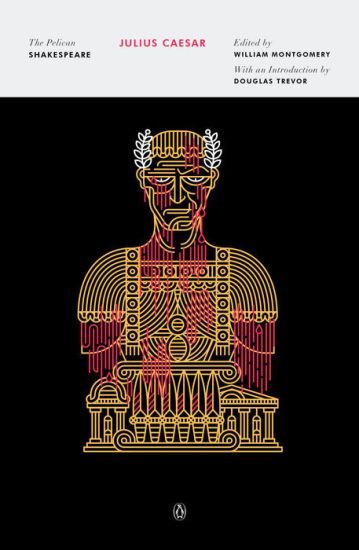
Shakespeare's cautionary tale about the dangers of upending democracy, Julius Caesar, which recently ran at the Public Theater's Shakespeare in the Park. Winner of the 2016 AIGA + Design Observer 50 Books - 50 Covers competitionThis edition of Julius Caesar is edited by William Montgomery with an introduction by Douglas Trevor and was recently repackaged with cover art by Manuja Waldia. Waldia received a Gold Medal from the Society of Illustrators for the Pelican Shakespeare series. The legendary Pelican Shakespeare series features authoritative and meticulously researched texts paired with scholarship by renowned Shakespeareans. Each book includes an essay on the theatrical world of Shakespeare's time, an introduction to the individual play, and a detailed note on the text used. Updated by general editors Stephen Orgel and A. R. Braunmuller, these easy-to-read editions incorporate over thirty years of Shakespeare scholarship undertaken since the original series, edited by Alfred Harbage, appeared between 1956 and 1967. With stunning new covers, definitive texts, and illuminating essays, the Pelican Shakespeare will remain a valued resource for students, teachers, and theater professionals for many years to come. For more than seventy years, Penguin has been the leading publisher of classic literature in the English-speaking world. With more than 1,700 titles, Penguin Classics represents a global bookshelf of the best works throughout history and across genres and disciplines. Readers trust the series to provide authoritative texts enhanced by introductions and notes by distinguished scholars and contemporary authors, as well as up-to-date translations by award-winning translators.
Julius Caesar

Julius Caesar

William Shakespeare

Oxford University Press
2025
nidottu
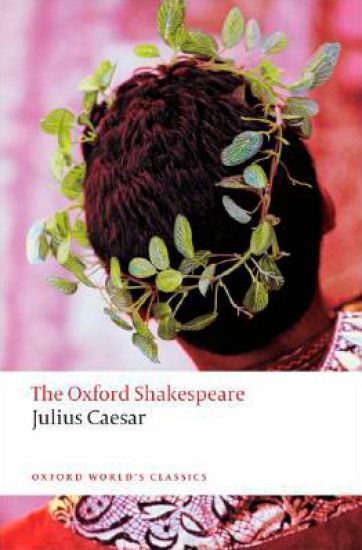
'Cry "havoc!" and let slip the dogs of war' Set against the backdrop of a nation breaking out into civil war, Julius Caesar raises questions of governance, power, tyranny, and enslavement. This New Oxford Shakespeare edition situates these questions within the historical framework of the play's early history in theatre and print, as well as within its long performance history up to and including in the 21st century. The introduction examines the ways in which Roman history is deployed to justify and question political structures, both by Shakespeare and other writers, as well as the transition from historical sources to stage. The New Oxford Shakespeare offers authoritative editions of Shakespeare's works with introductory materials designed to encourage new interpretations of the plays and poems. Using the text from the landmark The New Oxford Shakespeare Complete Works: Modern Critical Edition, these volumes offer readers the latest thinking on the authentic texts (collated from all surviving original versions of Shakespeare's work) alongside innovative introductions from leading scholars. The texts are accompanied by a comprehensive set of critical apparatus to give readers the best resources to help understand and enjoy Shakespeare's work. ABOUT THE SERIES: For over 100 years Oxford World's Classics has made available the widest range of literature from around the globe. Each affordable volume reflects Oxford's commitment to scholarship, providing the most accurate text plus a wealth of other valuable features, including expert introductions by leading authorities, helpful notes to clarify the text, up-to-date bibliographies for further study, and much more.
Julius Caesar: The Oxford Shakespeare

Julius Caesar: The Oxford Shakespeare

William Shakespeare

Oxford University Press
2008
nidottu
Julius Caesar's exciting plot, brilliant rhetoric, and searching characterisation have made it one of Shakespeare's most popular plays with both readers and theatre-goers. Introducing this thoroughly reconsidered edition, Arthur Humphreys provides a fresh look at the play's date and its place in the Shakespeare canon and examines Shakespeare's transmutation of history into drama. He investigates the play's ethical and moral concerns in a section on Roman values and analyses its fortunes in performance, from its immediately successful first staging to modern productions for cinema, television, and stage. ABOUT THE SERIES: For over 100 years Oxford World's Classics has made available the widest range of literature from around the globe. Each affordable volume reflects Oxford's commitment to scholarship, providing the most accurate text plus a wealth of other valuable features, including expert introductions by leading authorities, helpful notes to clarify the text, up-to-date bibliographies for further study, and much more.
Julius Caesar

Julius Caesar

Eric Rasmussen; Jonathan Bate

Red Globe Press
2011
nidottu
From the Royal Shakespeare Company – a modern, definitive edition of Shakespeare’s drama of the conflict between one man’s ambition and the good of the state. With an expert introduction by Sir Jonathan Bate, this unique edition presents a historical overview of Julius Caesar in performance, takes a detailed look at specific productions, and recommends film versions. Included in this edition are interviews with three leading directors – Lucy Bailey, David Farr and Edward Hall – providing an illuminating insight into the extraordinary variety of interpretations that are possible. This edition also includes an essay on Shakespeare’s career and Elizabethan theatre, and enables the reader to understand the play as it was originally intended – as living theatre to be enjoyed and performed. Ideal for students, theatre-goers, actors and general readers, the RSC Shakespeare editions offer a fresh, accessible and contemporary approach to reading and rediscovering Shakespeare’s works for the twenty-first century.
Julius Caesar Teacher's Book

Julius Caesar Teacher's Book

William Shakespeare

Evans Brothers Ltd
2013
nidottu
The books in this series provide support material to help students and teachers in the study of Shakespeare. Using simplified text and dramatic pictures, these books bring to life the main characters and key events. The Teacher's Book provides lesson notes and more than 30 photocopiable activities, including acting, mime, writing, and games.
Julius Caesar

Julius Caesar

Evans Brothers Ltd
2013
cd
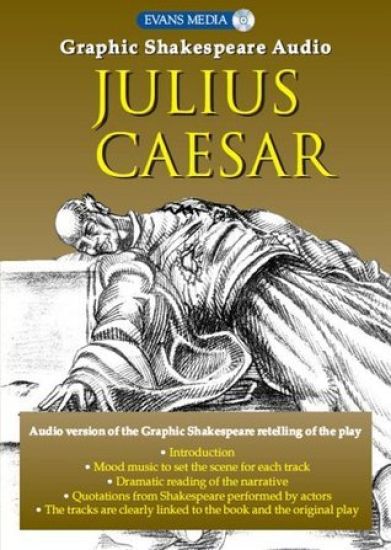
These audio CDs from this popular series is an ideal introduction to Shakespeare's plays, but can equally be used as revision aids. The main characters and key events are brought to life in the simplified narrative retellings of the plays, and short extracts from the original plays focus on key speeches in Shakespeare's language
Julius Rosenwald

Julius Rosenwald

Peter M. Ascoli

Indiana University Press
2015
pokkari
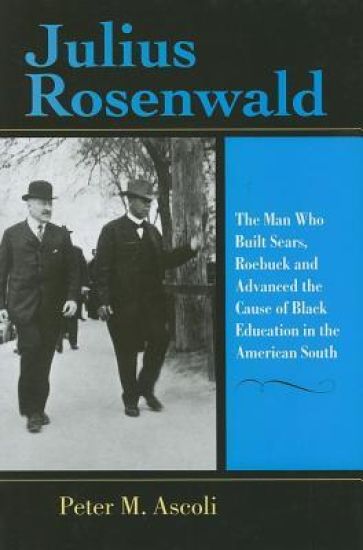
In this richly revealing biography of a major, but little-known, American businessman and philanthropist, Peter M. Ascoli brings to life a portrait of Julius Rosenwald, the man and his work. The son of first-generation German Jewish immigrants, Julius Rosenwald, known to his friends as "JR," apprenticed for his uncles, who were major clothing manufacturers in New York City. It would be as a men's clothing salesperson that JR would make his fateful encounter with Sears, Roebuck and Company, which he eventually fashioned into the greatest mail order firm in the world. He also founded Chicago's Museum of Science and Industry. And in the American South Rosenwald helped support the building of the more than 5,300 schools that bore his name. Yet the charitable fund he created during World War I went out of existence in 1948 at his expressed wish. Ascoli provides a fascinating account of Rosenwald's meteoric rise in American business, but he also portrays a man devoted to family and with a desire to help his community that led to a lifelong devotion to philanthropy. He tells about Rosenwald's important philanthropic activities, especially those connected with the Rosenwald schools and Booker T. Washington, and later through the Rosenwald Fund. Ascoli's account of Rosenwald is an inspiring story of hard work and success, and of giving back to the nation in which he prospered.
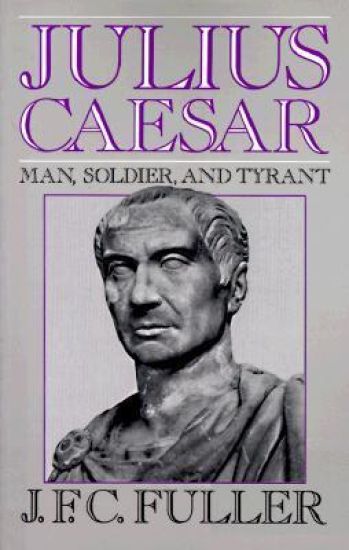
Julius Caesar

Julius Caesar

J. Fuller

Da Capo Press Inc
1991
pokkari
Since the Renaissance, Julius Caesar has been idolized as a superman. Classical sources, however, present a far less exalted being. As General Fuller writes, Caesar was "an unscrupulous demagogue whose one aim was power, and a general who could not only win brilliant victories but also commit dismal blunders.... It is reasonable to suspect that, at times, Caesar was not responsible for his actions, and toward the end of his life, not altogether sane." There is not doubt that Caesar was an extraordinary man." But Fuller points out that he was extraordinary for his reckless ambition, matchless daring, and ruthless tyranny, rather than for his skills as a military comander. Caesar continually had to extricate himself from results of mistakes of judgement. His unnecessary Alexandrian War, his close call at Thapsus, and his seemingly unpremeditated Gallic conquest are just a few of Fuller's many examples.And in telling Caesar's history, Fuller illuminates a century of Roman history as well. Aided by maps of Caesar's principal battles and diagrams of many of his weapons, Fuller brings to life Caesar's wars, his armies, his equipment, and his methods. Brilliant in design and impressive in scope, Julius Caesar clarifies how the military, political, and economic aspects of the Roman Republic worked together to produce a man whose name has come down to us as a synonym for absolute authority.
Julius Caesar

Julius Caesar

Josephine McMurtry

Greenwood Press
1998
sidottu
Perhaps more than any other single work, Shakespeare's Julius Caesar has popularized the image of Brutus as a ruthless and cowardly traitor, Caesar as a noble ruler and sympathetic victim, and the Ides of March as a time of danger and duplicity. On the surface, the play is comparatively simple and straightforward, and thus it has served to introduce generations of students to Shakespeare's works. But the play is deceptive in its apparent simplicity. While Brutus joins the conspirators in assassinating Caesar, his possibly selfless motives may make him the noblest Roman of them all. And while Caesar emerges as a beneficent leader in Antony's funeral oration, other traditions with which Shakespeare's audience would have been familiar paint him as a tyrannical despot. The play, then, is laden with ambiguity, and it raises more questions about human nature than it answers about Roman history. And while some scholars have criticized the play's language for being relatively unpoetic and inferior to some of Shakespeare's later tragedies, Julius Caesar has given us some of the most memorable passages in English literature.This addition to the Greenwood Guides to Shakespeare series offers a comprehensive overview of Julius Caesar and the issues central to an understanding and appreciation of the tragedy. Written at a level accessible to readers of all backgrounds, from secondary school students to scholars, the volume gives full attention to textual, contextual, dramatic, thematic, critical, and performance aspects of the play. The book begins with a look at the history of the text and a consideration of some modern editions. It then examines the historical and cultural contexts of Shakespeare's England and shows how they shaped his work. The book discusses Shakespeare's likely sources and how he adapted them, and it analyzes his dramatic art, including his characterizations, language, and imagery. The guide then turns to the themes treated throughout the play, and it surveys the tragedy's critical reception. Finally, the book charts the drama's lengthy stage history and looks closely at representative productions, including some film versions. An annotated bibliography and comprehensive index conclude the work.
Julius Caesar

Julius Caesar

Richard Wilson

Red Globe Press
2001
nidottu
Julius Caesar: A New Casebook provides students and academics with a selection of important essays by leading contemporary critics on Shakespeare's first "Globe" play. New historicist, feminist, psychoanalytic and Marxist readings of the tragedy have been chosen to highlight the urgency with which this drama of prophecy, interpretation and political crisis speaks to twenty-first century concerns about democracy, the media and mass communication.
Julius Caesar's Bellum Civile and the Composition of a New Reality
In his Commentarii de Bello Civili Julius Caesar sought to re-invent his image and appear before his present and future readers in a way which he could control and at times manipulate. Offering a new interpretation of the Bellum Civile this book reveals the intricate literary world that Caesar creates using sophisticated techniques such as a studied choice of vocabulary, rearrangement of events, use of indirect speech, and more. Each of the three books of the work is examined independently to set out the gradual transformation of Caesar's literary persona, in step with his ascent in the 'real' world. By analysing the work from Caesar's viewpoint the author argues that by adroit presentation and manipulation of historical circumstances Caesar creates in his narrative a different reality, one in which his conduct is justified. The question of the res publica is also a key point of the volume, as it is in the Bellum Civile, and the author argues that Caesar purposely does not present himself as a Republican, contrary to commonly held views. Employing detailed philological analyses of Caesar's three books on the Civil War, this work significantly advances our understanding of Caesar as author and politician.
Julius Caesar

Julius Caesar

William Shakespeare

WW Norton Co
2012
nidottu
This richly documented Norton Critical Edition of Julius Caesar is based on the 1623 First Folio text. It is accompanied by a note on the text, an introduction that sets the biographical and historical stage necessary to appreciate this richly allusive play, explanatory annotations, a map, and five illustrations. “Sources and Contexts” presents possible sources as well as analogues to Julius Caesar, an account of Shakespeare’s understanding of and approach to Roman history, and Ernest Schanzer’s study of the narrative challenges posed by the play. “Criticism” includes early commentary—by, among others, Samuel Johnson, William Hazlitt, and Harley Granville-Barker—on Julius Caesar as well as modern interpretations. Among these are John W. Velz on role-playing in Julius Caesar; Jan H. Blits on Caesar’s ambiguous end; Paul A. Cantor on rhetoric, poetry and the Roman republic; and R. A. Foakes on the themes of assassination and mob violence. “Performance History” reprints accounts of various aspects of staging Julius Caesar by Sidney Homan, John Nettles, and Robert F. Willson, Jr. A Film Bibliography and Selected Bibliography are also included.
Julius Caesar

Julius Caesar

Richard A. Billows

Routledge
2008
sidottu
Julius Caesar offers a lively, engaging, and thoroughly up-to-date account of Caesar’s life and times. Richard Billows’ dynamic and fast paced narrative offers an imaginative recounting of actions and events, providing the ideal introduction to Julius Caesar for general readers and students of classics and ancient history. The book is not just a biography of Caesar, but an historical account and explanation of the decline and fall of the Roman Republican governing system, in which Caesar played a crucial part. To understand Caesar’s life and role, it is necessary to grasp the political, social and economic problems Rome was grappling with, and the deep divisions within Roman society that came from them. Caesar has been seen variously as a mere opportunist, a power-hungry autocrat, an arrogant aristocrat disdaining rivals, a traditional Roman noble politician who stumbled into civil war and autocracy thanks to being misunderstood by his rivals, and even as the ideal man and pattern of all virtues. Richard A. Billows argues that such portrayals fail to consider the universal testimony of our ancient sources that Roman political life was divided in Caesar’s time into two great political tendencies, called "optimates" and "populares" in the sources, of which Caesar came to be the leader of one: the "popularis" faction.Billows suggests that it is only when we see Caesar as the leader of a great political and social movement, that had been struggling with its rival movement for decades and had been several times violently repressed in the course of that struggle, that we can understand how and why Caesar came to fight and win a civil war, and bring the traditional governing system of Rome to an end.
Julius Caesar

Julius Caesar

Antony Kamm

Routledge
2006
sidottu
This is a fresh account of Julius Caesar - the brilliant politician and intriguing figure who became sole ruler of the Roman Empire.Julius Caesar examines key figures such as Marius, Sulla, Cicero, Mark Antony, Gaius Octavius (emperor Augustus), Calpurnia and Cleopatra, as well as the unnamed warriors who fought for and against him, and politicians who supported and opposed him. Including new translations from classical sources, Antony Kamm sets Caesar’s life against the historical, political and social background of the times and addresses key issues: Did Caesar destroy the Republic?What was the legality of his position and the moral justifications of his actionsHow good a general was he?What was his relationship with Cleopatra?Why was he assassinated?What happened next?This is Caesar – the lavish spender, the military strategist, a considerable orator and historical writer, and probably the most influential figure of his time - in all his historical glory.Students of Rome and its figures will find this an enthralling, eye-opening addition to their course reading.
Julius Caesar

Julius Caesar

Antony Kamm

Routledge
2006
nidottu
This is a fresh account of Julius Caesar - the brilliant politician and intriguing figure who became sole ruler of the Roman Empire.Julius Caesar examines key figures such as Marius, Sulla, Cicero, Mark Antony, Gaius Octavius (emperor Augustus), Calpurnia and Cleopatra, as well as the unnamed warriors who fought for and against him, and politicians who supported and opposed him. Including new translations from classical sources, Antony Kamm sets Caesar’s life against the historical, political and social background of the times and addresses key issues: Did Caesar destroy the Republic?What was the legality of his position and the moral justifications of his actionsHow good a general was he?What was his relationship with Cleopatra?Why was he assassinated?What happened next?This is Caesar – the lavish spender, the military strategist, a considerable orator and historical writer, and probably the most influential figure of his time - in all his historical glory.Students of Rome and its figures will find this an enthralling, eye-opening addition to their course reading.
Julius Caesar

Julius Caesar

Routledge
2012
nidottu
This book explores traditional approaches to the play, which includes an examination of the play in light of current history, in the context of Renaissance England, and in relation to Shakespeare's other Roman plays as well as structural examination of plot, language, character, and source material. Julius Caesar: CriticalEssays also examines the current debates concerning the play in Marxist, psychoanalytic, deconstructive, queer, and gender contexts.
Julius Caesar

Julius Caesar

Richard A. Billows

Routledge
2011
nidottu
Julius Caesar offers a lively, engaging, and thoroughly up-to-date account of Caesar’s life and times. Richard Billows’ dynamic and fast paced narrative offers an imaginative recounting of actions and events, providing the ideal introduction to Julius Caesar for general readers and students of classics and ancient history. The book is not just a biography of Caesar, but an historical account and explanation of the decline and fall of the Roman Republican governing system, in which Caesar played a crucial part. To understand Caesar’s life and role, it is necessary to grasp the political, social and economic problems Rome was grappling with, and the deep divisions within Roman society that came from them. Caesar has been seen variously as a mere opportunist, a power-hungry autocrat, an arrogant aristocrat disdaining rivals, a traditional Roman noble politician who stumbled into civil war and autocracy thanks to being misunderstood by his rivals, and even as the ideal man and pattern of all virtues. Richard A. Billows argues that such portrayals fail to consider the universal testimony of our ancient sources that Roman political life was divided in Caesar’s time into two great political tendencies, called "optimates" and "populares" in the sources, of which Caesar came to be the leader of one: the "popularis" faction.Billows suggests that it is only when we see Caesar as the leader of a great political and social movement, that had been struggling with its rival movement for decades and had been several times violently repressed in the course of that struggle, that we can understand how and why Caesar came to fight and win a civil war, and bring the traditional governing system of Rome to an end.
Julius Caesar

Julius Caesar

William Shakespeare

Signet Classics
1998
nidottu
Featuring one of Shakespeare's best comedies, this revised and repackaged edition includes an updated bibliography, suggested references, stage and film history, and an overview of Shakespeare's life.