

Kirjahaku
Etsi kirjoja tekijän nimen, kirjan nimen tai ISBN:n perusteella.
549 tulosta hakusanalla Justyna Stepien


Språk: polska The second volume of a children's book series about the adventures of four resolute hens and the family they belong to.


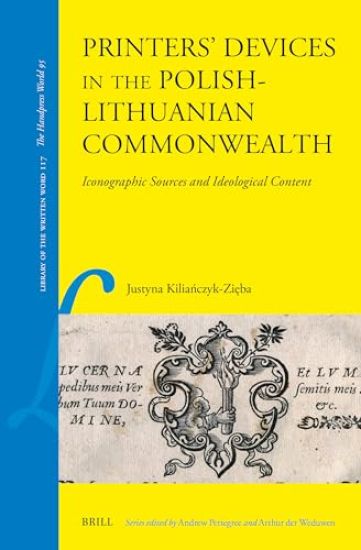
Printers' Devices in the Polish-Lithuanian Commonwealth: Iconographic Sources and Ideological Content
Justyna Kiliańczyk-Zięba
BRILL
2024
sidottu
This book discusses the printers' devices used in Poland-Lithuania in the fifteenth and sixteenth centuries. The compositions that served to identify the products of individual printers are explored here as previously unacknowledged research material for cultural studies: they allow for the reconstruction of the mentality of contemporary printers as well as their co-workers and reading public. The book investigates relationships within early modern intellectual communities and shows that the textual and visual discourses of the printers' devices were pan-European, reflecting the networked communities of European centres of learning and commerce. It documents the broad range of the output of Polish-Lithuanian presses as well and is therefore also a study of book culture in a multinational and multilingual state, whose inheritance is poorly recognised internationally.

Seasons of Stitches invites you on a journey through the changing cycle of the year with 16 stunning knitting patterns. Each design is inspired by the essence of a season — from spring's playful pastels to winter's cozy textures. The collection includes cardigans, sweaters and tops, as well as shawls and other accessories. Each project is a journey in itself, crafted to kindle your creativity. “This book is dedicated to every knitter who has ever sought solace in the soft embrace of yarn, finding peace in the rhythmic motion of needles gliding through threads,” Justyna says. Justyna Lorkowska is a beloved knitwear designer who loves designing sweaters and accessories. She lives in Poland with her partner, three kids and two dogs.
Urban Transformation through Artificial Intelligence
Justyna Zywiolek; Joanna Ejdys; Radoslaw Wolniak; Senad Becirovic
TAYLOR FRANCIS LTD
2026
sidottu
This book offers an in-depth examination of the ways in which artificial intelligence is reshaping urban landscapes to address the demands of sustainable development. It positions AI as an essential instrument for creating more intelligent, resilient cities that meet the requirements of contemporary urban living and environmental sustainability. It emphasises AI-driven advancements in urban management, including the optimisation of transportation, the administration of energy-efficient infrastructure, and the enhancement of public safety using predictive analytics. The examination of AI's role in critical services such as water and waste management, along with personalised public services, illustrates how data-driven insights improve citizens' quality of life. The book also examines AI applications in urban planning, modifying cities in response to climate and population changes. The authors present case studies of successful smart cities globally, providing practical insights and addressing legislative hurdles, privacy issues, and future trends influencing urban AI integration. This book is a valuable resource for academics across the fields of urban studies, technology and innovation management, transport studies, and public policy.

In Genealogy of Obedience Justyna Wlodarczyk provides a long overdue look at the history of companion dog training methods in North America since the mid-nineteenth century, when the market of popular training handbooks emerged. Wlodarczyk argues that changes in the functions and goals of dog training are entangled in bigger cultural discourses; with a particular focus on how animal training has served as a field for playing out anxieties related to race, class and gender in North America. By applying a Foucauldian genealogical perspective, the book shows how changes in training methods correlate with shifts in dominant regimes of power. It traces the rise and fall of obedience as a category for conceptualizing relationships with dogs.
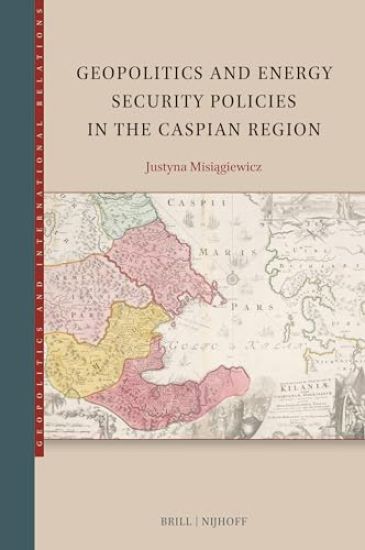
Geopolitics and Energy Security Policies in the Caspian Region
Justyna Misiagiewicz
BRILL
2024
sidottu
The analysis of geopolitics and energy security policies in the Caspian region is a challenging research task. This is because of the specific development of international relations in this region and the evolution of its importance in the context of the functioning of the global energy market. Due to its special geopolitical location in central Eurasia and at the junction at the world’s largest trading routes, the region is gaining in importance, both politically and economically in contemporary international relations, and becoming a place where actors involved satisfy the need for energy security.
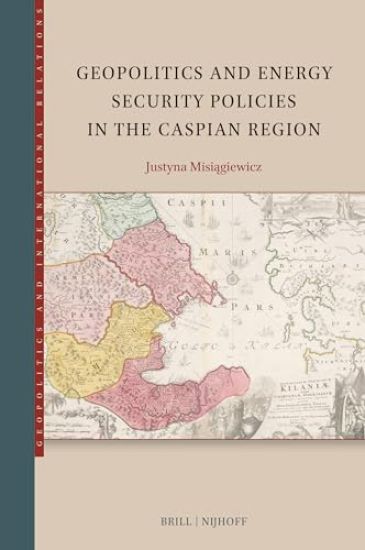
Geopolitics and Energy Security Policies in the Caspian Region
Justyna Misiagiewicz
BRILL
2025
nidottu
The analysis of geopolitics and energy security policies in the Caspian region is a challenging research task. This is because of the specific development of international relations in this region and the evolution of its importance in the context of the functioning of the global energy market. Due to its special geopolitical location in central Eurasia and at the junction at the world’s largest trading routes, the region is gaining in importance, both politically and economically in contemporary international relations, and becoming a place where actors involved satisfy the need for energy security.
Hybrid Work and Organizational Transformation
Justyna Zywiolek; Radoslaw Wolniak
TAYLOR FRANCIS LTD
2026
sidottu
As hybrid and remote work reshapes the modern workplace, Hybrid Work and Organizational Transformation offers a timely and research-based exploration of how organizations are redefining identity, trust, and communication in digitally mediated environments. This interdisciplinary monograph examines the cultural, psychological, and linguistic dynamics of hybrid work, providing a conceptual and practical framework for understanding and managing these transformations. Drawing on qualitative case studies from diverse sectors and regions, this book bridges theory and practice to deliver actionable insights for navigating the complexities of hybrid work cultures. Key features include a diagnostic framework for evaluating organizational readiness, trust-building strategies for virtual teams, and tools for fostering inclusion and collaboration in distributed environments. Grounded in social identity theory, trust theory, and digital affordance frameworks, it integrates empirical evidence with foresight scenarios and strategic recommendations. Readers will gain valuable perspectives on team cohesion, leadership ethics, and digital communication technologies, ensuring their organizations thrive in the post-pandemic era. Designed for advanced students, academic researchers, and practitioners, this volume is ideal for those in organizational behavior, human resource management, digital communication, and leadership studies. Public sector organizations, multinational enterprises, and educators will also benefit from its insights into building resilient, high-trust hybrid workplaces.

Sports Nutrition Handbook unpacks the need-to-know concepts of sports nutrition into everyday language, making fueling and daily diet easily understandable to athletes across a wide range of sports. Athletes will find the hows and whys of sports nutrition offered in plain language—no science required! Sports Nutrition Handbook is clear, easy to use as a reference, and includes the details if you want to explore more deeply. Sports Nutrition Handbook answers frequently asked questions in a straightforward and simple way. How do HIIT workouts promote weight loss? Does it help or harm to eat carbs before bedtime? Why do early morning workouts feel so different than workouts after breakfast? Why do marathoners often hit “the wall”? Answers to all your sports nutrition questions are easy to find, simple to grasp, and actionable for your next workout or race.
Craftwork in Small-Scale Societies of the Central European Bronze Age
Justyna Baron
Cambridge University Press
2026
sidottu
The Element examines various facets of craftwork in small-scale societies that thrived in much of Central Europe during the Bronze Age (2300–800 BCE). These societies exhibited distinct structures and types of social bonds that formed the social and spatial backdrop for craft practices. Since most Bronze Age villages were inhabited by small groups, all forms of crafting were at least partially communal, fostering the exchange of experiences, skills, and knowledge both within and across different production areas. The public nature of crafting practices also encouraged discussions about applied tools, methods, skills, and the quality of the final products. The author explores overarching questions about communication and knowledge transfer within and beyond small groups, drawing on archaeological and ethnographic data. This includes considerations of standardization, personalization, imitation, seasonality, and cross-crafting. This title is also available as Open Access on Cambridge Core.
Craftwork in Small-Scale Societies of the Central European Bronze Age
Justyna Baron
Cambridge University Press
2026
pokkari
The Element examines various facets of craftwork in small-scale societies that thrived in much of Central Europe during the Bronze Age (2300–800 BCE). These societies exhibited distinct structures and types of social bonds that formed the social and spatial backdrop for craft practices. Since most Bronze Age villages were inhabited by small groups, all forms of crafting were at least partially communal, fostering the exchange of experiences, skills, and knowledge both within and across different production areas. The public nature of crafting practices also encouraged discussions about applied tools, methods, skills, and the quality of the final products. The author explores overarching questions about communication and knowledge transfer within and beyond small groups, drawing on archaeological and ethnographic data. This includes considerations of standardization, personalization, imitation, seasonality, and cross-crafting. This title is also available as Open Access on Cambridge Core.
Cybersecurity in Motion
Justyna Zywiolek; Andrzej Szymonik; Artur Szymonik
TAYLOR FRANCIS LTD
2026
sidottu
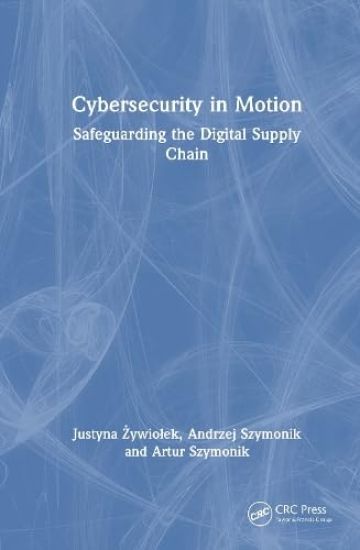
This book advances a central and urgent thesis: in the hyperconnected economy of Logistics 4.0, cybersecurity is no longer a technical safeguard at the periphery of logistics systems but the primary infrastructure of supply chain continuity, economic security and sustainable development. Digital logistics has evolved into a cyber-physical ecosystem in which data flows, autonomous decisions and algorithmic coordination shape material reality. In this environment, cyber risk becomes systemic risk, transforming security from an operational concern into a strategic determinant of organisational legitimacy, competitiveness and resilience. The monograph reframes cybersecurity as a governance architecture integrating digital infrastructure, risk intelligence, institutional accountability and technological foresight. The book offers a synthesis, demonstrating that digitalisation, cybersecurity and sustainability are mutually reinforcing rather than competing agendas. Without secure digital architectures, transparent ESG reporting, reliable traceability and accountable automation remain unattainable. Trust is the scarcest resource in digital supply chains, generated through verifiable data, secure infrastructures and credible governance. More than a catalogue of tools or regulatory recommendations, the volume delivers an integrated analytical architecture for understanding and governing cyber risk in Logistics 4.0 environments. It shows that digital transformation restructures supply chains into cyber-physical systems whose stability, efficiency and legitimacy depend on the integrity of their digital foundations, and that cybersecurity is a collective supply-chain capability rather than an individual organisational attribute. The work sets out a governance logic that guides organisations from digitalisation to resilience, treating Information Security Management Systems, standards and security operations frameworks as instruments for stabilising inter-organisational cooperation, maintaining service continuity and sustaining market legitimacy. It also outlines practitioner and research pathways centred on federated logistics data governance, scenario-based cyber resilience exercises, digital traceability architectures and integrating cybersecurity metrics into ESG reporting.
Cybersecurity in Motion
Justyna Zywiolek; Andrzej Szymonik; Artur Szymonik
TAYLOR FRANCIS LTD
2026
nidottu
This book advances a central and urgent thesis: in the hyperconnected economy of Logistics 4.0, cybersecurity is no longer a technical safeguard at the periphery of logistics systems but the primary infrastructure of supply chain continuity, economic security and sustainable development. Digital logistics has evolved into a cyber-physical ecosystem in which data flows, autonomous decisions and algorithmic coordination shape material reality. In this environment, cyber risk becomes systemic risk, transforming security from an operational concern into a strategic determinant of organisational legitimacy, competitiveness and resilience. The monograph reframes cybersecurity as a governance architecture integrating digital infrastructure, risk intelligence, institutional accountability and technological foresight. The book offers a synthesis, demonstrating that digitalisation, cybersecurity and sustainability are mutually reinforcing rather than competing agendas. Without secure digital architectures, transparent ESG reporting, reliable traceability and accountable automation remain unattainable. Trust is the scarcest resource in digital supply chains, generated through verifiable data, secure infrastructures and credible governance. More than a catalogue of tools or regulatory recommendations, the volume delivers an integrated analytical architecture for understanding and governing cyber risk in Logistics 4.0 environments. It shows that digital transformation restructures supply chains into cyber-physical systems whose stability, efficiency and legitimacy depend on the integrity of their digital foundations, and that cybersecurity is a collective supply-chain capability rather than an individual organisational attribute. The work sets out a governance logic that guides organisations from digitalisation to resilience, treating Information Security Management Systems, standards and security operations frameworks as instruments for stabilising inter-organisational cooperation, maintaining service continuity and sustaining market legitimacy. It also outlines practitioner and research pathways centred on federated logistics data governance, scenario-based cyber resilience exercises, digital traceability architectures and integrating cybersecurity metrics into ESG reporting.
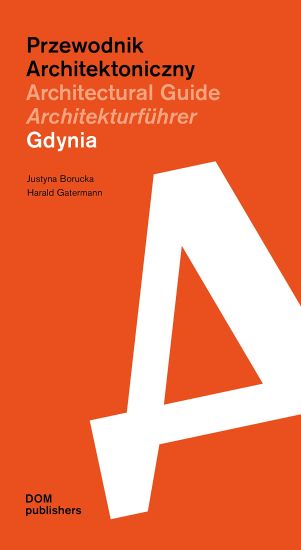
Gdynia is a unique city that arouses particular interest of architects due to its homogeneous architecture. The city, basing on the structure of an earlier fishing village, was entirely designed and built from scratch in the interwar period, as was the case later for cities such as Brasilia and Chandigarh. Gdynia as a modern port town together with Gdansk – the city of amber and Sopot, which is a world seaside resort, and with some smaller and less known towns forms a metropolitan area off the coast of the Baltic Sea: the Tri-City. Gdansk, with its historic centre of the Hanseatic city of Gdansk (Hansestadt Danzig), completely destroyed after World War II and then rebuilt as Polish Gdansk, is a bright example of reconstruction made in Poland. Sopot is considered a museum of architecture from the turn of the centuries, full of Art Nouveau villas and nostalgic baths, Gdynia, in turn, is a city of avant-garde modernism from the 1920s and 1930s. Thus, the Tri-City combines three great trends of the 20th century which are a source of fundamental debates among architects. This architectural guide is an excerpt from a broader publication Architekturführer Danzig: Gdansk Sopot Gdynia concerning the Tri-City metropolitan region and presents a modern and unique city of Gdynia in the form of 8 trips / city walks. The couple of authors go on a tour around Gdynia presenting about 80 buildings and projects. Professional descriptions of architecture examples structures, an extensive collection of plans and photographs as well as trips to particularly interesting architectural sights are an ideal help in getting to know the city.
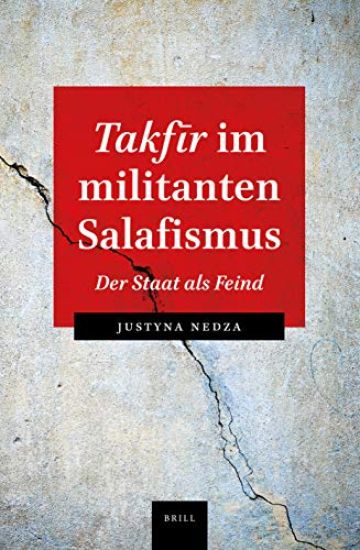
In this work, Justyna Nedza presents the first comprehensive analysis of the theologically charged legal practice of takfir in Egyptian and Saudi militant Salafist thought, with a focus on how this practice is employed to justify militant opposition to the state. Justyna Nedza pr sentiert hier die erste umfassende Analyse der theologisch aufgeladenen Rechtspraxis des takfīr im militanten Salafismus, insbesondere in gypten und Saudi Arabien. Dabei liegt das Hauptaugenmerk darauf, wie takfīr zur Rechtfertigung eines gewaltsamen Vorgehens gegen den Staat eingesetzt wird.