Containing footnotes and an extensive bibliography, this edition of Franz Mehring's classic biography is designed to assist the English-speaking reader towards a better understanding of Marx, his work and a history of Marxism. The book is divided into parts as follows: Early Years; A Pupil of Hegel; Exile in Paris; Friedrich Engels; Exile in Brussels; Revolution and Counter-Revolution; Exile in London; Marx and Engels; The Crimean War and the Crisis; Dynastic Changes; The Early Years of the International; 'Das Kapital'; The Zenith and Decline of the International; The Last Decade.
This is one of the most respected books on Marx's philosophical thought. Wood explains Marx's views from a philosophical standpoint and defends him against common misunderstandings and criticisms. All the major philosophical topics in Marx's work are considered: the central concept of alienation; historical materialism and Marx's account of social classes; the nature and social function of morality; philosophical materialism and Marx's atheism; and Marx's use of the Hegelian dialectical method and the Marxian theory of value.
This study examines Marx’s disputes with, and attacks upon, those anarchist theoreticians he encountered at various stages of his career. Marx’s attacks on Stirner, Proudhon and Bakunin are shown to be of vital importance to his career as a theorist and revolutionist. The formative influences upon Marx’s writings and his political activity are discussed and analyzed. The author re-situates Marx’s thought in the context of the 19th century when Marxism was not an unchallenged orthodoxy but a doctrine and method that needed to be defended against rival revolutionary impulses.
First published in English in 1929, this is a reissue of Otto Rühle's comprehensive biography of Karl Marx. Written by a leading Marxist and key figure within the German Labour movement, this is an exceptionally detailed and well-researched study which sets Marx's life and work firmly within its social and historical context before examining in depth the major events of his life and the writings for which he has become such an influential figure in modern political philosophy. The final chapter offers an appraisal of both the man and his work, as Rühle summarises why he believes Marx was a genius.
First published in English in 1929, this is a reissue of Otto Rühle's comprehensive biography of Karl Marx. Written by a leading Marxist and key figure within the German Labour movement, this is an exceptionally detailed and well-researched study which sets Marx's life and work firmly within its social and historical context before examining in depth the major events of his life and the writings for which he has become such an influential figure in modern political philosophy. The final chapter offers an appraisal of both the man and his work, as Rühle summarises why he believes Marx was a genius.
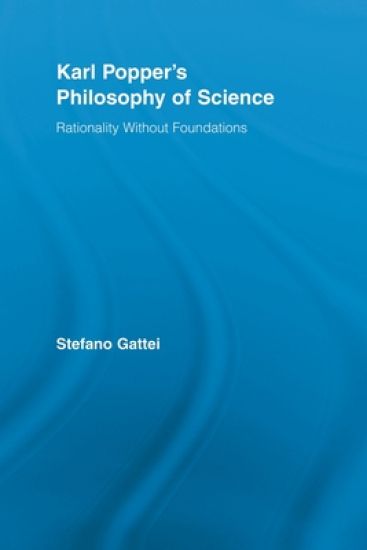
This book seeks to rectify misrepresentations of Popperian thought with a historical approach to Popper’s philosophy, an approach which applies his own mature view, that we gain knowledge through conjectures and refutations, to his own development, by portraying him in his intellectual growth as just such a series. Gattei seeks to reconstruct the logic of Popper’s development, in order to show how one problem and its tentative solution led to a new problem.
Presents, in straightforward language, the fundamentals of urban drainage and wastewater disposal. Carrying on the tradition of its predecessors (the first edition appeared in German in 1906), this new edition of a standard in the field has been reworked to reflect new U.S. technology, practices, and conditions. Chapters cover calculation of drainage systems, urban stormwater and combined sewer overflow management, general considerations of wastewater treatment, design and planning of treatment plants, industrial wastewater treatment and pretreatment, protection of receiving waters: discharge of wastewater into surface waters and self-purification of surface waters, conversion of SI units to English customary units, and information retrieval. Includes appendix of monographs for dimensioning of sewers.
A glamorous tribute to Karl Lagerfeld's highly influential creations for Chanel captured behind the scenes by US Vogue photographer Robert Fairer in beautiful, never-before-seen images. Casting a new light on one of the best-loved chapters in fashion history, Karl Lagerfeld Unseen: The Chanel Years illuminates key Chanel collections and creations from behind the scenes. From discreet client fittings in rue Cambon's immaculate black-and-beige salons to previously unseen backstage moments that show models, hairdressers, stylists, make-up artists and Karl Lagerfeld himself at work, Robert Fairer's stunning and high-energy photographs capture the elegance, glamour and spirit that defined Karl Lagerfeld's shows for Chanel. Texts by Karl Lagerfeld's collaborators and friends provide a fresh perspective on his creative process and reveal the stories behind the now iconic designs. A treasure trove of inspiration, this publication will be a must-have reference for fashion and photography lovers alike, and for dedicated Chanel fans the world over.
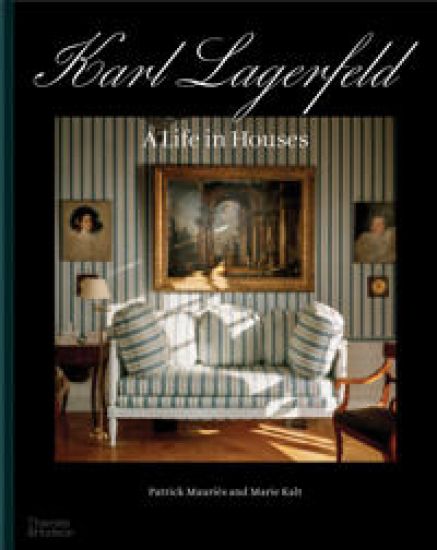
The first publication dedicated to Karl Lagerfeld's glamorous homes, known for their eclectic interiors, ranging from the Art Deco to the ultramodern. While Karl Lagerfeld was famous for being at the very centre of the fashion industry for over half a century, he was equally opinionated when it came to interiors, which acted as a private creative outlet alongside his fashion designs. Following an overview by Patrick Mauriès, each house is introduced by a short text by Marie Kalt unveiling its history and identifying key designers and pieces. The homes are documented by date, beginning with rare photography of Lagerfeld’s early addresses in the 1960s and 1970s, through to his final house purchase in 2009. From the elegant Art-Deco inspired apartment in Saint-Sulpice, Paris, to the incredibly ornate 18th-century mansion, Hôtel Pozzo di Borgo (his muse and collaborator Amanda Harlech described Lagerfeld as having ‘a Versailles complex’) – Lagerfeld’s houses reveal he was a collector of a Renaissance scale, and showed spectacular range in his decorating styles. Lagerfeld would balance the old with the new, humorously describing the minimalist decor of his 200-year old apartment in Quai Voltaire, Paris as ‘like floating in your own spaceship over a very civilised past’, and moved from one atmosphere to the next, leaving a Memphis-designed apartment in Monte Carlo for a Grand-Tour themed Roman pied-à-terre, followed by bucolic French country houses and even a majestic Nordic villa in his native Hamburg. Presented in a large, elegant format, Karl Lagerfeld: A Life in Houses will be a rich source of inspiration for those interested in interior design, and will appeal to fans of the decorative arts and the fashion designer himself.
A Financial Times Book of the Year: the definitive story of fashion's most enigmatic icon. Karl Lagerfeld lived a very public life. He shaped the Chanel and Fendi brands for decades, and his wit and wisdom amused and informed the world. Yet despite a massively public persona, his hinterland remained unknown. What is the truth behind this larger-than-life but enigmatic figure? The journalist and fashion specialist Alfons Kaiser met Lagerfeld on numerous occasions. He has now written the first authoritative biography on this fascinating character, whose life has always been marked by elements of secrecy. From his parents’ links with the Nazi regime to Lagerfeld’s last days in the company of only his closest friends, this book – the result of unprecedented archival and field work – divulges all the facets of a passionate artist and workaholic: the precocious boy who preferred to draw in the attic rather than play with his peers; the son who quarrelled with his parents but never got away from them; the competitor of Yves Saint Laurent, whom he outshone in the end; the brother, uncle, friend; and finally, the partner of Jacques de Bascher, the great love of his life.
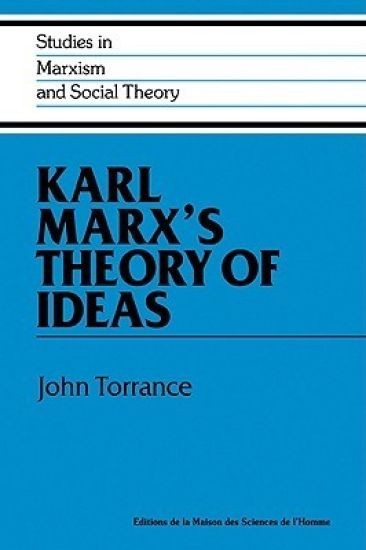
Marx's undeveloped ideas about how society presents a misleading appearance which distorts its members' understanding of it have been the subject of many conflicting interpretations. In this book John Torrance takes a fresh, un-Marxist approach to Marx's texts and shows that a more precise, coherent and cogent sociology of ideas can be extracted from them than is generally allowed. The implications of this for twentieth-century capitalism and for recent debates about Marx's conceptions of justice, morality and the history of social science are explored. The author argues that Marx's theory of ideas is sufficiently independent of other parts of his thought to provide a critique and explanation of those defects in his own understanding of capitalism which allowed Marxism itself to become, by his own definition, an ideology.
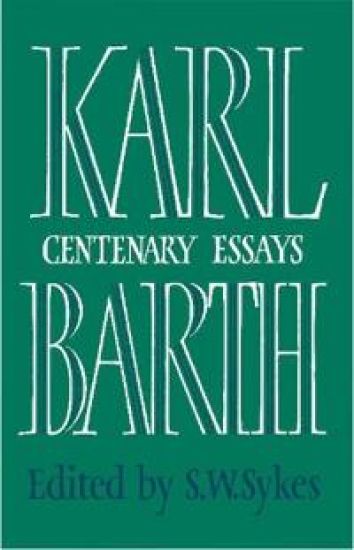
This short volume, which emerged from the Karl Barth centenary year in 1986, brings together a collection of essays which makes an important contribution to Barth interpretation. Few would dispute the fact that Karl Barth is one of the great figures of twentieth-century theology, and two decades after his death he continues to fascinate those who study the field and his own thought in the magisterial, unfinished Church Dogmatics. Yet while his impact and influence upon modern theology has been great, Barth has been subject, too, to suspicion and sometimes to fierce opposition. The contributors to this book examine and refute some of the more simplistic reasons why the thought of Karl Barth has had a somewhat limited appeal in modern English-language theology. Writing form a variety of ecclesiastical persuasions, Reformed, Lutheran, Anglican and Roman Catholic, the authors seek to demonstrate at a fundamental level the continuing important of some of Barth's major concerns. Collectively the essays constitute a positive introduction to Barth, to his place in the history of the philosophy of religion, as a constructive theologian, as a Churchman and in specific relation to the modern history of English-language theology.
This volume contains a selection of Karl Marx's most important writings, organized thematically under eight headings: methodology, alienation, economics, exploitation, historical materialism, classes, politics, and ideology. Jon Elster provides a brief introduction to each selection to explain its context and its place in Marx's argument. The volume is designed as a companion to Elster's An Introduction to Karl Marx and the thematic structure of each book is the same. But the Reader can also stand on its own and offers the student a substantial and revealingly organized selection of the crucial texts needed to understand and assess Marx's views.
This book, resulting from the Karl Barth centenary year in 1986, brings together a collection of essays which makes an important contribution to Barth interpretation. Few would dispute the fact that Karl Barth is one of the great figures of twentieth-century theology, and two decades after his death he continues to fascinate those who study the field and his own thought in the magisterial unfinished Church Dogmatics. Yet while his impact and influence upon modern theology has been great, Barth has been subject, too, to suspicion and sometimes to fierce opposition. The contributors to the book examine and refute some of the more simplistic reasons why the thought of Karl Barth has had a somewhat limited appeal in modern English-language theology. Writing from a variety of ecclesiastical persuasions, Reformed, Lutheran, Anglican and Roman Catholic, the authors seek to demonstrate, at a fundamental level, the continuing importance of some of Barth's major concerns.Collectively, the essays constitute a positive introduction to Barth, to his place in the history of the philosophy of religion, as a constructive theologian, as a churchman, and in specific relation to the modern history of English-language theology.This book, resulting from the Karl Barth centenary year in 1986, brings together a collection of essays which makes an important contribution to Barth interpretation. Few would dispute the fact that Karl Barth is one of the great figures of twentieth-century theology, and two decades after his death he continues to fascinate those who study the field and his own thought in the magisterial unfinished Church Dogmatics. Yet while his impact and influence upon modern theology has been great, Barth has been subject, too, to suspicion and sometimes to fierce opposition. The contributors to the book examine and refute some of the more simplistic reasons why the thought of Karl Barth has had a somewhat limited appeal in modern English-language theology.Writing from a variety of ecclesiastical persuasions, Reformed, Lutheran, Anglican and Roman Catholic, the authors seek to demonstrate, at a fundamental level, the continuing importance of some of Barth's major concerns. Collectively, the essays constitute a positive introduction to Barth, to his place in the history of the philosophy of religion, as a constructive theologian, as a churchman, and in specific relation to the modern history of English-language theology.
Marx’s undeveloped ideas about how society presents a misleading appearance which distorts its members’ understanding of it have been the subject of many conflicting interpretations. In this book John Torrance takes a fresh, un-Marxist approach to Marx’s texts and shows that a more precise, coherent and cogent sociology of ideas can be extracted from them than is generally allowed. The implications of this for twentieth-century capitalism and for recent debates about Marx’s conceptions of justice, morality and the history of social science are explored. The author argues that Marx’s theory of ideas is sufficiently independent of other parts of his thought to provide a critique and explanation of those defects in his own understanding of capitalism which allowed Marxism itself to become, by his own definition, an ideology.
Karl Popper (1902–1994) is one of this century’s most influential philosophers, but his life in fin-de siècle and interwar Vienna, and his exile in New Zealand during World War II, have so far remained shrouded in mystery. This intellectual biography recovers the legacy of the young Popper; the progressive, cosmopolitan, Viennese socialist who combated fascism, revolutionized the philosophy of science, and envisioned the Open Society. Malachi Hacohen delves into his archives (as well as the archives of his colleagues) and draws a compelling portrait of the philosopher, the assimilated Jewish intelligentsia, and the vanished culture of Red Vienna, which was decimated by Nazism. Hacohen’s adventurous biography restores Popper’s works to their original Central European contexts and, at the same time, shows that they have urgent messages for contemporary politics and philosophy.
Few philosophers in this century have had either Karl Popper’s range or his influence, inside and outside philosophy. This collection of essays by fifteen distinguished philosophers, several of whom have been closely associated with Popper and his work, provides a timely assessment of Popper’s contributions in a number of key areas: the methodology and philosophy of science; probability and determinism; quantum theory; biology; the theory of evolution; and the theory and practice of politics. The volume offers the specialist and the general reader alike fresh insights into the life and work of one of the twentieth century’s most original thinkers.
Karl Popper (1902–1994) is one of this century’s most influential philosophers, but his life in fin-de siècle and interwar Vienna, and his exile in New Zealand during World War II, have so far remained shrouded in mystery. This intellectual biography recovers the legacy of the young Popper; the progressive, cosmopolitan, Viennese socialist who combated fascism, revolutionized the philosophy of science, and envisioned the Open Society. Malachi Hacohen delves into his archives (as well as the archives of his colleagues) and draws a compelling portrait of the philosopher, the assimilated Jewish intelligentsia, and the vanished culture of Red Vienna, which was decimated by Nazism. Hacohen’s adventurous biography restores Popper’s works to their original Central European contexts and, at the same time, shows that they have urgent messages for contemporary politics and philosophy.